Bathroom Trends 2026: Why the Spa Shower Is Replacing the Bathtub
The bathtub was the centerpiece of the bathroom for a century. Walk into any mid-century American home, any 1970s European flat, any Japanese ryokan—the tub was the statement piece. Where we soaked, where we relaxed, where we drew a bath after a long day.
That’s shifting. In 2026, the spa shower is taking over—not just in luxury hotels and high-end renovations, but in mainstream new construction, apartment developments, and budget remodels. The question isn’t whether this is happening. It’s what it means for the bathroom industry, and specifically for heated towel rail manufacturers and buyers.
Why the spa shower won
The shift is driven by real changes in how people live.
1. Time poverty is real
A bath takes 20–30 minutes to fill, soak, and drain. A shower takes 7–10 minutes. For dual-income households, for parents managing morning routines, for anyone with a commute—the bath’s time cost is harder to justify. You can shower at 6am before the kids wake up. You can’t run a bath in that window.
2. Water efficiency went mainstream
A standard bath uses 80–100 gallons (300–380 liters). A 7-minute shower with a 2.0 gpm showerhead uses 14 gallons. That’s roughly 1/7th the water. Climate awareness and rising utility costs have made this math impossible to ignore. California’s Title 24, Australia’s WELS system, and UK Building Regulations revisions all push toward shower-centric fixtures.
3. Accessibility matters more as populations age
Walk-in showers have clear advantages for aging populations. The CDC estimates 235,000 US emergency room visits per year involve bathroom injuries, most near tubs. A curbless shower eliminates the single biggest fall risk.
This isn’t only about elderly homeowners. Universal design—the idea that a well-designed space works for everyone at every life stage—favors walk-in showers over bathtubs.
4. The wellness industry changed how we think about bathing
The spa industry trained consumers to associate showering with active wellness: cold plunges, steam sessions, pressure showers. High-end hotels pushed this further with rain showerheads, body jets, steam generators, and chromotherapy lighting built into shower enclosures.
Once you’ve experienced a properly designed spa shower, a standard bathtub feels underwhelming.
What the spa shower trend looks like in practice
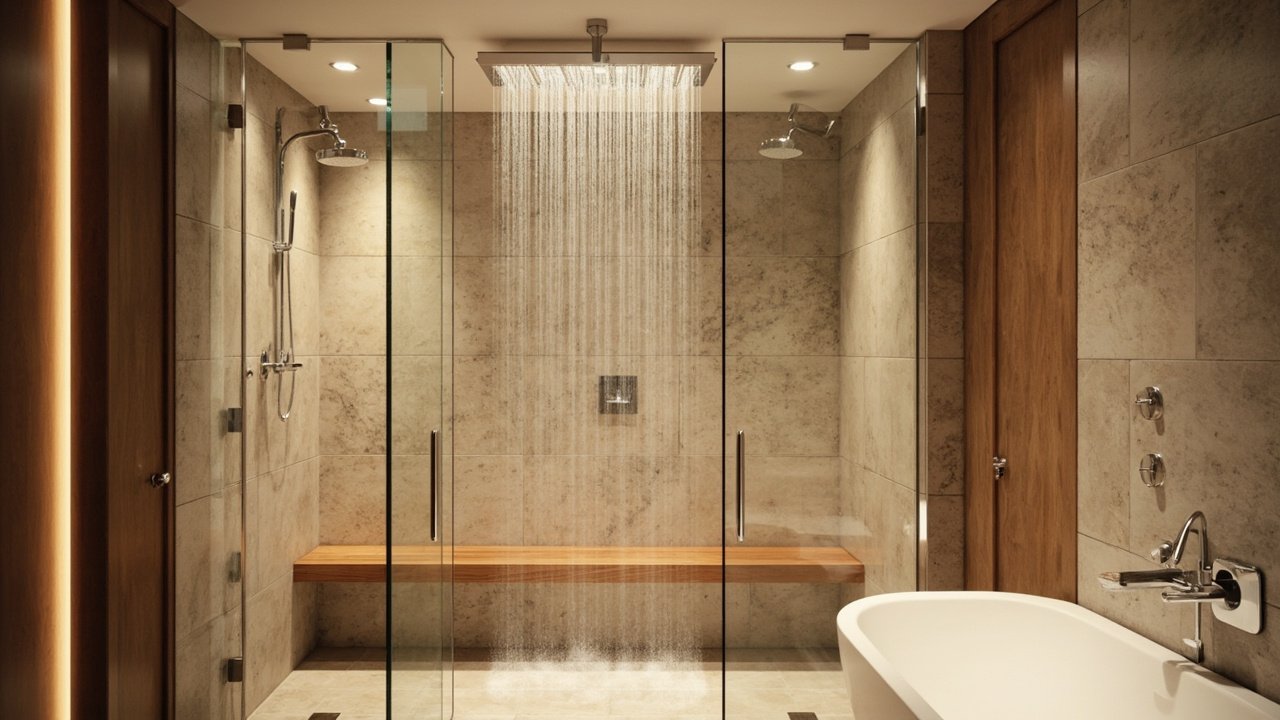
The 2026 spa shower is a system, not just an enclosure:
- Rain showerhead (12–16 inch, ceiling-mounted) as the primary water source
- Handheld spray for targeted rinsing
- Body jets (typically 2–4) for side washing
- Thermostatic valve for consistent temperature
- Frameless glass enclosure or curbless open design
- Steam generator in luxury installations
- Heated seating (teak or stone bench)
- Chromotherapy or circadian lighting in the ceiling
This is the standard configuration in four-star and above hotels globally. It’s the spec architects and interior designers target for high-end residential. And it’s increasingly the starting point, not the upgrade, for mid-range projects.
The heated towel rail connection
Here’s where this connects to what we do.
The spa shower trend creates new demand for heated towel rails in ways the traditional bathtub bathroom didn’t.
More towels, more often
A household using baths might wash and dry towels every 3–4 days. A household using spa showers daily generates wet towels every single day. That’s 3–4x the towel volume. Damp towels in a humid bathroom become a hygiene concern. More towels per week means more laundry, more storage, more need for fast drying.
A heated towel rail solves all three problems. In a spa shower bathroom, it’s not a luxury add-on—it’s functionally necessary.
The post-shower moment is a sales opportunity
In a bath-centric bathroom, you drain the tub and grab a towel. The experience is contained.
In a spa shower bathroom, you step out into a defined drying zone. Your towel is waiting—warm, dry, fluffy. This is the moment Four Seasons and Aman sell as “the experience.” And increasingly, it’s what residential consumers want.
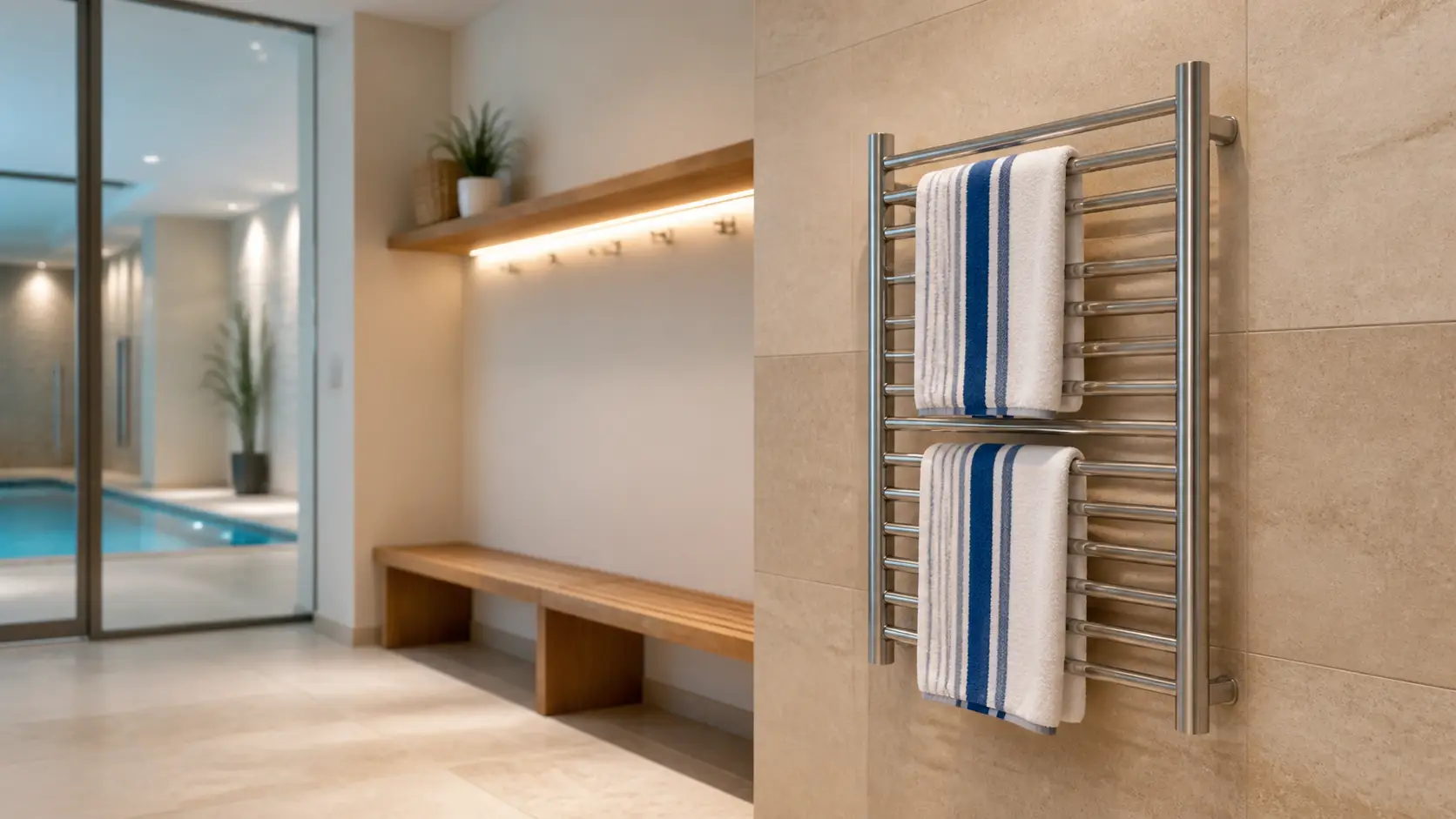
Heated towel rails at the shower exit are almost a required element in this context. The warmth is part of the ritual.
Hotel spec changes
For hotel projects, the shift away from tubs is showing up in room specs. Many boutique brands now specify shower-only configurations as standard. Even Marriott and Hilton have introduced shower-focused room types in newer select-service brands.
This changes how you spec heated towel rails:
- Placement matters more: the rail needs to be at the shower exit, not near a tub
- Multiple rails per bathroom: guest towels and hand towels may need separate rails
- Heat output matters: spa showers with steam generation create more humidity; higher-wattage rails handle the load better
- Timer integration: hotel energy management systems increasingly control towel rail schedules; rails that can’t integrate with BMS are being specified less
The bathtub isn’t dead—but it’s niche now
The bathtub still has legitimate use cases. It’s better for certain physical therapies—muscle recovery, physical therapy routines. It’s better for households with very young children. It’s a legal requirement in some jurisdictions for residential rentals.
But the default assumption has shifted. The bathtub used to be the centerpiece that defined the bathroom layout. Now it’s often the first thing to go when space is tight, or the last thing added when the budget runs out.
Designers and developers are increasingly working backward from the shower. First you design the shower enclosure, then you figure out what space remains for the toilet, vanity, and—optionally—the tub.
What this means for heated towel rail buyers
If you’re buying or specifying heated towel rails in 2026, the spa shower trend has practical implications:
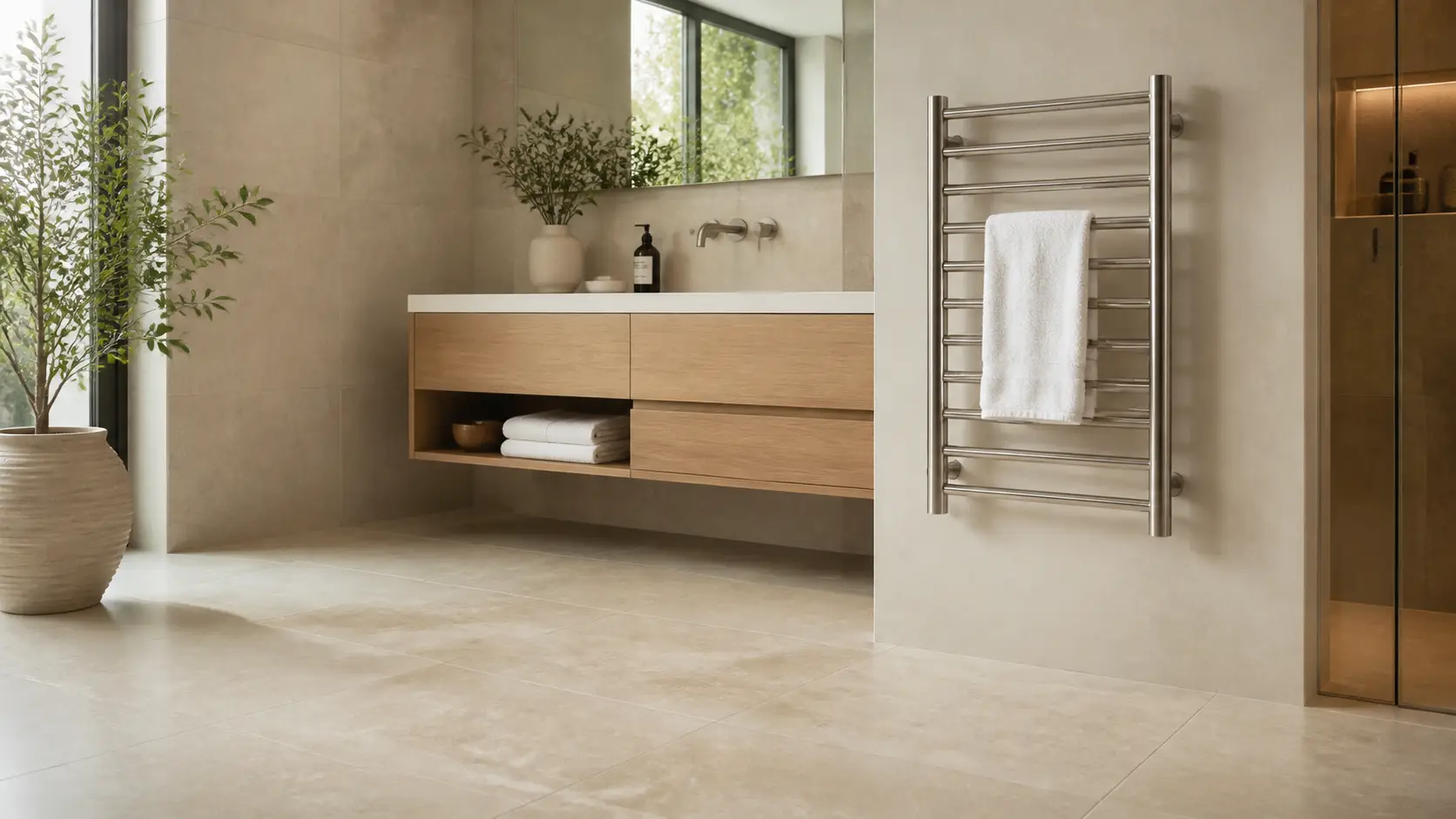
Sizing up: spa shower bathrooms typically need larger rails (800mm–1200mm wide) to handle higher towel volume and humidity load.
Placement planning: design the rail location around the shower exit, not the tub. It should be within arm’s reach of where you step out.
Consider dual-rail setups: separate rails for bath towels and hand towels are increasingly common in spa-style bathrooms.
Don’t skip the timer: in a bathroom with daily spa shower use, the rail runs every day. Timer control isn’t optional—it directly affects your electricity bill.
PTC is the right choice for this application: spa showers generate more humidity than baths; PTC self-regulating technology handles variable moisture loads better than standard resistance elements.
The bottom line
The bathtub’s decline and the spa shower’s rise isn’t a passing trend—it’s a structural shift in how people think about the bathroom. Driven by time poverty, water efficiency, accessibility, and the wellness industry, it reflects changes in how we actually live, not just how we aspire to relax.
For heated towel rail manufacturers, this shift is an opportunity. Spa shower bathrooms need towel rails more than bath-centric bathrooms did. The question is whether your products are designed for this context—placement, sizing, heat output, control integration.
The bathroom of 2026 is smaller, smarter, and shower-first. The heated towel rail that fits that bathroom is the one that will sell.
Looking for heated towel rails engineered for spa shower installations? Contact us for project pricing and technical specifications.