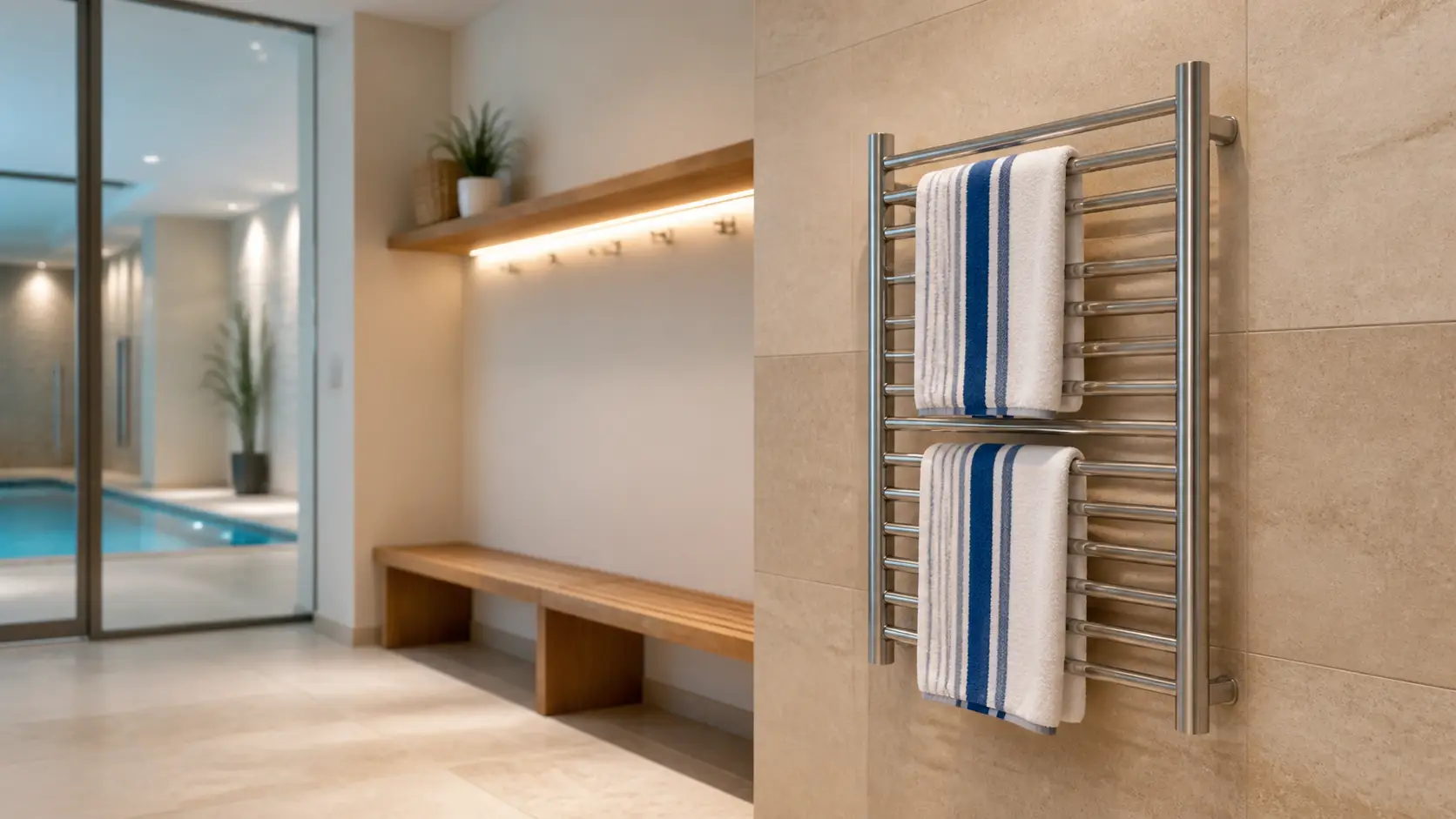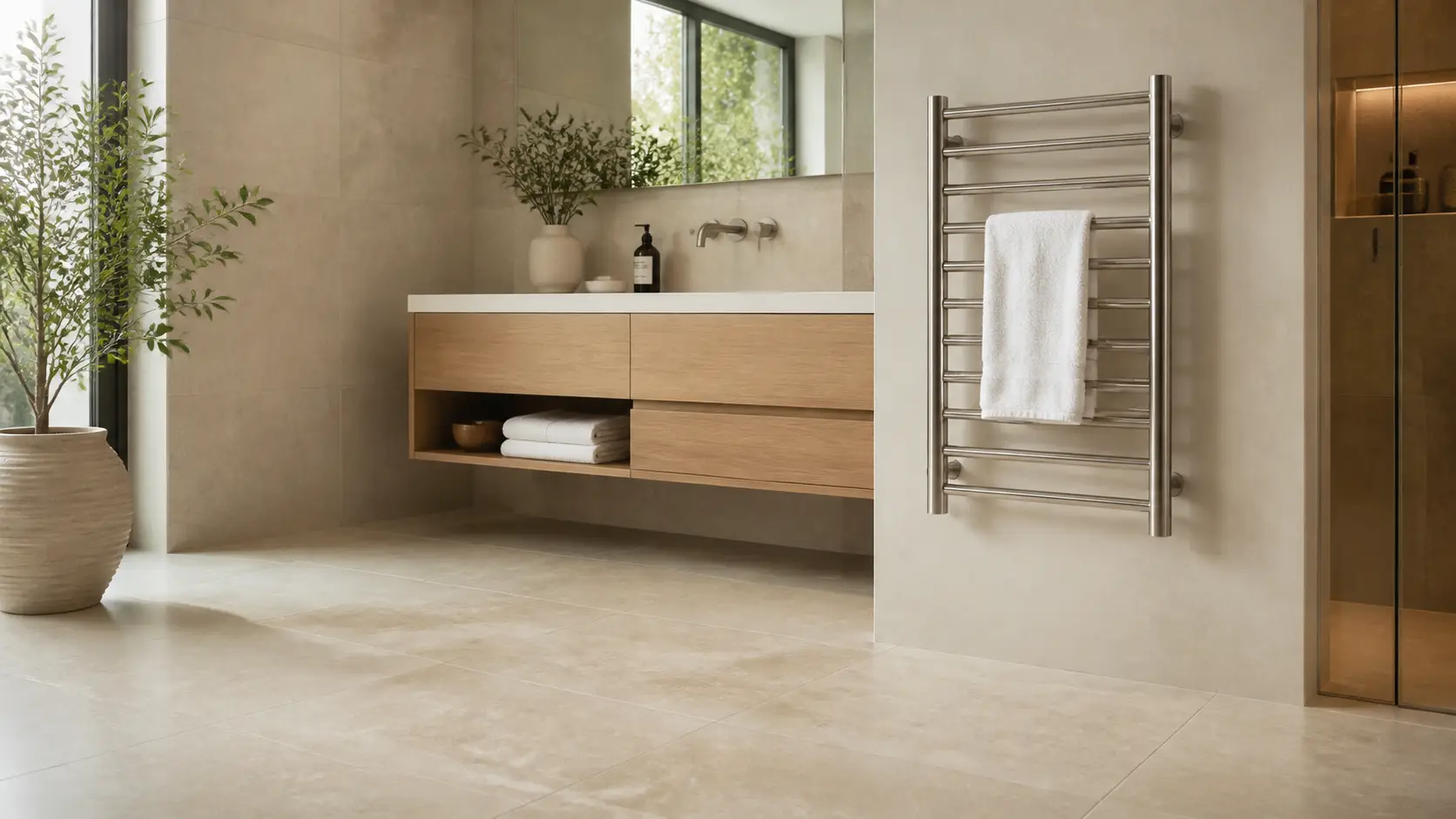
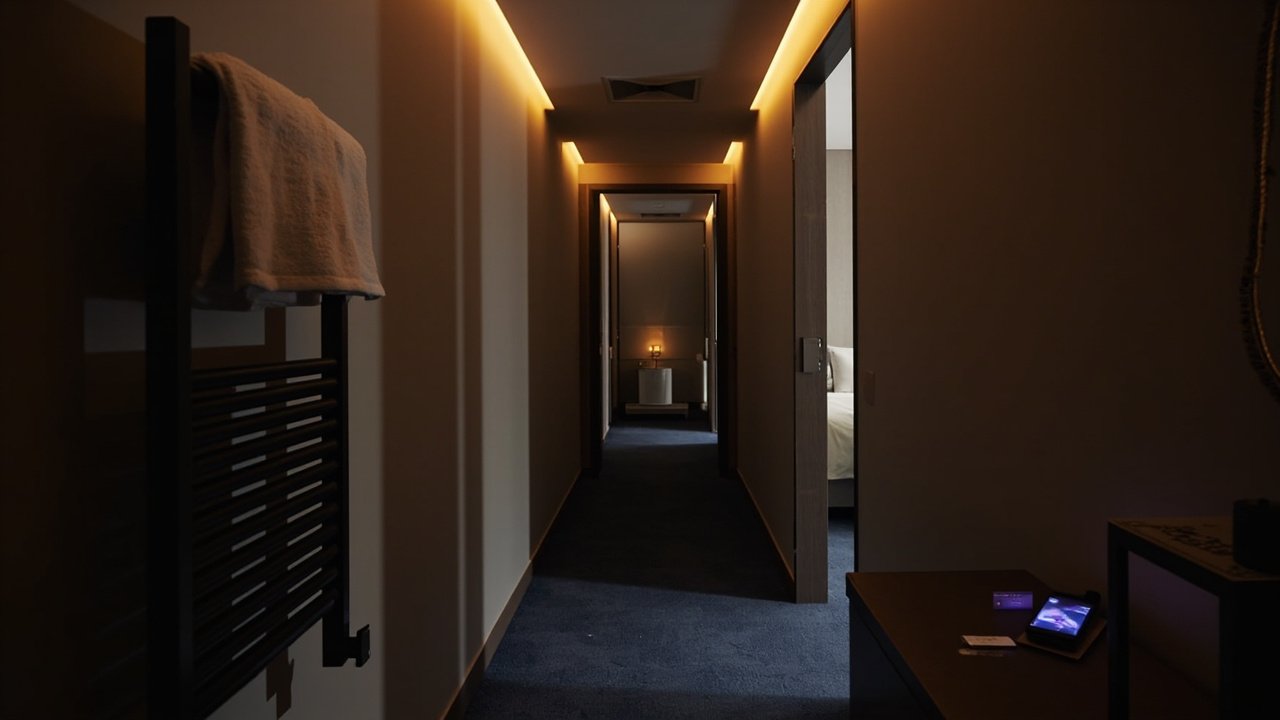
Smart home technology has worked its way into almost every corner of residential life — voice-controlled lights, app-managed thermostats, connected locks. Heated towel racks have not been immune to this trend. Wi-Fi-enabled and app-controlled towel warmers are now available from a growing number of manufacturers, marketed to hotels, property developers, and facility managers as the next step in guest experience technology.
The B2B question is straightforward: does the smart functionality actually add enough value to justify the higher price tag and the operational complexity that comes with it?
This article breaks down what smart towel warmers can actually do, where they create genuine operational value, where they add cost without commensurate benefit, and how to evaluate whether they make sense for your project.
What smart towel warmers can do
Smart or Wi-Fi enabled heated towel racks connect to a property’s local network and can be controlled through a mobile app, a web dashboard, or integration with a building management system. The specific capabilities vary by manufacturer, but the common features include:
- Remote on/off control from a smartphone or computer
- Schedule programming — set different heating schedules for different times of day or days of the week
- Temperature monitoring — some models report actual surface temperature back to the app
- Energy usage tracking — view how long the rack runs and estimated energy consumption
- Group or zone control — control multiple racks simultaneously from one dashboard
- Integration with property management systems — for hotels, some smart racks can sync with the room occupancy system and activate automatically when a guest checks in
These features sound compelling on paper. Whether they deliver real value depends heavily on the use case.
Where smart functionality creates genuine value
For certain commercial applications, Wi-Fi connectivity in a heated towel rack is more than a gimmick.
Large portfolio management
If you manage 50, 100, or 500 heated towel rack units across multiple properties, the ability to monitor and control all of them from a single dashboard is operationally meaningful. A facility manager can see at a glance whether every unit is functioning normally, receive alerts when a rack has been running continuously for longer than expected (which might indicate a thermostat failure), and adjust schedules across the entire portfolio in minutes instead of walking through each room.
For this use case, the smart functionality replaces a significant amount of manual inspection and on-site programming. The time savings compound quickly at scale.
Hotel energy management integration
Some smart towel warmer manufacturers offer integration with hotel property management systems (PMS) or building management systems (BMS). When a guest checks into a room, the PMS can signal the towel warmer to activate. When the guest checks out, the rack can revert to a setback or standby temperature. This prevents the rack from running continuously at full heat when the room is vacant.
For high-occupancy properties with rapid turnover — select-service hotels, extended-stay properties, vacation rentals — this kind of automatic coordination with the PMS can meaningfully reduce energy waste. A rack that runs 24 hours a day in an empty room is pure waste; a rack that activates on check-in and moderates on check-out is not.
Remote diagnostics and predictive maintenance
Connected devices that report temperature and runtime data back to a central system enable a more proactive maintenance model. Instead of waiting for a guest to report a cold rack, the facility team can be alerted when a unit’s temperature reading falls outside normal parameters. This shifts maintenance from reactive to predictive — a meaningful improvement in operational efficiency for large properties.
Where the value proposition breaks down
Smart functionality is not equally valuable in every commercial setting.
Single-property or small portfolio installations
If you are installing 5 to 20 heated towel racks in a single boutique hotel or a small commercial building, the “dashboard control” value proposition weakens considerably. A maintenance technician can walk through 20 rooms in an afternoon. The time savings from remote control do not justify the higher unit cost and the ongoing network management overhead.
For smaller installations, a simple 7-day programmable timer is almost always a better value decision. It provides schedule-based automation without the network complexity, firmware update requirements, or cybersecurity considerations that come with connected devices.
Guest experience differentiation
There is an argument that app-controlled towel racks create a premium guest experience — guests can pre-warm their towels before a shower, customize the temperature, and feel like they are in a high-tech room. Some boutique hotel brands make this pitch.
The honest assessment: most guests do not think about the towel rack at all until they use it. The “wow factor” of app-controlled towel warming is real in a handful of high-tech or design-forward properties, but it is not a meaningful differentiator in most commercial hospitality settings. Guests notice whether the towels are warm, not whether the rack is Wi-Fi enabled.
If guest experience is the primary argument for smart towel warmers, the case needs to be interrogated carefully before spending the premium.
Network and cybersecurity overhead
Wi-Fi enabled devices are internet-connected devices. That means:
- They need to be provisioned and maintained on the property network
- They require firmware updates over time
- They present a potential attack surface if not properly secured
- They depend on the property’s Wi-Fi network being operational
For properties with a mature IT infrastructure and an internal IT team, these considerations are manageable. For smaller properties or owner-operated hotels where the Wi-Fi router is someone else’s problem, a connected device adds operational complexity that may not have been accounted for.
The cost comparison
Smart-enabled towel warmers typically cost 20% to 50% more per unit than their non-connected counterparts. For a 100-room hotel specifying one heated towel rack per room, the smart premium can add $5,000 to $25,000 to the furniture and equipment budget, depending on the brand and model.
On top of the hardware premium, there may be subscription costs. Some manufacturers charge an annual software platform fee for access to the control dashboard, analytics, and firmware updates. These fees range from $5 to $20 per device per year. Over a 10-year product lifecycle, the subscription cost can approach or exceed the original hardware price premium.
Before specifying smart towel warmers, get the full cost picture from the supplier, including hardware premium, software subscription costs, network infrastructure requirements, and any integration engineering that may be needed for PMS or BMS connection.
When to specify smart — and when not to
A practical decision framework.
Specify smart/Wi-Fi enabled when:
– You are managing 50+ units across multiple properties or a large single property
– The property has an existing BMS or PMS integration capability that the towel warmer can connect to
– Your maintenance model is proactive and you have the IT infrastructure to support connected devices
– The brand or property positioning genuinely calls for high-tech guest experience features
Stick with non-connected programmable units when:
– You are installing fewer than 30 units in a single property
– The property has limited IT support or older network infrastructure
– The project budget is tight and the smart premium does not fit
– The guest experience argument is speculative rather than proven
The bottom line
Smart Wi-Fi enabled towel warmers are worth it for the right buyer — large portfolio operators, properties with existing BMS integration, and operations teams that can actually use the monitoring and control data to drive maintenance efficiency. For these buyers, the higher unit cost and ongoing subscription fees pay for themselves through energy savings, reduced reactive maintenance, and operational time savings at scale.
For the majority of single-property installations or smaller portfolios, the smart functionality adds more cost and complexity than it removes. A quality programmable timer does 80% of what the smart feature does — scheduled on/off control — at a fraction of the price and without the network overhead.
Before specifying smart towel warmers, know exactly what you are going to do with the data and the control. If the answer is “we will check the app occasionally,” the non-connected model is almost certainly the better buy.
Evaluating smart heated towel rack options for a commercial project? Contact our team for product specifications, integration requirements, and B2B pricing for both smart and non-connected models.