
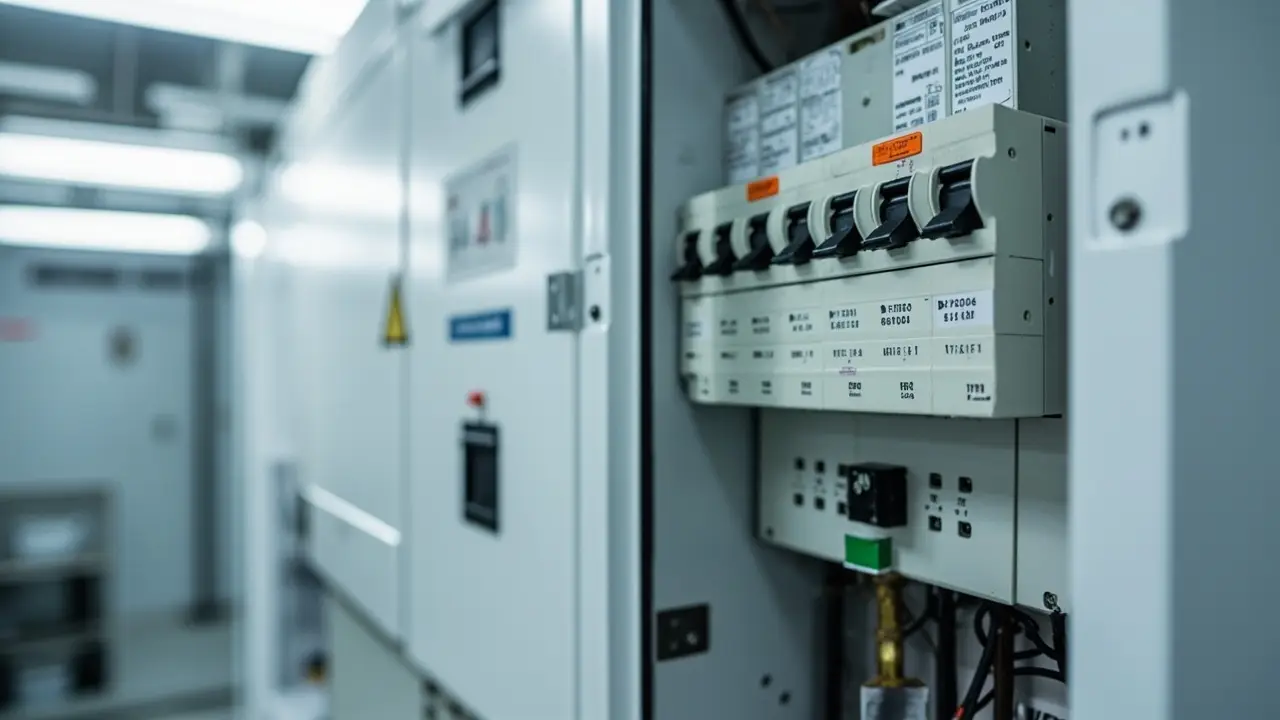
Electrical specifications cause more confusion in commercial heated towel rack projects than almost any other topic. The question — does this unit need its own dedicated circuit? — gets asked in almost every project specification meeting, and the answer is almost always the same: it depends.
This article walks through the actual electrical code requirements, load calculation logic, and practical considerations that determine whether a heated towel rack should be on a dedicated circuit or can share with other fixtures in a US commercial installation.
What the National Electrical Code actually says
The NEC (National Electrical Code) does not have a specific provision that says “heated towel racks must be on a dedicated circuit.” What the NEC does require is that no circuit be loaded beyond 80% of its rated capacity continuously, and that fixed electric space-heating equipment — which is how heated towel racks are classified — has its own specific rules.
Section 424.3 of the NEC addresses fixed electric space-heating equipment. It requires that fixed electric space-heating equipment (which includes heated towel racks) be supplied by a dedicated circuit when the equipment is rated at more than 50% of the ampere rating of the branch circuit. This gets technical quickly, so let us work through it with real numbers.
How to calculate whether you need a dedicated circuit
A typical electric heated towel rack draws between 100W and 250W at 120V. That translates to roughly 0.8A to 2A of current draw during heating. A standard 15A lighting circuit can handle many of these units without approaching the 80% threshold.
Here is the math:
- 15A circuit at 80% continuous load = 12A maximum continuous draw
- 100W heated towel rack at 120V = 0.83A
- 250W heated towel rack at 120V = 2.08A
In practical terms, a single 100W to 250W heated towel rack draws so little current that it can typically share a circuit with bathroom lighting and general outlets without any problem. You could run 5 to 10 of these units on a single 15A circuit before you hit the 80% threshold.
However, this is where the specification gets more complex.
When dedicated circuits are required
High-wattage commercial units — Some commercial-grade heated towel racks designed for large bathrooms or high-occupancy properties draw 400W to 600W. At 120V, that is 3.3A to 5A per unit. These still do not require a dedicated circuit on their own, but they do require careful aggregate load calculation if multiple units are on the same circuit.
Bathroom receptacle circuits — The NEC has specific rules for bathroom receptacle circuits (NEC 210.11.C.3). In most jurisdictions, bathroom receptacle circuits may serve bathrooms within the same area, but the circuit may not serve other loads outside the bathroom. If your heated towel rack is cord-and-plug connected and uses a bathroom outlet, it falls under these rules. Hardwired installations are typically treated differently.
GFCI requirements — All 120V heated towel rack circuits in bathrooms require ground-fault circuit interrupter (GFCI) protection, whether they are on a dedicated circuit or a shared circuit. This is a hard requirement under NEC 210.8 for bathroom circuits.
Hotel guest room circuits — In new hotel construction, the electrical code in most jurisdictions requires dedicated or specifically-designated circuits for bathroom fixtures in guest rooms. This varies by state and local code adoption, so always verify with the local authority having jurisdiction (AHJ) before specifying.
The difference between hardwired and plug-in installations
For hardwired heated towel racks, the electrical connection is treated as a fixed load. The NEC allows fixed loads to be calculated at 125% of the continuous load rating for circuit sizing purposes. So a 200W (1.67A) hardwired heated towel rack is treated as a 2.08A load for circuit sizing. A single 15A circuit can handle multiple hardwired units, but the aggregate calculation must be done.
For plug-in heated towel racks, the circuit must accommodate both the rack load and whatever else is on that outlet or circuit. A heated towel rack running on the same 15A bathroom circuit as a hair dryer, straightening iron, and exhaust fan will not trip the breaker, but if all devices run simultaneously at full load, the aggregate current could approach the limit.
Multiple racks in a single bathroom
Large hotel suites, resort bathrooms, and high-end residential-style bathrooms often have two or more heated towel racks — for example, one for bath towels and a second for hand towels. The combined load of multiple racks in a single bathroom is usually still within the capacity of a single 15A or 20A bathroom circuit, but the calculation must account for all continuous loads.
A practical rule: if you are installing three or more heated towel racks in a single bathroom, do a load calculation before specifying the circuit. It is also worth specifying a dedicated 20A circuit in high-end installations to provide headroom and ensure the circuit never approaches its thermal limit.
The GFCI question
One area where there is no ambiguity: GFCI protection is required for heated towel racks in bathrooms under the 2020 and 2023 NEC. This applies to both 120V plug-in and hardwired units.
For hardwired installations, the GFCI can be provided at the breaker level (a GFCI breaker) or at the device level (a GFCI-protected switch or controller). For plug-in installations, the outlet must be a GFCI outlet or the circuit must be protected by a GFCI breaker.
This is a safety requirement, not a preference. Specify accordingly.
What this means for your specification
Here is a quick-reference guide for specifiers.
| Scenario | Recommended circuit approach |
|---|---|
| Single 100-250W heated towel rack in a hotel guest room | May share with bathroom lighting on existing circuit; verify load calculation |
| Multiple heated towel racks (2-3) in a single large bathroom | Dedicated 15A or 20A circuit recommended |
| High-wattage commercial unit (400W+) | Dedicated circuit required; do load calculation |
| Plug-in installation in existing bathroom | Verify the circuit can handle aggregate load; GFCI outlet required |
| Hardwired installation in new construction | Include in bathroom circuit load calculation; specify GFCI protection |
| Installation in a bathroom with electric tankless water heater | Dedicated circuit almost certainly required; consult electrician |
Why not just specify a dedicated circuit for everything?
Cost and circuit panel capacity are the limiting factors. A dedicated 15A or 20A circuit for a heated towel rack in every hotel guest room adds real cost: roughly $150 to $300 per room in new construction for the additional circuit, breaker, and labor. For a 200-room property, that is $30,000 to $60,000 in additional electrical costs.
The smarter approach is to do the load calculation for each bathroom layout and specify dedicated circuits only where the aggregate load calculation requires it. In many hotel bathroom configurations, the heated towel rack can share a circuit with lighting and general bathroom fixtures without any code or safety issues.
The bottom line
A dedicated circuit is not universally required for heated towel racks under the NEC. Most 100W to 250W residential and commercial units can share a bathroom circuit with other fixtures without exceeding the 80% continuous load threshold. Dedicated circuits become necessary for high-wattage units, multiple-rack installations, or properties where the aggregate bathroom load approaches circuit capacity.
The universal requirement that cannot be skipped: GFCI protection on all 120V heated towel rack circuits in bathrooms. Always specify GFCI-protected circuits or outlets, regardless of whether the circuit is shared.
For any project with more than two heated towel racks in a single bathroom, or any installation with high-wattage units, consult a licensed electrician to do a load calculation before finalizing the specification. It takes an hour and prevents problems at inspection.
Planning electrical specifications for a commercial heated towel rack project? Contact our team for electrical specifications, load data sheets, and assistance with your project documentation.