Sourcing heated towel rails from China is not the hard part. Finding a supplier that won’t slow your supply chain, blow your margin, or leave you explaining quality issues to your customers — that is the part that actually takes work.
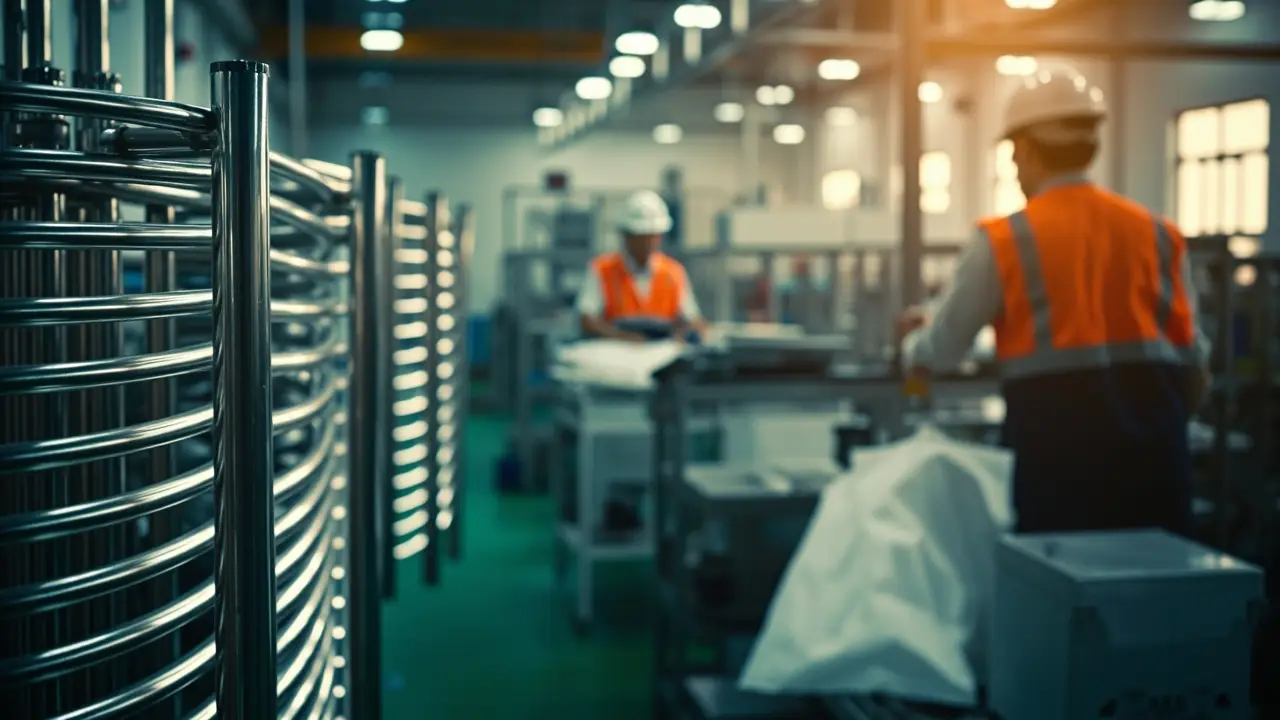
I have toured factories in Foshan and Taizhou. I have worked with importers across the UK, Germany, and Australia. I have seen what separates a reliable long-term supplier from a trading company with a very convincing catalogue. Here is what actually matters when you are evaluating a Chinese factory for heated towel rail procurement.
What You Are Actually Looking For
Most importers make the same mistake at the start: they focus on price. A heated towel rail that looks identical at $28 versus $38 can have completely different defect rates, warranty claim ratios, and production consistency. Price matters. But it is the last thing to compare, not the first.
Before you send any inquiry, know what you actually need:
- Market: UK requires WRAS or KIWA approval. Australia needs Watermark. Germany and the EU need CE and EN442 compliance. US requires ETL or UL.
- Volume: Are you ordering 200 units per SKU or 2,000? This changes which factories will even respond to you.
- Customization: Do you need specific lengths, finishes, or branded packaging? Or are you buying finished goods off the shelf?
- Responsibility model: Who do you call when 15% of a shipment arrives with a scratched surface? The factory’s answer to this question tells you everything.
The Factory vs. Trading Company Problem
This is the single most important distinction in Chinese sourcing, and most importers get it wrong at first.
A trading company acts as an intermediary. They take your order, find a factory, mark it up, and manage communication. Nothing wrong with that model if you know what you are getting — but for heated towel rails specifically, you lose the ability to audit production quality, negotiate tooling changes, or get transparency when something goes wrong.
A real factory has production lines, employs quality control staff, owns or leases their own manufacturing equipment, and can show you a production batch record with your order number on it.
How to tell the difference in a 30-minute video call:
- Ask to see the production floor in real time. A factory will show you one. A trading company will make excuses.
- Ask for a production photo with your inquiry name on the packaging. A genuine factory does this routinely. A trader may need to ask permission from their “partner.”
- Ask how many workers they have on the heated towel rail line specifically. If the answer is vague, keep digging.
Certifications: What You Actually Need vs. What They Claim to Have
Certifications are where importers get burned most often. Factories love to put “CE certified” in their email signature. What that often means: they have a CE test report for one product, in one size, that was tested two years ago. It does not mean every SKU you order is CE compliant.
What to actually verify:
For UK and Ireland:
– WRAS approval — not just a test report. WRAS is a specific certification with an approval number you can verify on the WRAS website.
– BEAB or BSI testing if your client requires it.
For Australia:
– Watermark certification — mandatory for sanitary products sold in Australia. Verify the certificate number on the Australian Building Codes Board website.
– RCM compliance for electrical components.
For Europe:
– CE marking with EN442 standard test reports for heat output. Ask for the actual test document with your product model on it.
– REACH/RoHS compliance for finishes. Especially important if you are selling into Scandinavia or the Netherlands where environmental regulations are strictest.
For North America:
– ETL or UL listing for electrical safety. Required by law in most states and provinces.
– Energy Star if you are positioning the product for energy-conscious projects.
The single most useful thing you can do: ask the factory for a copy of the actual certificate, not a photo of a frame on the wall. Then verify the number independently. Factories with real certifications have no problem with this request.
MOQ, Lead Time, and the Negotiation Reality
Minimum order quantities and lead times are where many importers get surprises after the order is placed.
Typical MOQ for heated towel rails:
- Standard off-shelf models: 50 to 100 units per SKU
- With customization (specific finish, length, bracket type): 200 to 500 units per SKU
- With full OEM or branding: typically 300 to 500 units for the first order, potentially lower for repeat orders
Typical production lead time:
- Stock models with no customization: 3 to 5 weeks after deposit
- Custom finishes or sizes: 6 to 10 weeks
- New tooling required: 10 to 16 weeks
Be very cautious of factories that promise 500 custom-branded units in three weeks. The production timeline for quality finishing alone — polishing, powder coating or PVD coating — takes time regardless of what the sales rep says.
What to Ask in the First Conversation
A good first call with a potential supplier should cover:
- “Can I do a video tour of the production line?” — gauge their openness.
- “What is your rejection rate on finished goods, and what is your rework policy?” — factories with over 5% defect rates and no rework policy are a liability.
- “Who handles warranty claims, and what does your support process look like?” — some factories offer 1-year warranty on heating elements but only if you ship the defective unit back at your cost.
- “Can you provide pre-production samples, and what is the cost if any?” — almost all genuine factories offer samples, often at cost or with partial refund against first order.
- “Do you work with freight forwarders, and which ports do you commonly ship from?” — most factories near Foshan ship from Yantian or Shenzhen. Know your shipping routes and costs before the order is placed.
The Sample Order: Your Best Insurance Policy
Never place a full container order before you have seen and tested a physical sample. This sounds obvious but gets ignored under time pressure.
A proper sample order should test:
- Fit and finish: Is the coating even? Are the welding seams smooth? Does it look like a $45 product or a $28 product?
- Heating performance: Does it heat to the stated temperature, and how evenly? A thermocouple test takes 20 minutes and tells you whether the product performs as quoted.
- Packaging: Does the sample arrive undamaged? If it arrives with a dented bar or scratched surface in a small parcel shipment, imagine what a container shipment looks like.
- Documentation: Did they include the test reports, certificates, and instructions with the sample? If not, that is a red flag for their internal process.
Red Flags to Watch For
These will save you more grief than any other checklist:
- The price is significantly below market. If a factory quotes you 30% less than three other factories for the same specification, one of two things is true: they are cutting corners on materials, or they will find ways to recover the margin after the order is placed.
- They refuse to provide references. A factory with a track record of supplying European or Australian importers will have references they are willing to share, with permission.
- They cannot explain their QC process. Specifics matter. “We have QC” means nothing. “We have inline inspection at each production stage and a final inspection against your purchase order specification” means something.
- They are vague about their export experience. Exporting to the UK, Germany, and Australia requires understanding of different packaging regulations, documentation standards, and labeling requirements. A factory that has never exported to your target market may not know what they do not know.
- Lead times sound too good to be true. Quality finishing on stainless steel or aluminum takes time. If they promise the impossible, they are either lying or will deliver late and blame the port.
Building a Long-Term Supplier Relationship
The importers who get the best pricing, the best access to new products, and the fastest resolution when issues arise are the ones who treat their Chinese factory as a partner, not a vendor.
Practical ways to build that:
- Visit in person at least once, ideally during production of your order if possible.
- Communicate in writing and keep records. WeChat is fine for casual communication but get critical terms confirmed by email.
- Pay on time. Many factories offer meaningful discounts for repeat orders paid quickly. The importers who get priority production slots are the ones who have earned trust through consistent payment.
- Share market feedback. If a product you imported has a recurring issue, report it back to the factory. Factories that receive structured feedback improve their products. Factories that only hear silence cannot fix problems they do not know exist.
Final Thoughts
Finding the right heated towel rail factory in China is not about finding the cheapest quote. It is about finding a factory whose capabilities, certifications, communication standards, and quality processes match what your customers expect.
The sequence is not complicated: start with certifications, verify them independently, do a video call with production floor access, order a sample, place a small first order, then scale.
Anyone who skips steps in that sequence is borrowing trouble for later.
Need help evaluating a specific factory or drafting a supplier questionnaire? Custom RFQ templates for heated towel rail procurement are available on request.