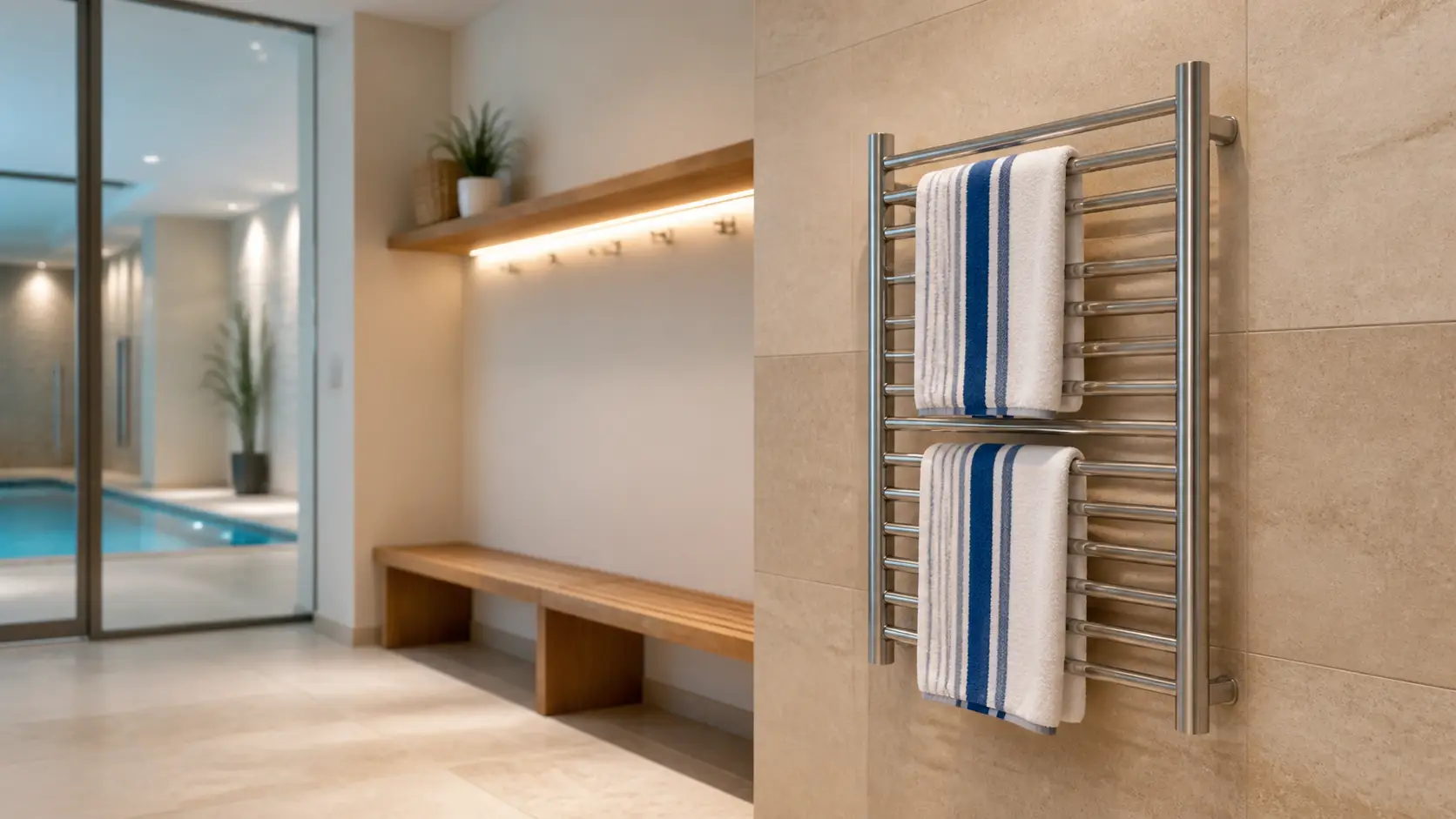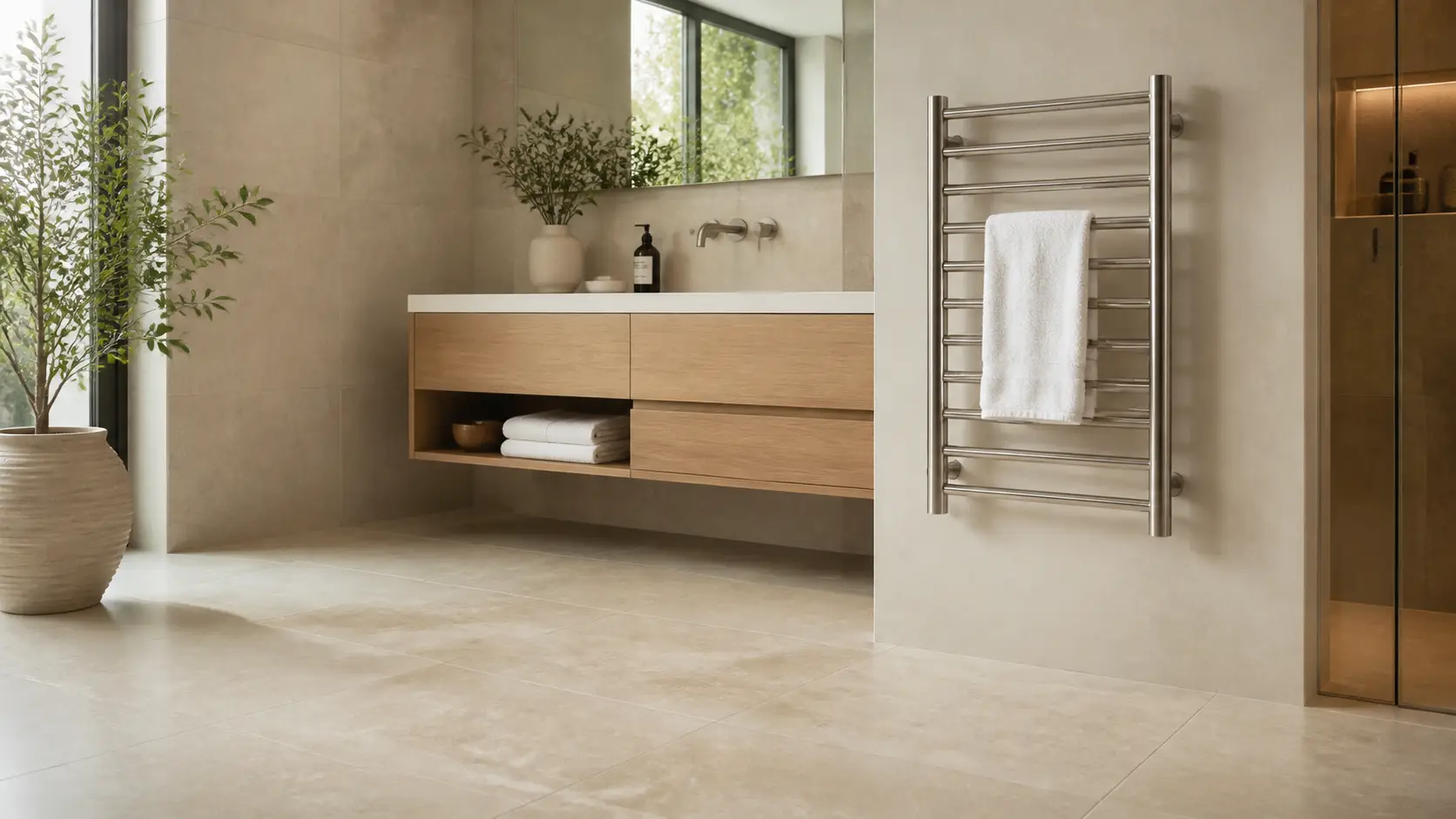
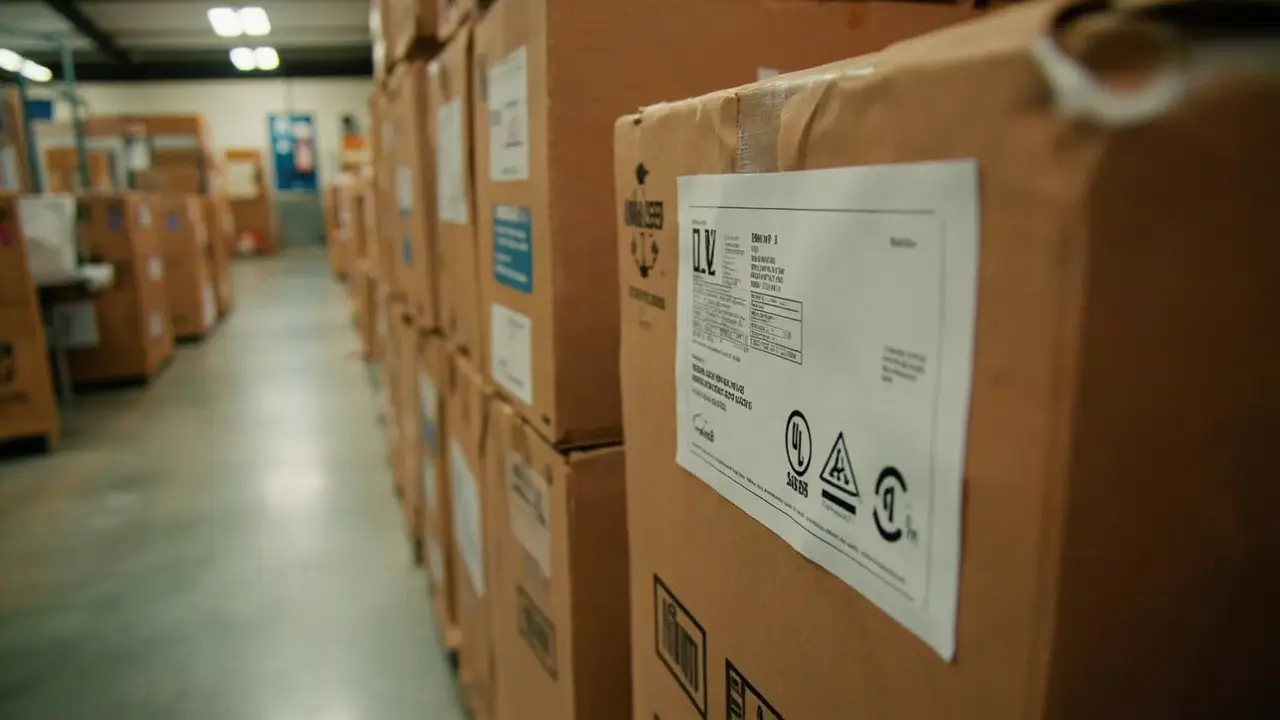
Commercial projects in the US have a paperwork problem. Before a single heated towel rack goes into a hotel bathroom or apartment building, someone has to sign off on whether the product is actually legal to install there. That sign-off depends on certifications — and if you’re sourcing from a manufacturer who doesn’t have the right paperwork, your order can get held up at the port, rejected by the building inspector, or worse, installed and then flagged during a property audit.
This covers what actually matters for heated towel racks in the US commercial market: what the certifications are, which projects need which ones, and how to avoid the documentation mistakes that cost buyers time and money.
Why Certifications Matter More in Commercial Work
In the residential market, product certification is sometimes treated as a suggestion. A homeowner buys a heated towel rack online, installs it themselves, and unless something goes visibly wrong, nobody checks much. Commercial projects are different.
Property developers, hotel operators, and general contractors working on commercial jobs need to verify that every fixture meets the relevant safety standards. Building inspectors will ask for documentation. Insurance carriers will ask for documentation. If you’re outfitting a hotel that eventually gets acquired or refinanced, due diligence reviews will ask for documentation going back years.
A heated towel rack without the right certifications isn’t just a compliance risk — it’s a liability issue. If a product causes a fire and it turns out to lack UL listing, the property owner’s insurance may not cover the claim.
UL Certification: The Non-Negotiable Starting Point
UL (Underwriters Laboratories) listing is the baseline certification you’ll encounter for any electrical product sold and installed in the US. A UL-listed product has been tested and found to meet their safety standards for electrical fire risk, shock hazard, and related concerns.
For heated towel racks specifically, the relevant UL standard is typically UL 964 — the standard for Electric Spa or Hot Tub Equipment — though depending on the product’s construction and heating method, other standards may apply.
What “UL Listed” Actually Means
A manufacturer earns UL listing by submitting product samples and technical documentation to UL for testing. UL engineers evaluate the product’s electrical design, heating elements, materials, and construction. If everything passes, the manufacturer can label the product “UL Listed” and use the UL mark in marketing and packaging.
This testing isn’t one-time. UL conducts periodic factory inspections and may require ongoing testing of production samples to maintain listing. Manufacturers who cut corners on production quality can lose their UL listing, which means any product already installed may need to be re-evaluated.
What UL Listing Covers
UL listing for a heated towel rack addresses several safety concerns relevant to bathroom installation:
- Electrical fire risk: the heating element, wiring, and controls must be designed to prevent overheating and ignition.
- Shock hazard: all electrical components must be properly insulated and grounded.
- Moisture exposure: the product must perform safely when exposed to bathroom humidity and splashing.
- Cord and plug integrity: if the product includes a cord and plug rather than hardwired installation, the cord must meet strain relief and ampacity requirements.
Verifying a Manufacturer’s UL Listing
Don’t take a manufacturer’s word for it. Anyone can claim their product is “UL Listed.” Verifying it takes about two minutes.
Go to ul.com and use the UL Product iQ database. Search by manufacturer name and product type. You’ll see whether a UL listing exists, what standard it was tested to, and when the listing was last updated.
If a manufacturer claims UL listing but you can’t find it in the database, that’s a serious red flag. Either the listing lapsed, it was never real, or the listing covers a different product than what you’re being sold.
IPX4 Waterproof Rating
IPX4 is an ingress protection rating from the IEC (International Electrotechnical Commission). The IP rating system uses two digits: the first indicates solid particle protection, the second indicates liquid protection. “X” means solid particle protection wasn’t rated; “4” means the product is protected against water splashed from any direction.
IPX4 means the product can handle water splashing onto it without the electrical components getting damaged or presenting a shock hazard. This matters for bathroom installations because heated towel racks sit above baths and showers, and regular use involves exposure to water vapor and occasional splashing.
Is IPX4 Required by Code?
The NEC (National Electrical Code) doesn’t explicitly require IPX4 for bathroom towel warmers. What it requires is that electrical products installed in wet locations be “suitable for the location.” For a bathroom, that means a product rated for moisture exposure.
IPX4 is the widely-accepted minimum rating for a heated towel rack installed in a bathroom zone near water. Products with lower ratings may not meet the NEC’s suitability standard for bathroom installation.
When specifying heated towel racks for a commercial bathroom project, requiring IPX4 as a baseline specification eliminates the ambiguity. Your architect, engineer, or building inspector will understand the standard.
What IPX4 Doesn’t Cover
IPX4 addresses water splash from any direction. It doesn’t cover immersion — that’s a different standard, typically IPX7 or higher. IPX4 also doesn’t cover direct water jet exposure (which would be IPX5 or higher).
Hardwired vs. Plug-In: Electrical Code Implications
This is where commercial buyers get confused, and where the wrong choice can fail a building inspection.
A heated towel rack can be either hardwired (connected directly to the building’s electrical system via a junction box) or plug-in (connected via a standard cord and plug). The choice has code implications.
Hardwired Installation
Hardwired products are permanently connected to the building’s electrical system. They don’t have a visible cord and plug once installed. From an electrical code perspective, hardwired installation is the cleaner option for commercial bathrooms — no visible cord, no plug, no receptacle, and the connection is inside the junction box.
The NEC requires that products installed in wet locations be protected by a GFCI device. For hardwired products, this protection can be provided by a GFCI circuit breaker or a GFCI-protected circuit feeding the junction box.
Hardwired heated towel racks require an accessible junction box in the wall behind the product. During installation, the electrician connects the product’s wires to the circuit wires inside the junction box, then mounts the product to cover the box. The connection is not visible once installed.
Plug-In Installation
Plug-in products connect to a standard receptacle via a cord and plug. In a commercial bathroom, this creates a visible electrical connection that many building inspectors consider undesirable — a cord hanging from a wall-mounted fixture looks unfinished, and the receptacle may not meet GFCI protection requirements for the location.
The NEC generally allows plug-in heated towel racks in residential settings. In commercial installations — hotels, office buildings, apartment complexes — building inspectors often require hardwired installation.
If you’re specifying products for a commercial project and you know the architect or inspector will prefer hardwired units, make this clear to your manufacturer early. Some product lines offer both configurations from the same base model. Others are hardwired only.
The GFCI Requirement
Regardless of hardwired or plug-in installation, a bathroom installation requires GFCI protection. The circuit feeding the heated towel rack must either be on a GFCI-protected circuit breaker or connect through a GFCI outlet or GFCI-protected device.
When specifying heated towel racks for commercial bathrooms, include GFCI requirements in your electrical specification. If a manufacturer doesn’t know what GFCI is, that’s a red flag.
Other Certifications You May Encounter
UL and IPX4 are the baseline. Depending on the project type and jurisdiction, you may also see the following.
Energy Star
Energy Star certification is voluntary, not required. Products that meet EPA energy efficiency standards earn the label. For heated towel racks, Energy Star is relevant for residential and light commercial buyers who care about energy consumption.
If you’re specifying for a project where sustainability credentials matter — LEED certification, Green Globes, or similar — Energy Star adds a point. It’s not required, but it’s worth noting if your client’s project is chasing a green rating.
CEC (California Energy Commission) Title 20
California has stricter efficiency standards for certain products under Title 20. If you’re specifying heated towel racks for a project in California, check whether Title 20 applies to your product category and whether the manufacturer has the required documentation.
NSF International
Some commercial bathroom specifications require NSF certification, particularly for products used in food service, healthcare, or educational settings. NSF certification addresses food-safe materials and sanitation. It’s not typically required for standard hotel or apartment installations, but check the spec if you’re working on a hospital, clinic, or food service environment.
The Documentation Checklist for Commercial Buyers
Before placing an order for heated towel racks for a US commercial project, confirm the following with your manufacturer:
- UL listing: verify the product is UL listed in the UL Product iQ database, and request a copy of the UL test report.
- IPX4 rating: confirm the product is rated IPX4 or higher. Request the IEC test report if available.
- Installation type: confirm whether the product is hardwired, plug-in, or available in both configurations.
- GFCI compatibility: confirm the product works with GFCI-protected circuits.
- Documentation package: request UL test reports, IPX4 test certificates, installation instructions, and electrical schematic if needed for the building inspector.
The Common Mistakes That Cost Money
Several mistakes come up repeatedly for buyers who’ve been through this process.
Buying based on price without verifying certifications. A manufacturer offers significantly lower pricing than competitors. You order 300 units. The goods arrive at the port. Your customs broker flags that the products lack UL documentation. The shipment is held. You pay demurrage. Then you find out the “certification” was never real.
Assuming “ETL Listed” is equivalent to “UL Listed.” ETL (Intertek) is a Nationally Recognized Testing Laboratory (NRTL) just like UL. Products tested and listed by ETL meet the same safety standards as UL-listed products, and both are acceptable to building inspectors. But if the spec explicitly requires “UL Listed” and the product is only ETL listed, you’ll need a written variance from the building department. Don’t assume they will grant it.
Not specifying hardwired vs. plug-in early enough. If the spec calls for hardwired and you order plug-in units, you’ve got the wrong product. Some manufacturers can convert a plug-in unit to hardwired in production; others can’t. Changing the configuration after production starts means a new lead time.
Forgetting the jurisdiction. Different cities and states have different inspection cultures. Some inspectors are strict about certifications and code compliance. Others are more flexible. Know your jurisdiction and plan accordingly.
Wrapping Up
Certifications for heated towel racks in the US commercial market aren’t optional add-ons. They’re the entry fee for a legal installation. UL listing and IPX4 rating are the minimum requirements. Hardwired installation is the standard expectation in commercial bathrooms. Every buyer who skips the documentation step learns the hard way that certifications cost less than a held shipment or a failed inspection.
If you’re sourcing for a project and want to verify that a manufacturer’s certifications will hold up to US commercial inspection, reach out. This is the kind of issue I can usually sort out within a day.
Need help verifying certifications for a US commercial project? Contact us to discuss your specification requirements.