I’ve been tracking Amazon sales data for towel warmers since 2022, and something odd happened in late 2024. Wall-mounted units — the ones that have dominated the category for years — started flattening out. Meanwhile, freestanding heated towel racks jumped over 50% in average monthly sales.
I’m not convinced this means wall-mounted models are dying. It probably just means a lot of buyers spent years choosing the wrong type for their actual bathroom, and the market is finally catching up.
If you’re stuck deciding between these two formats, here’s what the sales numbers and installer complaints actually tell us.
At a Glance: Quick Comparison
| Freestanding | Wall-Mounted | |
|---|---|---|
| Installation | Plug & play, zero tools | Drill required; recessed needs electrician |
| Best for | Renters, flexible layouts | Homeowners, permanent setups |
| Typical bars | 5–6 bars | 8–10 bars |
| Heat-up time | ~10 min (PTC) | ~15–20 min |
| Avg. price | $90–$180 | $80–$250 + install |
| Portability | Move anywhere | Fixed to wall |
| 2025 trend | ↑ +50% growth | → Flat / slight decline |
What Is a Freestanding Towel Warmer?
A freestanding towel warmer is a heated rack that sits on the floor and plugs into a standard outlet.
Key features:
- 5–6 bars — enough for 1–2 large towels
- Weight: 6–10 lbs (about as heavy as a loaded toaster oven)
- Setup time: Under 60 seconds
- No drilling, no wiring, no commitment
The main selling point is straightforward: you can put it beside your bathtub on Tuesday and move it to the guest room on Friday.
Most of the units driving this 2025 growth are five-bar and six-bar models with digital timers and PTC heating elements. PTC tech has been around for a while, but Chinese factories have only recently started putting it into freestanding units at consumer prices.
Why PTC matters: PTC heats up in about 10 minutes, while older alloy-wire designs can take 20–30 minutes to reach full temperature.
What Is a Wall-Mounted Towel Warmer?
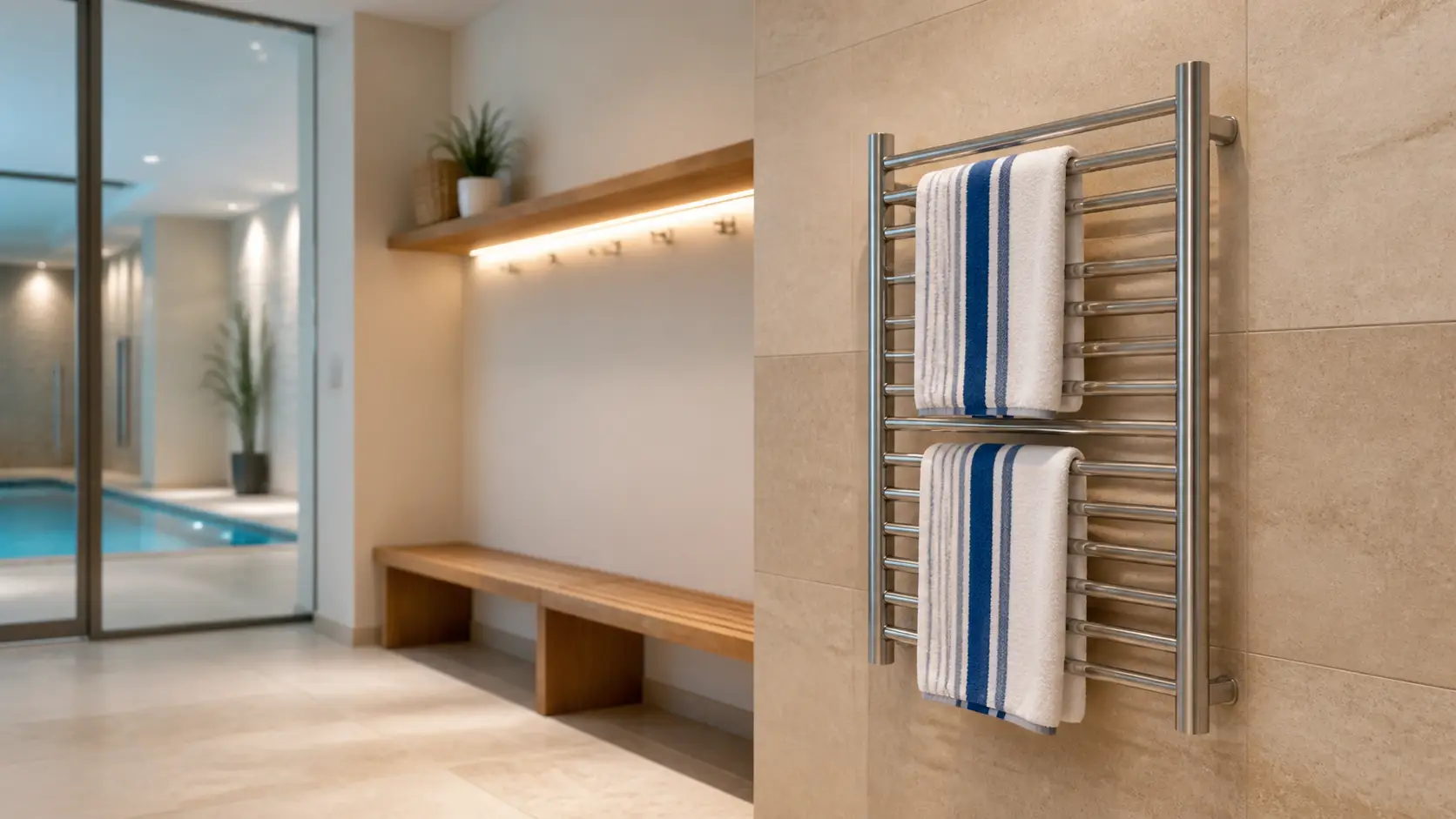
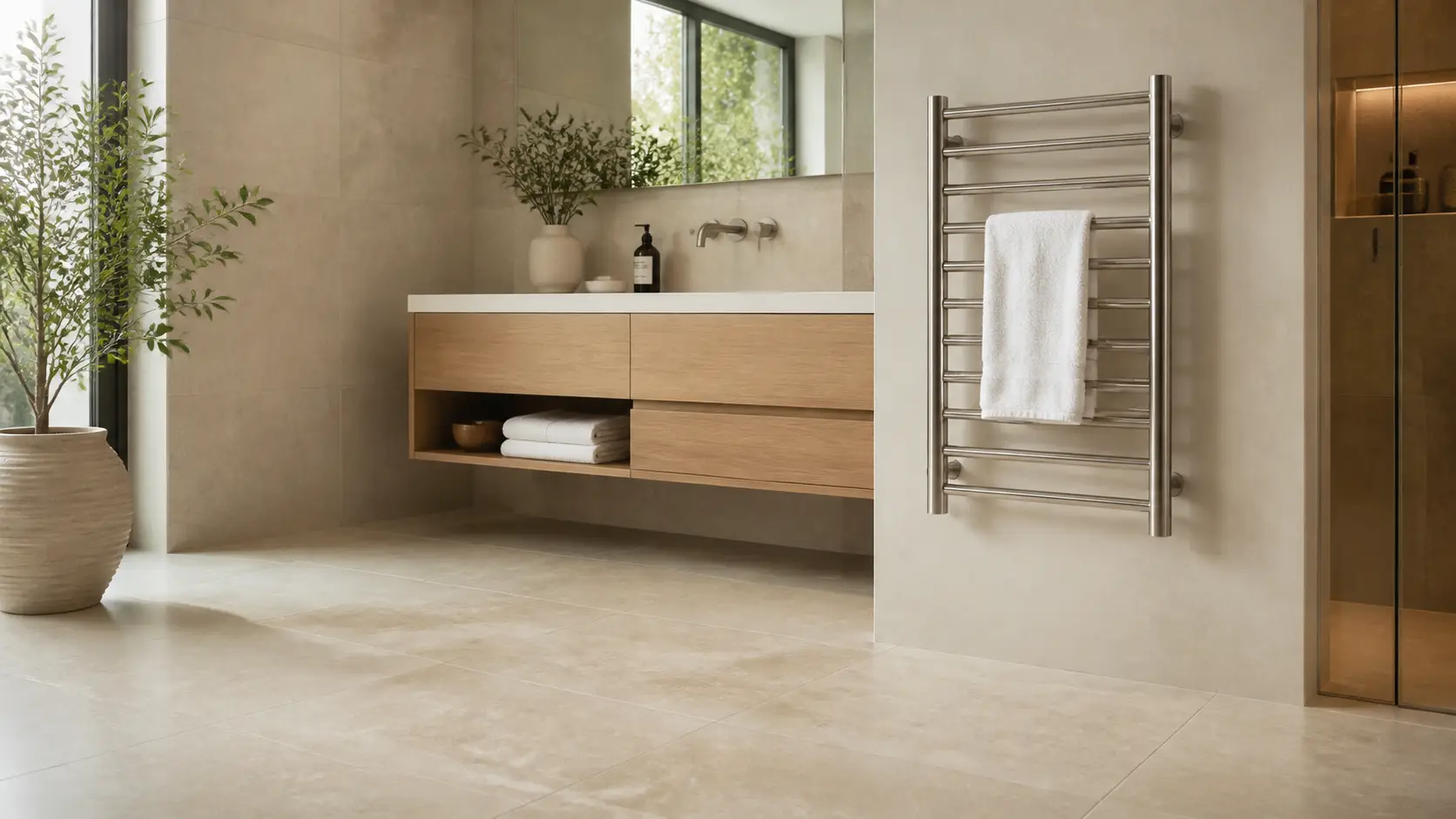
This is the traditional format. It attaches directly to your bathroom wall.
Key features:
- 8–10 bars — fits 2+ bath sheets plus hand towels
- Zero floor space used
- Two install types:
- Surface-mounted — plugs into nearby socket, visible cord
- Recessed — wiring hidden inside wall, clean look
The extra capacity helps if you have a family of four sharing one bathroom. You can hang two bath sheets and a hand towel on a 10-bar unit and still have space between them for air to move.
The downside? Permanence. Once it’s up, you’re not moving it without patching drywall. And if you want the clean recessed look with no visible cord, you need to plan that during a renovation.
Head-to-Head: 5 Key Differences
1. Installation Effort
Freestanding:
✅ Unbox, stand up, plug in — done
❌ No tools, no drilling, no electrician
Wall-Mounted:
⚠️ Surface-mounted = weekend DIY project (drill + wall anchors)
⚠️ Recessed = electrician + open walls ($200–$400 install cost)
Real-world note: A plumber I know in Florida says he gets maybe one call a year about a freestanding unit tipping over. Almost always, the buyer went for the cheapest no-name model they could find.
2. Space & Placement
| Scenario | Winner | Why |
|---|---|---|
| Bathroom < 40 sq ft | Wall-mounted | Saves precious floor space |
| Weird layout / corners | Freestanding | Place heat exactly where you want it |
| Large family bathroom | Wall-mounted | 8–10 bars handle more towels |
Freestanding models are smaller than people expect. A standard five-bar unit takes up roughly 16″ × 10″ of floor space.
3. Heating Performance
Drying speed:
– 10-bar wall-mounted: 45–60 min for 2 large bath towels
– 6-bar freestanding: 60–90 min for the same load
But: The gap is getting smaller. Newer freestanding units with PTC heating + auto shut-off are scoring higher in customer satisfaction than basic wall-mounted units without timers.
Buyers seem to care more about reliable temperature control than just having more bars.
4. Flexibility
This is why freestanding units are trending right now.
| Freestanding | Wall-Mounted |
|---|---|
| Move to guest bedroom when relatives visit | Fixed permanently |
| Take with you when you move apartments | Stays with the house |
| Store in closet between Airbnb bookings | Adds resale value (if next owner likes the location) |
5. Price
| Type | Price Range | Extra Costs |
|---|---|---|
| Wall-mounted plug-in | $80–$120 | None (DIY) |
| Wall-mounted recessed | $150–$250 | + $200–$400 installation |
| Freestanding 5-bar w/ timer | $90–$120 | None |
| Freestanding 6-bar PTC | $130–$180 | None |
Freestanding prices have gotten surprisingly competitive in 2025.
Which One Should You Choose?
Forget the trend for a second. The right choice depends on your bathroom, not the market.
Pick Freestanding If:
☑️ You rent and can’t drill into walls
☑️ You want to move the heater between rooms
☑️ Your bathroom layout makes wall placement difficult
☑️ You only need it for 1–2 towels
☑️ You plan to use it seasonally or in a guest bathroom
Pick Wall-Mounted If:
☑️ You own the property and want a permanent fixture
☑️ You have a large family and need the extra bar capacity
☑️ You’re already renovating and can hide the wiring
☑️ Floor space is genuinely tight
☑️ You want a clean, built-in look
The Bottom Line
Honestly? Neither is objectively “better.”
The freestanding surge isn’t happening because wall-mounted units are bad. It’s happening because a lot of people bought wall-mounted units when they actually needed portability, and vice versa.
If you’re buying for yourself: Match the unit to your space and your habits.
If you’re in the business of selling these things: The data is pretty clear for 2025 — freestanding models with timers and PTC heating are where the growth is.
Related Reading:
– Heated Towel Rail Installation Guide: Surface-Mounted vs Recessed
– Smart Features in Heated Towel Rails: A Complete Guide