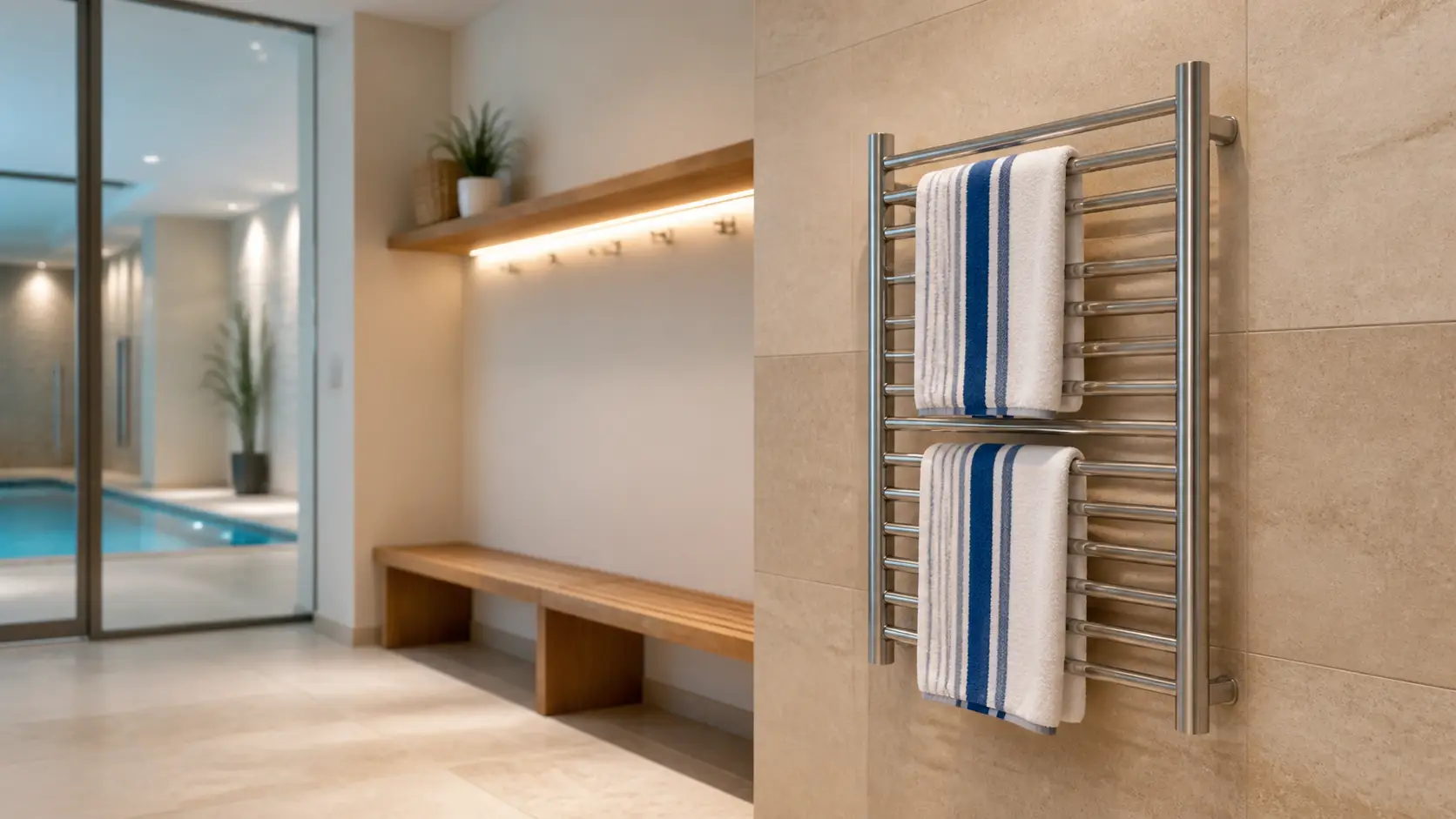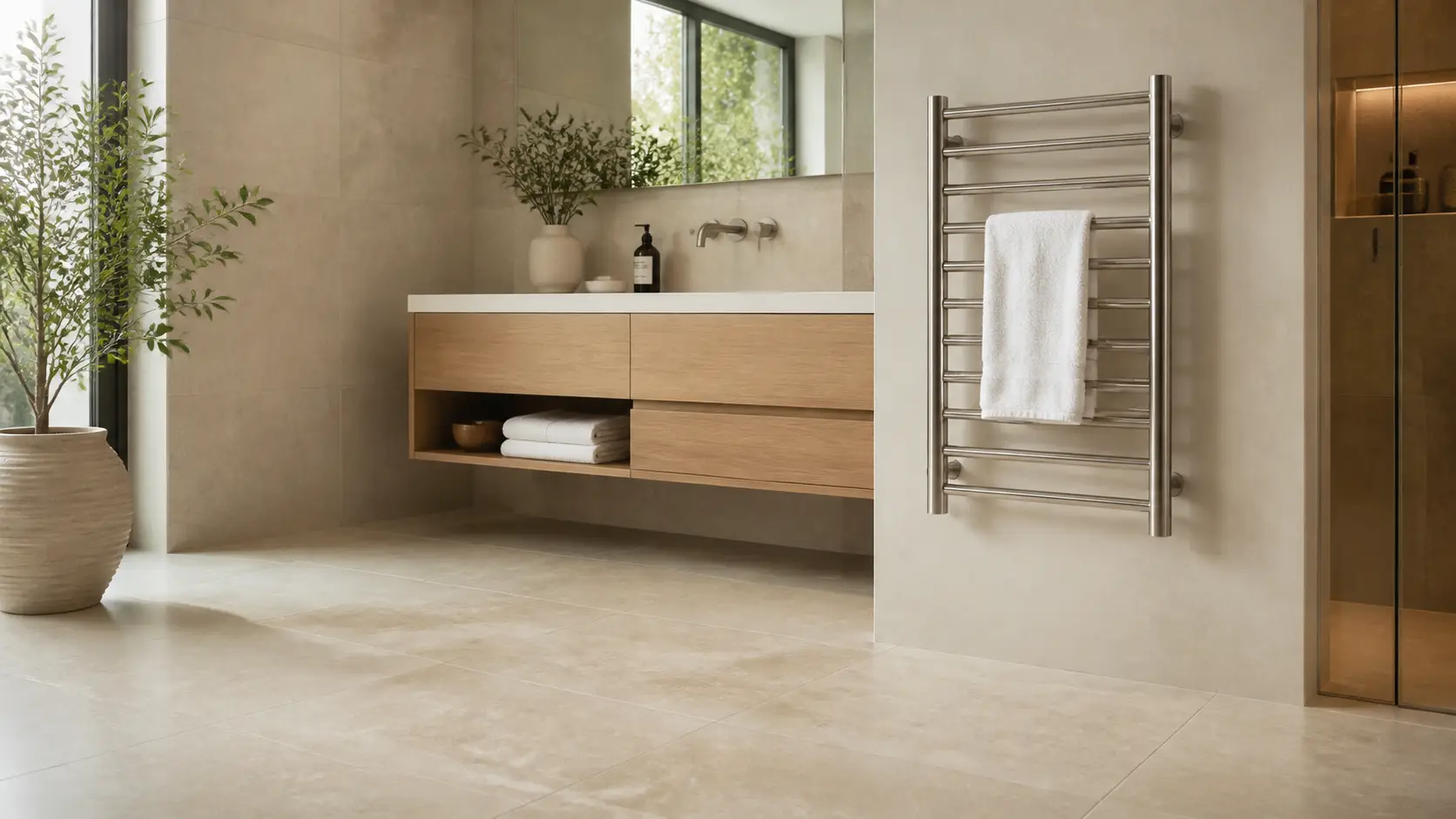
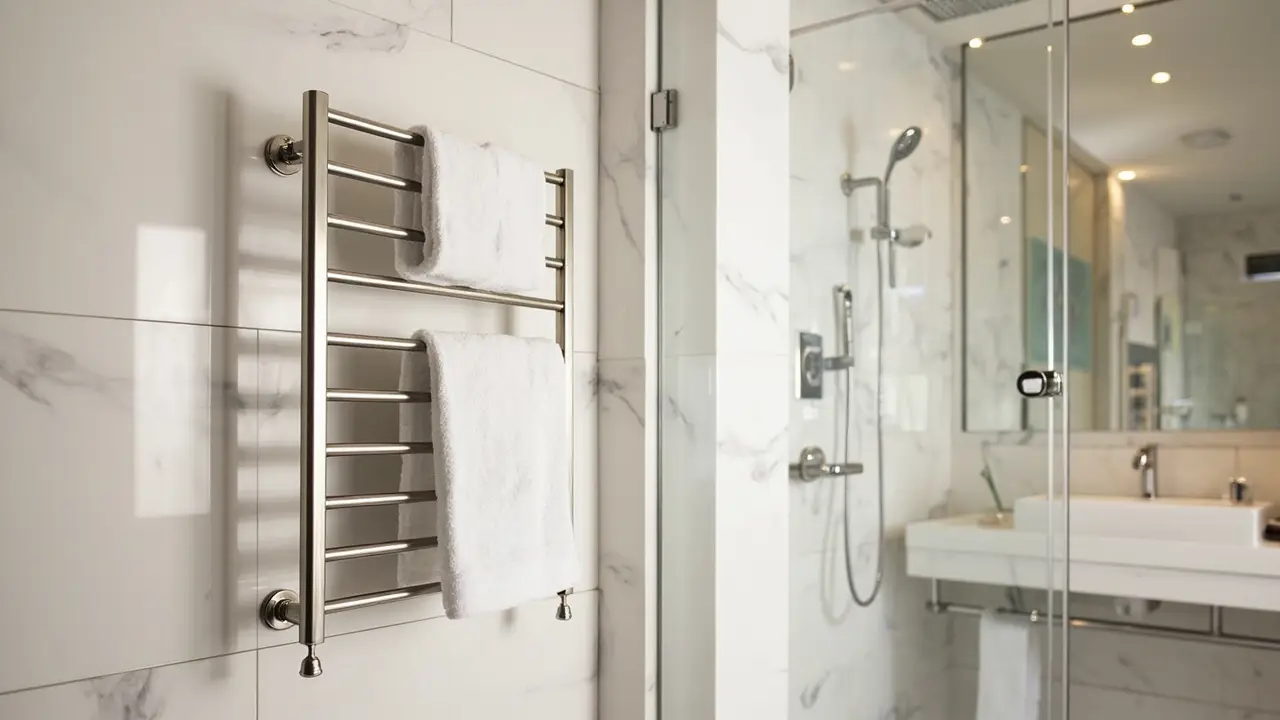
When you’re sourcing heated towel racks for a hotel renovation, a property development, or a bathroom upgrade, the stakes are different from a typical consumer purchase. You need products that perform reliably under heavy daily use, meet specific safety certifications for your target market, and arrive on time — in bulk. Get the wrong specification and you’re looking at costly reorders, client complaints, and project delays that eat into your margin.
This guide covers everything a procurement manager, a hotel project manager, or a bathroom designer needs to know before placing a bulk order for electric towel warmers or towel radiators. We’ll look at heating technologies, materials, sizing, certifications, and how to evaluate a manufacturer — so you can source with more confidence and fewer surprises.
Why Heated Towel Racks Matter in Commercial and High-Volume Residential Projects
In a hotel bathroom or a high-end residential development, a heated towel rack does more than dry towels. It contributes to the overall sense of luxury that guests or residents notice — and that developers use in their listings. A warm, dry towel after a shower has become an expected amenity in mid-range and upscale properties across North America, Europe, and Australasia.
From a building perspective, an electric towel warmer also helps manage moisture in the bathroom, which means less mold and lower long-term maintenance costs — something property managers tend to appreciate when you’re trying to justify the specification to a client.
Key B2B benefits at a glance:
- Guest/resident satisfaction and perceived property value
- Reduced mold and moisture-related maintenance claims
- Energy-efficient bathroom heating with programmable timers
- Solid ROI when specified correctly for the property type
Understanding Heating Technologies: Which One Fits Your Project?
Not all heated towel racks heat the same way. The technology affects installation requirements, energy consumption, and long-term maintenance — all critical factors in a commercial context.
Electric Heating (Dry Element)
Electric models use a dry heating element — typically a carbon fiber heating cord or a PTC (Positive Temperature Coefficient) heating cable — to warm the rail directly. No plumbing is involved.
Advantages for B2B buyers:
- Easier retrofit installation; no connection to the central heating system needed
- Independent operation via a timer or wall switch
- Lower installation cost in existing buildings
- Precise temperature control with thermostatic controls
Common use cases: Hotels and guesthouses where bathroom layouts don’t align with existing central heating, or where you need per-room temperature control to manage energy costs across the property.
Fluid-Filled (Hydrogenic) Heating
Fluid-filled towel radiators use a sealed network of pipes filled with a heat-transfer fluid — usually water or a glycol mixture — warmed by an electric element. They retain heat longer and distribute warmth more evenly across the rail’s surface.
Advantages for B2B buyers:
- More even surface temperature across all bars
- Better heat retention — the rail stays warm even after the element switches off
- Often preferred in European and UK markets for their aesthetic symmetry
Considerations: Installation typically requires connection to a power source but can also be dual-fuel (connected to both the central heating system and an electric element). This flexibility is valuable in hotel projects where some bathrooms may have different heating infrastructure.
Hybrid / Dual-Fuel
A dual-fuel heated towel rack connects to both the central heating system and a standalone electric element. When the central heating is off — summer months, for example — the electric element takes over. This is the most versatile configuration for hotels and commercial properties in temperate climates.
Best for: Projects in Northern Europe and the UK where heated towel racks are expected year-round but central heating is seasonal.
Material Comparison: Stainless Steel vs. Brass vs. Aluminum
The material affects durability, corrosion resistance, aesthetic finish, and ultimately, the price point. Here’s how the three main materials stack up for commercial use.
| Material | Durability | Corrosion Resistance | Finish Options | Price Point | Best For |
|---|---|---|---|---|---|
| Stainless Steel | High | Excellent (304 grade) | Brushed, polished, matte | Mid-High | Hotels, high-humidity, coastal properties |
| Brass | High | Good (lacquered) | Polished chrome, gold, bronze | High | Luxury boutique hotels, high-end residential |
| Aluminum | Medium | Good (anodized) | Powder-coated colors, matte | Low-Mid | Budget projects, temporary installations |
Stainless Steel Heated Towel Racks: The Commercial Standard
Stainless steel heated towel racks dominate the hotel and commercial property sector for good reason. Grade 304 stainless steel holds up well against the constant moisture and cleaning chemicals that come with professional housekeeping.
Key specs to request:
- Grade 304 stainless steel (or 316 for coastal properties with salt-air exposure)
- IP44 or higher waterproof rating for bathroom installation
- Wattage: typically 50-300W depending on rail size and room coverage
Brass Heated Towel Racks: Premium Positioning
If your project targets the luxury segment — boutique hotels, high-end rental properties, premium residential developments — brass heated towel racks with polished chrome or gold finishes command a higher price point and help justify higher listing values. Brass conducts heat efficiently and allows for more intricate design details.
Considerations for bulk orders:
- Higher unit cost but stronger margin potential
- Specify lacquered vs. uncoated finish depending on the market
- UK and European buyers often prefer brass for traditional or heritage property renovations
Aluminum Heated Towel Racks: Cost-Effective Solutions
Aluminum towel racks are lightweight, heat up quickly, and come in a wide range of powder-coated finishes. For budget-conscious developers or rental property portfolios where unit economics are tight, aluminum offers a viable entry point.
The main drawback is dent resistance — aluminum dents more easily than steel — so factor in the traffic profile of the property.
Sizing Your Heated Towel Rack: Key Considerations for Projects
Getting the size right is one of the most common sources of error in bulk procurement. Too small, and towels don’t dry properly. Too large, and you’re paying for more energy consumption than necessary.
Room Size Guide
| Bathroom Size | Recommended Rail Width | Number of Bars | Typical Wattage |
|---|---|---|---|
| Small en-suite (4-6 m2) | 400-600mm | 4-5 bars | 40-80W |
| Standard bathroom (6-10 m2) | 500-600mm | 5-8 bars | 80-150W |
| Large bathroom / wet room (10-15 m2) | 600-800mm | 8-12 bars | 150-250W |
| Hotel suite / premium bathroom (15+ m2) | 800-1000mm+ | 12-20 bars | 250W+ |
These figures assume a standard ceiling height (2.4-2.7m). For vaulted or open-plan bathrooms, you may need to size up.
Bar Count and Towel Capacity
If the property will see heavy daily use — think a 200-room hotel at 80% occupancy — you need enough bar count to handle simultaneous drying. Each bar can hold one standard bath towel when unfolded. Budget for one bar per expected simultaneous user at peak times.
For hotel projects, a common specification is:
- One heated towel rack per room for rooms rated up to 4-star
- Two heated towel racks (or one oversized rack) per room for 5-star suites
- Staff areas (housekeeping closets, spa changing rooms) often benefit from a compact commercial towel warmer with higher wattage
Certifications Your Manufacturer Must Have
Certifications are non-negotiable in B2B sourcing. Selling into the UK, EU, North American, or Australasian markets requires compliance with specific safety and performance standards. Request documentation before placing a bulk order.
Key Certifications by Market
| Market | Required Certifications | What They Cover |
|---|---|---|
| UK | BEAB, WRAS, UKCA | Electrical safety, water quality, and compliance |
| EU | CE, EN 442 | Low Voltage Directive, Radiator efficiency standards |
| North America | UL / ETL, Energy Star (optional) | Electrical safety, energy efficiency |
| Australia / NZ | Watermark, RCM | Water efficiency, regulatory compliance |
| Global (general) | IP44 minimum for bathroom use | Water and dust protection rating |
A reputable OEM heated towel rack manufacturer will hold these certifications and provide documentation for each shipment. Be cautious of factories that cannot produce certificates on demand — this is a red flag for quality consistency.
Evaluating a Heated Towel Rack Manufacturer: What to Look For
When you’re ordering containers of electric towel warmers, you’re not just buying a product. You’re buying a partnership with a supplier who will be responsible for consistent quality across potentially hundreds of units.
Red Flags to Watch For
- No sample unit available before bulk order. A serious manufacturer will always offer a sample before a full order.
- Vague warranty terms. Look for at least 3-5 years on the heating element and 1-2 years on the finish.
- Can’t verify certifications. If they claim CE or ETL compliance but can’t share documentation within 48 hours, move on.
- Minimum order quantity far below industry norms. Quality production typically requires MOQs of 50-200 units for custom specifications. Unusually low MOQs may indicate substandard production methods.
Green Flags (What Good Suppliers Offer)
- In-house R&D team with CAD design capabilities for custom configurations
- Modular production lines that can accommodate mixed-specification bulk orders
- Private label / OEM programs — your brand on their product, with full custom packaging options
- Dimensional drawings and BIM objects for architects and interior designers on your team
- Responsive technical support — a dedicated export sales contact who speaks your language
Energy Efficiency: What Your End Customers Care About
Energy costs are a growing concern for hotel operators and property managers. An energy efficient heated towel rack is not just an environmental message — it directly affects operating costs across hundreds of rooms.
Ways to Improve Energy Efficiency
- Timer-integrated controls: Heated towel racks with integrated timers or smart thermostatic valves avoid 24/7 operation. Program them to activate 1-2 hours before typical morning check-out times.
- Dual-fuel flexibility: Dual-fuel towel radiators can run on central heating during winter months — more cost-effective than pure electric operation.
- Lagging and insulation: Some premium models offer insulated heating elements that retain warmth longer, reducing cycling frequency.
- Smart thermostatic valves: Connect to a building management system (BMS) to coordinate heating schedules across all rooms simultaneously.
How to Request a Bulk Pricing Quote from a Heated Towel Rack Factory
When you’re ready to move from project specification to procurement, here’s what a professional OEM quotation request should include:
- Target market and certification requirements (UKCA, CE, UL, Watermark, etc.)
- Heating type (electric dry element, fluid-filled, dual-fuel)
- Material and finish (304 stainless steel brushed; RAL 9016 white matt; polished chrome brass, etc.)
- Size and bar count (width x height x depth in mm)
- Wattage (standard or specified for room coverage)
- Quantity per shipment and number of shipments expected
- Custom packaging or branding requirements (private label, retail box, installation manual in target language)
- Required delivery window
A well-structured inquiry gets a well-structured response — typically a detailed quotation within 48-72 hours, including FOB or CIF pricing, lead times, and payment terms.
Final Thoughts
Heated towel racks are a high-visibility, high-impact specification in hotel and premium residential projects. Get them right, and they contribute to guest satisfaction and property value. Get them wrong, and you’re dealing with returns, reorders, and damaged client relationships.
The most successful B2B procurement for towel warmers starts with understanding your end user’s environment, specifying the right heating technology and material for that context, and sourcing from a manufacturer with documented quality certifications and a track record in commercial projects.
If you’re mid-specification and want a second opinion on which configuration makes the most sense for your target market, get in touch — I’m happy to review the project brief and recommend the optimal spec.
Ready to source? Get in touch for OEM / bulk pricing on heated towel racks tailored to your market and certification requirements. Lead times, samples, and custom branding available for orders of 50+ units.