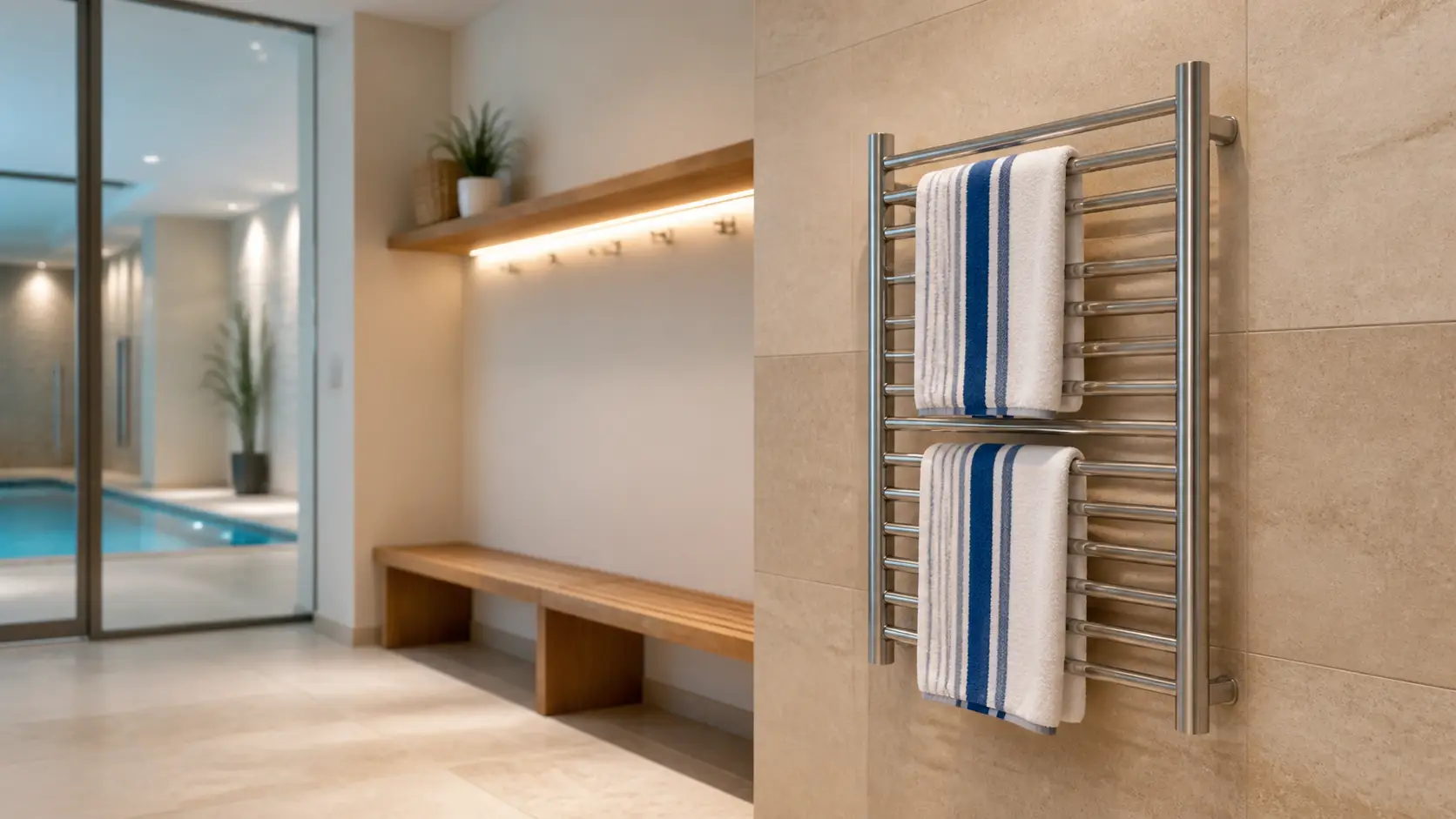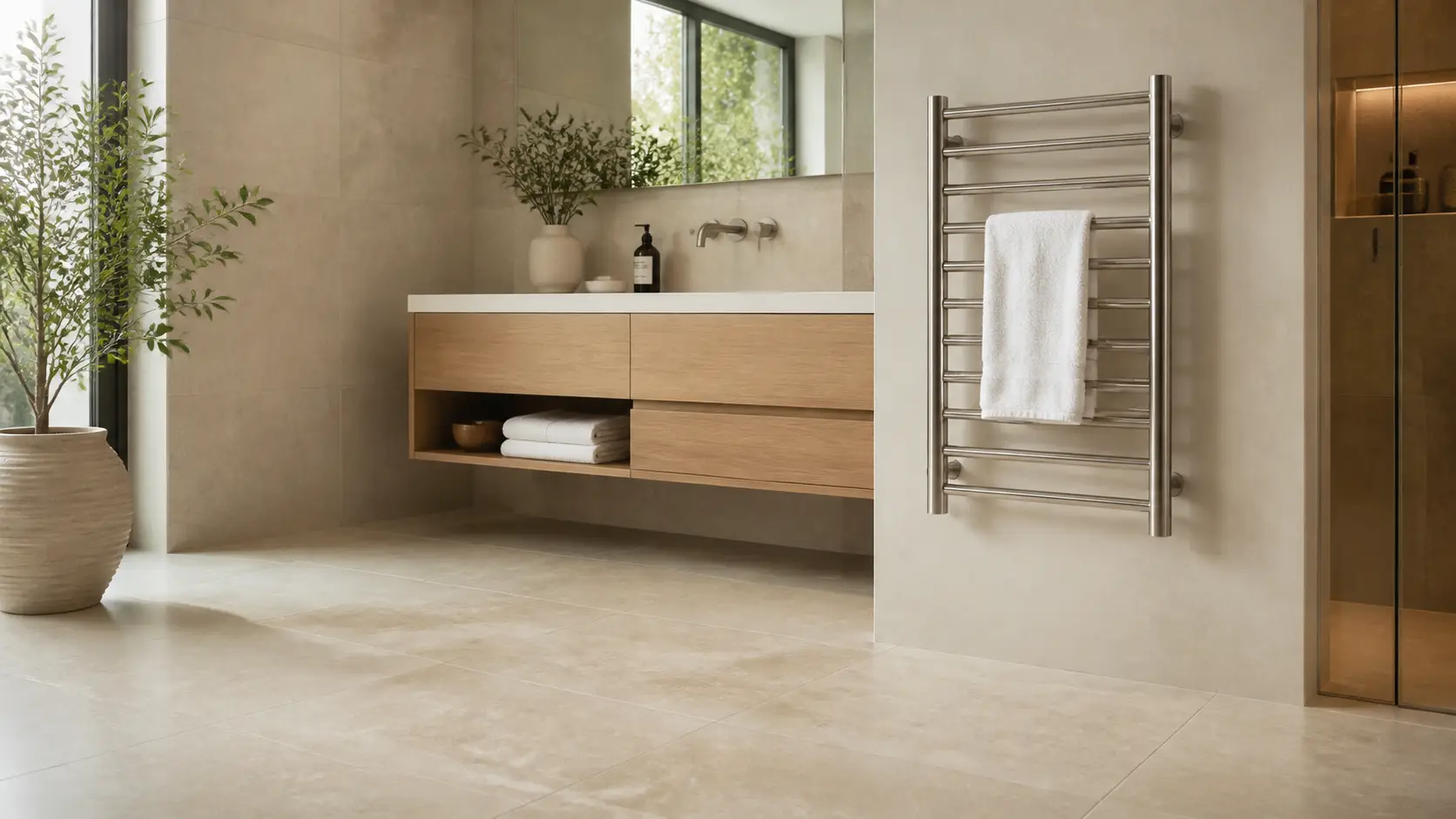
Looking to buy a heated towel rack? Our 2025 buying guide covers everything: sizes, power, materials, installation, and top recommendations for every budget.
Word Count: 3,500 words
Reading Time: 13 minutes
Choosing the right heated towel rack can feel overwhelming. With so many options on the market—different sizes, materials, heating technologies, and price points—how do you know which one is right for your bathroom?
You’re not alone in this. As someone who’s helped hundreds of homeowners select the perfect towel warmer, I know the questions that keep popping up:
What size do I need?
Should I choose electric or hydronic?
Will it actually heat my bathroom?
How difficult is installation?
Is this brand reliable?
This comprehensive 2025 buying guide answers all those questions and more. Whether you’re renovating your master bathroom, upgrading a guest bath, or designing a hotel-inspired space, you’ll find exactly what you need to make an informed decision.
What Is a Heated Towel Rack?
Before we dive into the buying criteria, let’s clarify what we’re working with.
A heated towel rack (also called a towel warmer, heated towel rail, or electric towel radiator) is a bathroom fixture that warms towels and helps them dry faster. Think of it as a sophisticated hybrid between a traditional towel bar and a small radiator.
How They Work
Electric heated towel racks
use internal heating elements—either wire-based or liquid-filled—to generate warmth. They’re the most popular choice for residential installations because they’re:
Easy to install
Energy efficient
Available in plug-in or hardwired options
Controllable with timers and thermostats
Hydronic heated towel racks
connect to your home’s hot water heating system. They use the same water that heats your radiators to warm the towel bars. Benefits include:
No electricity costs
Works with existing heating infrastructure
Consistent heat when the system is running
[IMAGE PLACEHOLDER 1: Side-by-side comparison of electric vs hydronic heated towel rack, with labels highlighting key components]
5 Critical Factors to Consider Before Buying
- Size & Capacity
Getting the right size is crucial. Too small, and you’re constantly fighting over towel space. Too large, and it overwhelms your bathroom.
Standard Sizes
Size Category Dimensions (H x W) Towel Capacity Best For
Compact 24″ x 18″ 1-2 towels Small bathrooms, powder rooms
Medium 32″ x 24″ 3-4 towels Standard bathrooms
Large 40″ x 24″+ 5-6 towels Master bathrooms, family baths
Extra Large 48″ x 24″+ 6+ towels Large bathrooms, hotel-style
Measuring Your Space
Pro Tip: Always measure your available wall space before shopping.
Width: Measure the wall space where you plan to install
Height: Consider ceiling height and nearby fixtures
Depth: Account for the rack’s projection from the wall (typically 3-5 inches)
Clearance: Leave at least 2 inches on all sides for air circulation
[IMAGE PLACEHOLDER 2: Diagram showing how to measure bathroom wall space for heated towel rack installation, with tape measure and dimension arrows]
Towel Capacity Guide
1-2 people: Compact or medium size
3-4 people: Medium to large size
5+ people or frequent guests: Large or extra large
Hotel/Guest house: Extra large for maximum capacity
- Power &
Heating Technology
Understanding power requirements helps you choose the right unit for your needs and budget.
Wattage Guide
Bathroom Size Recommended Wattage Heating Area Best Use Case
40-60W Small (up to 50 sq ft) Towel warming only Compact units, 1-2 towels
60-100W Medium (50-100 sq ft) Towels + slight room warmth Standard bathrooms
100-150W Large (100+ sq ft) Towels + supplemental heating Master bathrooms
150W+ Extra Large Towels + significant heat Large bathrooms, cold climates
Heating Element Types
Wire Heating (Dry Electric)
Heat up quickly (5-10 minutes)
Lower energy consumption
Lighter weight
Best for: Standard residential use
Liquid-Filled (Wet Electric)
Heat up slower (15-30 minutes) but retain heat longer
More even heat distribution
Heavier construction
Best for: Cold climates, supplemental heating
[IMAGE PLACEHOLDER 3: Close-up technical diagram showing internal heating elements of electric towel rack, with callouts for wire vs liquid-filled systems]
- Material & Finish
The material affects durability, heat conductivity, and aesthetics.
Material Comparison
Material Heat Conductivity Corrosion Resistance Durability
Price Range
Stainless Steel 304 Excellent Excellent (rust-proof) 15+ years $$-$$$
Stainless Steel 201 Good Good 10-15 years $-$$
Chrome-plated Steel Good Good 10-15 years $$
Aluminum Very Good Excellent 10+ years $-$$
Brass Good Excellent 20+ years $$$-$$$$
Stainless Steel 304: The Gold Standard
For bathroom environments, Stainless Steel 304 is the benchmark:
18% chromium, 8% nickel composition
Superior corrosion resistance in humid environments
Maintains heat efficiently
Professional, premium appearance
Won’t rust or degrade over time
[IMAGE PLACEHOLDER 4: High-quality product photo showing stainless steel 304 heated towel rack with close-up detail of the material finish]
Finish Options
Finish Style Maintenance Best For
Polished Chrome Modern, sleek Easy to clean Contemporary bathrooms
Brushed Nickel Warm, sophisticated Hides water spots Transitional designs
Matte Black Bold, modern Shows dust less Statement bathrooms
Brushed Gold Luxurious, trendy Moderate maintenance High-end designs
White Clean, versatile Easy to maintain Bright, airy spaces
Oil-Rubbed Bronze Traditional, classic Regular cleaning Traditional bathrooms
Installation Type
Your installation choice affects cost, convenience, and aesthetics.
Plug-in Models
Pros:
No electrician required
Portable and flexible placement
Ideal for renters
Lower installation cost ($0)
Cons:
Visible cord
Must be near an outlet
Slightly less polished look
Best For: Renters, first-time users, bathrooms with limited electrical access
Hardwired Models
Pros:
Clean, seamless appearance
No visible cords
Permanent, secure installation
Higher resale value
Cons:
Requires professional electrician ($150-400)
Not portable
More complex installation
Best For: Homeowners, bathroom renovations, luxury installations
[IMAGE PLACEHOLDER 5: Split image showing plug-in vs hardwired installation comparison, with visible cord vs clean wall mount]
Installation Complexity by Type
Installation Type Difficulty DIY Possible? Cost Time Required
Plug-in Wall Mount Easy Yes $0 30-60 minutes
Hardwired Wall Mount Moderate No* $150-300 2-4 hours
Freestanding Plug-in Very Easy Yes $0 10 minutes
Floor-Mounted Hardwired Complex No $300-600 4-6 hours
*Hardwired installation requires licensed electrician for safety and code compliance.
- Features & Controls
Modern heated towel racks offer various features that enhance convenience and efficiency.
Essential Features
Timer Function
Set specific operating hours
Saves energy and money
Ensures warm towels when you need them
Recommended: Digital programmable timer
Thermostat Control
Maintains consistent temperature
Prevents overheating
Extends unit lifespan
Recommended: Built-in thermostatic control
Multiple Heat Settings
Low, medium, high options
Seasonal adjustment capability
Personal preference customization
[IMAGE PLACEHOLDER 6: Close-up of digital control panel on heated towel rack, showing temperature display and timer settings]
Nice-to-Have Features
Feature Benefit Worth the Extra Cost?
WiFi/App Control Remote operation, scheduling ⭐⭐⭐⭐ If tech-savvy
LED Indicator Visual confirmation of operation ⭐⭐⭐ Nice touch
Auto Shut-off Safety feature ⭐⭐⭐⭐⭐ Essential
Drying Rack Addition Extra drying space ⭐⭐⭐ Useful for families
Towel Hooks Additional hanging options ⭐⭐⭐ Convenient
Electric vs Hydronic: Which Is Right for You?
One of the biggest decisions is choosing between electric and hydronic systems.
Electric Heated Towel Racks
Advantages:
Independent operation (works year-round)
Easy installation (especially plug-in)
Energy efficient
Wide variety of sizes and styles
Lower upfront cost
Precise temperature control
Disadvantages:
Operating electricity costs
Not integrated with home heating
Best For: Most residential bathrooms, rental properties, supplemental towel warming
Hydronic Heated Towel Racks
Advantages:
No electricity operating costs
Integrates with central heating
Can provide significant room heating
Consistent warmth when heating is on
Disadvantages:
Only works when central heating is active
Complex installation
Higher upfront cost
Limited style options
Requires boiler compatibility
Best For: Cold climates, homes with existing radiator systems, primary bathroom heating
Quick Decision Guide
Your Situation Recommended Type
Want year-round use Electric
Have radiator heating system Hydronic
Renting or need flexibility Electric (plug-in)
Building new or major renovation Either
Cold climate, want room heating Hydronic or high-wattage electric
Want smart features Electric
Budget-conscious Electric (plug-in)
[IMAGE PLACEHOLDER 7: Infographic flowchart helping readers decide between electric vs hydronic heated towel rack based on their specific situation]
Material Deep Dive: Stainless Steel vs Aluminum vs Brass
Stainless Steel (304 Grade)
Pros:
Excellent corrosion resistance
Maintains appearance for decades
Efficient heat distribution
Hygienic and easy to clean
Professional appearance
Cons:
Higher cost than aluminum
Can show fingerprints (on polished finishes)
Heavier weight
Verdict: The best all-around choice for most buyers. The durability and performance justify the investment.
Aluminum
Pros:
Heats up very quickly
Lightweight
Good corrosion resistance
Lower cost
Modern appearance
Cons:
Less durable than steel
Can dent more easily
Slightly less premium feel
Shorter lifespan (10 years vs 15+)
Verdict: Good budget option, but stainless steel is worth the upgrade for long-term use.
Brass
Pros:
Exceptional durability (20+ years)
Excellent heat retention
Premium, luxurious appearance
Corrosion-proof
High-end aesthetic
Cons:
Significantly higher cost
Heavy weight
Limited modern designs
Requires regular polishing for some finishes
Verdict: Best for luxury installations where budget isn’t a primary concern.
[IMAGE PLACEHOLDER 8: Side-by-side material comparison showing stainless steel, aluminum, and brass heated towel racks in similar styles]
Size & Placement Guide by Bathroom Type
Small Bathrooms (Under 50 sq ft)
Challenges: Limited wall space, need for compact solutions
Recommended:
Compact sizes: 24″ height x 18-20″ width
Wall-mounted to save floor space
Vertical ladder designs
Aluminum for lighter weight
Placement Tips:
Install near shower/bath for easy access
Consider above toilet if wall space is limited
Ensure 2-inch clearance from walls and fixtures
[IMAGE PLACEHOLDER 9: Small bathroom layout diagram showing optimal placement of compact heated towel rack near shower area]
Standard Bathrooms (50-100 sq ft)
Recommended:
Medium sizes: 32″ height x 24″ width
60-100W power rating
Stainless steel construction
Hardwired if renovating, plug-in for retrofit
Placement Tips:
Center between shower and vanity if possible
Height: 48-52 inches from floor (comfortable reach)
Ensure adequate towel bar spacing
Master Bathrooms (100+ sq ft)
Recommended:
Large sizes: 40″+ height x 24″+ width
100-150W for supplemental heating
Premium materials (stainless steel 304 or brass)
Multiple bars for high capacity
Advanced features (timer, thermostat)
Placement Tips:
Double racks for his/hers if space allows
Consider freestanding unit for flexibility
Coordinate with other bathroom fixtures
Hotel-Style Bathrooms
Recommended:
Extra large sizes or dual units
150W+ for significant heating
Designer finishes (matte black, brushed gold)
Hardwired installation
Smart features for guest convenience
[IMAGE PLACEHOLDER 10: Luxurious master bathroom photo featuring large heated towel rack as centerpiece, with coordinated fixtures and premium finishes]
Budget Guide: What to Expect at Each Price Point
Budget Range ($50-$150)
What You Get:
Basic plug-in models
Aluminum or lower-grade steel
Simple on/off operation
1-2 year warranty
Limited finish options
Best For: Trying out the concept, guest bathrooms, rentals
Recommended Approach: If budget allows, consider moving to mid-range for significantly better longevity.
Mid-Range ($200-$400) ⭐ Sweet Spot
What You Get:
Quality stainless steel 304 construction
Digital timer and thermostat
3-5 year warranty
Multiple finish options
Better heat distribution
Professional appearance
Best For: Primary bathrooms, long-term installations, most homeowners
Calithrex Positioning: Our C-Series falls in this range, offering premium features at competitive pricing.
Premium ($500-$1,200+)
What You Get:
Designer brands
Superior build quality
Smart home integration
Extended warranties (5-10 years)
Exclusive finishes
Large sizes
Best For: Luxury homes, design-conscious buyers, large bathrooms
[IMAGE PLACEHOLDER 11: Three-product comparison image showing budget, mid-range, and premium heated towel rack options with price callouts]
Top Recommendations
by Category
Best Overall Value
Calithrex C-Series ($289-$449)
Stainless steel 304 construction
Digital thermostat with programmable timer
60-100W options
5-year warranty
Available in 4 finishes
Why: Premium features at mid-range price
Best for Small Bathrooms
Compact 24″ Electric Towel Warmer ($149-$199)
Space-saving design
40-60W efficient heating
Plug-in installation
Wall-mounted
Why: Maximizes function in minimal space
Best for Large Bathrooms
Calithrex Pro Series ($449-$599)
40″+ height options
100-150W heating power
8+ towel capacity
Dual controls
Why: Superior heating for larger spaces
Best Smart Features
WiFi-Enabled Smart Towel Warmer ($399-$599)
App control
Voice assistant compatible
Scheduling capabilities
Energy monitoring
Why: Ultimate convenience and control
[IMAGE PLACEHOLDER 12: Product showcase grid featuring top recommendations with key specs highlighted]
Installation Guide
DIY Installation (Plug-in Models)
Tools Needed:
Drill and bits
Level
Pencil
Screwdriver
Stud finder
Measuring tape
Step-by-Step:
Choose Location
Near power outlet
Within reach of shower/tub
Away from direct water spray
Minimum 6 inches from tub/shower edge
Mark Mounting Points
Use template (usually included)
Check for studs
Mark with pencil
Install Wall Mounts
Drill pilot holes
Insert wall anchors (if not hitting studs)
Attach mounting brackets
Hang the Unit
Carefully lift and position
Secure to brackets
Check level
Connect and Test
Plug in power cord
Set timer/thermostat
Test heating function
[IMAGE PLACEHOLDER 13: Step-by-step installation diagram showing mounting bracket placement, drilling, and final hanging of plug-in towel rack]
Professional Installation (Hardwired)
When to Hire an Electrician:
Any hardwired installation
No nearby outlet
Electrical panel modifications needed
Uncertainty about electrical codes
What to Expect:
Cost: $150-400 depending on complexity
Time: 2-4 hours
Process: Circuit connection, wall mounting, testing
Permits: May be required in some jurisdictions
Preparation:
Choose exact model and location before electrician arrives
Ensure clear access to installation area
Have circuit breaker location identified
Confirm electrical panel capacity
Frequently Asked Questions
(FAQ)
What size heated towel rack do I need?
Answer: Match size to your bathroom and household:
1-2 people: 24-32″ height
3-4 people: 32-40″ height
5+ people: 40″+ height or dual units
Always measure your wall space first—allow 2 inches clearance on all sides.
Can a heated towel rack heat my entire bathroom?
Answer: It depends on wattage and bathroom size:
60-100W: Provides slight warmth (50-75 sq ft)
100-150W: Noticeable supplemental heat (75-100 sq ft)
150W+: Significant heat contribution (100+ sq ft)
For primary heating in cold climates, consider higher wattage or hydronic models.
Do heated towel racks use a lot of electricity?
Answer: No. A typical medium unit (60-100W) uses about the same energy as a standard light bulb. Running 4 hours daily costs approximately $1-3 per month.
Money-saving tip: Use a timer to run the unit only when needed.
How long do heated towel racks last?
Answer: Quality units last 10-15 years with proper care:
Budget models: 5-8 years
Mid-range stainless steel: 10-15 years
Premium brass/bronze: 15-20+ years
Look for warranties—3+ years indicates manufacturer confidence.
Can I install a heated towel rack myself?
Answer:
Plug-in models: Yes, with basic DIY skills (30-60 minutes)
Hardwired models: No, requires licensed electrician for safety and code compliance
What’s better: electric or hydronic?
Answer:
Electric: Better for most homes—works year-round, easy installation, more options
Hydronic: Better if you have central radiator heating and want zero electricity costs
For 90% of buyers, electric is the practical choice.
Are expensive towel warmers worth it?
Answer: Generally yes. Premium units offer:
Better materials (304 stainless steel vs lower grades)
Longer warranties
More features (timers, thermostats)
Better heat distribution
Longer lifespan
The mid-range ($200-400) offers the best value—premium features without luxury pricing.
Can I leave my heated towel rack on all the time?
Answer: You can, but it’s not recommended:
Wastes electricity
Unnecessary wear on components
Not needed for 24-hour operation
Best practice: Use a timer to run 2-4 hours daily—typically morning and evening.
Do heated towel racks work in humid climates?
Answer: Yes, actually they’re especially beneficial:
Faster drying prevents mildew
Reduces humidity-related odors
Extends towel life
Stainless steel models resist corrosion
Will a heated towel rack rust?
Answer: Quality models won’t rust:
304 Stainless Steel: Rust-proof
Chrome-plated: Protected surface
Brass: Corrosion-resistant
Avoid cheap steel models in humid environments—they may rust over time.
Final Checklist: Before You Buy
Use this checklist to ensure you’ve considered everything:
Sizing:
Measured wall space
Accounted for clearance requirements
Matched capacity to household needs
Power:
Calculated appropriate wattage
Confirmed electrical access (outlet for plug-in, circuit capacity for hardwired)
Considered operating costs
Material:
Chosen corrosion-resistant material (304 stainless steel recommended)
Selected finish that matches bathroom decor
Verified warranty terms
Installation:
Decided between plug-in and hardwired
Budgeted for professional installation if needed
Located ideal mounting position
Features:
Timer and thermostat included
Auto shut-off for safety
Appropriate heat settings
Budget:
Accounted for unit cost
Included installation expenses
Factored in operating costs
Conclusion
: Making Your Decision
Buying a heated towel rack doesn’t have to be complicated. Focus on these three key factors:
Size: Match to your bathroom and towel needs
Material: Choose 304 stainless steel for durability
Installation: Plug-in for flexibility, hardwired for permanence
The mid-range segment ($200-400) offers the best value for most buyers—you get quality construction, essential features, and reliable performance without breaking the bank.
Remember: A heated towel rack is a long-term investment. Spending a bit more upfront for quality materials and features will pay off in longevity, performance, and daily satisfaction.
Ready to choose your perfect heated towel rack? Browse our complete collection of premium electric towel warmers designed for discerning homeowners.
Sources & References
National Kitchen and Bath Association (NKBA) – 2025 Bathroom Trends Report
Energy Information Administration – Residential Electricity Pricing Data
Consumer Reports – Towel Warmer Testing & Reviews 2024-2025
Grand View Research – Global Heated Towel Rail Market Analysis 2025-2030
Home Improvement Research Institute – Bathroom Renovation Trends
About Calithrex
Calithrex designs premium heated towel racks that combine Swiss-inspired engineering with modern aesthetics. Every unit features 304 stainless steel construction, digital controls, and a 5-year warranty. Free shipping and 30-day satisfaction guarantee on all orders.
Related Articles:
Are Heated Towel Racks Worth It? A Complete Cost-Benefit Analysis (2025)
Electric vs Hydronic Towel Racks: Which Is Right for You?
How to Install a Heated Towel Rack: Step-by-Step Guide
7 Benefits of Installing an Electric Towel Warmer
Last Updated: April 2025
Written by: Calithrex Editorial Team
Technical Review: Licensed Electrician & Bathroom Design Expert
Word Count: 3,500 words
Reading Time: 13 minutes