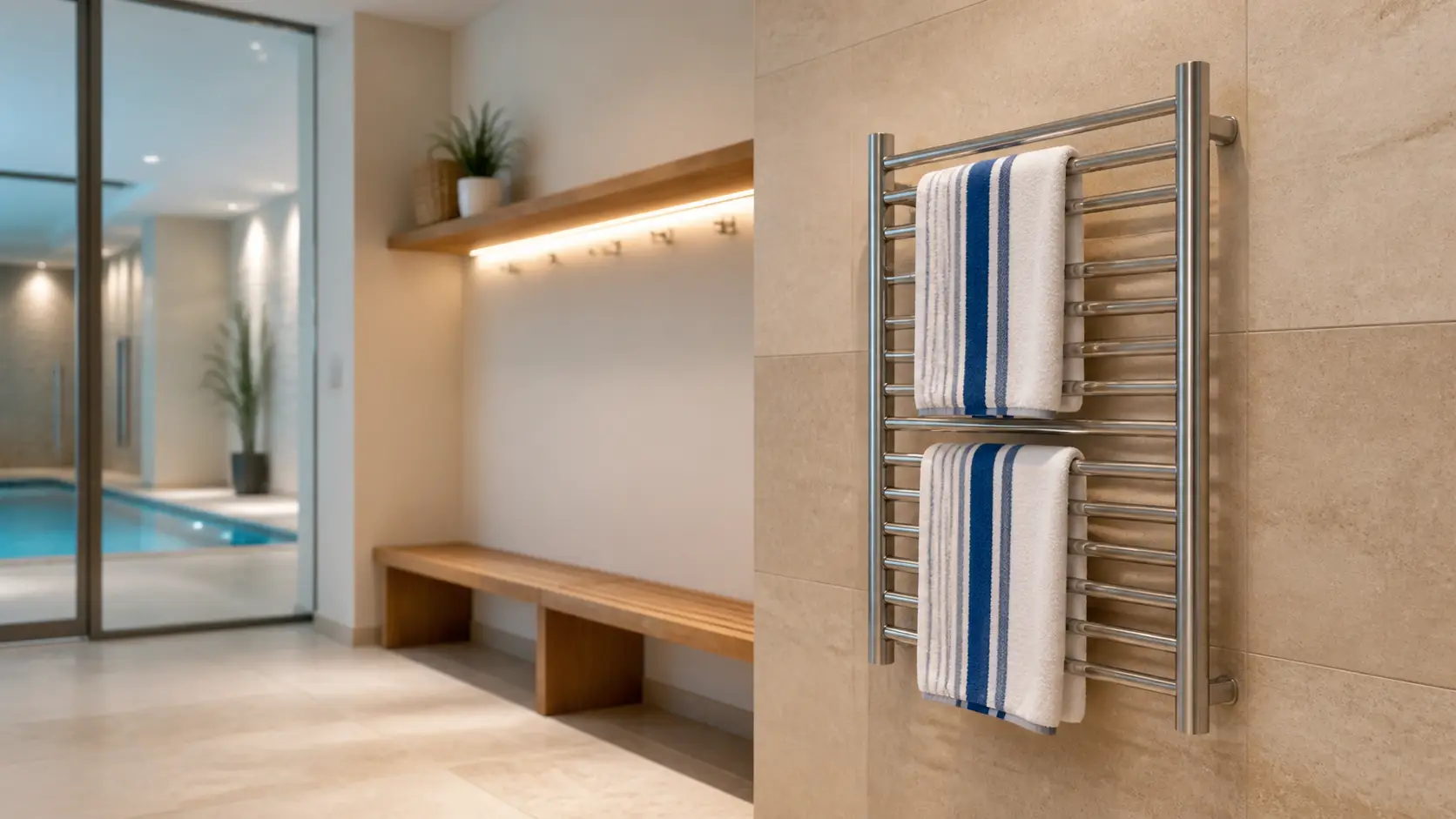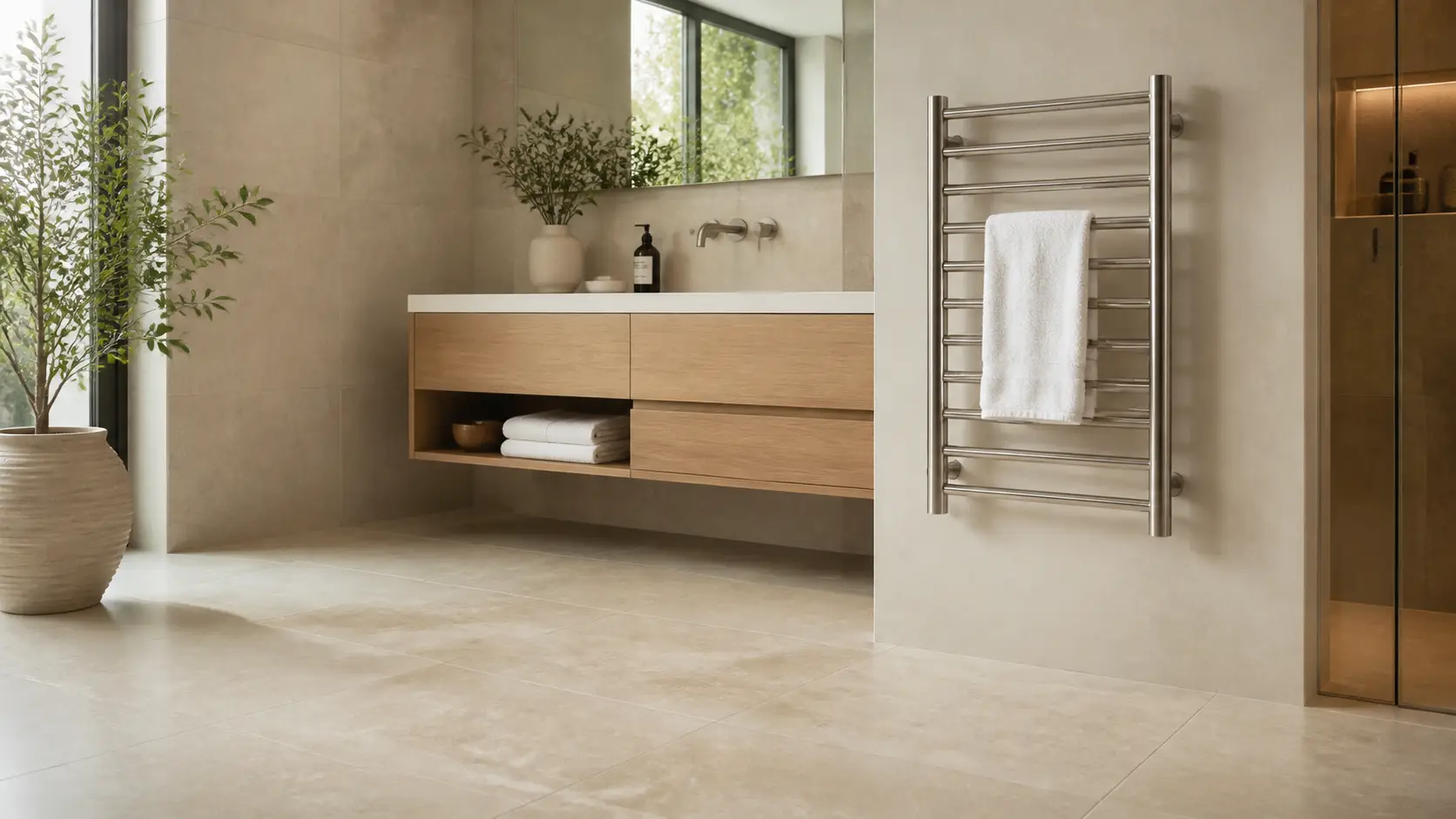
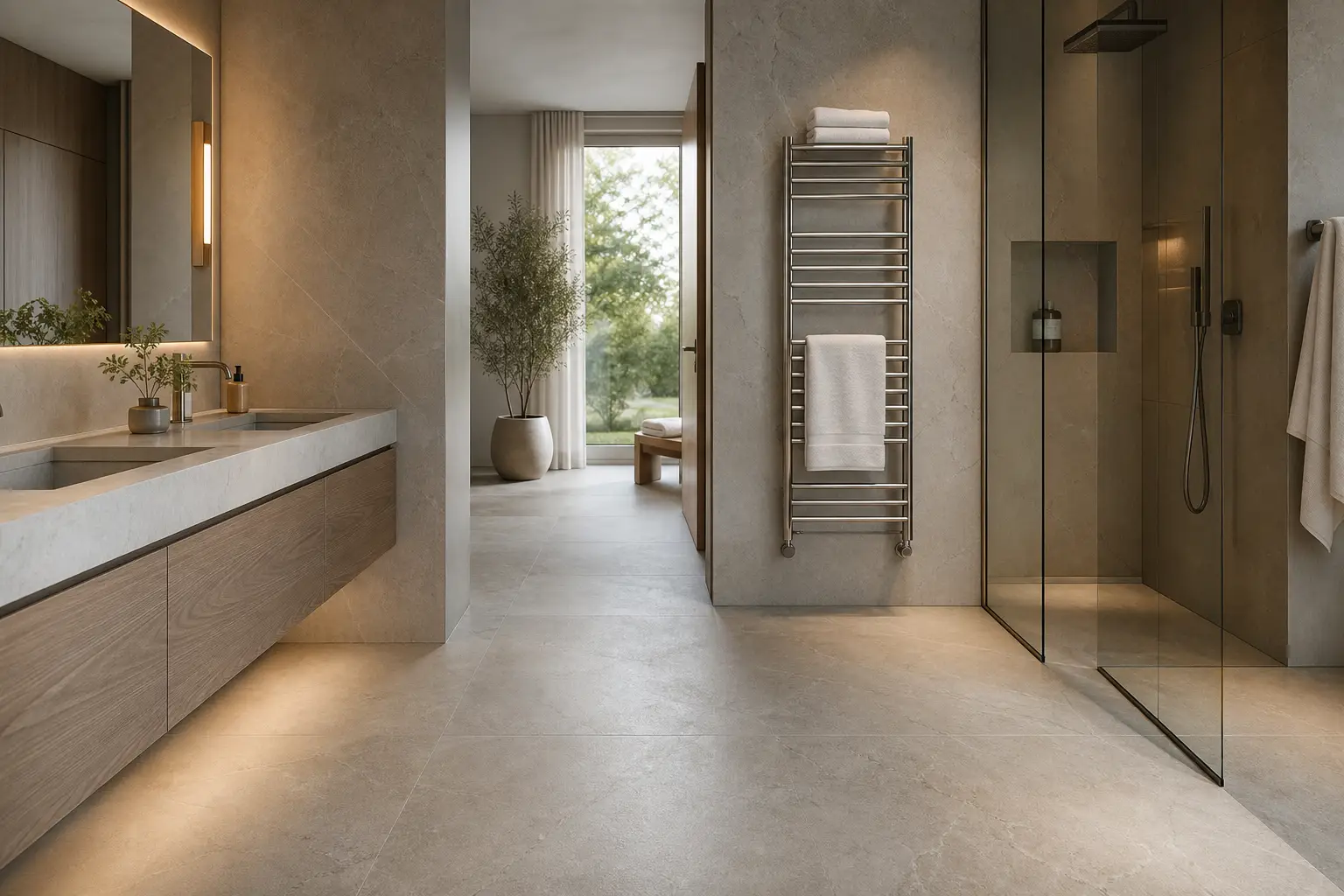
Bathroom flooring trends in 2026 are moving toward surfaces that look warm and refined while making wet bathrooms easier to use safely. The best flooring choices balance slip-aware texture, moisture resistance, easier cleaning, warmer colors, and a clear towel zone near the shower or bath. Heated towel racks fit into that plan because towel placement, dry walking paths, wall location, and electrical routing all affect how the bathroom works after a shower.
For homeowners, the goal is a floor that feels calm under daily use. For designers, contractors, hotels, apartments, and spa projects, the goal is more precise: choose flooring, towel storage, lighting, ventilation, and heating details early enough that the finished bathroom is attractive, maintainable, and practical.
What Is Changing in Bathroom Flooring for 2026?
The strongest direction is not one material. It is a planning shift. Bathroom floors are expected to support wellness-style design, safer wet zones, fewer maintenance problems, and better everyday comfort.
| 2026 flooring direction | What it means in practice | Heated towel rack connection |
|---|---|---|
| Slip-aware surfaces | Choose texture and finish for wet walking paths, not only appearance | Keep towels close enough to reduce dripping across the room |
| Warm neutrals | Beige, taupe, soft gray, stone-look, and wood-look tones feel calmer than cold white floors | Coordinate rack finish with faucets, hardware, and floor undertones |
| Larger tile formats | Fewer grout lines can make floors easier to clean visually and physically | Plan wall-mounted accessories before tile and wall finishes close |
| Curbless and wet-room influence | More continuous floors between shower and main bathroom | Place heated towel racks on the dry side of the wet zone |
| Moisture control | Flooring works best with ventilation and towel drying, not alone | Warm towels are a comfort layer, not a substitute for exhaust ventilation |
| Project standardization | Hotels and multifamily projects need repeatable, easy-clean specifications | Use consistent rack size, finish, wattage, and placement rules |
The practical takeaway is simple: flooring should be specified with the whole bathroom routine in mind. A beautiful floor can still fail the user if it is slippery, hard to clean, poorly lit, or paired with a towel location that makes people walk across the room while wet.
Slip Resistance Should Be Planned Before Style Is Finalized
Bathroom flooring is different from flooring in a hallway or bedroom because it is regularly exposed to water, bare feet, towels, bath mats, and changing light. A glossy tile that looks premium in a showroom may not be the right choice for a shower exit, wet room, hotel bathroom, or aging-in-place remodel.
For 2026 projects, a better sequence is:
- Start with the wet path: shower exit, tub edge, vanity route, and towel reach.
- Choose floor texture and finish for those wet paths first.
- Use lighting to make floor edges, steps, and transitions easier to read.
- Keep loose towel piles and floor clutter out of the walking route.
- Confirm cleaning needs before choosing heavily textured surfaces.
The Tile Council of North America explains that tile slip resistance is more complex than a single number and depends on use conditions, contaminants, surface profile, maintenance, and testing method. That is why buyers should not rely only on a product photo. Ask suppliers for flooring suitability, maintenance guidance, and wet-area recommendations.
Warm Materials Are Replacing Cold Bathroom Minimalism
Current bath-design direction favors warmer, more natural-looking rooms. NKBA's 2026 bath trend coverage points to light neutrals, warm browns and tans, greens, organic design, durable surfaces, and larger-format flooring. Houzz bathroom research also shows continued homeowner interest in upgraded flooring, lighting, and wellness-oriented features.
For flooring, that means several practical palettes work well:
| Flooring look | Best use | Towel rack finish idea |
|---|---|---|
| Warm stone-look porcelain | Luxury residential bathrooms, hotels, spas | Brushed stainless, chrome, or warm metallic finishes |
| Soft gray porcelain | Modern apartments, compact bathrooms, clean hospitality rooms | Chrome, brushed stainless, or matte black |
| Wood-look porcelain | Spa-style homes, wellness bathrooms, warmer hotel suites | Matte black, brushed stainless, or brushed gold when hardware matches |
| Terrazzo-look tile | Design-led residential bathrooms and boutique hospitality | Simple rack finishes that do not compete with the pattern |
| Large-format neutral tile | Wet rooms and low-grout bathrooms | Wall-mounted racks planned with blocking and wiring before tile |
The towel rack does not need to dominate the room. It should look intentional with the floor, faucets, mirror frame, shower hardware, vanity pulls, and lighting finish.
Curbless Showers and Wet Rooms Change the Towel Zone
Curbless showers and wet-room-style layouts are popular because they can make a bathroom feel larger, cleaner, and more accessible. They also make planning more demanding. When the floor continues from the shower into the bathroom, water movement, drainage, slope, towel reach, and ventilation matter more.
A heated towel rack should usually sit on the dry side of the wet zone, close enough for easy reach but not inside direct spray. In many projects, that means:
- Mounting the rack outside the shower glass or open wet area.
- Keeping a clear dry standing point between shower exit and towel.
- Avoiding placement behind a swinging door.
- Leaving enough wall width for towels to hang open.
- Coordinating hardwired models before waterproofing, tile, and wall finish work.
For hotel and spa bathrooms, this is also a maintenance issue. Housekeeping should be able to clean the floor around the rack without tight gaps, exposed cords, or awkward wall corners.
Flooring, Ventilation, and Towel Drying Work Together
Bathroom flooring performance is tied to moisture management. The EPA's mold guidance emphasizes moisture control, prompt drying of wet materials, and keeping indoor humidity under control. A bathroom floor may be water-resistant, but the room still needs airflow, ventilation, and habits that reduce lingering dampness.
Use this hierarchy:
| Moisture-control layer | What it does | What it does not do |
|---|---|---|
| Exhaust ventilation | Removes humid air after bathing | Does not dry folded towels by itself |
| Floor slope and drainage | Moves water away from standing areas | Does not solve poor towel storage |
| Slip-aware tile texture | Improves wet-foot confidence | Does not replace cleaning or bath mats where needed |
| Heated towel rack | Helps towels feel warmer and dry more effectively between uses | Does not replace room ventilation |
| Lighting and clear layout | Helps users see wet zones and transitions | Does not fix an unsafe surface choice |
This is the right way to position heated towel racks: they support comfort and towel drying, especially when paired with proper ventilation and towel spacing.
Design Rules for Residential Bathrooms
For a home bathroom, flooring should support daily comfort without creating maintenance regret. A practical 2026 plan looks like this:
| Homeowner decision | Better choice | Avoid |
|---|---|---|
| Main floor finish | Matte or lightly textured porcelain rated for bathroom use | Highly polished floor tile in wet walking paths |
| Color direction | Warm neutral, stone-look, soft gray, or wood-look porcelain | Very dark floors that show lint, water marks, and dust |
| Towel location | Rack reachable from shower or tub exit | Towel storage across the room |
| Lighting | Vanity lighting plus soft low-level night lighting | One harsh ceiling light only |
| Heating and controls | Timer-based towel warming for morning/evening use | Leaving comfort heating unmanaged all day |
The best residential bathroom does not need to look like a showroom. It should make the normal routine easier: step out, reach a towel, avoid a slippery path, dry towels between uses, and keep the floor easier to clean.
Design Rules for Hotels, Apartments, and Spa Projects
B2B buyers should treat flooring and towel racks as repeatable specification items, not separate accessories. The questions are different from a single home remodel:
- Can the floor finish be cleaned consistently by housekeeping or maintenance teams?
- Is the slip-aware surface appropriate for the expected guest or resident profile?
- Does the towel rack placement repeat across room types?
- Are wiring, wall blocking, and control locations documented before construction?
- Does the rack finish match the faucet, shower trim, and door hardware package?
- Can replacement parts, warranty support, and installation documentation be managed across multiple rooms?
For hotels and spas, guest comfort matters, but so does operational simplicity. A towel warmer that looks premium but is hard to clean around, placed too far from the shower, or confusing to operate will not perform well in real rooms.
Where Should a Heated Towel Rack Go With 2026 Flooring Layouts?
Use the floor plan to find the rack location, not the other way around.
| Layout type | Recommended towel rack logic | Key caution |
|---|---|---|
| Standard shower bathroom | Place rack near the shower exit on a dry wall | Avoid door swings and cramped towel clearance |
| Tub and shower combination | Keep rack reachable from both tub and vanity side where possible | Do not mount too close to splash zones |
| Wet room | Use the dry-side wall outside direct spray | Confirm waterproofing, wiring, and drainage plan |
| Compact apartment bathroom | Use vertical wall space to reduce floor clutter | Confirm towel length and reach height |
| Hotel bathroom | Standardize placement across similar room types | Keep cleaning access and controls simple |
| Spa suite | Align rack with robe, towel, and shower routine | Avoid treating it as a decorative afterthought |
This placement step should happen before tile ordering and electrical rough-in. Late towel rack decisions can create exposed cords, awkward outlets, missing wall support, or mismatched finishes.
Buyer Checklist for Bathroom Flooring and Towel Rack Planning
Before finalizing a bathroom flooring plan for 2026, check these points:
- Is the floor suitable for wet bathroom use, not just attractive in photos?
- Has slip resistance been considered for shower exits, tub edges, and wet walking paths?
- Are grout lines, texture, and maintenance realistic for the user or property type?
- Does the color palette coordinate with towel rack, faucet, shower, and cabinet hardware?
- Is the towel rack on a dry-side wall near the bathing area?
- Has the electrical route or outlet location been planned before tile and wall finishes?
- Is the room ventilated enough to control humidity after showers?
- Are lighting and floor transitions easy to read at night?
- For hotels or multifamily projects, can the same specification repeat across rooms?
Flooring sets the base of the room. The heated towel rack completes the towel routine. When both are planned together, the bathroom feels more intentional and works better every day.
FAQ
What bathroom flooring is trending in 2026?
Warm stone-look porcelain, large-format neutral tile, wood-look porcelain, terrazzo-look surfaces, and lightly textured slip-aware finishes are strong directions. The trend is not only visual; buyers are also prioritizing easier cleaning, safer wet paths, and warmer bathroom design.
Is porcelain tile a good choice for bathroom floors?
Porcelain is often a strong bathroom-flooring option because it can offer durability, moisture resistance, and many stone-look or wood-look designs. The specific tile still needs to be chosen for the bathroom location, expected wet conditions, surface texture, and maintenance requirements.
Should bathroom flooring be matte or glossy?
Matte or lightly textured flooring is usually more practical for wet bathroom paths than a high-gloss surface. Glossy floors can look clean in photos, but they may show water marks and may not be ideal near showers or tubs.
Where should towels be placed in a curbless shower bathroom?
Towels should be reachable from the shower exit without forcing the user to cross the room while wet. A heated towel rack usually works best on a dry-side wall near the shower or tub, outside direct spray and away from door conflicts.
Can a heated towel rack help with bathroom moisture?
A heated towel rack can help towels feel warmer and dry more effectively between uses, but it is not a replacement for ventilation. Bathrooms still need moisture control through exhaust ventilation, airflow, proper drainage, and good cleaning habits.
What should hotel buyers check before specifying heated towel racks?
Hotel buyers should check placement consistency, mounting method, finish durability, wattage, controls, cleaning access, wall support, documentation, warranty support, and whether the rack works with the selected bathroom floor and wet-zone layout.
Practical Next Step for Calithrex Buyers
If you are planning a 2026 bathroom remodel, hotel room package, apartment specification, or spa bathroom, start with the floor plan. Mark the wet path, shower exit, towel reach, ventilation point, lighting zones, and wall space before selecting the final heated towel rack.
Explore the Calithrex heated towel rack collection for residential bathrooms, or use the commercial projects page when you need repeatable towel warmer planning for hotels, spas, apartments, and renovation projects.
Sources
- NKBA, 2026 Bath Trends Report release
- Houzz, 2025 U.S. Bathroom Trends Study
- EPA, A Brief Guide to Mold, Moisture and Your Home
- Tile Council of North America, Coefficient of Friction and DCOF