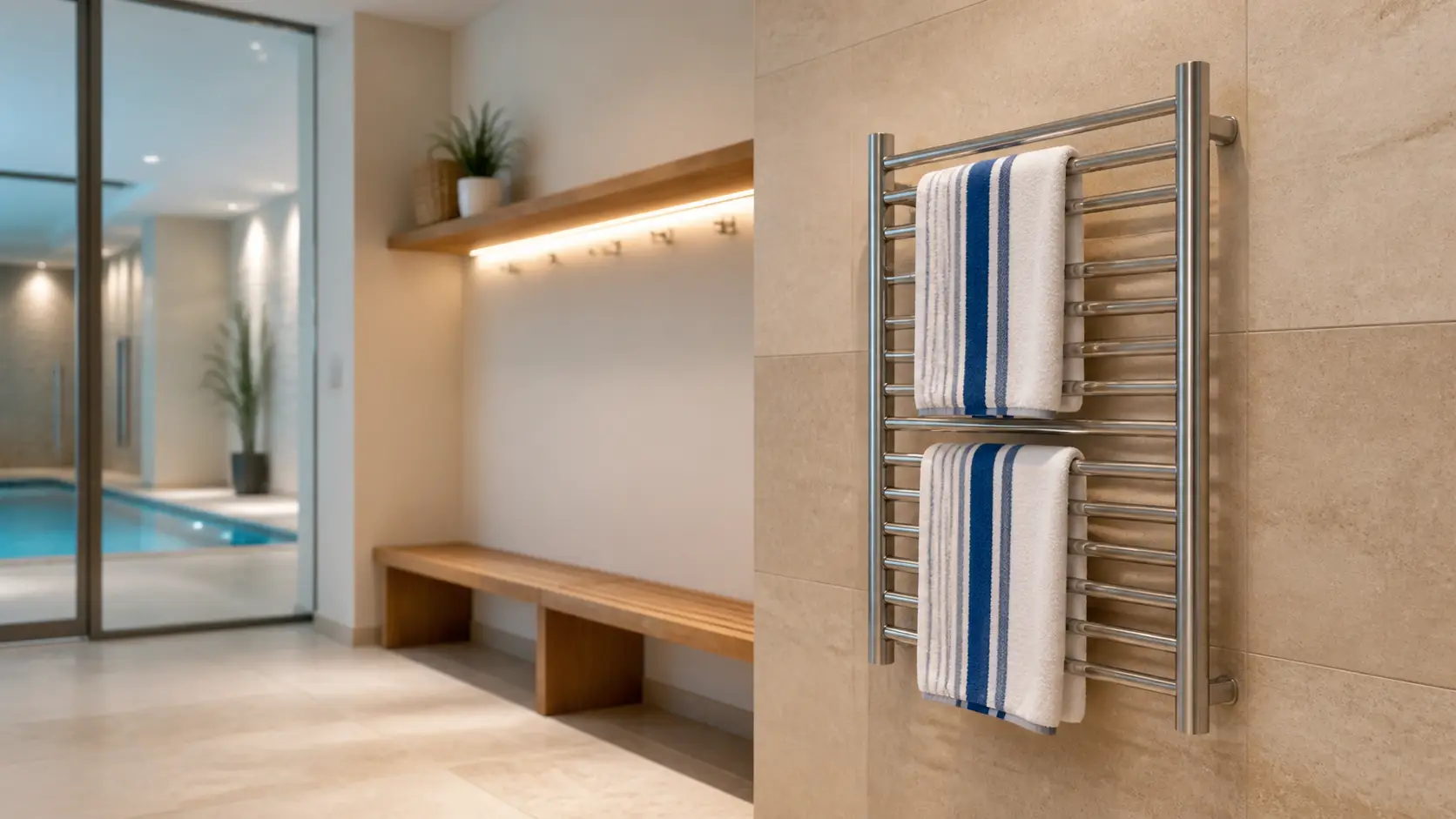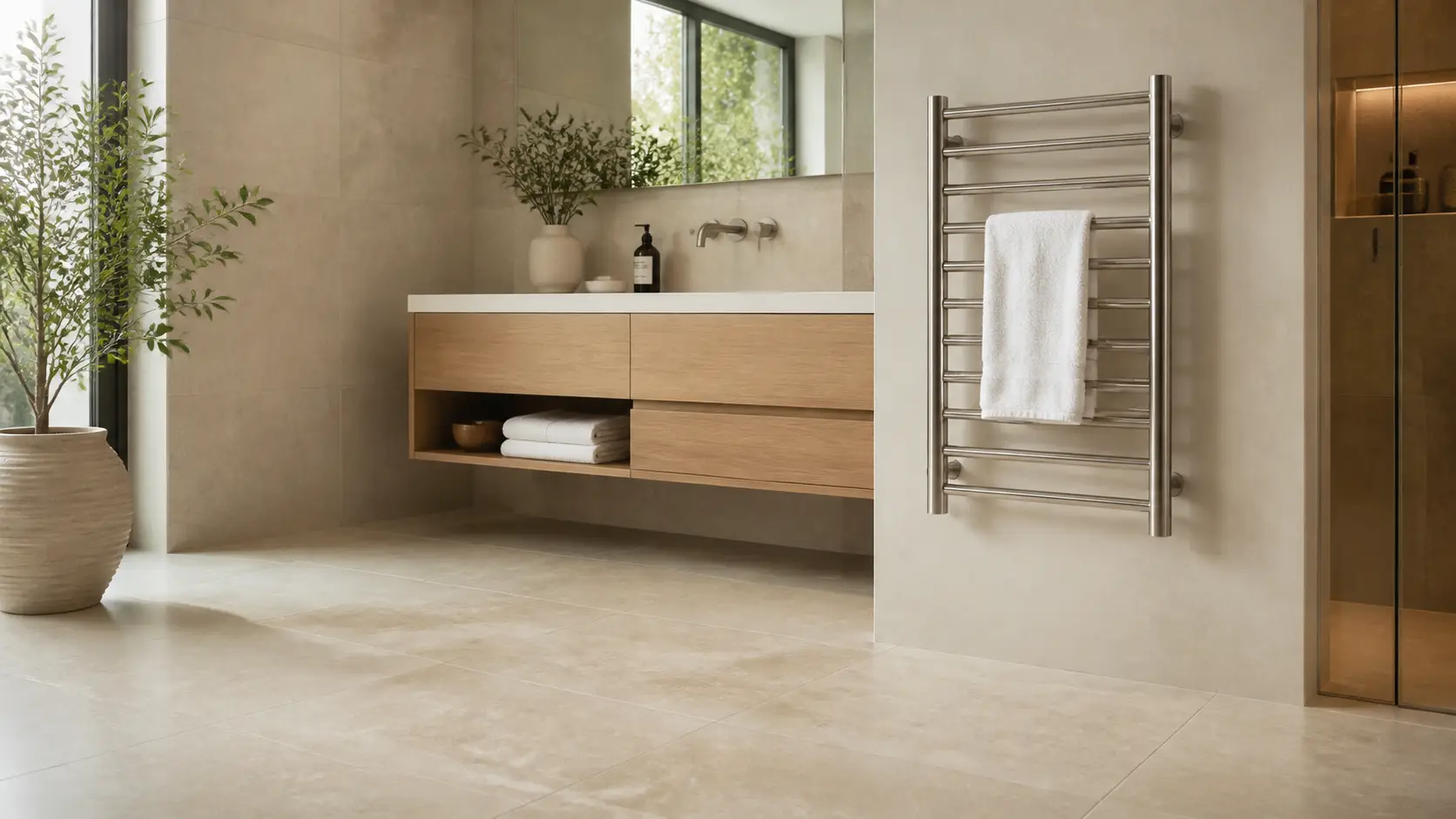
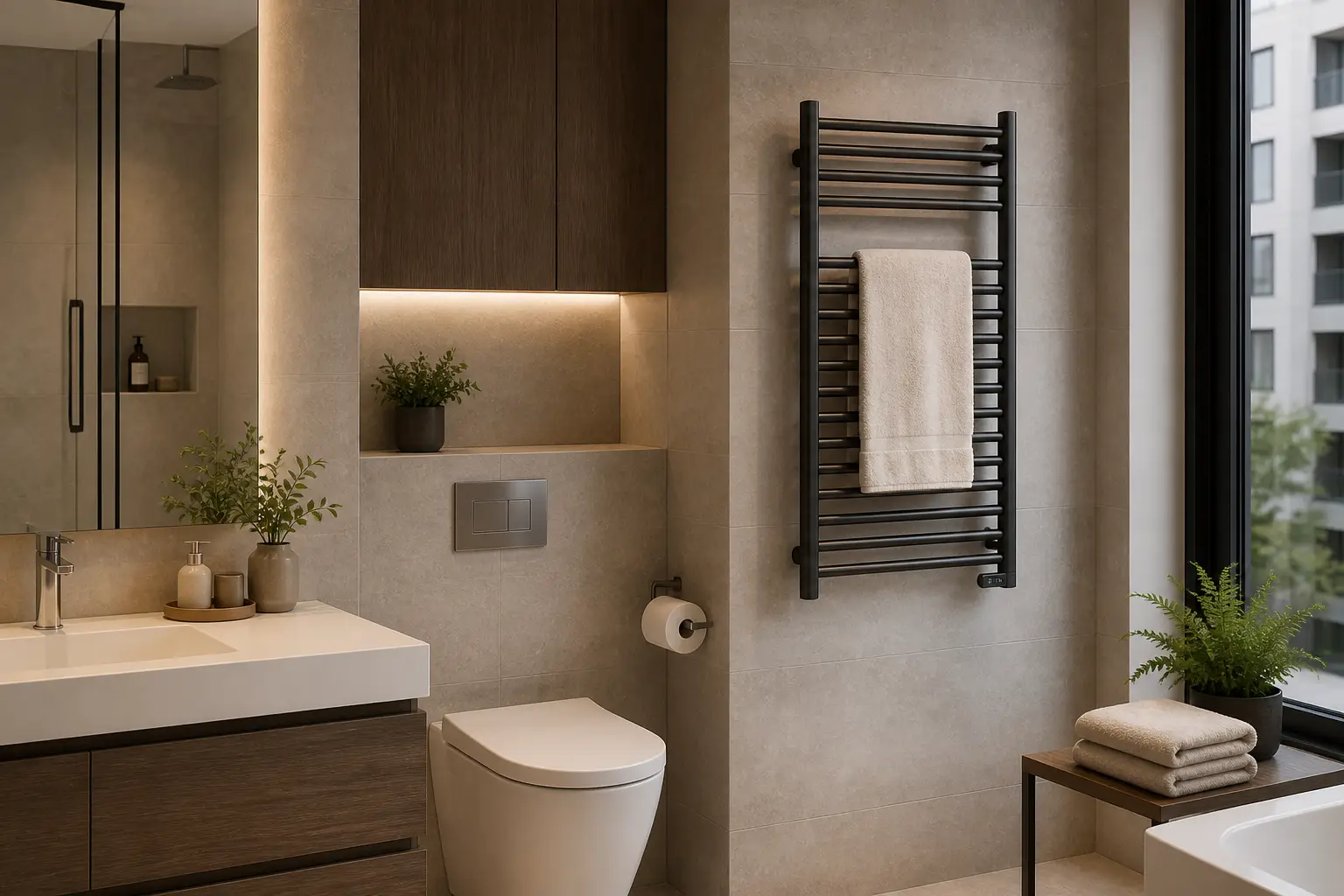
Electric heated towel rails can be a useful upgrade for apartment and multifamily bathroom projects when they are planned early. They help towels dry more predictably, make compact bathrooms feel more premium, and give developers a visible comfort feature that does not require a large footprint.
The key is specification discipline. A towel rail that works well in one model unit may create problems across 200 apartments if the wiring, wall blocking, finish durability, controls, replacement parts, and installation drawings are not planned before construction.
Why multifamily bathrooms are a good fit
Apartment bathrooms often have limited wall space, limited natural ventilation, and shared design standards across many units. That makes small comfort upgrades important. A heated towel rail can support towel drying, reduce the feeling of damp towels after showering, and make a bathroom feel more complete without changing the room footprint.
The broader market also supports the category. Grand View Research reports strong growth in heated towel rails and notes that electric models represented most of the market in 2024. For multifamily developers, electric units are usually easier to plan across repeated bathrooms because each unit can be specified by voltage, wattage, wiring method, finish, and placement.
The best-fit properties usually include:
- Luxury apartment buildings.
- Build-to-rent communities.
- Serviced apartments.
- Student or co-living units with premium bathroom packages.
- Condo developments where bathroom finishes influence buyer perception.
- Wellness-focused rental communities.
Start with the apartment type
Do not choose one towel rail before mapping the unit mix. A studio, one-bedroom, two-bedroom, penthouse, and accessible unit may need different placement decisions even if the same finish is used throughout the building.
| Unit type | Best specification direction | Planning priority |
|---|---|---|
| Studio | Compact wall-mounted rail | Space efficiency |
| One-bedroom | Standard wall-mounted rail | Daily towel drying |
| Two-bedroom | Taller rail or higher towel capacity | Multiple users |
| Premium unit | Larger designer rail | Visual upgrade and comfort |
| Accessible unit | Carefully placed wall-mounted rail | Reach, clearance, and safety |
The goal is not to over-specify every bathroom. The goal is to match the amenity to the unit category and make installation repeatable.
Hardwired or plug-in for apartments?
For new multifamily construction, hardwired heated towel rails usually make more sense. They look cleaner, avoid exposed cords, and can be coordinated with bathroom electrical plans before walls and tile are finished.
Plug-in units can still be useful in limited cases:
- Retrofit apartments where walls are already finished.
- Small pilot projects before a broader rollout.
- Owner-managed furnished rentals.
- Temporary model-unit displays.
For a full building, hardwired installation is usually easier to standardize. Developers should confirm voltage, circuit planning, GFCI requirements, switch or timer location, and local electrical code with the project electrician before approving final drawings.
Placement matters more than size
In apartment bathrooms, the best heated towel rail is often the one that fits the room cleanly. A rail that is too wide, too close to a shower opening, or mounted behind a door may look good in a catalog but feel awkward in real use.
Check these placement points:
- The towel should not touch the floor.
- The rail should not block door swing, vanity drawers, or shower entry.
- Guests or residents should not bump into the rail when using the toilet or shower.
- The unit should be placed where towels have airflow.
- Controls should be easy to reach but not easy to hit accidentally.
- The mounting wall should have proper blocking or structural support.
If the towel rail is added late, placement often becomes a compromise. Include it in the bathroom elevation drawings early.
Wattage and building-level energy planning
One electric heated towel rail has a modest power draw. A multifamily project may have dozens or hundreds of units, so the building-level load still matters.
Use this simple planning formula:
Daily kWh per unit = wattage / 1000 x hours used per day.
For example, a 120W towel rail running 3 hours per day uses 0.36 kWh per day per apartment. Across 150 apartments, that becomes 54 kWh per day before occupancy patterns and control settings are considered.
Timers and clear controls help. A towel rail does not need to run all day to provide comfort. For rental properties, simple operation also reduces service calls and tenant confusion.
Finish and material choices for repeated units
Multifamily developers need finishes that survive cleaning, tenant turnover, and replacement over time. The finish should also match the broader fixture package.
| Finish | Best use | Watchpoint |
|---|---|---|
| Brushed stainless steel | Modern rental bathrooms | Must match faucet and shower tones |
| Polished chrome | Broad compatibility | Shows water spots |
| Matte black | Design-forward apartments | Scratches can be visible |
| Brushed gold | Premium condos or luxury rentals | Batch consistency matters |
Stainless steel is usually the safest material direction for humid bathrooms. Buyers should ask about stainless grade, finish process, cleaning limitations, and whether replacement rails or mounting kits will be available later.
What developers should request from suppliers
For apartment and multifamily projects, a product quote should include more than a model name and price.
Ask for:
- Product dimensions and installation drawings.
- Wattage, voltage, and wiring method.
- IP rating and bathroom placement guidance.
- Surface temperature range.
- Material and finish specification.
- Available timer or control options.
- Certifications for the target market.
- Warranty terms for multi-unit use.
- Spare parts and mounting-kit availability.
- Lead time for sample, pilot, and bulk order.
- Packaging labels by unit type, floor, or project phase.
The most important supplier question is repeatability. A developer needs the same model, finish, and documentation across the whole project, not just a good sample.
Operations and maintenance
A heated towel rail becomes part of the apartment's long-term maintenance plan. Property managers should know how the unit is mounted, how controls work, and what replacement parts are available.
Before handover, prepare:
- Basic operating instructions for residents.
- Maintenance notes for property staff.
- Cleaning guidance for the finish.
- Spare mounting hardware or control parts.
- Model numbers and warranty documentation.
- Clear process for replacing a damaged unit.
Good documentation reduces future confusion. It also protects the brand perception of the building after the initial lease-up period.
FAQ
Are electric heated towel rails useful for apartments?
Yes, especially in premium apartments, compact bathrooms, humid climates, and buildings where bathroom comfort is part of the amenity package. They help towels dry more predictably and make the bathroom feel more finished.
Should multifamily projects choose hardwired heated towel rails?
For new construction, usually yes. Hardwired units look cleaner, avoid visible cords, and are easier to coordinate with electrical drawings before walls and tile are finished.
What size heated towel rail works best in apartments?
Most apartments need a compact or medium wall-mounted model. Larger units may fit premium units, two-bedroom apartments, or bathrooms with more open wall space.
Do heated towel rails use too much electricity for apartments?
They should be planned like any repeated electrical fixture. The rated wattage is usually modest per unit, but developers should calculate building-level load and use timers or simple controls to limit unnecessary runtime.
What should developers check before approving a model?
Check dimensions, wattage, voltage, wiring, IP rating, finish, certifications, warranty, spare parts, mounting method, installation drawings, and whether the supplier can deliver consistent batches.
Final advice for multifamily projects
Electric heated towel rails work best when they are treated as part of the bathroom specification, not a late decorative add-on. The right model should fit the unit type, wiring plan, finish schedule, towel needs, and maintenance process.
Calithrex can help apartment developers, designers, and project buyers compare size, finish, wiring, and packaging options before bulk ordering. Start with the unit mix and bathroom elevations, then specify the heated towel rail that fits the project.