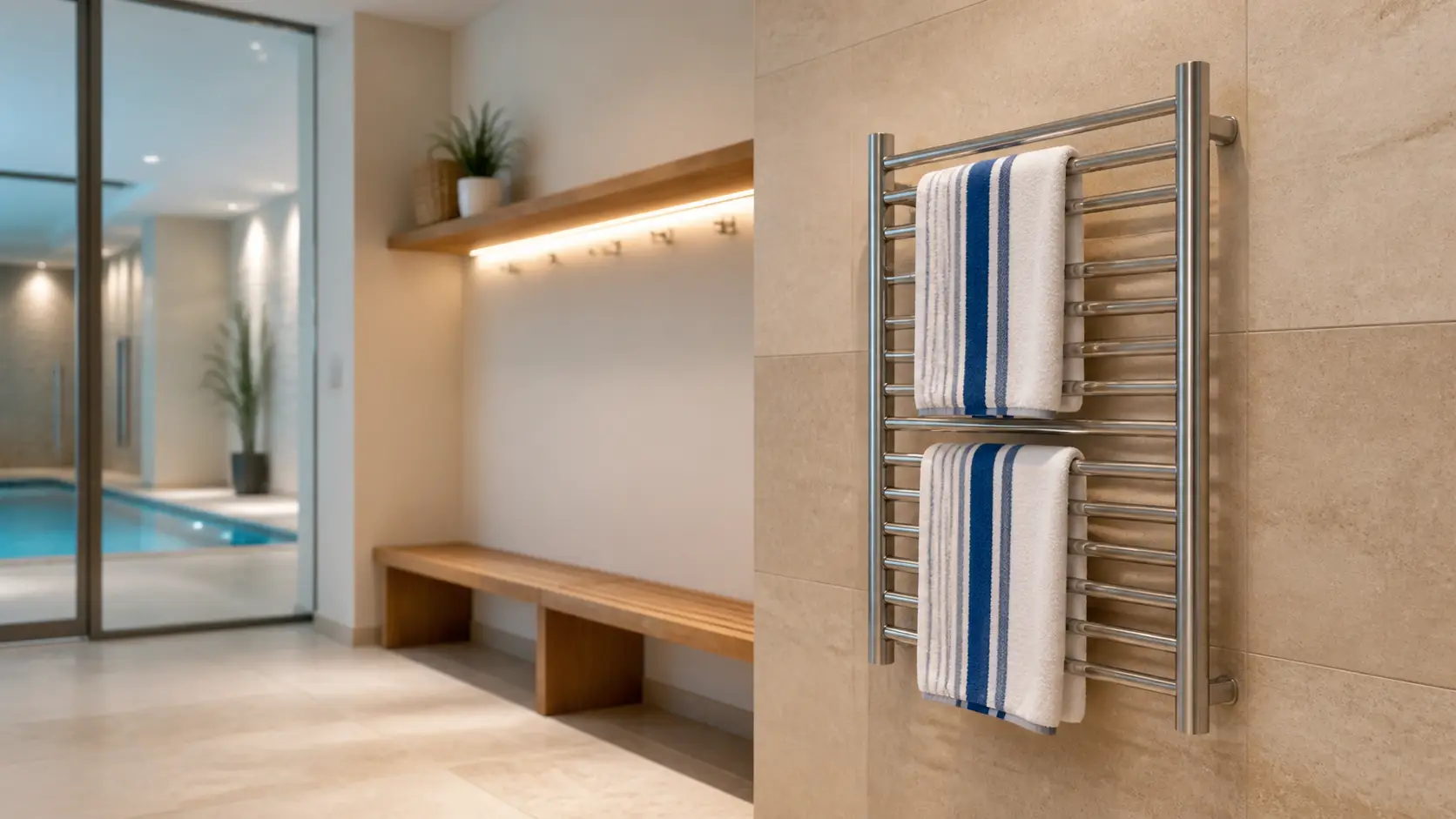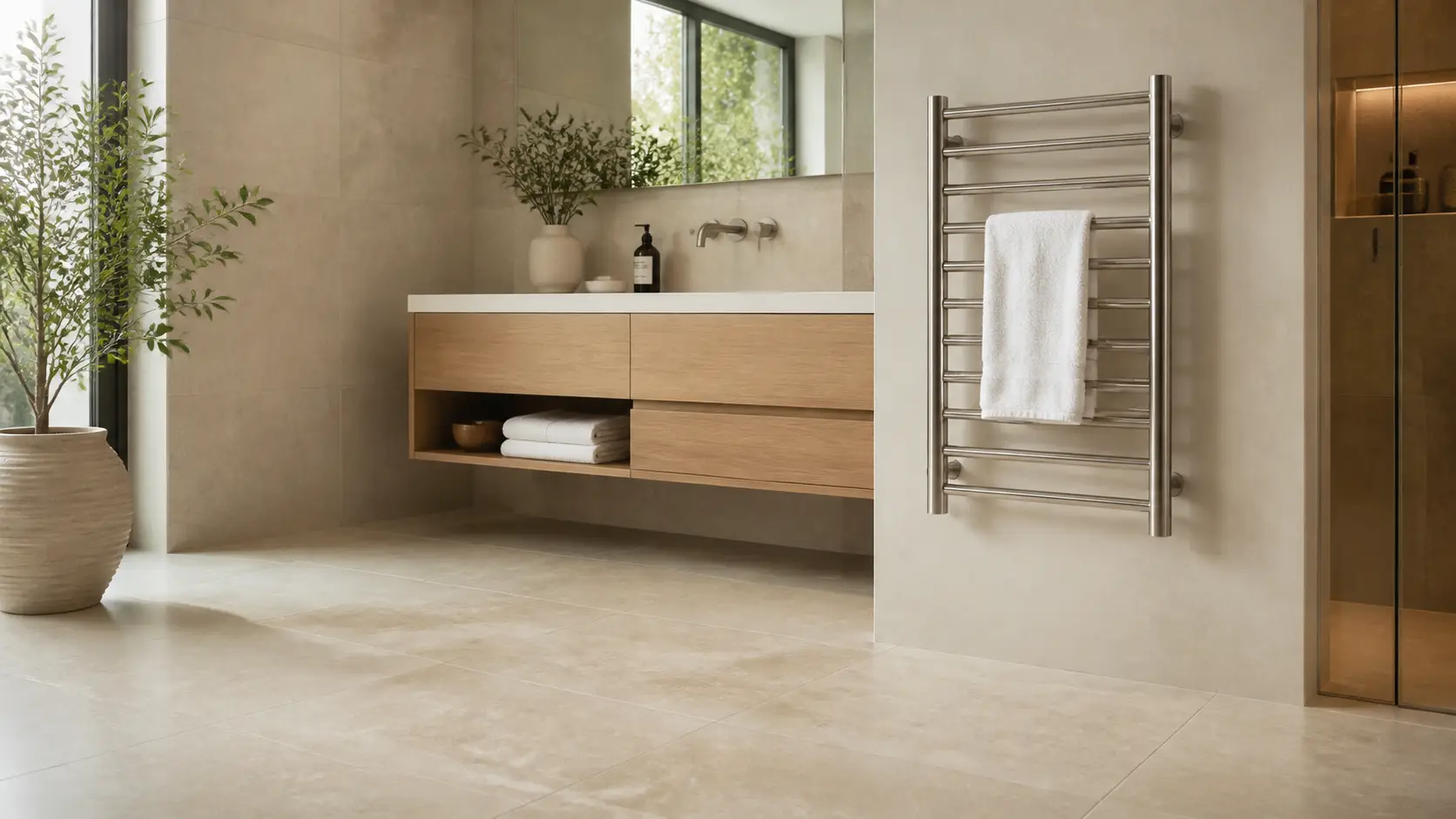
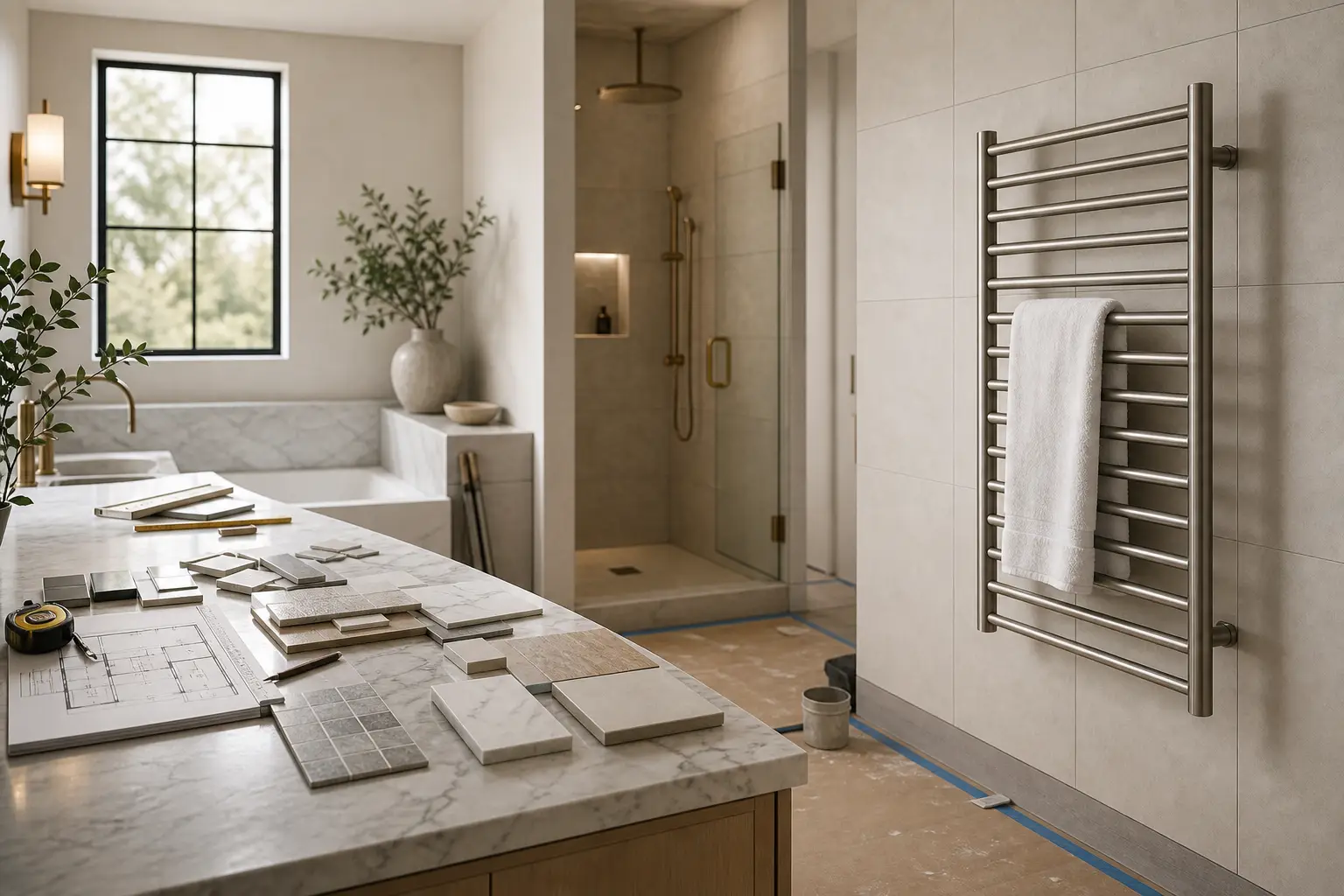
A heated towel rail should be planned before tile, wiring, and wall blocking are finalized. In a bathroom renovation, waiting too long can force awkward placement, exposed cords, weak mounting, or a finish that does not match the rest of the room.
For designers, contractors, and homeowners, the right question is not simply which heated towel rail looks best. The better question is: where will wet towels go, how will the unit be powered, what wall can support it, and how will it fit the finished bathroom design?
Why renovation projects are the right time to decide
Bathroom renovations are already opening walls, moving fixtures, updating electrical plans, and changing tile surfaces. That makes renovation the easiest time to plan a hardwired heated towel rail correctly.
Houzz's 2025 U.S. Bathroom Trends Study reports that most renovating homeowners hire professionals for bathroom projects. That matters because heated towel rails sit between design, electrical work, tile layout, and daily use. They need coordination, not last-minute selection.
Planning early helps you:
- Choose a cleaner hardwired installation.
- Add wall blocking before tile is installed.
- Place controls in a natural location.
- Coordinate finish with faucets, shower trim, and lighting.
- Avoid mounting the rail where towels block doors or drawers.
- Confirm bathroom wet-zone and electrical safety requirements.
Start with towel behavior
Before choosing a model, map how towels will actually be used. Many bathrooms look good in renderings but fail because towels have nowhere practical to dry.
Ask these questions:
- How many people use the bathroom daily?
- Are bath towels, hand towels, or robes being warmed?
- Will towels hang after every shower?
- Is the bathroom naturally humid?
- Is there enough airflow around the towel location?
- Can the user reach the rail comfortably?
The best heated towel rail location is usually near the shower or tub, but not where it receives direct spray unless the product and installation zone allow it. It also needs enough clearance for towels to hang freely.
Choose the installation type before tile work
Renovation projects usually have two choices: hardwired or plug-in.
| Installation type | Best for | Renovation note |
|---|---|---|
| Hardwired | Full remodels, premium bathrooms, clean design | Plan before walls close |
| Plug-in | Light refreshes, rentals, finished walls | Easier, but visible cord may affect design |
Hardwired units look more integrated and are usually preferred for high-end renovations. Plug-in units can be useful when the homeowner wants a simpler upgrade without electrical work, but they should still be placed safely and neatly.
If the renovation includes new tile, new drywall, or electrical updates, discuss the towel rail with the electrician early. It is much easier to plan a power point, switch, or timer before the wall is finished.
Placement checklist for designers and contractors
A heated towel rail should support the layout, not fight it. Use this checklist before finalizing the bathroom elevation:
| Placement question | Why it matters |
|---|---|
| Is there enough wall width? | Prevents the rail from feeling squeezed |
| Can towels hang without touching the floor? | Improves drying and appearance |
| Is the rail away from door swing? | Prevents impact and poor access |
| Is the wall properly supported? | Reduces mounting problems |
| Is the rail near the shower or tub? | Makes daily use easier |
| Is there airflow around towels? | Helps drying performance |
| Are controls easy to reach? | Reduces confusion |
| Is the location allowed by electrical code? | Supports safe installation |
For small bathrooms, a vertical or compact wall-mounted rail may work better than a wide unit. For larger primary bathrooms, a taller ladder-style rail can add both function and visual balance.
Match finish to the full bathroom package
A heated towel rail is a visible fixture. It should coordinate with the faucet, shower trim, cabinet hardware, lighting, mirror frame, and accessories.
Common finish directions:
- Brushed stainless steel for modern neutral bathrooms.
- Polished chrome for broad compatibility.
- Matte black for contrast and contemporary design.
- Brushed gold for warmer, boutique-style spaces.
Finish quality matters in renovations because homeowners often compare the rail directly with new fixtures. A weak finish can make the whole bathroom feel less considered. Ask about cleaning guidance and finish durability before ordering.
Think about wattage, controls, and use pattern
Most heated towel rails are designed to warm towels and support drying, not to heat the whole bathroom. Buyers should check wattage, expected surface temperature, timer options, and whether the unit is intended for continuous or scheduled use.
For everyday use, timers are helpful. They let the user warm towels before or after showering without leaving the rail on unnecessarily. In family bathrooms, simple controls are better than complicated panels.
A practical use pattern might be:
- Start before showering if warm towels are the priority.
- Run after showering if towel drying is the priority.
- Use a timer rather than all-day operation.
- Keep towels spread across rails instead of bunched tightly.
Safety and bathroom zones
Because heated towel rails are electrical fixtures used in bathrooms, safety planning is essential. Requirements vary by market and local code, but the project team should discuss:
- GFCI or RCD protection where required.
- IP rating and placement near wet areas.
- Distance from direct water spray.
- Proper mounting and wall support.
- Switch, timer, and control location.
- Manufacturer installation instructions.
- Local electrician approval.
Do not rely only on product photos. A rail shown near a shower in a lifestyle image still needs to match the actual rating, installation zone, and local electrical rules for your renovation.
Common renovation mistakes
Avoid these issues:
- Choosing the towel rail after tile is finished.
- Forgetting wall blocking before installation.
- Installing the rail behind a door with poor airflow.
- Placing the rail too far from the shower to be useful.
- Choosing a finish that does not match the fixture package.
- Assuming a towel rail will replace ventilation.
- Buying only by size without checking wattage or controls.
- Ignoring electrical code and IP rating requirements.
Most problems come from late decisions. Add the towel rail to the renovation plan as early as you would add a mirror, vanity light, or shower niche.
FAQ
When should a heated towel rail be planned in a bathroom renovation?
Plan it before electrical rough-in, wall blocking, and tile layout are finalized. Early planning gives you better placement, cleaner wiring, and stronger mounting.
Is a hardwired heated towel rail better for a remodel?
For full renovations, usually yes. Hardwired installation looks cleaner and can be coordinated with switches or timers. Plug-in units are better for lighter updates where walls are not being opened.
Where should a heated towel rail go in a bathroom?
Place it near the shower or tub, with enough clearance for towels to hang, good airflow, safe distance from direct spray, and easy access to controls.
Can a heated towel rail heat the whole bathroom?
Usually no. Most heated towel rails are designed to warm towels and support drying. Bathroom heating should be planned separately if room heat is the main goal.
Do heated towel rails need special electrical planning?
Yes. The project electrician should confirm voltage, protection, switching, IP rating suitability, and local code requirements before installation.
Final advice for renovation projects
A heated towel rail is easiest to install well when it is treated as part of the renovation plan, not an accessory chosen at the end. Decide the location, wiring method, finish, controls, and wall support before the bathroom is closed up.
Calithrex heated towel rails can support bathroom renovation projects where comfort, towel drying, clean design, and reliable installation matter. Start with the layout and towel behavior, then choose the model that fits the finished room.