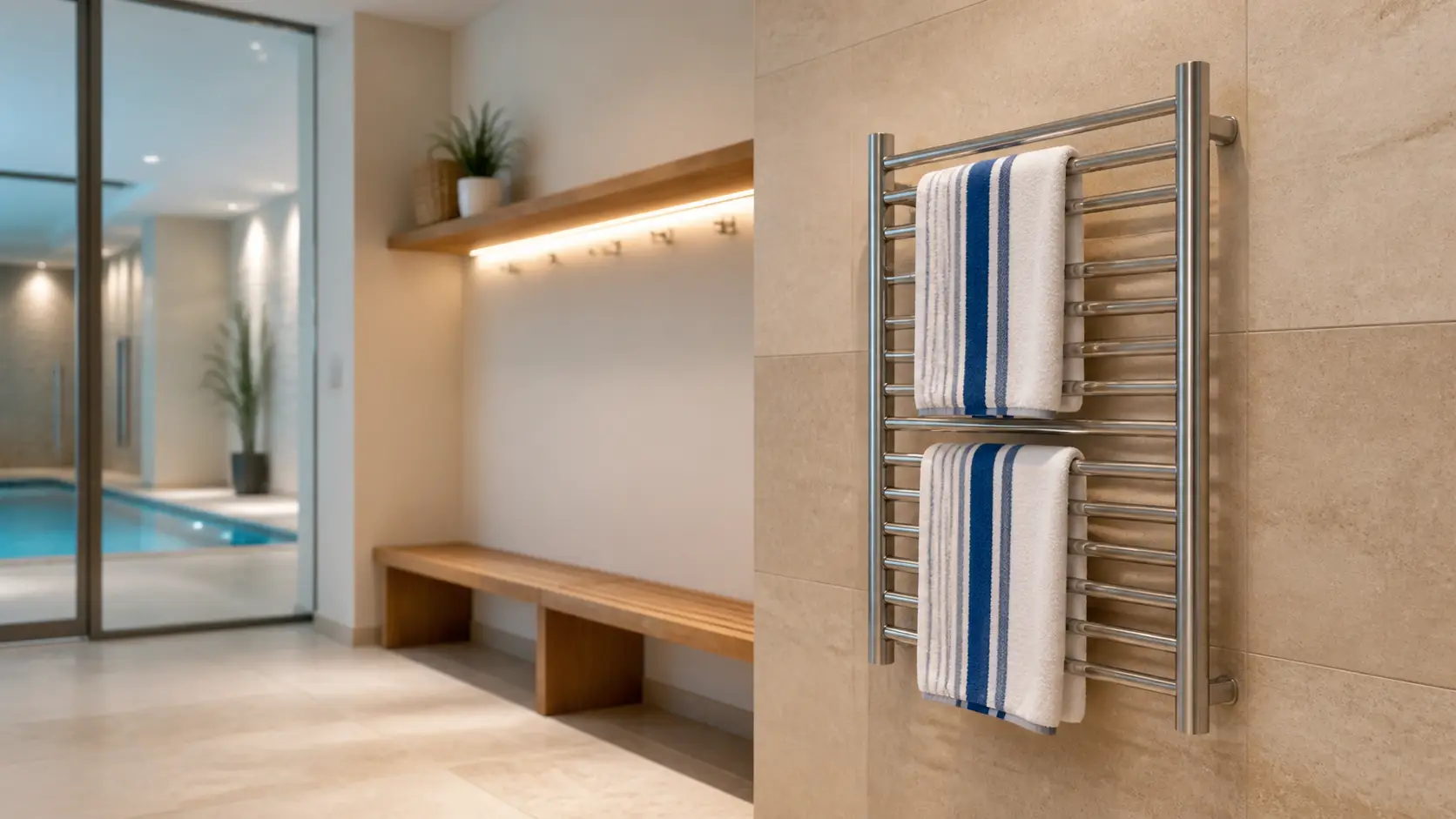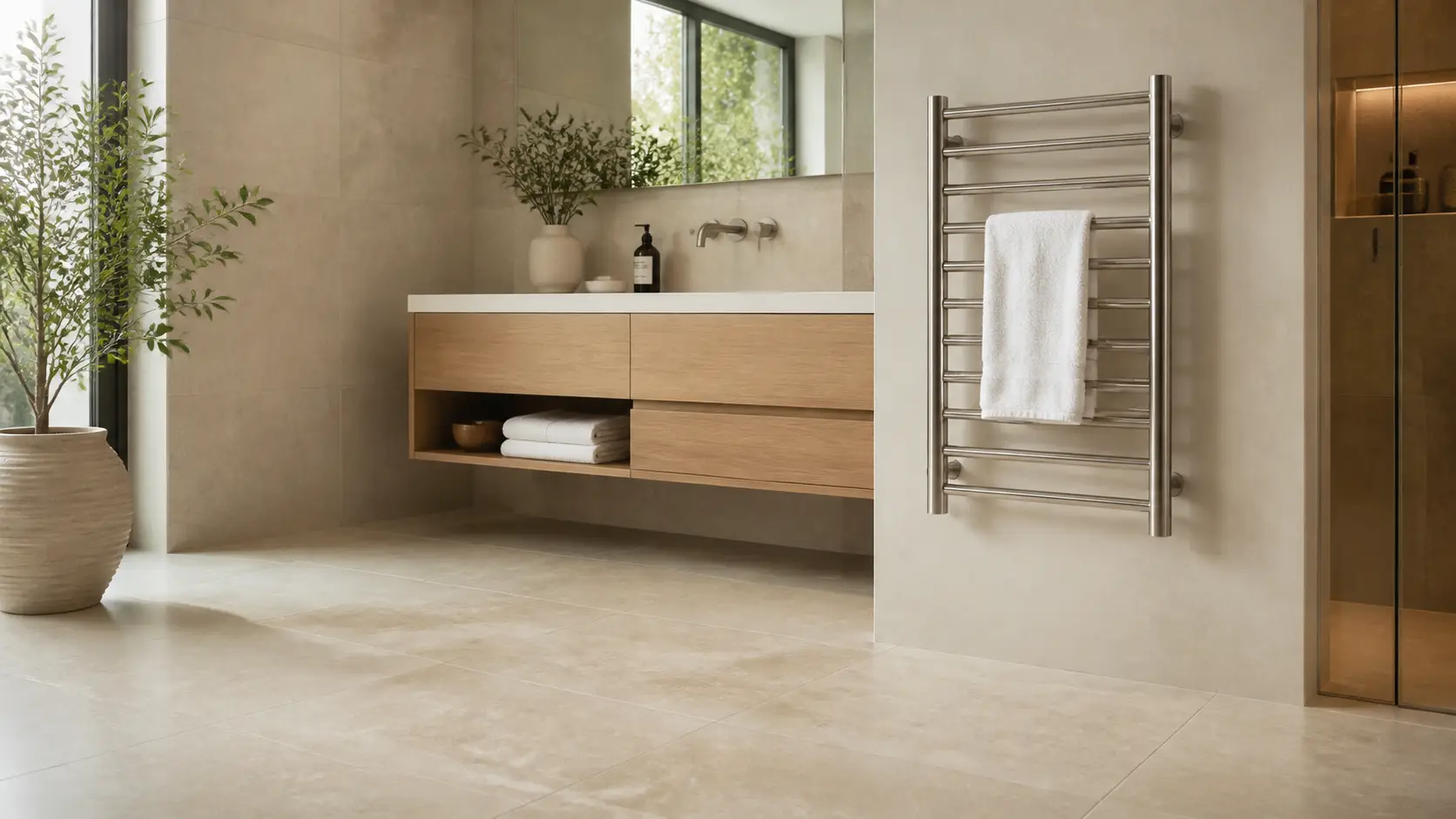
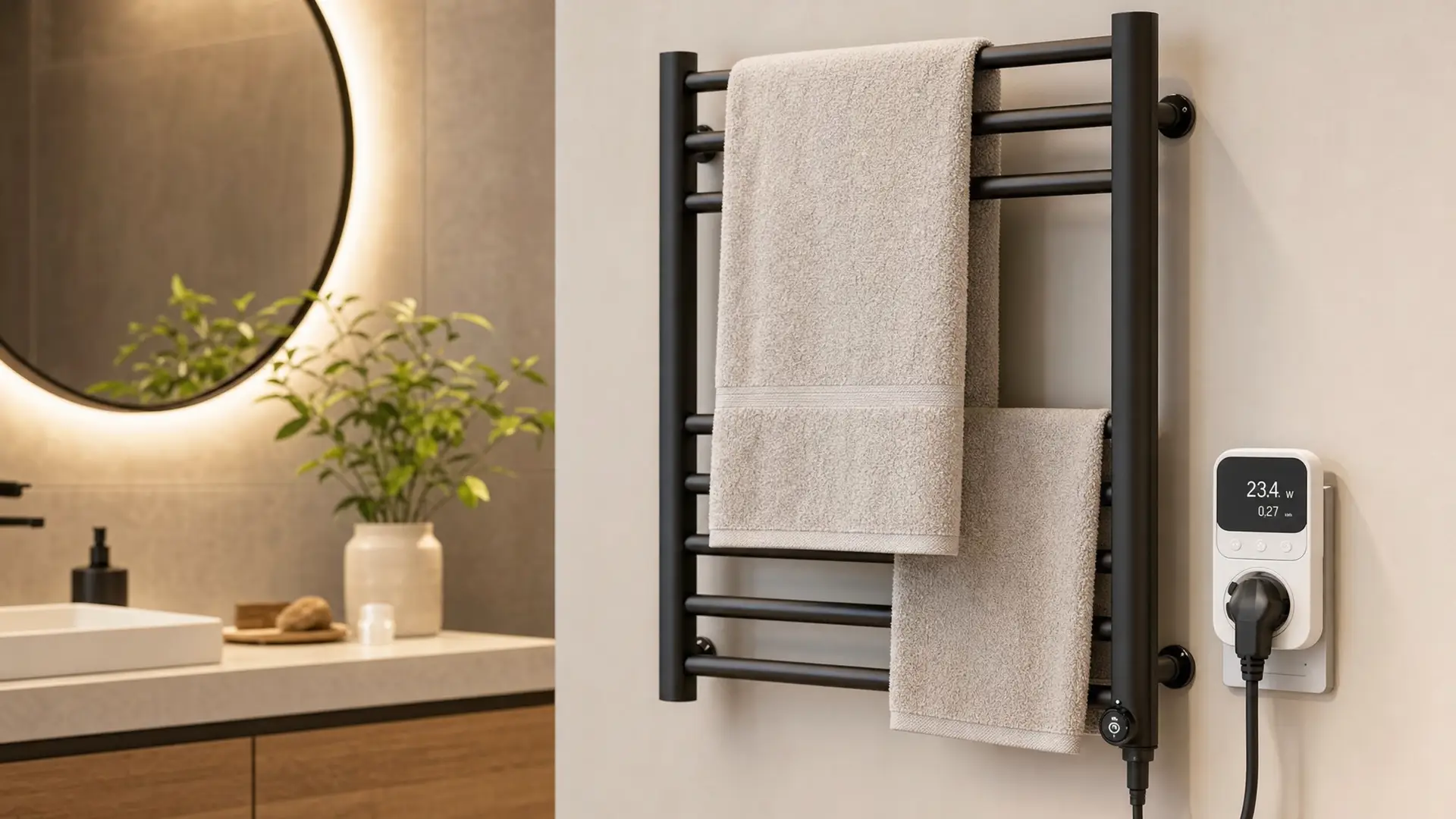
Bottom line: A standard 150W heated towel rack costs roughly $0.08 per day to run on a 4-hour timer. That’s about $2.40 per month or $29 per year—less than a single tank of gas for your car. Even left on 8 hours daily, the annual cost stays under $60.
Buyers ask me about running costs all the time, especially the ones selling into markets where people watch their utility bills closely. Are these things expensive to run? Not really. The exact cost depends on wattage, how long you leave it on, and what you pay per kWh. Here’s the breakdown so you can give your customers straight answers.
Power Draw by Rail Size
| Rail Size | Typical Wattage | Best For |
|---|---|---|
| Compact (4–5 bars) | 60–100W | Small bathrooms, guest baths, tight spaces |
| Standard (6–8 bars) | 120–150W | Family bathrooms, daily use |
| Large (9–12 bars) | 180–250W | Large bathrooms, high humidity, pool areas |
Most homes end up with something in the 120–150W range. To put that in perspective, it’s about the same as a bright old-school incandescent bulb.
Daily Running Cost Breakdown
The Math
Formula: (Wattage × Hours × Electricity Rate) ÷ 1000 = Daily Cost
At the US average rate of $0.15 per kWh:
| Wattage | 4 Hours/Day | 8 Hours/Day | 24 Hours/Day |
|---|---|---|---|
| 100W | $0.06 | $0.12 | $0.36 |
| 150W | $0.09 | $0.18 | $0.54 |
| 200W | $0.12 | $0.24 | $0.72 |
Annual Costs
| Usage Pattern | 100W Unit | 150W Unit | 200W Unit |
|---|---|---|---|
| 4 hours/day (timed) | $22 | $33 | $44 |
| 8 hours/day | $44 | $66 | $88 |
| 24 hours/day | $131 | $197 | $263 |
Realistic scenario: Most households run a 150W unit on a timer for 4–6 hours daily, landing at $30–$50 per year.
How to Keep Costs Low
Use a Timer
A programmable timer is the easiest way to cut running costs by 50% or more. Set it to run 2 hours before your usual shower time and switch off afterward. The towels stay warm when you need them, and you’re not paying to heat an empty bathroom.
Choose the Right Wattage
Bigger is not always better. A 200W rail in a 4 m² bathroom is overkill. Match wattage to room size:
| Bathroom Size | Recommended Wattage |
|---|---|
| Under 4 m² | 60–100W |
| 4–6 m² | 120–150W |
| 6–10 m² | 180–250W |
| Over 10 m² | 250W+ or dual rails |
Insulate the Space
Poor insulation means heat escapes faster, so the rail works harder. Sealed windows, door sweeps, and decent ventilation all help the rail do its job without excessive run time.
Regional Cost Variations
| Region | Average Rate ($/kWh) | Annual Cost (150W, 4 hrs/day) |
|---|---|---|
| US (average) | $0.15 | $33 |
| UK | $0.30 | $66 |
| Germany | $0.35 | $77 |
| Australia | $0.25 | $55 |
| Canada | $0.12 | $26 |
In high-cost markets like Germany or the UK, a timer becomes essential. Even there, the annual cost stays well under $100 for typical usage.
The Bottom Line
Electricity cost should not be a barrier to selling or installing heated towel racks. At under $3 per month for typical use, the running cost is trivial compared to the comfort and hygiene benefits. For your customers, frame it this way: for the price of one coffee per month, they get dry towels every morning and a warmer bathroom.
If you’re sourcing for a market where energy costs are a concern, prioritize rails with built-in timers or smart controls. They add $10–$20 to the unit cost but cut operating expenses by half, which is an easy sell for end users.
Sourcing heated towel racks with timers or smart controls? We manufacture programmable and WiFi-enabled models with energy-saving features. Request bulk pricing →