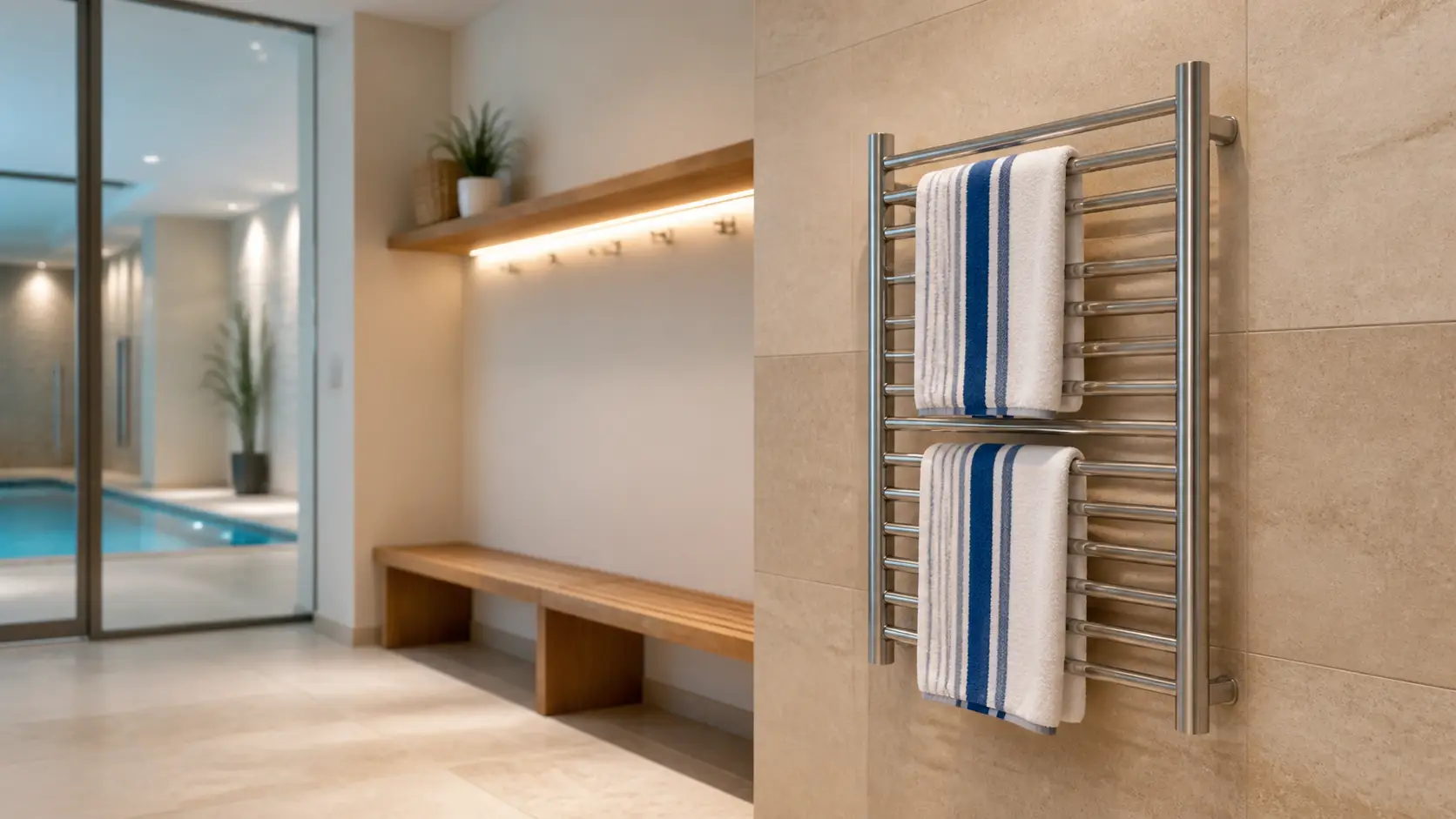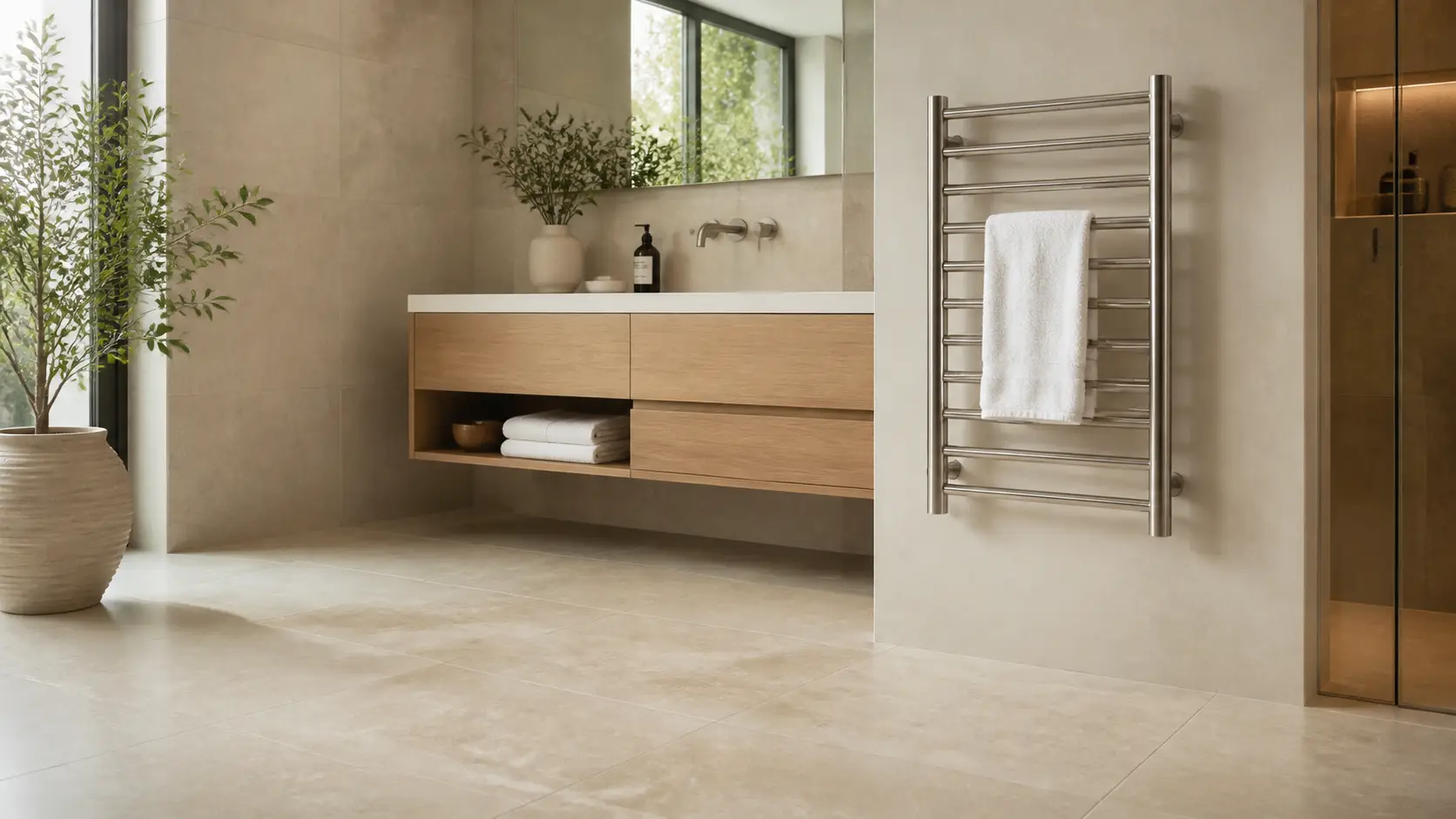

Yes, you can use a heated towel rack for some clothes, but only in a limited way. It is best for damp towels, bathrobes, hand towels, and light garments that can safely hang open near gentle heat. It is not a replacement for a clothes dryer, and it should not be used for heavy laundry, shoes, plastic-backed items, or fabrics whose care label warns against heat.
What Belongs on the Rack
A heated towel rack is a bathroom drying aid, not a general laundry machine. Its advantage is open, warm surface area. When a towel or light garment is spread across warm bars, heat helps moisture leave the fabric while room air carries that moisture away. That is why spacing matters as much as temperature.
Use this simple rule: if the item can hang loosely, tolerate mild heat, and dry without dripping, it may be a reasonable fit. If the item is heavy, folded into a thick bundle, soaked, coated, plastic-backed, or heat-sensitive, use another drying method.
| Item | Usually suitable? | How to use it |
|---|---|---|
| Bath towel | Yes | Spread it over more than one bar if possible |
| Hand towel | Yes | Hang with air around both sides |
| Cotton bathrobe | Sometimes | Check the care label and avoid crowding |
| Lightweight shirt | Sometimes | Use only if the label allows heat |
| Heavy jeans or hoodie | Poor fit | Too thick and slow for a bathroom rack |
| Shoes, mats, or plastic-backed items | No | Use the product's recommended drying method |
Check the Care Label First
Clothing labels matter because not every fabric should be warmed, tumble dried, or exposed to heat. The U.S. Federal Trade Commission explains that care labels give consumers instructions for ordinary care of clothing and some textile goods. If a garment says line dry, dry flat, cool iron only, do not tumble dry, or keep away from heat, follow that instruction.
The rack should also be used within its own product instructions. If the manual limits the rack to towels or specified fabrics, do not expand that use because the wall space looks convenient. A bathroom fixture can be useful without becoming a catch-all drying station.
This is especially important for delicate knits, elastic fabrics, coated rainwear, swimwear with special finishes, leather, faux leather, and anything with glued decorations. Heat may affect shape, texture, adhesive, or finish.
Airflow Matters More Than Piling
The common mistake is treating the rack like a warm shelf. A stack of wet clothing does not dry well because the inner layers cannot release moisture. The outside layer may feel warm while the inside stays damp. That can leave fabric smelling stale and can keep bathroom humidity high.
Hang one or two items openly instead. Leave gaps between towels and garments. Do not wrap several layers around the same bar. If you need to dry a family load of laundry, use a laundry rack, drying room, outdoor line, or dryer designed for that purpose.
A heated towel rack works best after normal bathing routines: a towel from the shower, a robe worn briefly, or a lightweight garment that needs a small amount of drying support. It is not meant to rescue soaked laundry straight from the washer.
Bathroom Moisture Still Needs Ventilation
Heat moves moisture out of the towel or garment, but it does not remove that moisture from the room by itself. The U.S. EPA's residential moisture guidance focuses on controlling moisture sources and drying wet materials, while ENERGY STAR notes that adequate ventilation helps control moisture and remove odors.
That means the fan, window, or room airflow still matters. If the bathroom stays humid after every shower, clothes on the rack will dry slowly. They may also add more moisture to a room that is already struggling.
Use the bathroom fan during and after showers. Keep the rack outside direct spray. Do not hang dripping items over the floor where water can collect near walls, outlets, switches, or walking paths. If the room already has recurring mold or mildew, solve the moisture problem first.
When It Is a Bad Idea
Do not use a heated towel rack as a clothes dryer when any of these conditions apply:
- The item is dripping wet or too heavy to hang securely.
- The care label warns against heat or gives a different drying method.
- The fabric contains plastic, rubber backing, foam, glue, leather, or delicate trim.
- The item blocks most of the rack and prevents airflow.
- Water could drip toward controls, outlets, cords, or wall openings.
- You need to dry multiple full laundry loads.
Also avoid improvised electrical setups. If a plug-in rack is not near a suitable bathroom outlet, do not solve the problem with a casual extension cord across a wet floor. CPSC extension-cord guidance exists because cords and electrical products need proper ratings and safe use conditions. In bathrooms, poor cord routing is more than an inconvenience.
Best Fit and Poor Fit
Best fit: a homeowner who wants one fixture to keep daily towels, a robe, or one light garment from staying damp after use. The rack is on a dry wall, the bathroom has ventilation, and users understand that items should hang open.
Poor fit: a household that wants to dry heavy laundry indoors every day, has weak ventilation, or expects one rack to replace a dryer. It is also a poor fit when the only available wall places fabric over a splash zone, outlet, heater, or door swing.
If your main problem is towel dampness after showers, an open heated towel rack can be a practical tool. If your main problem is full laundry drying, plan a laundry solution instead.
Explore the Calithrex heated towel rack collection when you are comparing open rack styles for towels, robes, and everyday bathroom routines.
FAQ
Can I dry a shirt on a heated towel rack?
Sometimes. Check the care label first, then hang the shirt open with room for airflow. Do not use the rack for heat-sensitive fabrics or heavy wet clothing.
Can a heated towel rack dry jeans?
Jeans are usually a poor fit because they are thick and hold a lot of water. Use a normal clothes-drying method unless the product and garment instructions clearly allow it.
Is it okay to put a bathrobe on a heated towel rack?
Often yes, if the robe's care label allows heat and the robe can hang without crowding the rack. Thick robes may need more time and better airflow.
Will clothes dry faster if I pile more on the rack?
No. Piling blocks airflow and traps moisture inside the fabric. Fewer items, hung openly, usually dry better.
Can I leave clothes on a heated towel rack overnight?
Follow the rack manual and the garment label. A timer and good ventilation are better than leaving unknown fabrics on heat for long periods.
Does a heated towel rack replace bathroom ventilation?
No. It can help towels and light garments dry, but moisture still needs to leave the room through a fan, window, or other ventilation path.