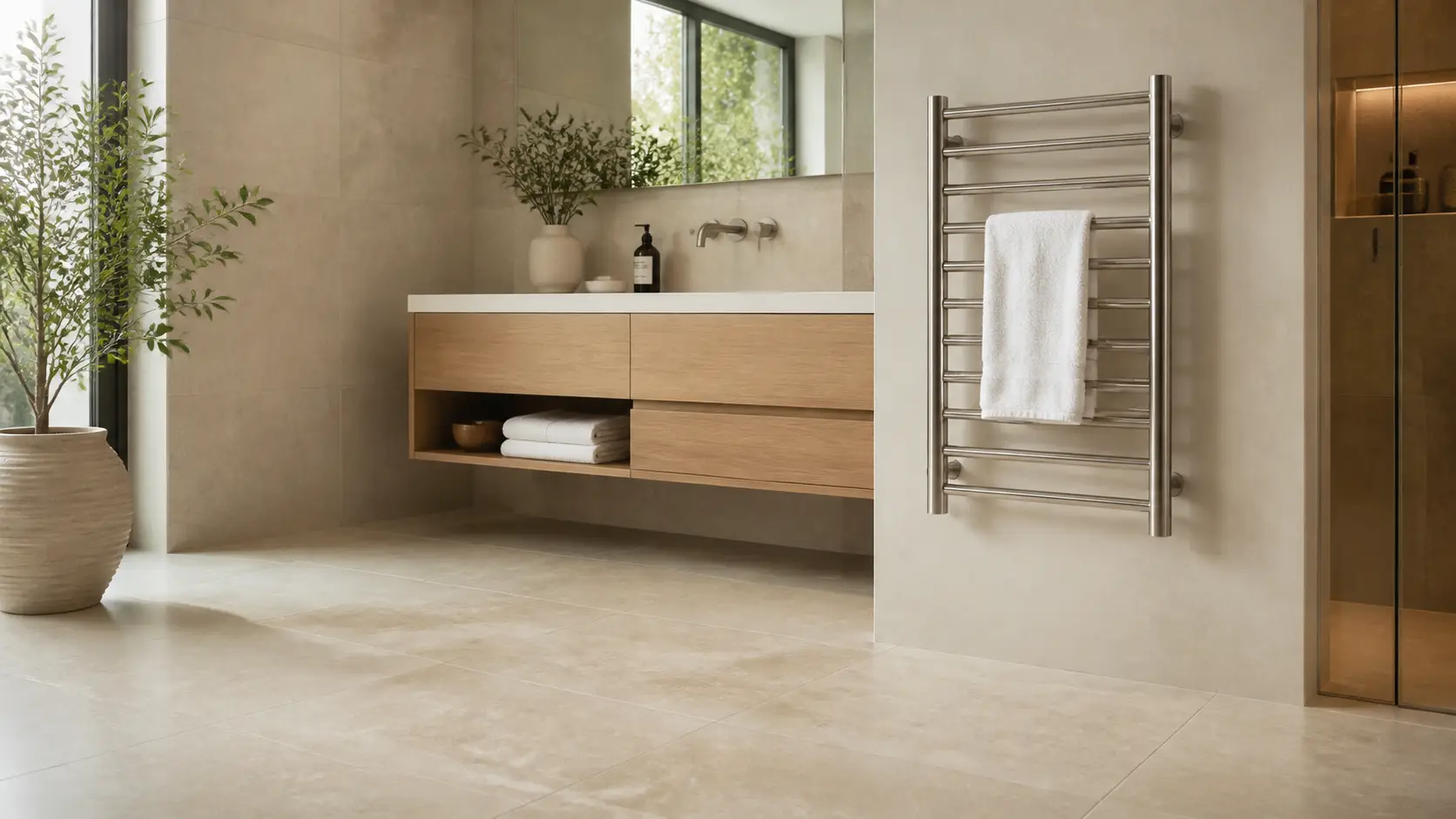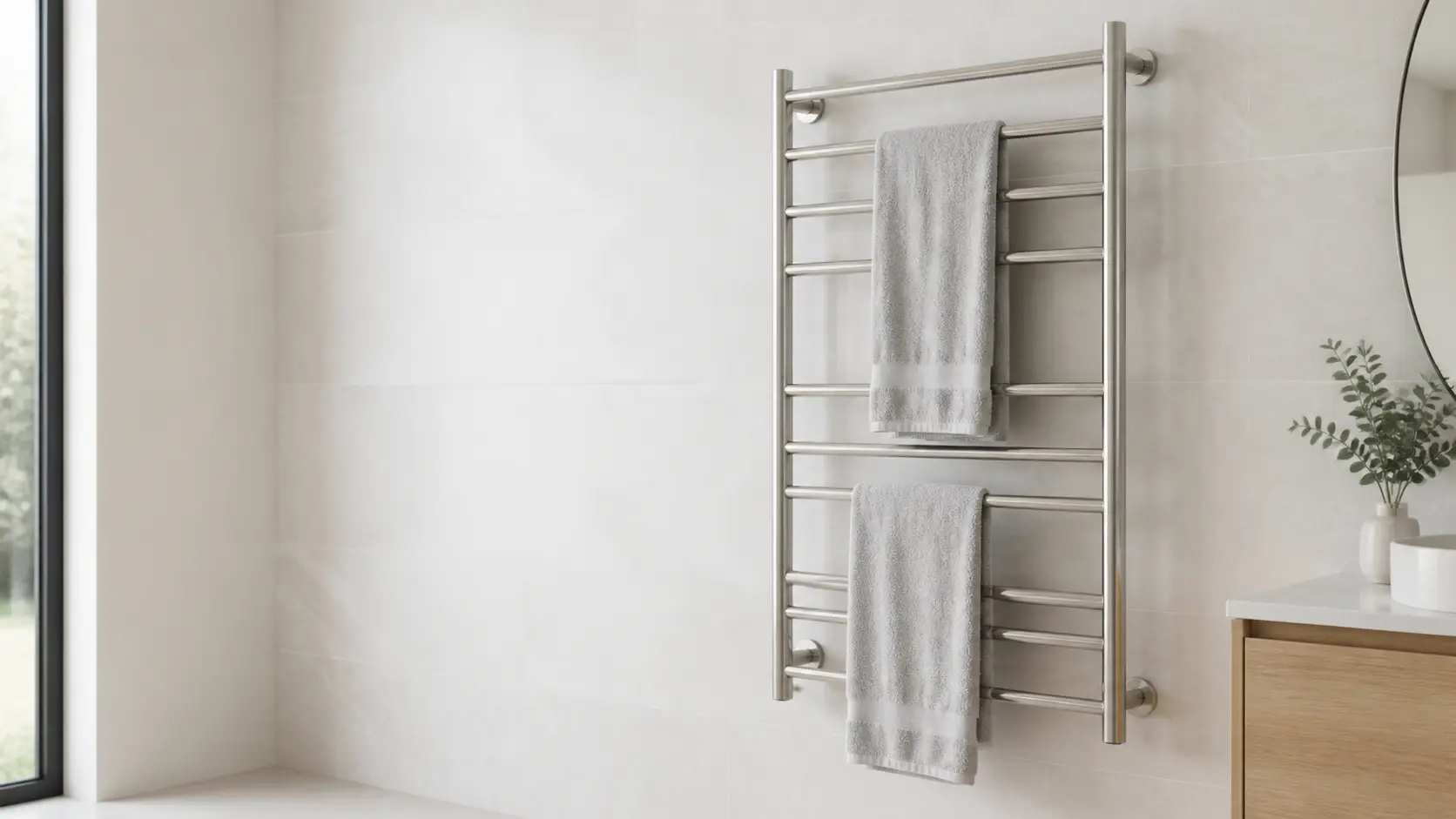
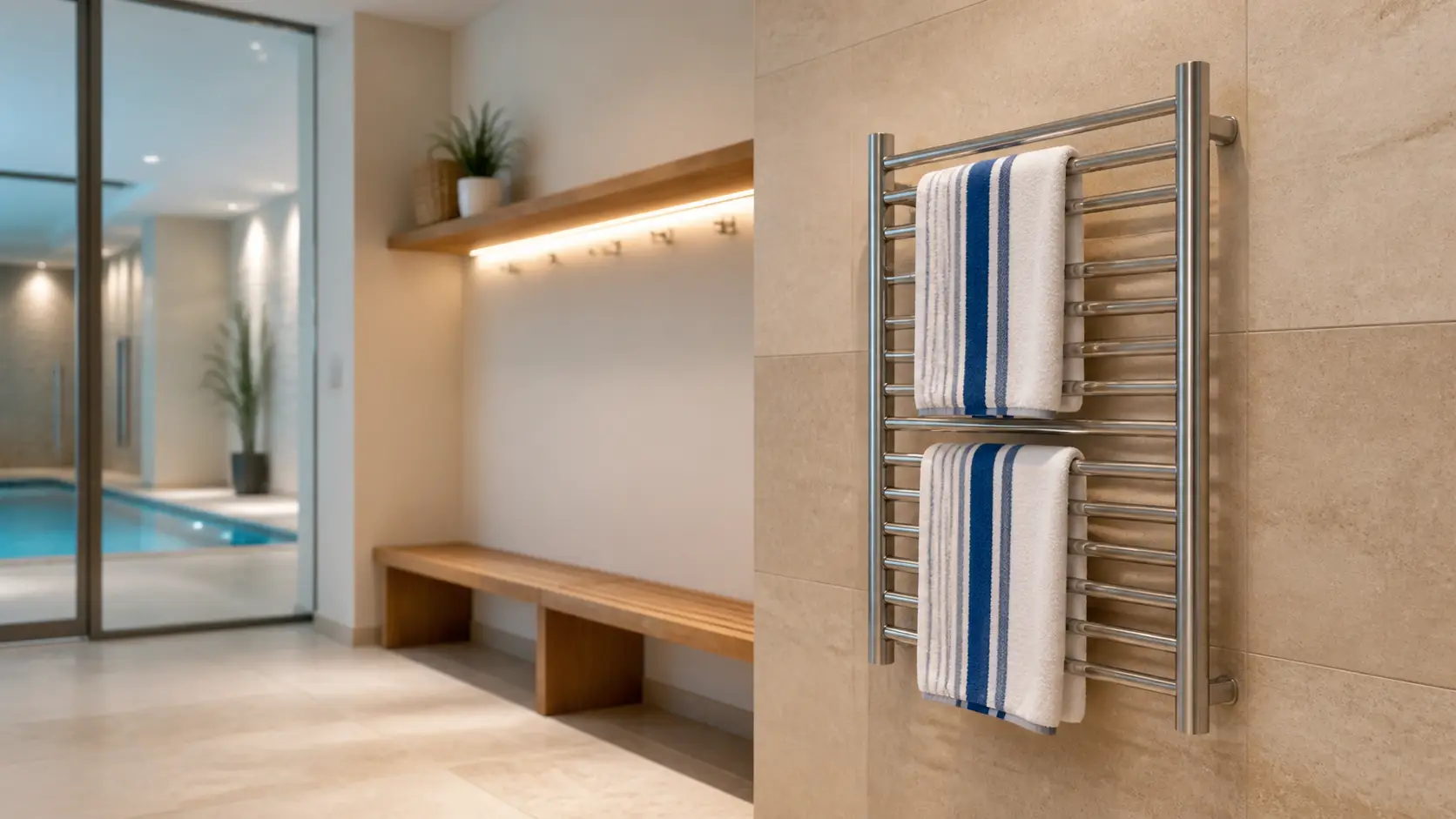
A heated towel rack can make sense in an indoor pool-house bathroom or changing area when the real need is a better place for wet towels to hang openly between swims. It must be planned as an indoor electrical fixture with a suitable location, adequate ventilation, and the exact model’s installation instructions—not as outdoor equipment or a shortcut around persistent moisture problems. Start by counting wet towels, confirming the power plan, and separating the dry changing zone from splash-prone areas.
A pool-house towel routine is different from a bathroom routine
Pool towels are often heavier, wetter, and used by more people at once than ordinary bath towels. That makes capacity and airflow more important than the idea of “warm towels.”
An open rack can give towels a defined place to dry gradually between uses, but it is not a commercial laundry dryer. Do not expect it to dry a pile of dripping towels or a room full of wet swimwear quickly. If towels remain very wet, use fewer items, better ventilation, an extra drying area, or a separate laundry process.
| Pool-house question | What to verify before buying |
|---|---|
| Is the rack indoors? | It should be installed only in a location the exact model is approved for |
| How many towels arrive at once? | Count daily peak towels, not just household members |
| Will towels hang open? | Leave gaps and avoid dense layers of fabric |
| Is the room humid? | Plan ventilation and investigate water sources |
| Where is power located? | Confirm the model’s installation requirements and local rules |
| Is the wall constantly splashed? | Choose a location outside direct-spray and splash exposure as required by the manual |
Keep “poolside” and “outdoors” separate
This is the first planning rule. A heated towel rack intended for an interior bathroom or changing room is not automatically suitable for an uncovered patio, a deck, or an area exposed to rain, pool spray, sun, or weather. An outdoor towel stand and an indoor electric towel rack solve different problems and follow different safety requirements.
Choose a location inside the pool house, indoor changing room, or finished bathroom where people can hang a towel after swimming without bringing the appliance into a splash-prone zone. The model instructions and local electrical requirements govern the final position. If the project includes a hardwired rack, new outlet, or uncertain wet-area placement, involve a qualified local electrician before installation.
Do not run a cord across a doorway, wet floor, or walking path to reach a more convenient spot. Do not use an extension cord. A good location that has no safe power plan is not actually a good installation location.
Size the rack around the peak towel load
Pool-house planning fails when capacity is based on an ordinary two-person bathroom. Think about the busiest hour: children arriving from the pool, guests coming in to change, or a family using towels, cover-ups, and hand towels at once.
Start by listing what needs to hang on the rack. Towels are the first priority. If you expect many thick beach towels or dripping swimsuits, give them a separate drying or laundry path. The rack works best when fabric can hang loosely and air can move around it.
For a shared setting, two towel zones may work better than one crowded rack: a heated rack for towels in rotation and a conventional drying rail or hooks elsewhere. Keep wet towels out of closed cabinets until they are dry.
Humidity and ventilation still do the heavy lifting
Pools bring moisture with them. Even indoors, a pool house may have high humidity from wet people, towels, doors opening, and the pool itself. A heated towel rack can assist drying on the fabric, but it cannot remove all that moisture from the air or fix condensation, leaks, poor enclosure design, or an underperforming exhaust system.
Make ventilation part of the same routine. Use the pool-house ventilation system as designed, operate the bathroom exhaust where appropriate, and investigate recurring fogged surfaces, musty odors, wet walls, or water stains. The U.S. Environmental Protection Agency identifies moisture control as the key step in controlling mold growth; rack heat is not a substitute for controlling the source of moisture.
Practical habits help too. Encourage swimmers to shake excess water from towels before hanging them, spread towels out rather than folding them, and avoid leaving wet textiles in a heap after guests depart. These steps protect the rack’s drying performance and keep the room easier to clean.
Choose materials and care with the room in mind
An indoor pool-house environment can be humid and may require more frequent surface care than a typical guest bath. Before purchase, read the exact product’s specifications for intended use, cleaning guidance, and finish care. Do not make a material choice based only on a product photo or a generic claim that a finish is “rustproof.”
Clean the rack only as the manufacturer directs. Avoid abrasive pads, harsh chemicals, and improvised coatings. Inspect the visible exterior periodically for loose mounting, cord damage, finish damage, or moisture where it should not be. If you see electrical damage, discoloration from heat, or corrosion that affects the appliance, stop using it and contact the appropriate support or professional service.
The electric heated towel rack maintenance guide provides a conservative home-care baseline, but the model manual remains the primary source for care instructions.
Plan the daily guest experience
A pool house should make the next step obvious. Place the rack where towels can be hung without blocking shower access, changing space, a toilet, a door swing, or a narrow circulation path. Make sure guests do not need to reach over the wettest part of the room to use it.
Use simple labels or a clear routine if the room serves many people: towels on the open rack, clean spares in dry storage, used swimwear in a washable hamper, and heavily soaked items in a separate drying or laundry process. This reduces the temptation to overload the rack or leave a towel pile on the floor.
If the goal is a quick spa-style warm towel before a swim, consider whether an enclosed towel warmer is actually the better category. For daily damp-towel management, an open rack usually makes more sense because fabric can remain spread out. Calithrex’s rack versus towel warmer guide explains the tradeoff.
Frequently asked questions
Can I put a heated towel rack outside by the pool?
Do not assume an indoor electric rack is outdoor-rated. Use it only in locations permitted by the exact model documentation and local requirements.
Can it dry wet swimsuits and towels?
It can help light, suitably spaced items dry gradually, but it is not a replacement for a laundry dryer or a way to process a large pile of soaking fabric. Follow fabric-care labels and the product manual.
How many pool towels can one rack handle?
Base the answer on usable bar space, towel thickness, and the model’s intended capacity. A crowded load dries poorly, so count open hanging positions rather than the total number of towels you hope to fit.
Is a heated towel rack enough to control pool-house humidity?
No. Use appropriate ventilation and address water sources, condensation, and leaks separately.
Does the rack need special wiring in a pool house?
Requirements vary by model, location, and local code. Confirm the installation plan with the manual and a qualified electrician whenever there is uncertainty.
The practical next step
Treat the rack as one part of an indoor towel-management plan: safe location, verified electrical setup, open towel spacing, effective ventilation, and a separate path for overload laundry. If all five fit the room, an electric heated towel rack can make the transition from pool to dry towels more orderly and comfortable.