If your heated towel rack feels warm on only one side, do not assume immediately that it is broken—but do not take it apart to find out. First remove heavy, overlapping towels, confirm the controls and timer, and allow the model’s full documented warm-up time. If uneven heat remains, becomes worse, or appears with unusual smells, discoloration, tripping, damage, or a warning in the manual, switch the unit off and contact the manufacturer, installer, or qualified service professional.
First, define what “uneven” means
A towel rack is not a laboratory hot plate. Different points on a frame can feel different while the appliance is warming up, while a thermostat cycles, or while some bars are covered by thick, damp fabric. A towel placed over one end also changes what your hand can feel: fabric holds moisture, blocks airflow, and insulates the metal beneath it.
The question becomes more important when the difference is persistent. For example, a rack that has completed its documented warm-up time but leaves an entire group of bars cold may need support. The same is true when a rack suddenly behaves differently after previously working normally.
| Situation | A safe way to interpret it | Best next step |
|---|---|---|
| Rack is newly switched on | Heat may not yet have spread through the frame | Wait for the manual’s full warm-up time |
| One area is covered by a thick towel | Fabric can make warmth feel lower and slow drying | Remove the towel and check later |
| Rack was overloaded | Overlap limits airflow and makes comparison unreliable | Use fewer, spread-out items |
| Different bars remain cold after normal warm-up | May be an equipment or control issue | Stop troubleshooting internally; contact support |
| Heat pattern changed with smell, damage, or tripping | This is not a routine drying issue | Switch off and arrange qualified help |
Check the operating conditions before judging the rack
Start with a dry bathroom floor and dry hands. Read the model manual for its intended warm-up behavior, timer settings, and permitted towel load. Then make only external, user-level checks.
Confirm that the rack is switched on and that a timer or daily schedule has not reached its end. If the product offers a temperature setting, confirm the selected setting according to the manual. A timer setting, standby mode, or interrupted schedule can create the impression that one part of the rack has failed when the unit is not completing a normal cycle.
Next, remove towels and other items without tugging on the appliance. Let the bare rack run only as the manufacturer permits. Do not put a thermometer, probe, or other object into the rack, and do not remove covers. Your goal is simply to see whether the heat pattern still seems unusual when fabric is not affecting it.
Towel placement can hide useful heat
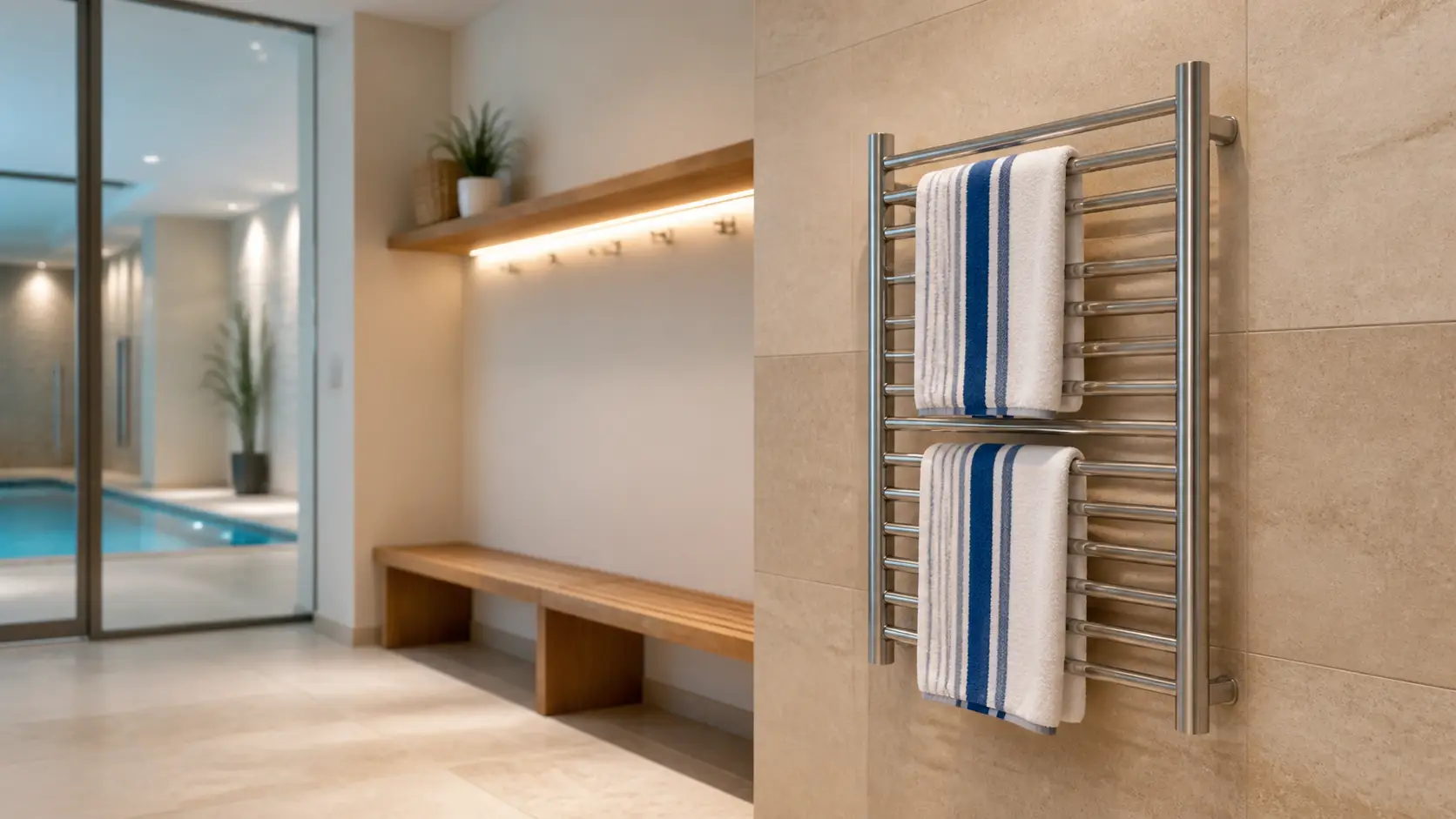
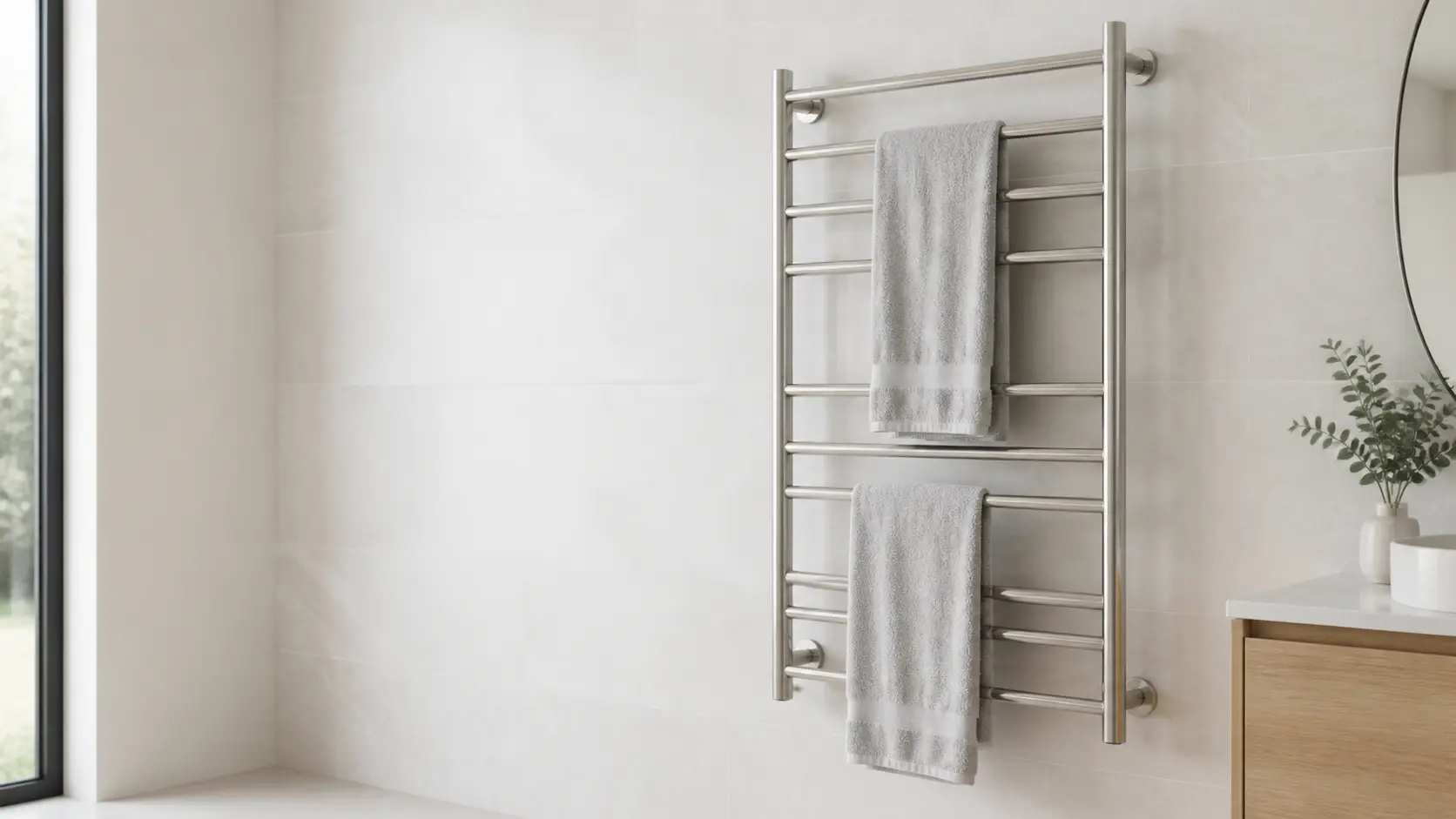
An open electric heated towel rack works best when towels are spread across bars with air gaps. A large bath sheet folded over several rungs may look tidy but often creates a dense, damp layer. It can slow moisture release and make some bars feel less warm than others.
Try a more realistic routine:
- Hang one towel across as much open bar area as the rack is designed to support.
- Avoid tightly wrapping towels around the side rails.
- Leave room between household towels rather than stacking them.
- Keep heavy laundry, shoes, and dripping items off the rack.
- Use the bathroom fan or other appropriate ventilation after bathing.
These steps do not repair an electrical defect. They simply eliminate poor airflow and excess fabric as explanations before you request service. Calithrex’s guide to hanging towels for better drying gives more practical layout ideas.
Why an internal repair is not the answer
Electric towel racks may use different heating designs and internal controls. The electrical and thermal parts are not homeowner-serviceable just because the frame is visible. Opening the product, probing wires, bypassing a control, or trying to “balance” the temperature could create a shock, burn, fire, or warranty problem.
This boundary matters even more for a hardwired rack. A hardwired connection, wall switch, timer, junction box, or circuit must be assessed by a qualified electrician or the original installer when there is any doubt. For plug-in models, stop using the unit if the cord, plug, outlet, or surrounding wall shows damage or heat marks.
Do not keep resetting a breaker or GFCI that trips again. Repeated tripping is not a normal way to restore a towel rack; it is a signal to stop and investigate through the appropriate professional path.
When to contact the manufacturer or service provider
Collect clear, useful information rather than trying a repair. Note the model name, installation type, approximate purchase date, and exact symptom. A helpful description might say: “After the stated warm-up time with no towels on it, the left-hand bars are still cold while the right-hand bars are warm.” Also note whether the display works, the timer is active, or any safety device has tripped.
Photos of exterior damage and the accessible model label can help, but do not move a hardwired appliance or open a panel just to obtain them. Follow the manufacturer’s support instructions and disclose any unusual smell, noise, discoloration, or water exposure immediately.
How this differs from slow towel drying
Even heat and fast drying are related but not identical. A rack can be functioning normally while a crowded bath sheet stays damp because evaporation needs air movement as well as heat. Conversely, an apparently cold section of the frame can indicate a product issue even if the towel nearest a warm bar feels comfortable.
Use the rack as a towel-drying aid, not as a replacement for bathroom ventilation or a solution to water intrusion. If mirrors stay fogged for long periods, walls feel damp, or there is a leak, address the room condition as well. The heated towel rack maintenance guide explains how ordinary cleaning and visual inspections fit into a safer routine.
Frequently asked questions
Is it normal for every bar to feel exactly the same?
Not necessarily. Warm-up, cycling, towel coverage, and product design can create modest differences. The manual for your exact model is the reference point.
Can thick towels make only part of the rack feel warm?
Yes. Thick, damp, overlapping fabric can insulate the bars and change how warmth is perceived. Remove it and allow the documented warm-up time before judging the rack.
What if half the rack stays cold when it is empty?
If that persists after the manual’s normal warm-up period, contact the manufacturer, seller, installer, or qualified service professional. Do not open the appliance.
Can I use the rack while I wait for service?
No, not if the manual treats the symptom as a fault or you notice damage, odor, tripping, water exposure, or abnormal heat. Switch it off and follow the service guidance.
Will a towel rack fix a damp bathroom?
No. It can help towels dry between uses, but ventilation and any water problems must be handled separately.
The practical next step
Make the safe external checks, remove towel coverage as a variable, and use the model manual as the decision point. Persistent uneven heat is a support question, not an invitation to DIY inside an electrical bathroom fixture.