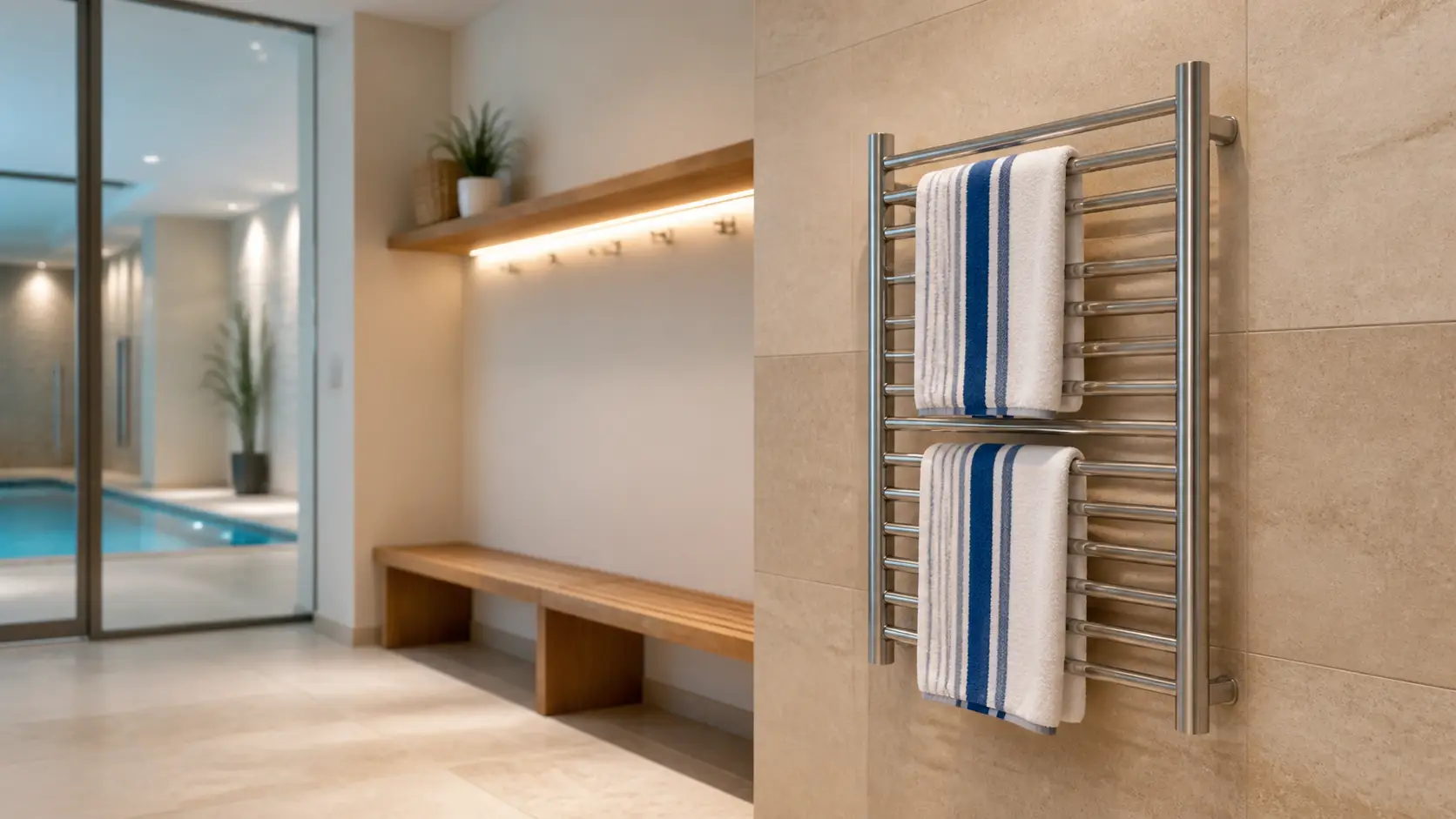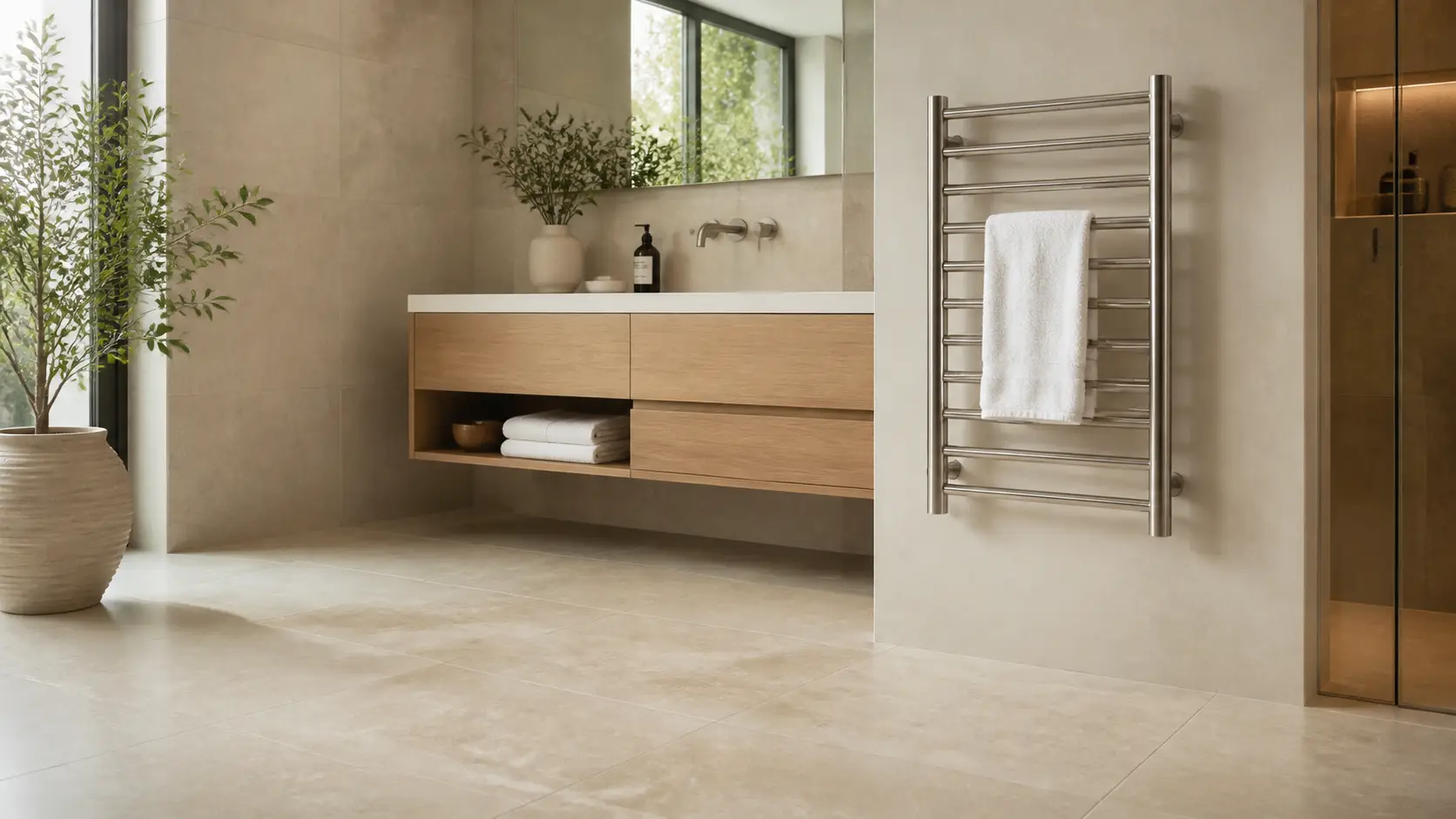
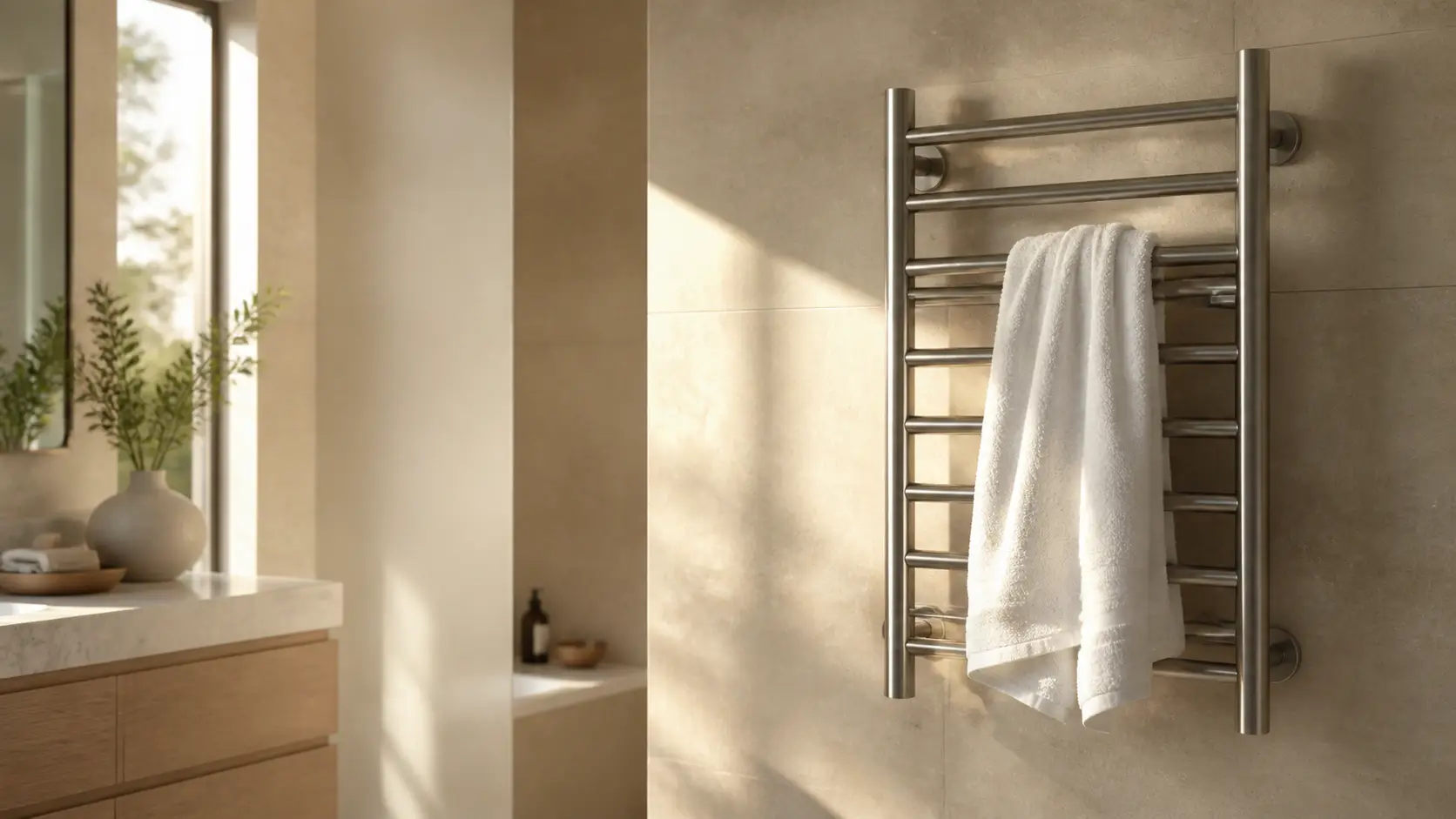
Heated towel racks are warm enough to make towels more comfortable and help them dry between uses, but the exact surface temperature is model-specific. It changes with the heating design, controls, room conditions, and whether towels cover the bars. Do not rely on one universal number from the internet. Check the product manual and specifications for the exact rack, then use it as directed and keep children, fabric-care instructions, and bathroom electrical safety in mind.
There is no single “heated towel rack temperature”
People ask this question because “warm” can mean very different things. A compact electric rack, a large ladder-style rack, and a hydronic towel radiator connected to a home heating system do not behave alike. Nor do a bare metal bar and the same bar covered by a thick, damp bath sheet.
Some manufacturers publish operating ranges for their models. For example, WarmlyYours states a range of 100–140°F for one of its towel-warmer control systems. That is useful as an example of a product-specific answer—not as a promise for every rack. Never use another brand’s figure to judge whether your own appliance is safe or defective.
| What affects how warm a rack feels | Why it matters |
|---|---|
| Model and heating technology | Designs regulate heat and distribute it differently |
| Control setting or timer | Some products offer settings; others use one operating range |
| Installation and power arrangement | The manual specifies the intended setup and controls |
| Room temperature and airflow | A cold, damp room can make warmth feel less noticeable |
| Towel thickness and placement | Thick, overlapping towels insulate bars and slow drying |
| Time since switch-on | The rack needs its documented warm-up period |
The practical standard is simple: use the number and instructions supplied with the exact appliance you own or are considering. If a listing does not make safety, control, and installation information easy to verify, treat that as a reason to ask questions before buying.
What should warm bars feel like?
An electric heated towel rack is designed for gentle, steady towel warmth and drying support. It is not meant to act like an oven, a space heater, or a towel bucket that quickly heats a bundled stack of fabric. You may notice that the metal bars feel warmer than the towel itself at first, especially when a towel is thick or damp.
How the towel is hung matters. A towel spread loosely across multiple bars exposes more fabric to warmth and air. A bath sheet folded into several dense layers traps moisture and can feel merely lukewarm on the outside even though the rack is doing its job. More fabric on a rack is not automatically more useful fabric.
Allow the full warm-up period in the manual before deciding whether the rack is operating normally. During that time, keep towels and robes within the intended load and avoid covering controls, switches, or vents if the product has them.
Why temperature is also a safety question
Warm surfaces still require normal household care. Consumer Reports notes that towel warmers can have hot surfaces and that users should follow the manufacturer’s fabric and safety guidance. This is particularly important around children, people with reduced sensitivity to heat, pets, and fabrics that should not be exposed to heat.
Use these everyday rules:
- Follow the model’s manual for placement, controls, cleaning, and permitted use.
- Keep towels spread out rather than tightly wrapped around the entire frame.
- Do not place plastic-backed products, items with unknown care instructions, or materials that the manual excludes on the rack.
- Keep the appliance and its electrical connection clear of direct spray and follow local installation requirements.
- Do not try to make a rack hotter by modifying controls, wiring, fuses, or timers.
- If the rack becomes unusually hot, smells unusual, is discolored, or behaves differently from the manual, switch it off and seek the appropriate service help.
A well-planned towel routine also uses ventilation. The rack can support drying on the towel; it cannot resolve a bathroom leak, chronic condensation, or failed exhaust fan.
Do more watts always mean a hotter towel?
No. Wattage describes electrical power, not a universal surface temperature or towel experience. A larger rack may use more power because it has more bars or more heating area. A product’s thermostat, control strategy, construction, and towel coverage all affect the result.
That is why comparing two products only by wattage can lead to a poor choice. Instead, compare the space available for towels, the number of users, documented controls, installation type, product instructions, and the drying routine you expect. The complete heated towel rack buying guide can help organize those practical checks.
Is a hotter rack always better for drying?
Not necessarily. Drying depends on both heat and airflow. A towel needs room for moisture to leave the fabric and for room air to carry it away. Putting several damp towels tightly on a very warm rack can still leave the center layers damp.
For better results, hang one towel per usable space where possible, leave visible gaps, and run the room’s ventilation appropriately after bathing. If you need an appliance that makes a dry towel feel intensely warm in a short time, an enclosed towel warmer is a different product category. An open rack is generally the better daily arrangement for holding and gradually drying used towels. See heated towel rack versus towel warmer for that distinction.
How to evaluate temperature before buying
Do not guess from a lifestyle photo. Use this short checklist before purchasing:
1. Find the exact model manual, not only a marketplace description. 2. Confirm whether it is plug-in, hardwired, or offers both options. 3. Read how the controls, timer, and temperature settings work. 4. Confirm the stated warm-up behavior and intended towel capacity. 5. Check the bathroom placement and local electrical requirements with a qualified professional when needed. 6. Review fabric limits and the support path if the rack does not behave as documented.
For a permanent bathroom installation, a qualified electrician or installer should resolve any uncertainty about wiring, wet-area placement, or local code. A comfortable towel is not worth improvising with electrical work.
Frequently asked questions
Can a heated towel rack burn you?
Surface temperature varies by model. Treat the rack as a warm appliance, use it as instructed, and supervise people who may be vulnerable to heat. Do not assume that one brand’s claimed temperature applies to another.
Why do the bars feel hotter than my towel?
Metal transfers heat differently than thick fabric. A damp or folded towel also absorbs heat while moisture evaporates, so it can feel less warm than the exposed bars.
Can I adjust the temperature?
Only if the exact model provides that control. Check its manual; many racks are designed around a fixed operating range or timer rather than fine temperature adjustment.
Should I test the rack with a thermometer?
Do not use an informal reading to override the product manual. If you suspect abnormal behavior, stop using the appliance and contact the manufacturer, seller, installer, or qualified service professional.
Will a warmer rack heat my whole bathroom?
Most electric heated towel racks are primarily towel fixtures, not main room-heating systems. Assess bathroom heating separately.
The practical next step
Choose a rack by verified documentation, suitable capacity, safe installation, and a realistic drying routine—not by a generic temperature claim. Then give towels space, use the controls as intended, and treat any unusual heat or electrical behavior as a reason to stop and ask for help.