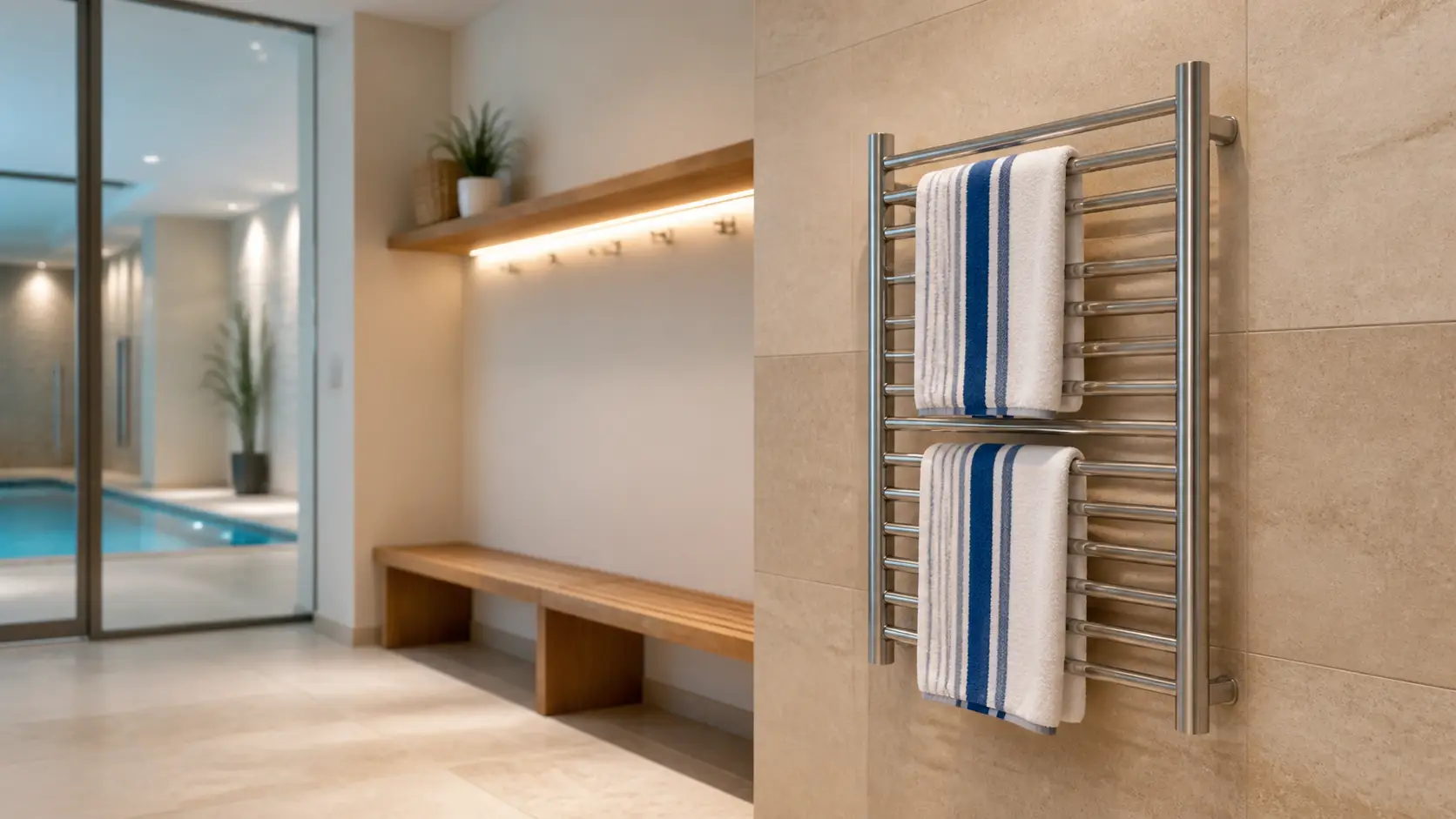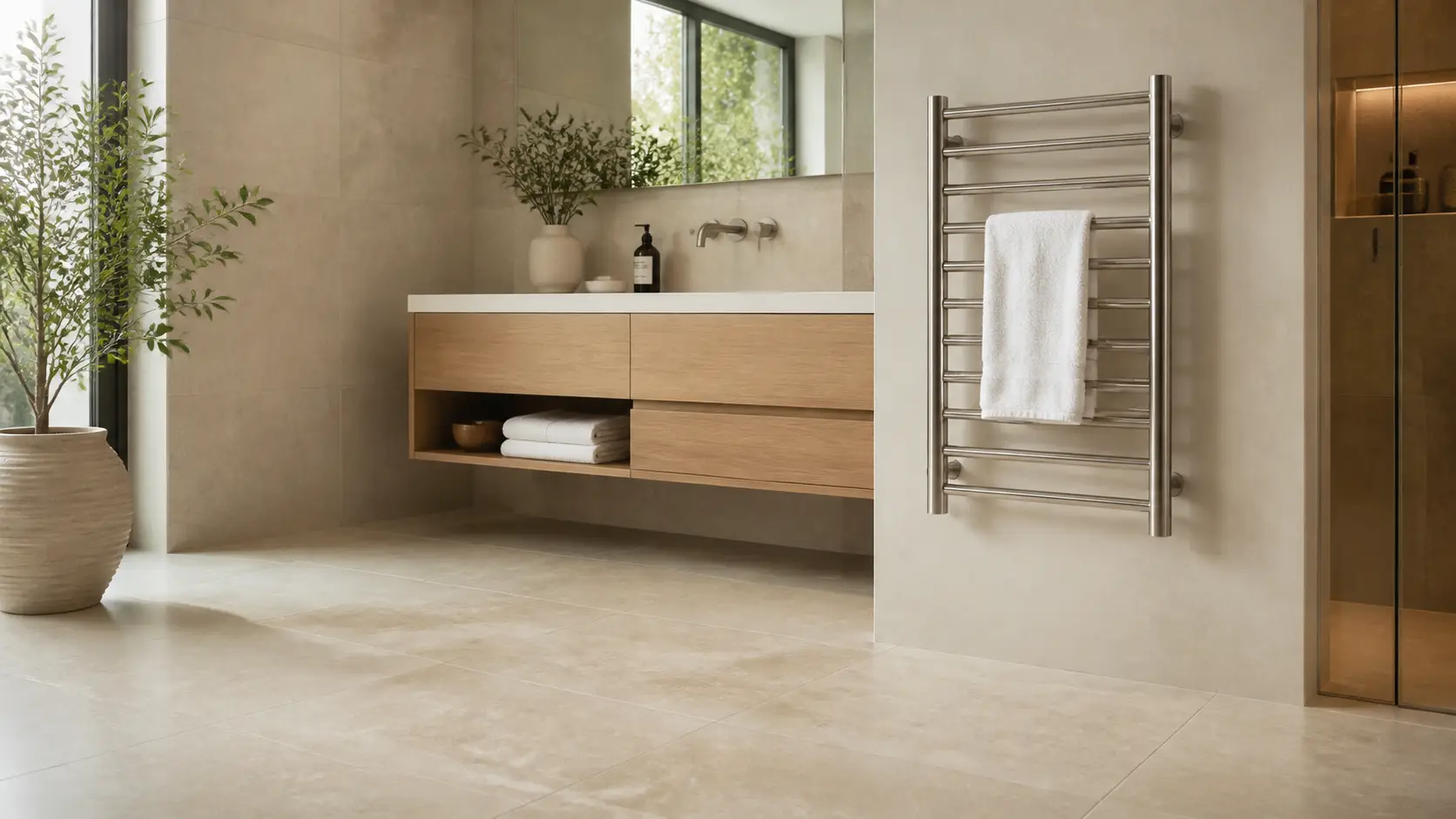
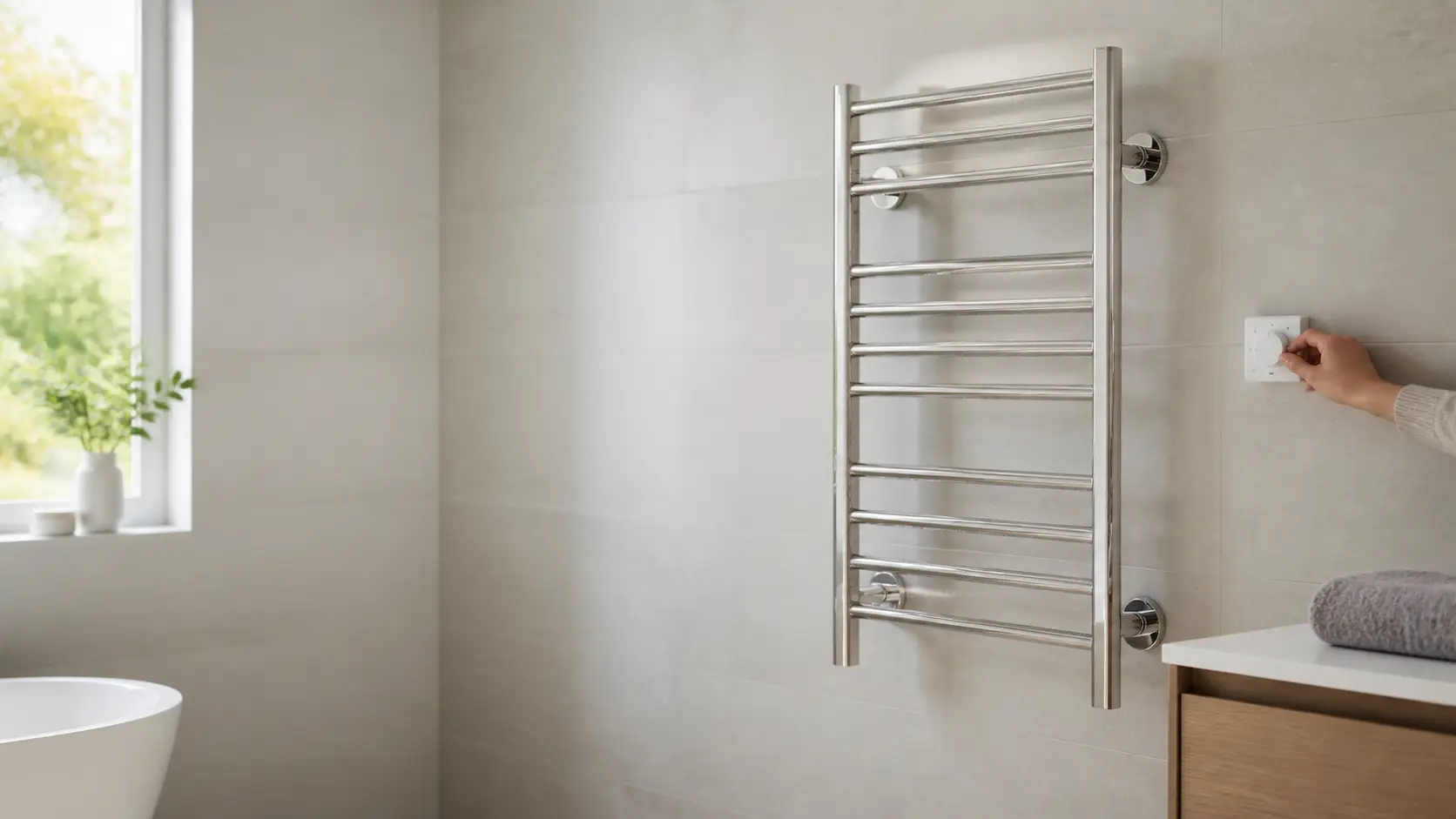
If a heated towel rack is not working, start with the simple, user-accessible checks: confirm that the power source is live, make sure the rack is actually switched on, review its timer or schedule, and read the model-specific manual. Do not open the unit, alter wiring, bypass a safety device, or keep using it if there is damage, an unusual smell, repeated tripping, or exposed wiring. Those are service or electrician issues.
Start with a safe reset, not a repair
It is frustrating to hang up a damp towel and find the rack cold. The good news is that a cold rack does not automatically mean a failed heating element. Many electric towel racks are controlled by a timer, a wall switch, a plug, a GFCI-protected outlet, or an automatic shutoff. A change in any one of those places can look like a product failure.
Before touching controls, make the area dry and keep hands dry. Then check the installation instructions for the exact model. Controls, indicator lights, warm-up times, and reset steps are not universal. A general article can help you organize the first checks; the product manual is the authority for the equipment in front of you.
| What you notice | Safe first check | Do not do |
|---|---|---|
| No light or warmth | Confirm the wall switch, plug, and timer state | Disassemble the rack or cord |
| Rack stopped after a set time | Review the timer or schedule in the manual | Assume it should run continuously |
| Outlet-powered rack is cold | Check whether the outlet works with a suitable device, if safe to do so | Use an extension cord or adapter to “test” it |
| Breaker or GFCI has tripped | Follow the home’s normal reset procedure once, if the manual permits | Repeatedly reset a circuit that trips again |
| Damage, smell, sparking, discoloration | Switch off power and arrange qualified help | Continue operating or trying resets |
Check the power path in order
For a plug-in rack, first look at the plug and outlet without pulling, twisting, or forcing anything. If the cord is loose, pinched, cracked, hot, or discolored, stop using the unit and contact the seller, manufacturer, or a qualified electrician as appropriate. A towel rack cord should never run across a walkway, through a door, or to a distant outlet by extension lead.
If the plug and cord look normal, check the nearby wall switch and the rack’s own power control. In bathrooms, outlets may be protected by a GFCI or other safety device. Follow the device and home instructions if it has tripped. If it trips again, do not keep resetting it to make the rack work. Repeated tripping is a reason to stop and have the circuit and appliance assessed.
For a hardwired rack, the visible controls may be a wall switch, timer, or controller rather than a plug. You can verify the control position and the schedule, but wiring, junction boxes, and internal connections are not homeowner troubleshooting tasks. Ask a qualified electrician or the installer to examine those parts.
Do not overlook timer and control settings
A timer is one of the most common explanations for a rack that appears to have “stopped.” Some controls are set for one to several hours, some use daily schedules, and some turn off after a power interruption until they are set again. An indicator light may confirm power, but it does not always prove that every heating component is operating normally.
Work through the manual slowly:
1. Confirm the current time if the controller uses schedules. 2. Confirm that the intended operating period has not ended. 3. Check whether a child lock, standby mode, or temperature setting is active. 4. Allow the full warm-up period stated for that exact model. 5. If the manual includes a user reset, follow only that documented method.
Avoid judging a rack after a minute or two. The frame and towels need time to warm, and a thick, folded bath sheet can make the heat feel less noticeable. That is different from a rack that shows no sign of operation after its documented warm-up time.
Separate a drying expectation from a fault
Sometimes the rack is working but the towel still feels damp. An open electric heated towel rack helps a towel dry between uses when fabric is spread across the bars and room air can carry moisture away. It is not a tumble dryer or a cure for a steamy room, a plumbing leak, or a weak bathroom fan.
For a simple check, remove overloaded or tightly folded items and allow air gaps between towels. Make sure the bathroom has appropriate ventilation during and after bathing. If the bars are gently warming according to the manual but a large towel remains damp, the issue may be towel placement, towel thickness, humidity, or operating time rather than an electrical fault. Calithrex’s guide to why heated towel racks dry towels slowly explains that distinction in more detail.
Stop using the rack when warning signs appear
Electrical appliances in bathrooms deserve caution. Switch the rack off at its normal control or the relevant circuit and seek qualified help when you notice any of the following:
- a burning smell, smoke, sparks, crackling, or visible overheating;
- a damaged cord, plug, switch, casing, or mounting point;
- water where it should not be, including a leak affecting the appliance or connection;
- a breaker or GFCI that trips again after one normal reset attempt;
- a hardwired rack that is loose, damaged, or has an unexplained loss of power;
- a result that conflicts with the manufacturer’s troubleshooting instructions.
Do not remove covers, probe inside the appliance, or substitute fuses, components, or wiring. Those actions can create hazards and may affect service eligibility.
A better routine after the problem is resolved
Once the rack is operating normally, give it a job it can do well. Spread towels out, avoid piling heavy laundry on the bars, use the supplied controls rather than improvised timers, and keep bathroom ventilation part of the routine. For cleaning and ordinary care, see the electric heated towel rack maintenance guide.
If you are replacing a failed unit or planning a new installation, compare the model documentation, power arrangement, controls, and support route before choosing a finish.
Frequently asked questions
Why did my towel rack stop working after a few hours?
It may have completed a timer cycle or schedule. Check the manual for the timer’s normal behavior before treating it as a fault.
Can I reset a GFCI or breaker more than once?
Do not repeatedly reset a device that trips again. Stop using the rack and arrange an appropriate inspection.
My indicator light is on, but the rack does not feel warm. What now?
Confirm the documented warm-up time and control settings. If the rack still does not warm as instructed, contact support or a qualified service professional rather than opening it.
Can I fix a hardwired heated towel rack myself?
Do not work on hardwired electrical connections yourself unless you are qualified and authorized to do so. Contact the installer or a qualified local electrician.
Does a cold towel mean the rack is broken?
Not necessarily. Thick or folded towels, short run times, crowded bars, and humid air can limit drying and warmth even when the rack is operating.
The practical next step
Use the manufacturer’s instructions to complete only the safe, external checks. If the cause is not clear—or any warning sign appears—turn the unit off and contact the appropriate service path. A dependable towel routine begins with safe power, open towel spacing, and realistic drying expectations.