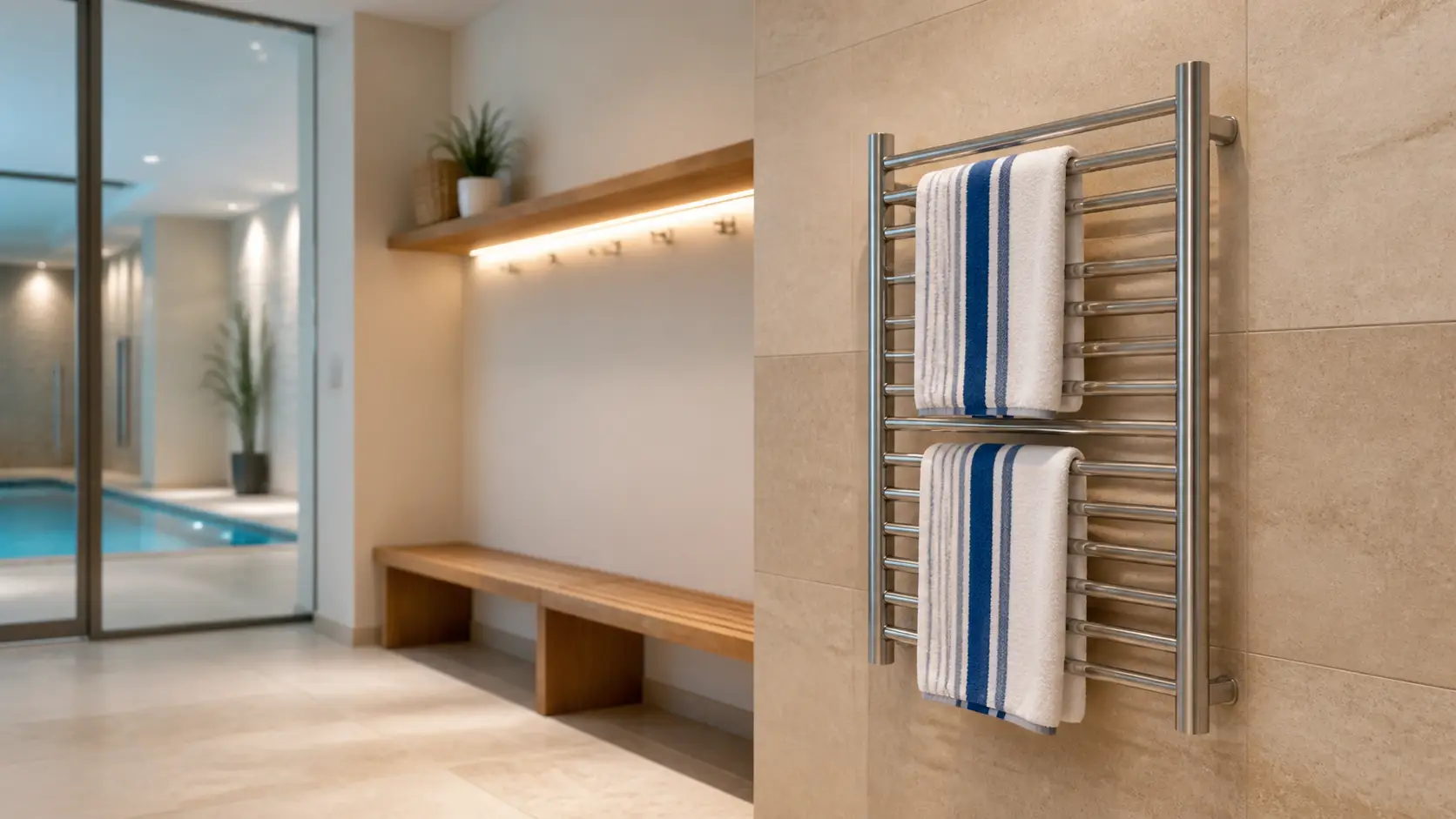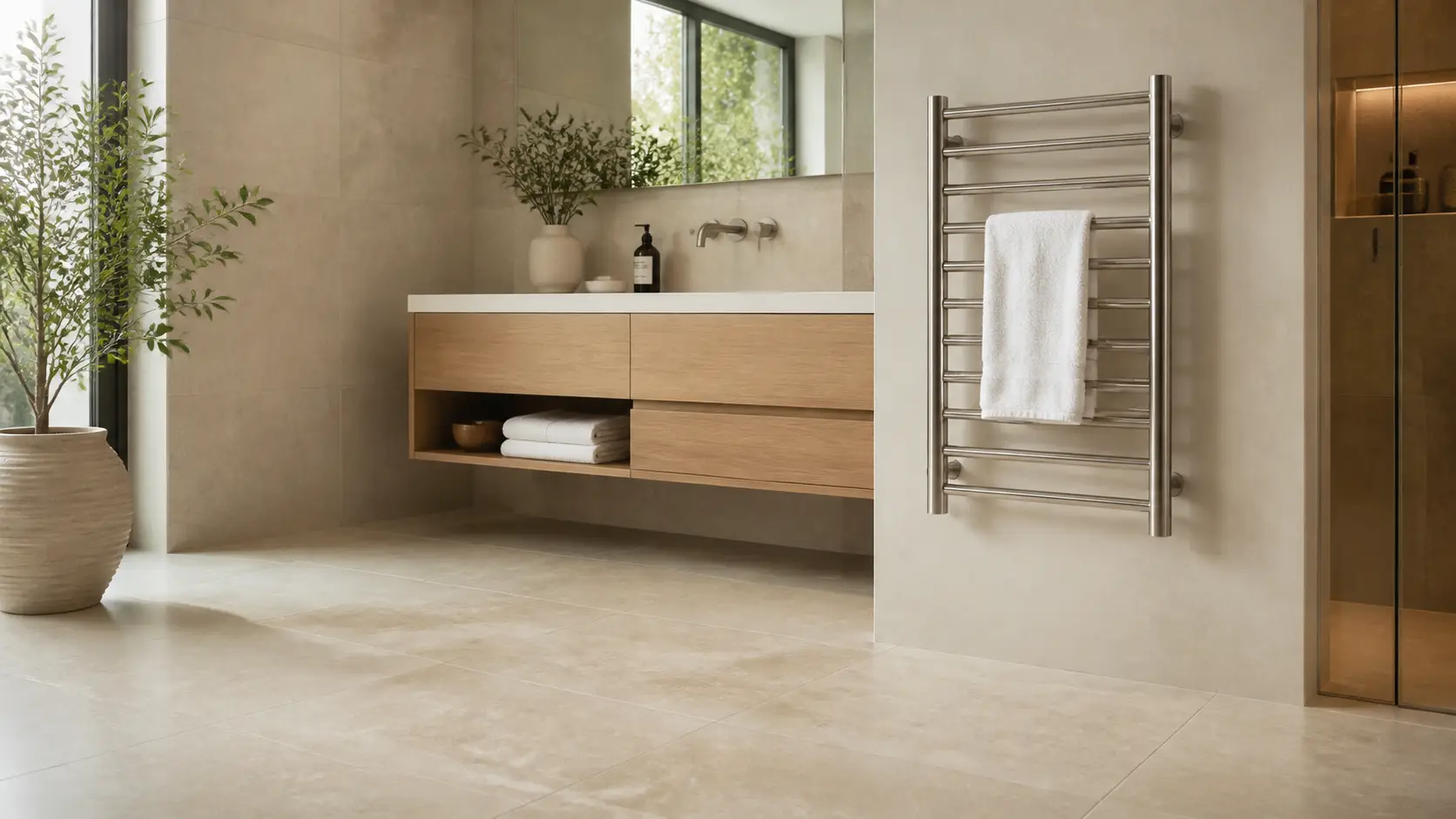
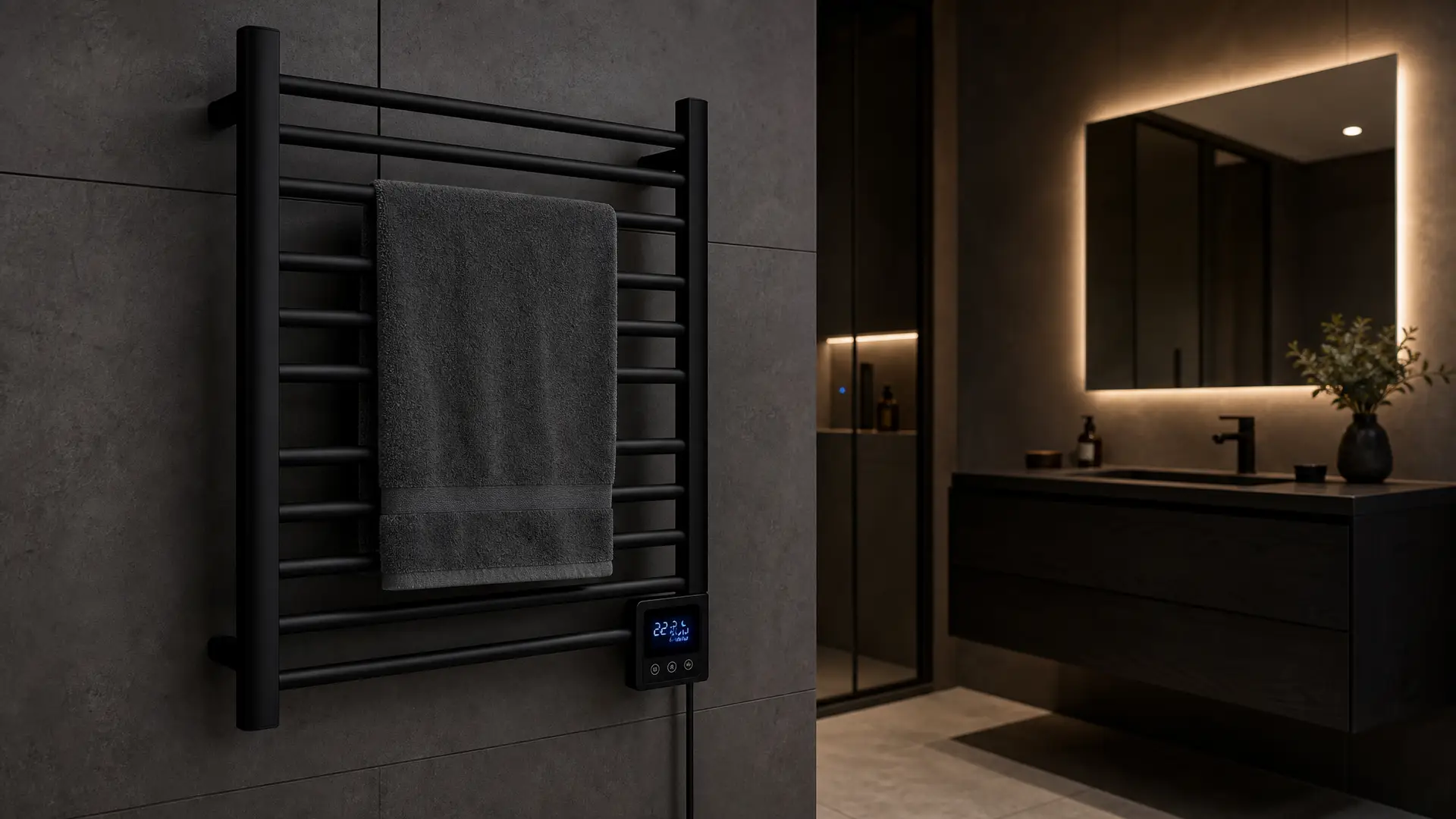
Bottom line: Most heated towel racks reach full surface temperature in 15 to 30 minutes. A 150W stainless steel rail in a 5 m² bathroom hits 50°C in about 20 minutes. With a programmable timer set to start 30 minutes before your shower, the towels are warm when you need them and you’re not paying to heat an empty room.
I have timed hundreds of units across different wattages, materials, and room sizes. The range is surprisingly narrow. What changes is not the top speed—it’s how long the rail stays hot and how evenly the heat spreads. This guide gives you real numbers and explains what drives the differences.
Typical Heat-Up Times by Wattage
| Wattage | Rail Material | Room Size | Time to 40°C | Time to Max Temp | Max Surface Temp |
|---|---|---|---|---|---|
| 100W | Stainless steel | 4 m² | 12 min | 25 min | 45°C |
| 150W | Stainless steel | 5 m² | 10 min | 20 min | 52°C |
| 200W | Stainless steel | 6 m² | 8 min | 15 min | 58°C |
| 150W | Aluminum | 5 m² | 8 min | 18 min | 48°C |
| 200W | Aluminum | 6 m² | 6 min | 12 min | 55°C |
Key takeaway: Wattage matters more than material for speed, but material affects how the heat feels. Aluminum heats faster but cools quicker. Steel takes longer to warm up but holds temperature longer.
What Affects Heat-Up Time?
1. Starting Temperature
A rail in a 10°C bathroom takes longer to reach operating temperature than one in an 18°C bathroom. The cold walls and air absorb initial heat. In unheated bathrooms, expect an extra 5–10 minutes.
2. Rail Material
| Material | Thermal Conductivity | Heat-Up Speed | Heat Retention |
|---|---|---|---|
| Aluminum | High | Fast | Poor |
| Stainless steel | Medium | Moderate | Good |
| Carbon steel | Low | Slow | Excellent |
Aluminum rails feel ready in 10 minutes. Stainless steel needs 15–20. Carbon steel can take 25+ but stays warm for an hour after switch-off.
3. Towel Load
Draping a cold, wet towel over the rail slows initial warming because the towel absorbs heat. A loaded rail may take 5–10 minutes longer to reach peak surface temperature than an empty one. The flip side: once warm, the towel traps heat and improves efficiency.
4. Room Ventilation
Drafty bathrooms lose heat faster. Poorly sealed windows or exhaust fans running continuously extend heat-up time. In a sealed 5 m² bathroom, a 150W rail reaches 50°C in 20 minutes. In a drafty one, it might take 30.
Towel Drying Time: The Real Test
Heat-up time is only half the story. What buyers actually care about is: how long until my towels are dry?
| Towel Type | Rail Wattage | Drying Time | Conditions |
|---|---|---|---|
| Standard bath towel (400g) | 150W | 2–3 hours | Wring-damp, spread flat |
| Heavy luxury towel (600g) | 150W | 3–4 hours | Wring-damp, folded |
| Hand towel | 100W | 1–1.5 hours | Spread over 2 bars |
| Family load (4 towels) | 200W | 3–4 hours | Evenly distributed |
Pro tip: Spreading towels flat across multiple bars dries them 30% faster than bunching them on one bar.
Why Timers Matter
A rail running 24/7 wastes electricity and over-dries towels. The smarter approach: set a timer to start the rail 30–45 minutes before typical bathroom use.
| Schedule | Timer Setting | Usage |
|---|---|---|
| Morning rush | 6:00 AM – 9:00 AM | Warm towels for morning showers |
| Evening routine | 6:00 PM – 10:00 PM | Post-work shower comfort |
| Hotel setup | 5:00 AM – 10:00 AM + 5:00 PM – 11:00 PM | Guest peak times |
Programmable timers cost $10–$20 and cut running costs by 50–70%.
The Bottom Line
Expect 15–30 minutes to full heat. Plan for 2–4 hours to dry a damp bath towel completely. The best user experience comes from a timer that starts the rail before you need it, not from leaving it on all day.
If you’re sourcing for retail, emphasize timer compatibility. It turns a “slow” 20-minute heat-up into a “perfect” zero-wait experience.
Looking for timer-compatible heated towel racks? We offer programmable and smart WiFi models with app scheduling. See bulk options →