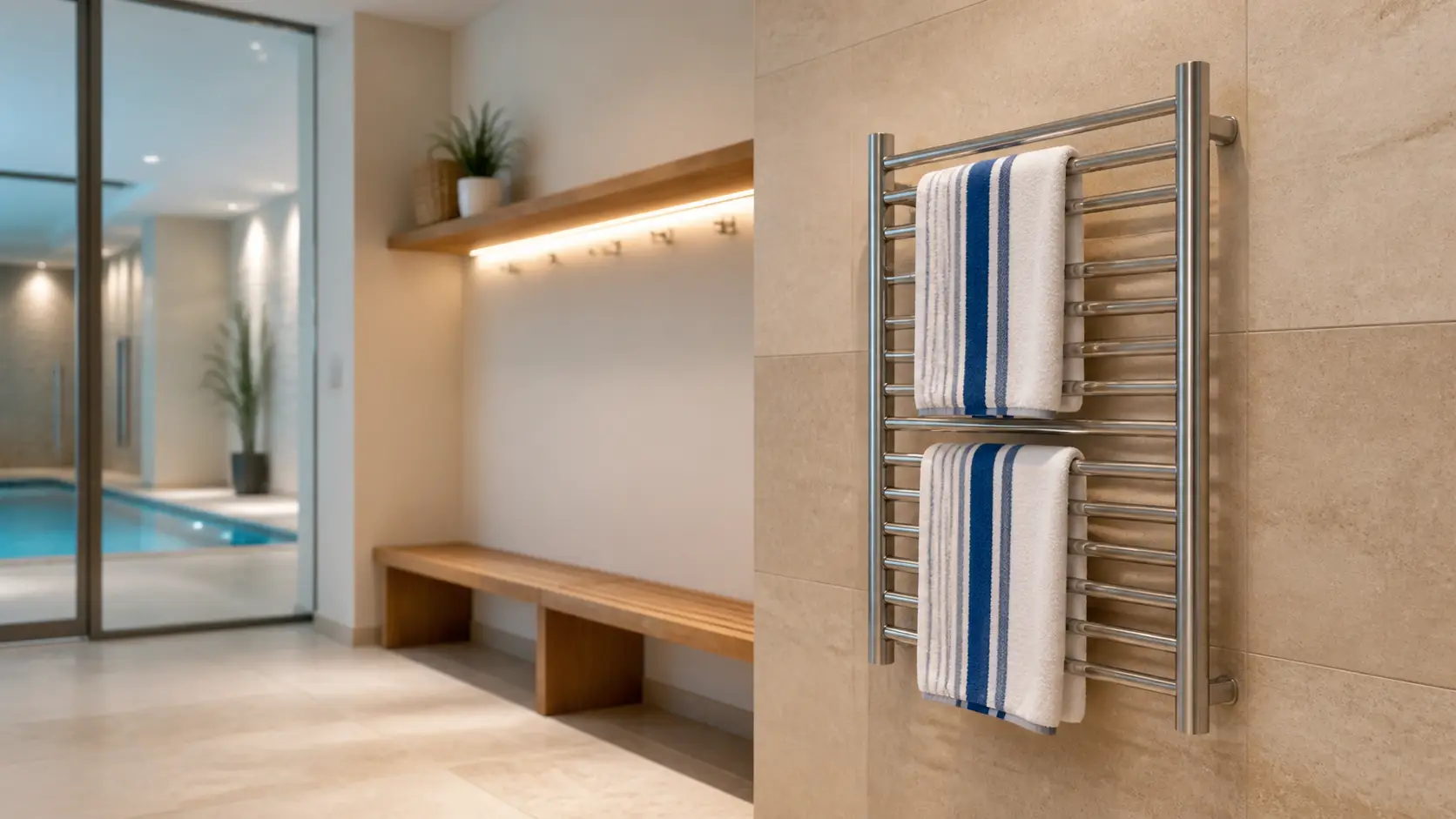
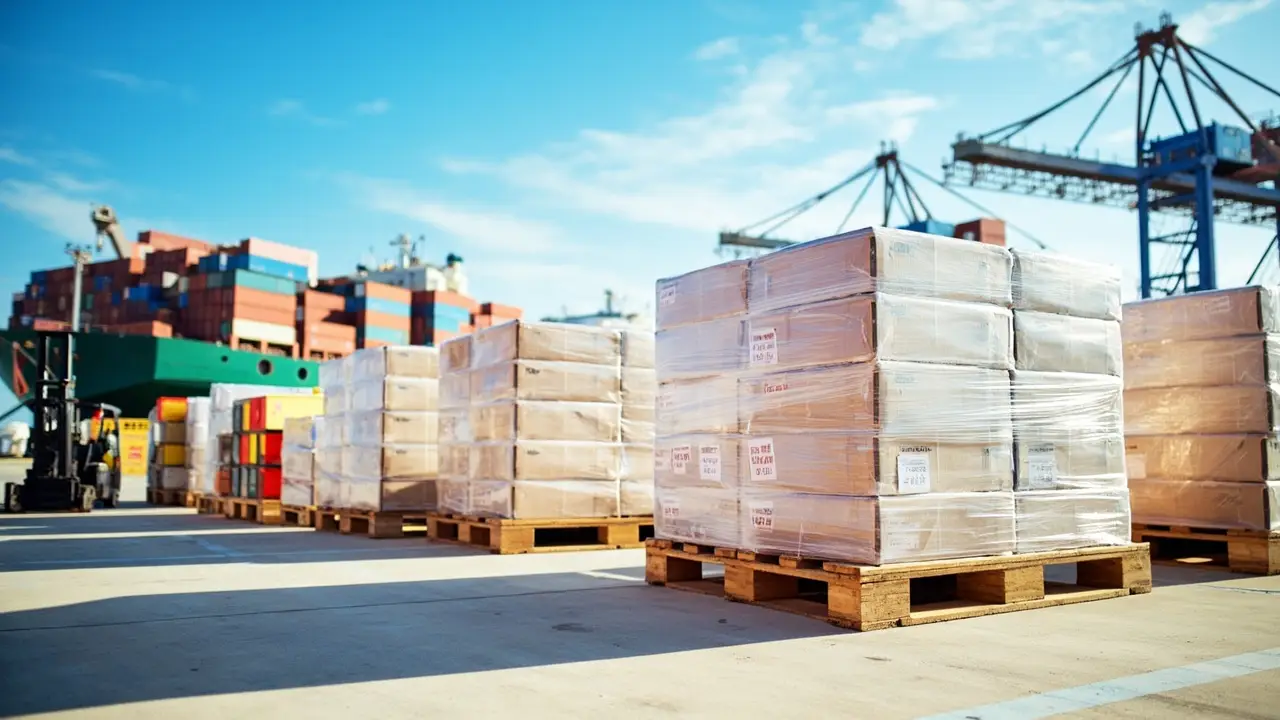
Bottom line: Ocean freight from China to the US West Coast takes 14–18 days and costs $2,000–$4,500 per container. Add 5–10 days for customs and inland delivery. For heated towel rack importers, the real challenge is not the ocean crossing. It is avoiding detention fees, customs holds, and surprise charges that can add 20% to your landed cost.
Most first-time buyers focus on the factory price and treat shipping as an afterthought. That is a costly mistake. In the heated towel rail business, freight, duties, and port fees can represent 25%–40% of your total landed cost. I have seen importers lose their entire margin because they did not account for demurrage or booked the wrong container size. Understanding the full logistics chain is what separates profitable importers from those who bleed margin on every shipment.
This guide covers everything from port selection to customs clearance, with real numbers drawn from 8 years of exporting bathroom products to the US market.
Ocean Freight: FCL vs LCL for Heated Towel Racks
Full Container Load (FCL)
FCL means you book an entire container. For heated towel rails, this is the most common arrangement once volume justifies it.
Container sizes that matter:
| Container Type | Internal Dimensions | Typical Capacity (Towel Rails) | Best For |
|---|---|---|---|
| 20GP (20-foot) | 5.9m × 2.35m × 2.39m | 450–550 units | Small-medium batches, single SKU |
| 40GP (40-foot) | 12.03m × 2.35m × 2.39m | 900–1,100 units | Large batches, mixed SKUs |
| 40HQ (40-foot high cube) | 12.03m × 2.35m × 2.69m | 1,000–1,200 units | Bulky packaging, mixed orders |
Heated towel rails are bulky but lightweight. A typical unit with packaging weighs 8–15 kg. A 20GP container can hold 500+ units by volume, but you will hit the weight limit (21,000 kg) only if packing extremely dense. This means container utilization is driven by volume, not weight.
FCL advantages:
– Lower per-unit shipping cost
– No risk of cargo damage from other shippers’ goods
– Faster port processing (no consolidation/deconsolidation)
– Predictable timeline
FCL disadvantages:
– Need enough volume to fill a container economically
– Upfront commitment to a full container
Less Than Container Load (LCL)
LCL means your cargo shares a container with other shippers. The freight forwarder consolidates multiple shipments at a warehouse in China, then deconsolidates at the US destination.
When LCL makes sense:
– Trial orders under 200 units
– Testing a new supplier before committing to FCL volume
– Urgent replenishment when you do not have enough for FCL
LCL pricing structure:
– Charged by cubic meter (CBM) or weight, whichever is higher
– Typical rate China to US West Coast: $35–$65 per CBM
– A standard heated towel rail carton (4 units) is roughly 0.08–0.12 CBM
– Minimum charge: usually 1 CBM
The LCL trap: LCL rates look cheap on paper, but the add-on fees stack up fast.
- Origin consolidation fee: $50–$100
- Destination deconsolidation (CFS) fee: $100–$200
- Documentation fee: $50–$80
- Handling fee per carton: $5–$10
For a 100-unit shipment (25 cartons), these fees can add $400–$700. That often erases the savings versus just booking a 20GP FCL at partial fill.
Rule of thumb: If your cargo exceeds 10–12 CBM, get an FCL quote and compare all-in costs.
Major Shipping Routes: China to USA
West Coast Route (Fastest)
Ports: Shanghai / Ningbo / Shenzhen → Los Angeles / Long Beach / Oakland
- Transit time: 14–18 days
- Best for: Buyers on the West Coast or Midwest (via rail)
- Current market rate (20GP): $1,800–$3,200
- Peak season surcharge: +$300–$600 (August–October)
This is the default route for most heated towel rack shipments. LA/Long Beach handles the highest volume but also experiences the worst congestion. During the 2021–2022 backlog, some containers sat for 3 weeks. Oakland is often 2–3 days faster during peak periods.
East Coast Route (Panama Canal)
Ports: Shanghai / Ningbo → New York / Savannah / Charleston (via Panama Canal)
- Transit time: 28–35 days
- Best for: East Coast buyers who want direct delivery without cross-country rail
- Current market rate (20GP): $2,800–$4,500
- Panama Canal note: Drought restrictions have added 3–7 days to transit times since 2023
East Coast Route (Suez Canal)
Ports: Shenzhen / Hong Kong → New York / Savannah (via Suez Canal)
- Transit time: 30–38 days
- Best for: Southern China factories shipping to the East Coast
- Current market rate (20GP): $2,600–$4,200
- Suez risk: Geopolitical disruptions (Red Sea tensions) have caused rerouting around Africa, adding 10–14 days
Rail from West Coast (Inland)
After arriving at LA/Long Beach, containers move inland by rail to major hubs:
- Chicago: 5–7 days additional
- Memphis: 6–8 days additional
- Dallas: 5–7 days additional
- Columbus (OH): 7–9 days additional
Rail is included in most intermodal freight quotes. The key variable is chassis availability—shortages can delay pickup from the port by 2–5 days.
Real Shipping Costs: A Breakdown
Example Shipment: 500 Units, Shanghai to Los Angeles
Product: 800mm stainless steel heated towel rails, 4 units per carton
Total cartons: 125
Total volume: ~15 CBM
Total weight: ~1,800 kg
| Cost Item | Amount | Notes |
|---|---|---|
| Ocean freight (20GP FCL) | $2,400 | Base rate, subject to BAF/CAF adjustments |
| Bunker adjustment (BAF) | $180 | Fuel surcharge, fluctuates monthly |
| Terminal handling origin | $120 | Shanghai port loading |
| Terminal handling destination | $280 | LA port unloading |
| Documentation fee | $85 | Bill of lading, customs docs |
| Customs clearance (US) | $150 | Broker fee |
| ISF filing (10+2) | $50 | Required 24 hours before loading |
| Inland delivery (LA to Phoenix) | $650 | Drayage + trucking |
| Total logistics cost | $3,915 | ~$7.83 per unit |
Compare this to the ex-factory price of $36/unit from our FOB pricing guide. Shipping represents 22% of landed cost. Add duties and insurance, and the total is closer to 30%.
What Moves the Price
Seasonality:
– January–March: Lowest rates, post-holiday lull
– April–July: Moderate, gradual climb
– August–October: Peak season, rates up 20%–40%
– November–December: Pre-holiday rush, then sharp drop
Container availability:
– 2021–2022 saw container shortages with rates hitting $15,000+ per container
– 2023–2024 normalized to $1,500–$3,500
– Monitor rates 30 days before shipment to lock favorable pricing
Carrier choice:
– Maersk, MSC, CMA CGM: Premium carriers, reliable schedules, 10%–15% higher rates
– COSCO, Evergreen, OOCL: Mid-tier, good value
– Smaller carriers: Lowest rates but less schedule reliability. Use them only if your delivery date is flexible.
US Customs and Import Regulations
HS Code Classification
Heated towel rails fall under HS Code 7321.89 (other appliances of iron or steel for domestic use). This classification determines your duty rate.
Current US duty rates (as of 2024–2025):
– Base rate: 3.4% (column 1 general rate)
– Section 301 tariffs: Additional 25% on certain Chinese-origin goods
– Heated towel rails: Currently subject to 25% Section 301 tariff
– Total duty: 28.4% on declared customs value
Important: Duty is calculated on the customs value, which is typically the FOB price plus insurance and freight (CIF value). Not the retail price. Not the ex-factory price alone.
Required Documentation
| Document | Purpose | Who Provides |
|---|---|---|
| Commercial invoice | Customs valuation | Supplier |
| Packing list | Carton contents, weights | Supplier |
| Bill of lading (B/L) | Ownership and transport contract | Carrier/forwarder |
| Certificate of origin | Country of manufacture proof | Supplier / chamber of commerce |
| UL test reports | Safety compliance (if claiming UL) | Test lab / supplier |
| ISF filing | Security screening (required before loading) | US importer or broker |
ISF (Importer Security Filing) — The 10+2 Rule
US Customs requires electronic filing of cargo information before the vessel departs China:
- 10 data elements from importer: Seller, buyer, manufacturer, ship-to party, container stuffing location, consolidator, importer of record, consignee, country of origin, commodity HTS number
- 2 data elements from carrier: Vessel stow plan, container status messages
Penalty for late or inaccurate ISF: $5,000 per violation. Your customs broker handles this, but you must provide accurate data promptly.
Customs Examination Types
| Exam Type | Frequency | Cost | Delay |
|---|---|---|---|
| X-ray (VACIS) | ~5% of shipments | $150–$300 | 1–2 days |
| Tailgate | ~2% of shipments | $200–$400 | 2–3 days |
| Intensive (physical) | ~1% of shipments | $800–$1,500 | 5–10 days |
Random exams are unavoidable. The best protection is clean, accurate documentation and consistent classification across shipments. I have had clients get flagged because their commercial invoice listed “bathroom heater” one month and “towel radiator” the next. Consistency matters.
ACE Entry Types
Most heated towel rack importers use one of two entry types:
- Consumption entry (Type 01): Goods enter US commerce immediately. Duty paid at entry. Standard for resale inventory.
- Warehouse entry (Type 21): Goods stored in bonded warehouse, duty deferred until withdrawal. Useful for managing cash flow.
Delivery Timeline: From Factory to Warehouse
Typical Schedule (Shanghai to Los Angeles, FCL)
| Stage | Duration | Cumulative |
|---|---|---|
| Factory production complete | — | Day 0 |
| Inland trucking to Shanghai port | 1–2 days | Day 2 |
| Port arrival and customs export | 1–2 days | Day 4 |
| Vessel loading and departure | 1 day | Day 5 |
| Ocean transit | 14–18 days | Day 23 |
| Arrival at LA/Long Beach | — | Day 23 |
| Port discharge and availability | 2–4 days | Day 27 |
| Customs clearance | 1–3 days | Day 30 |
| Inland delivery to warehouse | 2–5 days | Day 35 |
Total: 30–40 days from factory to your warehouse.
Add 7–14 days for peak season port congestion, customs examination, chassis shortages, or weather delays.
Planning rule: Order 60 days before you need stock in your warehouse. If you need inventory for a November sales push, place your factory order in August.
Hidden Costs and How to Avoid Them
Demurrage and Detention
These are the most painful surprise charges:
- Demurrage: Container sits at the port past free days. $100–$200 per day after day 4–5.
- Detention: Container sits at your facility past free days. $50–$100 per day after day 7–10.
Prevention:
– Pre-clear customs before the vessel arrives
– Have a trucker booked for the day the container becomes available
– Return empty containers promptly
– Consider using a customs-bonded warehouse if your facility cannot accept immediately
Port Congestion Surcharges
During peak periods, carriers add:
– Peak season surcharge (PSS): $300–$600 per container
– Port congestion surcharge: $200–$400 per container
– Chassis shortage surcharge: $100–$200 per container
These are negotiable if you have an annual contract with a forwarder. Spot-rate shippers eat the full surcharge.
Customs Penalties
- Misclassification: Duty rate difference + potential penalty of 20%–100% of underpaid duty
- Valuation errors: If customs determines your declared value is too low
- Missing documentation: Shipment held until resolved
Fix: Use an experienced customs broker who knows bathroom fixtures. The $150 broker fee is cheap insurance against a $5,000 penalty. I have seen importers try to save money with a generalist broker who misclassified heated towel rails as “steel furniture” and triggered a $3,200 penalty.
Insurance Gaps
Marine cargo insurance covers loss or damage during transit. Key decisions:
- All-risk policy: Covers everything except named exclusions. Recommended for heated towel rails (powder coat damage, bending).
- Warehouse-to-warehouse: Coverage from supplier factory to your warehouse, not just port-to-port.
- Declared value: Insure for 110% of CIF value to cover replacement cost plus freight.
Typical premium: 0.15%–0.3% of insured value. For a $20,000 shipment, that is $30–$60.
Working with Freight Forwarders
What a Good Forwarder Does
- Books ocean space at competitive rates
- Handles export clearance in China
- Files ISF and manages US customs entry
- Arranges inland trucking or intermodal rail
- Tracks shipment and alerts you to delays
- Provides cargo insurance options
- Offers warehousing and distribution if needed
How to Choose a Forwarder
Questions to ask:
1. How many China–US bathroom product shipments do you handle monthly?
2. Do you have an office or agent in Shanghai/Shenzhen?
3. What is your typical LA port clearance time?
4. Can you provide references from other building material importers?
5. Do you offer annual volume contracts with rate locks?
Red flags:
– Quotes that seem 30%+ below market rate (hidden fees coming)
– No US customs broker license (must be licensed)
– Cannot explain ISF requirements clearly
– No tracking portal or proactive communication
Annual Contract vs Spot Rate
If you ship 5+ containers per year, negotiate an annual contract:
| Approach | Rate Stability | Flexibility | Best For |
|---|---|---|---|
| Spot rate | Market-driven, volatile | High (book as needed) | Irregular shippers |
| Annual contract | Fixed or capped rates | Lower (commit to volume) | Regular importers |
| NVOCC contract | Hybrid (base rate + adjustments) | Medium | 3–10 containers/year |
Annual contracts typically save 10%–20% versus spot rates. They also include priority space allocation during peak season, which matters when carriers start turning away spot bookings in September.
Packaging for Ocean Freight
Heated towel rails are vulnerable to damage in transit. The most common issues:
- Bent bars: From stacking pressure or rough handling
- Chipped powder coat: Carton abrasion or moisture
- Scratches: Insufficient internal protection
- Carton collapse: Inadequate box strength for stacking
Packaging Best Practices
| Element | Standard | Premium |
|---|---|---|
| Inner wrap | Polybag | Foam sleeve + polybag |
| Inner box | Single-wall corrugated | Double-wall corrugated |
| Corner protection | None | Foam corners |
| Master carton | 4 units, single-wall | 4 units, double-wall, banded |
| Palletization | Floor-loaded | On pallets, stretch-wrapped |
| Moisture protection | None | Desiccant packs |
For FCL: Floor-loading maximizes container space but requires careful stacking. Palletizing reduces damage risk but uses 10%–15% more container volume.
For LCL: Always palletize. Your cargo will be handled multiple times during consolidation and deconsolidation.
Marking requirements:
– “FRAGILE” and “HANDLE WITH CARE” labels
– Country of origin (“Made in China”)
– Carton dimensions and weight
– SKU and purchase order number
Summary: Key Numbers to Remember
| Metric | Typical Value |
|---|---|
| Ocean transit (China to US West Coast) | 14–18 days |
| Ocean transit (China to US East Coast) | 28–35 days |
| Total door-to-door time | 30–40 days |
| 20GP container cost (West Coast) | $1,800–$3,200 |
| 40HQ container cost (West Coast) | $2,800–$4,800 |
| US import duty (Section 301 included) | 28.4% |
| Customs clearance time | 1–3 days |
| Inland delivery (West Coast to Midwest) | 5–9 days |
| Cargo insurance premium | 0.15%–0.3% of value |
| Demurrage (after free days) | $100–$200/day |
| Detention (after free days) | $50–$100/day |
Need Help with Your First Shipment?
We export heated towel rails to the USA year-round and work with established freight forwarders on both coasts.
What we handle:
– Export clearance and documentation from China
– FCL and LCL booking at competitive contracted rates
– ISF filing coordination
– UL and compliance documentation for US customs
– Proper export packaging to survive ocean transit
– Door-to-door tracking and delivery coordination
To get a shipping quote, please provide:
– Product specifications and quantity
– Destination city or zip code
– Preferred shipping term (FOB, CIF, or DDP)
– Target delivery timeframe
📧 Request shipping estimate: Submit your inquiry here. We will reply with route options, timeline, and all-in cost breakdown within 24 hours.
Minimum shipment: 50 units (LCL) or 300 units (FCL). Sample orders ship DDP worldwide.
Related Articles:
– Wholesale Heated Towel Rack Pricing: FOB vs CIF vs DDP Explained
– OEM Customization: From Prototype to Mass Production
– The Complete Guide to Heated Towel Rail Certifications