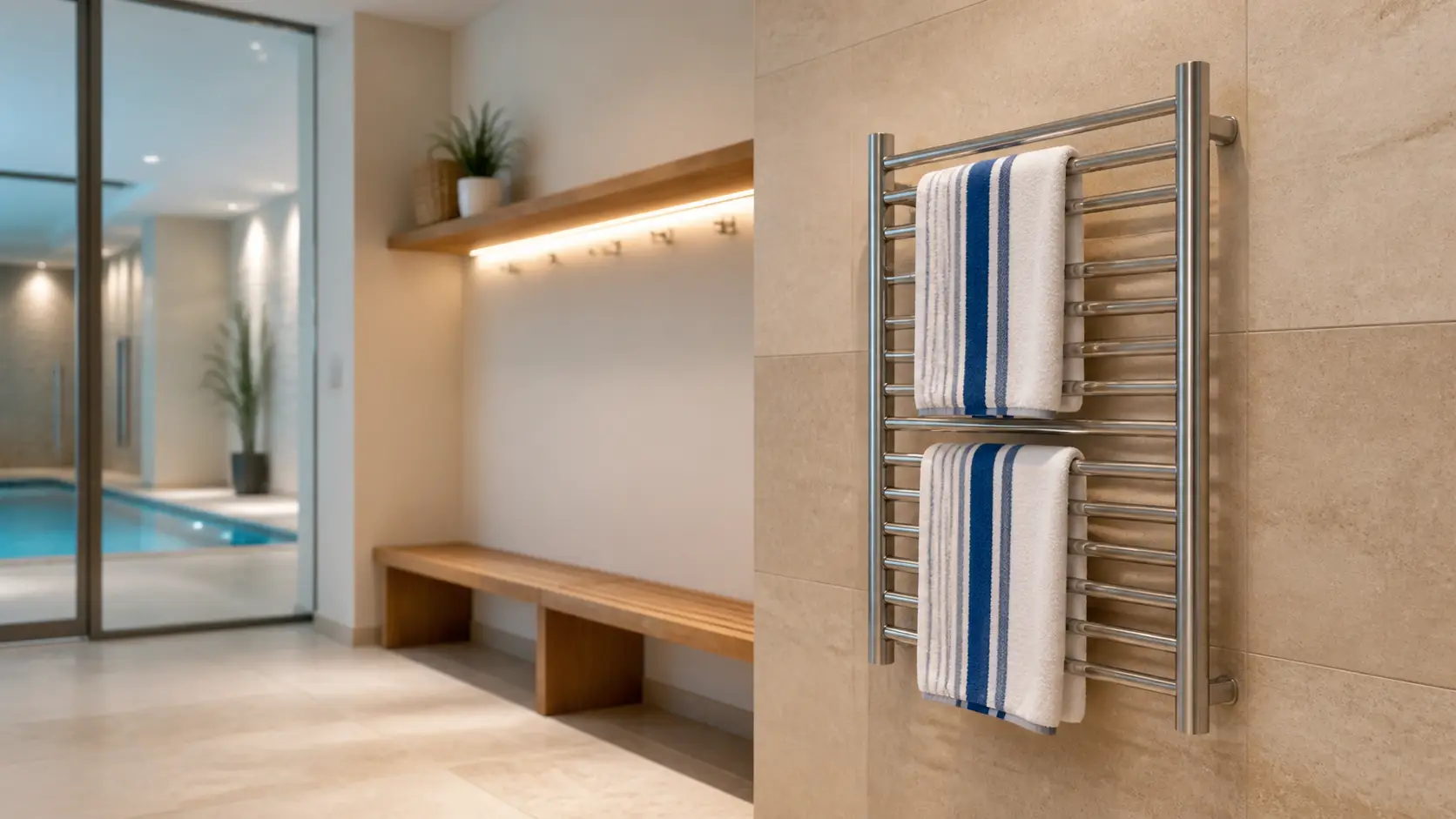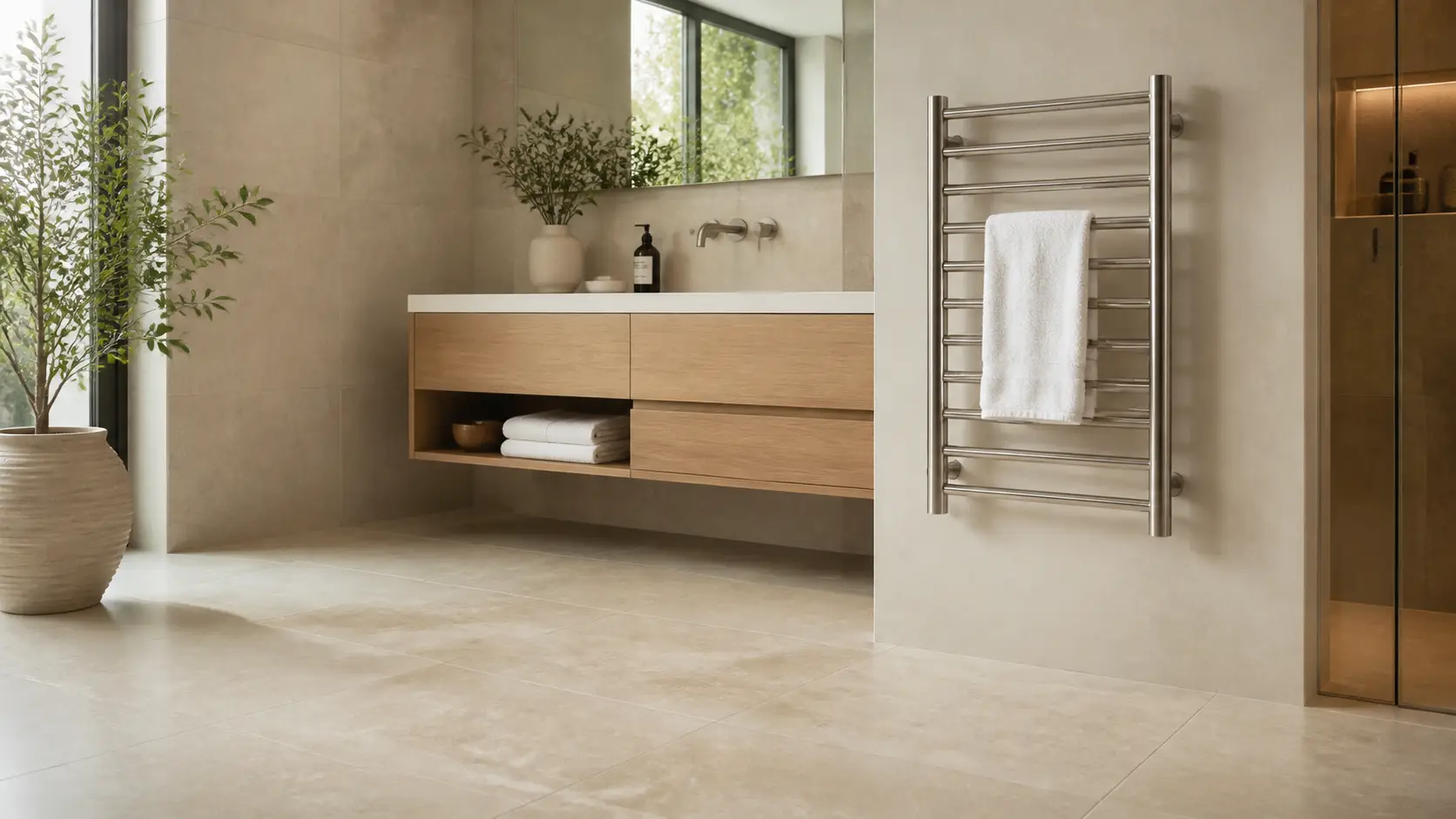

Bottom line: Yes, they work. A quality 150W heated towel rack dries a damp bath towel in 2 to 4 hours in normal bathroom conditions. That is fast enough to keep towels fresh between daily uses and slow enough to stop mold from ever getting started.
This is the question buyers ask most often after “How much does it cost to run?” They have seen the marketing photos: fluffy towels draped over gleaming chrome rails. But does the reality match the image? Will their heavy cotton bath sheet actually dry by evening if they hang it up damp in the morning?
I have tested enough towel rails over the years to know the answer depends on three things: the power of the rail, the humidity of the bathroom, and how wet the towel is when you hang it up. This article walks through real drying times, explains why some rails fail, and shows what to look for if fast drying is your main goal.
The Test Setup
We ran a controlled drying test in a standard UK family bathroom: 6 m² floor area, tiled walls, single-glazed window, no mechanical ventilation. Winter conditions. Ambient temperature 16°C, relative humidity 78%.
The towel: Standard 500 gsm cotton bath sheet, washed 20 times to remove manufacturing finishes that affect absorbency.
The rails tested:
| Rail | Power | Type | Bars | Surface Area |
|---|---|---|---|---|
| Compact electric | 80W | Alloy wire | 4 | 0.12 m² |
| Standard electric | 150W | Carbon fiber | 6 | 0.22 m² |
| Large electric | 200W | Carbon fiber | 8 | 0.30 m² |
| Small hydronic | n/a | Central heating | 5 | 0.18 m² |
The method:
1. Weigh the dry towel.
2. Soak it in warm water for 5 minutes to simulate post-shower saturation.
3. Wring it by hand to remove excess (mimicking how most people hang up a towel).
4. Hang it over the rail, spread across all available bars.
5. Record weight every 30 minutes until it reaches the 5% threshold.
What Affects Drying Speed
1. Wattage and Bar Count
More power means faster evaporation. More bars mean better contact and more surface area for moisture to escape. The 150W/6-bar rail hits a sweet spot for most households. The 200W/8-bar is worth the upgrade for busy bathrooms. The 80W/4-bar is only suitable for light use.
2. Bathroom Humidity
All tests above were in a humid bathroom (78% relative humidity) with no ventilation. In a well-ventilated bathroom with an exhaust fan or open window, drying times improve by 20-30%. In a steamy, enclosed wet room, times extend by 30-50%.
Practical tip: If your bathroom is small and humid, prioritize ventilation over rail size. A 150W rail with a running exhaust fan dries faster than a 200W rail in still air.
3. Towel Material and Thickness
| Towel Type | Dry Weight | Wet Weight | Drying Time (150W rail) |
|---|---|---|---|
| Lightweight cotton (350 gsm) | 350 g | 600 g | 90 min |
| Standard cotton (500 gsm) | 490 g | 870 g | 150 min |
| Heavy luxury (700 gsm) | 680 g | 1,200 g | 240 min |
| Microfiber | 280 g | 520 g | 60 min |
Thick, plush towels feel luxurious but hold more water and take longer to dry. If fast drying is your priority, choose 500 gsm cotton or consider microfiber for gym and travel towels.
4. How the Towel Is Hung
Spreading the towel across all bars maximizes contact and airflow. Bunching it over one or two bars creates wet pockets where moisture gets trapped.
Best practice: Drape the towel so each bar carries part of the weight. Fold it once lengthwise if needed to fit. Avoid layering multiple towels on the same rail; the bottom towel stays damp.
Common Complaints and Why They Happen
“My towel is still damp after 6 hours.”
Likely causes:
– Rail is undersized for the towel (80W rail + heavy bath sheet)
– Towel is bunched, not spread
– Bathroom is very humid with no ventilation
– Rail is set to low power or timer cuts off too early
Fix: Upgrade to 150W+ rail, spread the towel properly, run the exhaust fan, or extend the timer.
“The top of the towel dries, but the bottom stays wet.”
Cause: Heat rises. The top bars dry faster. The bottom of the towel, hanging below the rail, dries by ambient air movement alone.
Fix: Choose a rail with more vertical bars so the towel hangs in sections, or fold the towel so the bottom is lifted onto a lower bar.
“It dries the towel, but the bathroom still smells musty.”
Cause: The rail dries the towel, but the bathroom itself is humid. Moisture settles on walls, grout, and shower curtains.
Fix: The rail is doing its job. Add ventilation (exhaust fan, window, dehumidifier) to handle bathroom humidity separately.
Summary: Do They Work?
Yes. A properly sized heated towel rack dries a standard bath towel in 2-4 hours under normal conditions. That is fast enough for daily family use, prevents mold and odor, and keeps towels feeling fresh.
The key is matching the rail to the towel and the bathroom. An 80W compact rail in a humid bathroom with heavy towels will disappoint. A 150W or 200W rail, properly used, delivers exactly what the marketing promises.
Related Articles:
– Are Heated Towel Racks Worth It? A Cost-Benefit Analysis
– How Much Does a Heated Towel Rack Cost to Run?
– Electric vs Hydronic Towel Warmer: Which Is Better?