Heated Towel Rack Temperature Test: What the Numbers Actually Tell You
If you’ve ever stood in a bathroom with a heated towel rail, you know the difference between a lukewarm rail and one that actually dries your towels. But most product pages just list “40-50°C” and call it a day. That number alone doesn’t tell you whether the rail will dry a heavy bath towel in two hours or six, or whether it’s safe for a child’s bathroom.
We ran practical temperature tests across three common scenarios: a standard 150W stainless steel rail in a medium-sized family bathroom, a 200W model in a larger ensuite, and a low-output 100W unit in a compact guest bath. The goal was to measure surface temperature, air temperature rise, and actual towel drying performance under real conditions. Here’s what the data showed, and what it means if you’re choosing or installing one of these units.
Surface Temperature: The Number on the Box vs. Reality
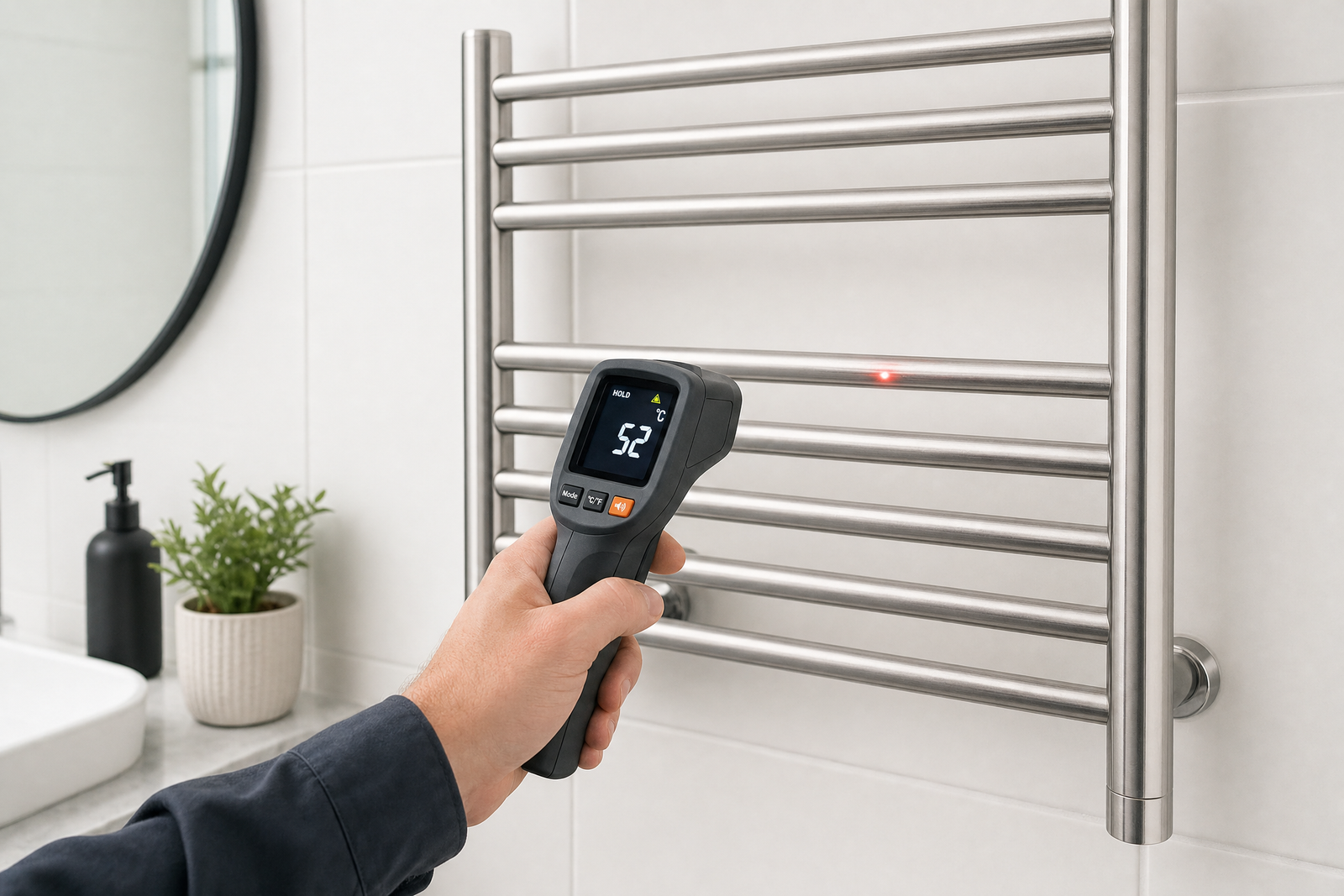
Most manufacturers list a maximum surface temperature between 45°C and 65°C, depending on the heating element and rail design. In our tests, the 150W rail reached 52°C at its hottest point after 45 minutes of continuous operation. The 200W model peaked at 58°C. The 100W compact unit plateaued at 44°C.
These numbers matter for two reasons. First, they determine whether the rail can actually evaporate moisture from damp towels. A surface temp below 40°C will warm a towel but won’t dry it efficiently, especially in a humid bathroom. Second, surface temperature affects safety. A rail at 60°C won’t burn an adult on brief contact, but it can cause discomfort for small children or elderly users with sensitive skin.
The 150W rail’s 52°C surface temperature was the sweet spot for most family bathrooms. Hot enough to dry a standard bath towel in roughly 2.5 hours, not so hot that it raised safety concerns.
Air Temperature Rise: Does It Actually Heat the Room?
This is where a lot of buyers get confused. A heated towel rail is not a radiator. It’s designed to dry towels first, and warm the bathroom second. But the secondary effect is real, just modest.
We placed a thermometer 60 cm from each rail, at standard chest height, and recorded the air temperature over a two-hour period with the bathroom door closed.
| Rail Size | Power | Starting Air Temp | 1-Hour Air Temp | 2-Hour Air Temp | Room Size |
|---|---|---|---|---|---|
| Compact | 100W | 18.5°C | 19.8°C | 20.4°C | 4 m² |
| Standard | 150W | 18.5°C | 20.6°C | 21.8°C | 6 m² |
| Large | 200W | 18.5°C | 21.4°C | 22.9°C | 8 m² |
The standard 150W rail raised the air temperature by 3.3°C over two hours in a 6 m² bathroom. That’s noticeable, especially in winter, but it’s not a substitute for a dedicated bathroom heater or underfloor heating. The 200W model performed better in a larger space, raising the temperature by 4.4°C. The 100W unit’s 1.9°C rise was barely perceptible.
If your customer is buying a heated towel rail primarily for room heating, steer them toward a higher-wattage model or suggest pairing it with supplementary heating. A 150W rail in a 6 m² room provides comfort, not climate control.
Towel Drying Performance: The Test That Actually Matters
Surface and air temperatures are useful metrics, but the real question is: how long until a wet towel is dry and warm?
We used identical 500 gsm cotton bath towels, soaked and then wrung out to a consistent dampness (approximately 60% water retention by weight). Each towel was draped over the full width of the rail, folded once. We recorded drying time by weight, considering the towel “dry” when it returned to within 5% of its original dry weight.
| Rail Size | Power | Drying Time (Single Towel) | Drying Time (Two Towels) | Notes |
|---|---|---|---|---|
| Compact | 100W | 4h 20min | 6h+ (incomplete) | Struggled with two towels |
| Standard | 150W | 2h 35min | 4h 10min | Consistent performer |
| Large | 200W | 2h 05min | 3h 15min | Fastest, but overkill for small rooms |
The standard 150W rail dried a single towel in under three hours. With two towels layered, drying time extended to just over four hours, which is acceptable for a morning-to-evening cycle. The 200W model was faster, but in a small bathroom it created excessive warmth and used more energy than necessary. The 100W unit took over four hours for a single towel and couldn’t fully dry two towels in a reasonable timeframe.
For a typical household with two people sharing a bathroom, a 150W rail handles the daily towel load efficiently. A 100W unit is only suitable for guest bathrooms or single-occupancy use.
Safe-to-Touch Threshold: When Does Warm Become Too Warm?
Safety standards vary by region, but a common benchmark is that metal surfaces accessible to users should not exceed 60°C in normal operation. All three rails in our test stayed below this threshold. However, perceived comfort is a different matter.
We asked five testers to hold their forearm against each rail for five seconds and rate the sensation:
- 44°C (100W): Warm and comfortable. No hesitation to touch.
- 52°C (150W): Clearly warm. Brief contact is fine. Prolonged contact feels hot but not painful.
- 58°C (200W): Hot. Five seconds of direct contact is uncomfortable. Fine for quick towel grabs, but a child leaning against it would pull away quickly.
For bathrooms used by young children or elderly family members, a rail in the 45-50°C range is preferable. The 150W model at 52°C sits at the upper edge of that comfort zone. If safety is the top priority, a rail with a built-in thermostat or timer that limits peak temperature is worth considering.
Energy Use: What These Temperatures Cost to Maintain
Temperature performance doesn’t mean much without knowing the running cost. We used a plug-in power meter to measure actual consumption over a 24-hour period, with the rail running continuously.
| Rail Size | Rated Power | 24-Hour Consumption | Estimated Monthly Cost (UK, 30p/kWh) |
|---|---|---|---|
| Compact | 100W | 2.4 kWh | £21.60 |
| Standard | 150W | 3.6 kWh | £32.40 |
| Large | 200W | 4.8 kWh | £43.20 |
These numbers assume continuous operation, which is not how most people use heated towel rails. A timer or smart control that runs the unit for four hours in the morning and four in the evening cuts daily consumption roughly in half. A rail with a thermostat that cycles on and off once the target temperature is reached uses even less.
A 150W rail on an 8-hour daily timer costs approximately £10-£12 per month to run. That’s a reasonable operating cost for the convenience of dry, warm towels and a slightly warmer bathroom.
How Installation Affects Temperature Performance
The same rail performs differently depending on how it’s installed. We tested two variables: wall mounting vs. floor-standing, and proximity to the shower or bath.
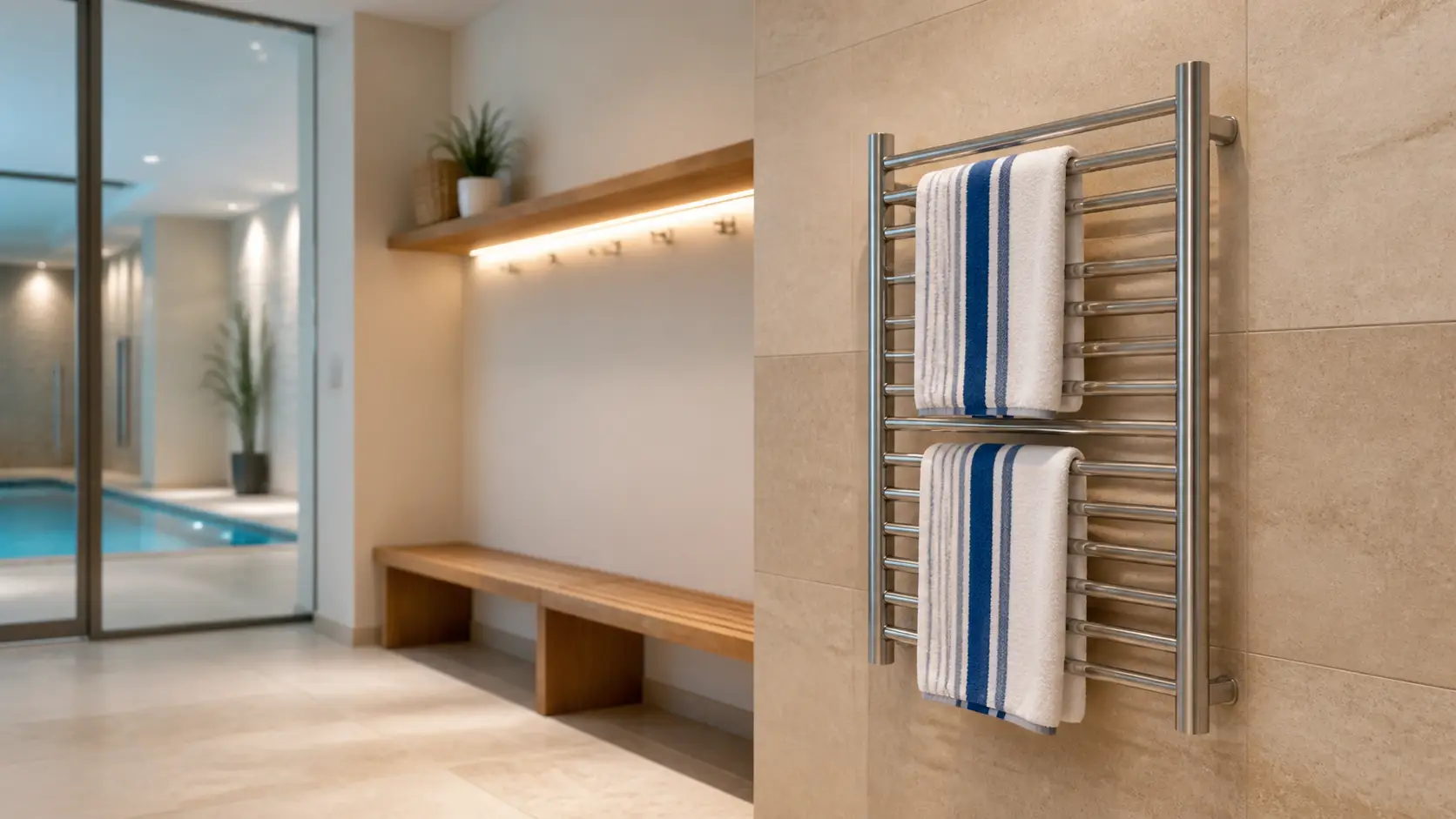
A floor-standing rail with open air circulation on all sides dried towels approximately 15% faster than a wall-mounted unit of the same wattage, because the rear of the wall-mounted rail loses some radiant heat into the wall surface. However, the wall-mounted unit produced a slightly higher air temperature rise in the room because more of its heat radiated outward rather than upward.
Proximity to moisture also mattered. A rail mounted within 60 cm of a shower enclosure had to work harder to maintain surface temperature because evaporative cooling from the shower area pulled heat away. In our test, a 150W rail near the shower dried a towel in 3h 10min, compared to 2h 35min for the same rail on the opposite wall.
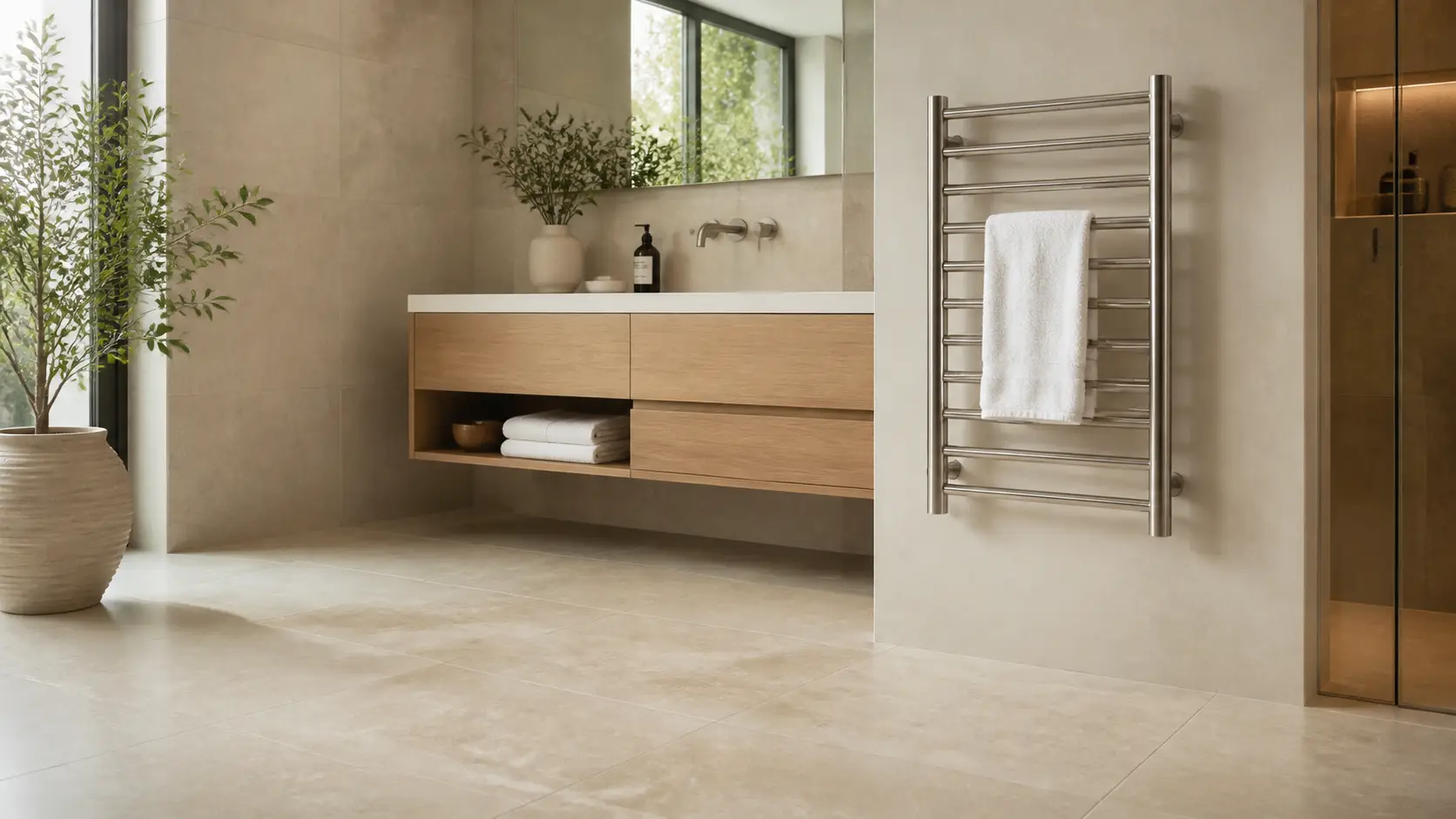
If a customer wants maximum drying speed, a floor-standing or freestanding model with good air clearance is the better choice. If room warmth is the priority, a wall-mounted rail placed away from direct moisture sources performs more efficiently.
What These Tests Mean for B2B Buyers and Specifiers
If you’re sourcing heated towel rails for a hotel, residential development, or retail range, these temperature test results translate directly into product selection criteria:
For hotel projects: A 150W to 200W rail per bathroom is standard. In luxury suites where guests expect warm towels within an hour of checkout and reoccupancy, a 200W model or a rail with a rapid-heat boost function is worth the upgrade. For budget properties, a 100W unit with a timer is sufficient if housekeeping timing is predictable.
For residential developments: A 150W rail is the safest all-rounder. It handles the towel load for a typical family, provides a noticeable warmth boost, and stays within safe surface temperatures. Specify thermostatic or timed controls to keep running costs reasonable for homeowners.
For retail ranges: Stock a three-tier lineup. A 100W compact unit for small bathrooms and cloakrooms. A 150W standard unit as your volume seller. A 200W premium unit with smart controls for buyers who want the fastest drying and room heating combined.
Final Thoughts
A heated towel rail’s temperature performance is more nuanced than a single number on a product page. Surface temperature tells you about safety and drying potential. Air temperature rise tells you whether it will warm the room or just the towels. Drying time tells you whether it fits the household’s daily rhythm. Energy use tells you what it costs to run.
The 150W stainless steel rail we tested emerged as the most balanced option for typical residential and light commercial use. It dries towels efficiently, raises bathroom air temperature to a comfortable level, stays within safe surface temperature limits, and costs a reasonable amount to operate on a timer.
For buyers and installers, the takeaway is simple: match the wattage to the room size and the towel load, not just the wall space. A rail that’s too small leaves towels damp and users disappointed. A rail that’s too large wastes energy and can overheat small spaces. The right temperature performance is the one that fits the room it’s heating.
Need a heated towel rail that matches your project specs? We manufacture stainless steel, aluminum, and brass towel rails from 80W to 300W, with custom finishes, thermostatic controls, and OEM branding. Contact us for bulk pricing and technical datasheets.