Heated towel racks can help towels dry, but they are not magic dryers. If towels stay damp, the usual causes are poor airflow, towels folded too thickly, a rack that is too small, low wattage, high bathroom humidity, or running the rack for too short a time.
The most reliable setup is simple: spread towels across warm bars, leave air gaps, use the correct rack size, run the rack long enough, and keep the bathroom ventilated. Heat helps evaporation, but airflow removes moisture from the towel and bathroom air.
Why this topic matters
Many buyers expect a heated towel rack to work like a tumble dryer. That expectation creates disappointment. A heated towel rack warms the towel and supports drying between uses; it does not blast hot air through fabric.
This distinction matters for:
- Homeowners comparing comfort upgrades
- Hotels choosing guest bathroom amenities
- Designers planning towel placement
- Contractors specifying electrical points
- Property managers trying to reduce damp towel complaints
If the bathroom is humid and the towel is folded into a thick stack, even a good heated towel rack will dry slowly.
The short answer: heat needs airflow
Drying happens when moisture leaves the towel and moves into the surrounding air. Heat speeds evaporation, but airflow and ventilation decide how quickly that moisture leaves the bathroom.
A heated towel rack works best when:
- The towel touches warm bars
- The towel is spread out instead of bunched
- Air can move around both sides of the towel
- The bathroom fan or window helps remove humid air
- The rack runs long enough after use
If the towel is thick, folded several times, or pressed tightly against other towels, the outer layer may warm while the inner layer stays damp.
1. Towels are folded too thickly
The most common mistake is loading the rack like a storage ladder instead of a drying surface.
Drying slows down when:
- One large towel is folded into multiple layers
- Several towels overlap on the same bar
- Towels cover the full rack with no air gaps
- Bath sheets hang bunched together
- Wet towels are wrapped around bars instead of draped cleanly
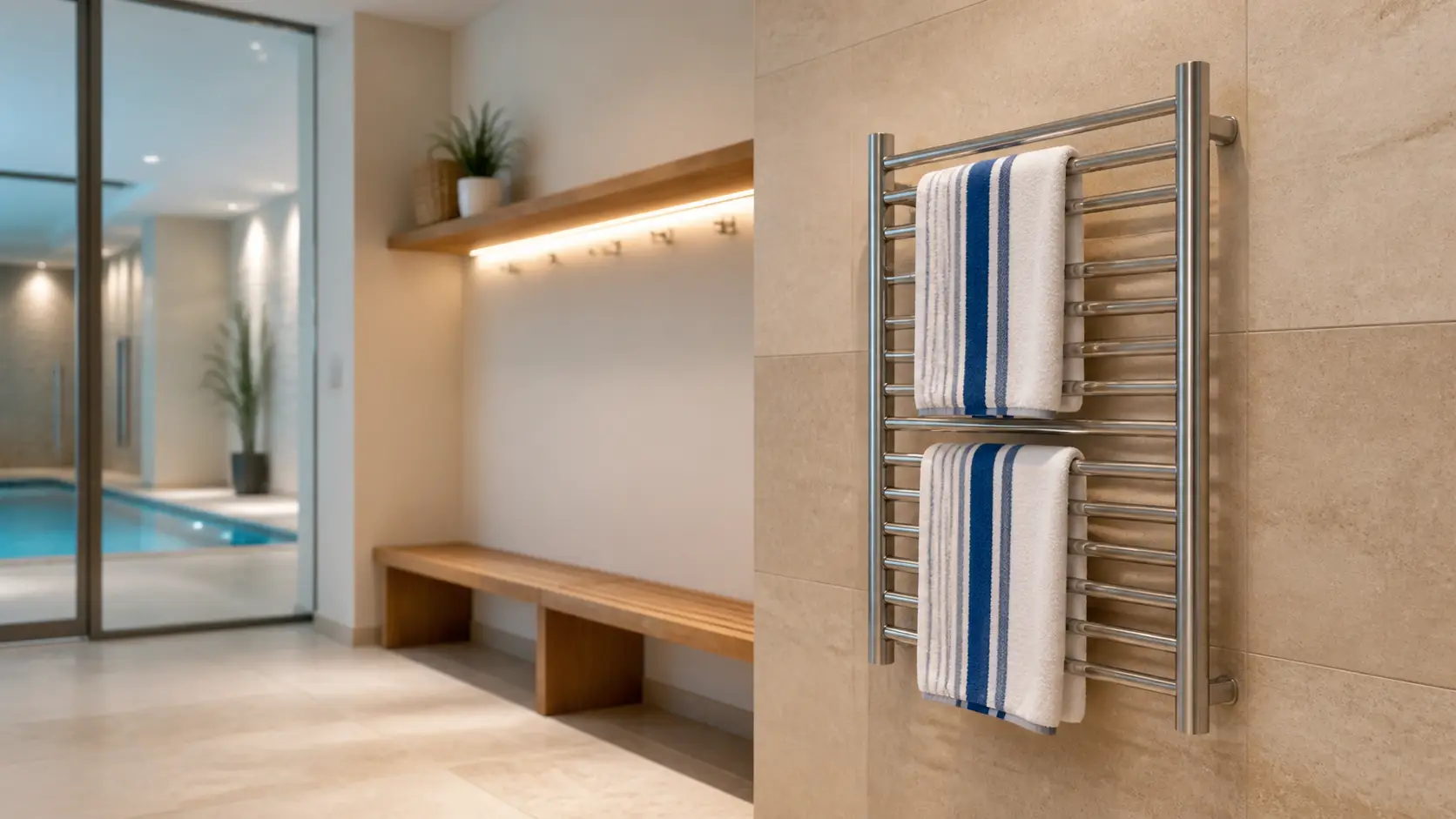
For better drying, spread one towel across more surface area. If you use large bath sheets, choose a wider rack or one with more bar spacing.
2. The rack is too small for the towel load
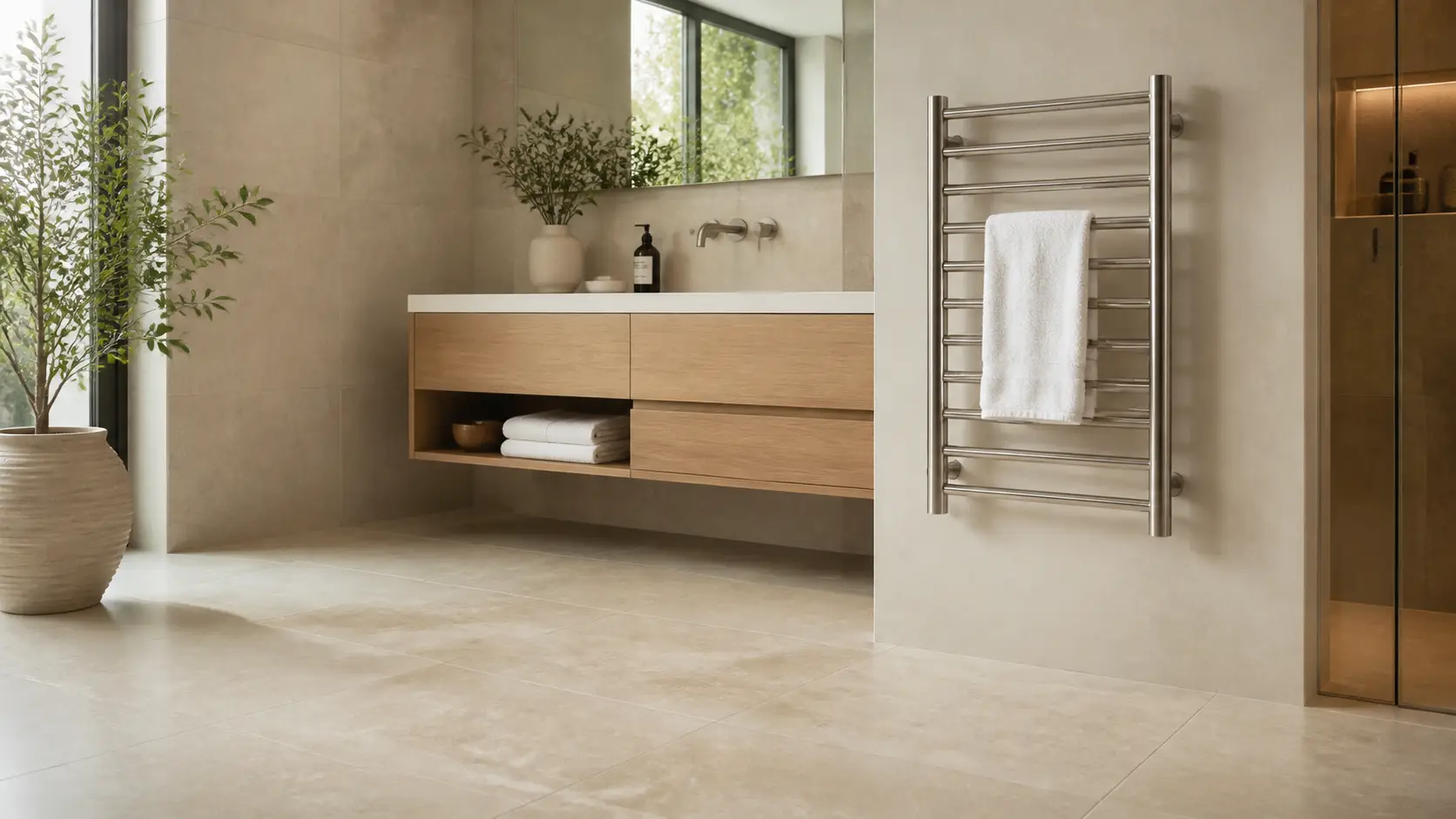
A compact rack may look elegant, but it may not have enough heated surface area for a family bathroom or hotel room.
Ask these questions:
- How many towels need to dry at the same time?
- Are they hand towels, bath towels, or bath sheets?
- Can each towel be spread out?
- Is there space between towels?
- Does the rack have enough bars for real daily use?
For B2B projects, towel capacity should be specified early. A hotel guest bathroom with oversized towels needs a different solution than a small powder room with one hand towel.
3. Bathroom humidity is too high
High humidity makes towels dry slowly because the air is already holding moisture. The U.S. Environmental Protection Agency recommends keeping indoor humidity roughly between 30% and 60% where possible to help control moisture and mold.
If a bathroom has weak ventilation, towels can stay damp even with a heated towel rack.
Warning signs include:
- Fogged mirrors for a long time after showering
- Damp towels the next morning
- Musty smells
- Condensation on windows
- Dark spots around grout or silicone
- A fan that is noisy but weak
A heated towel rack can support towel drying, but it should be part of a moisture-control system that includes ventilation.
4. The rack does not run long enough
Some users turn the rack on only during a shower and expect a wet towel to dry immediately. That is usually too short.
Drying depends on:
- Towel thickness
- Starting moisture level
- Rack wattage
- Room temperature
- Humidity
- Air movement
- Contact with heated bars
A timer can help. Many users run the rack before and after bathing rather than leaving it on all day. For hotels, timer planning can improve guest comfort while reducing unnecessary runtime.
5. Wattage and bar design matter
Higher wattage does not automatically mean better drying, but wattage, bar layout, and surface area all matter.
Compare:
- Total wattage
- Number of heated bars
- Bar spacing
- Rack width
- Towel contact area
- Whether heat is distributed evenly
- Intended room and towel capacity
A small, low-wattage rack may be fine for hand towels. It may be disappointing for two thick bath sheets in a humid bathroom.
6. Ventilation is doing more than you think
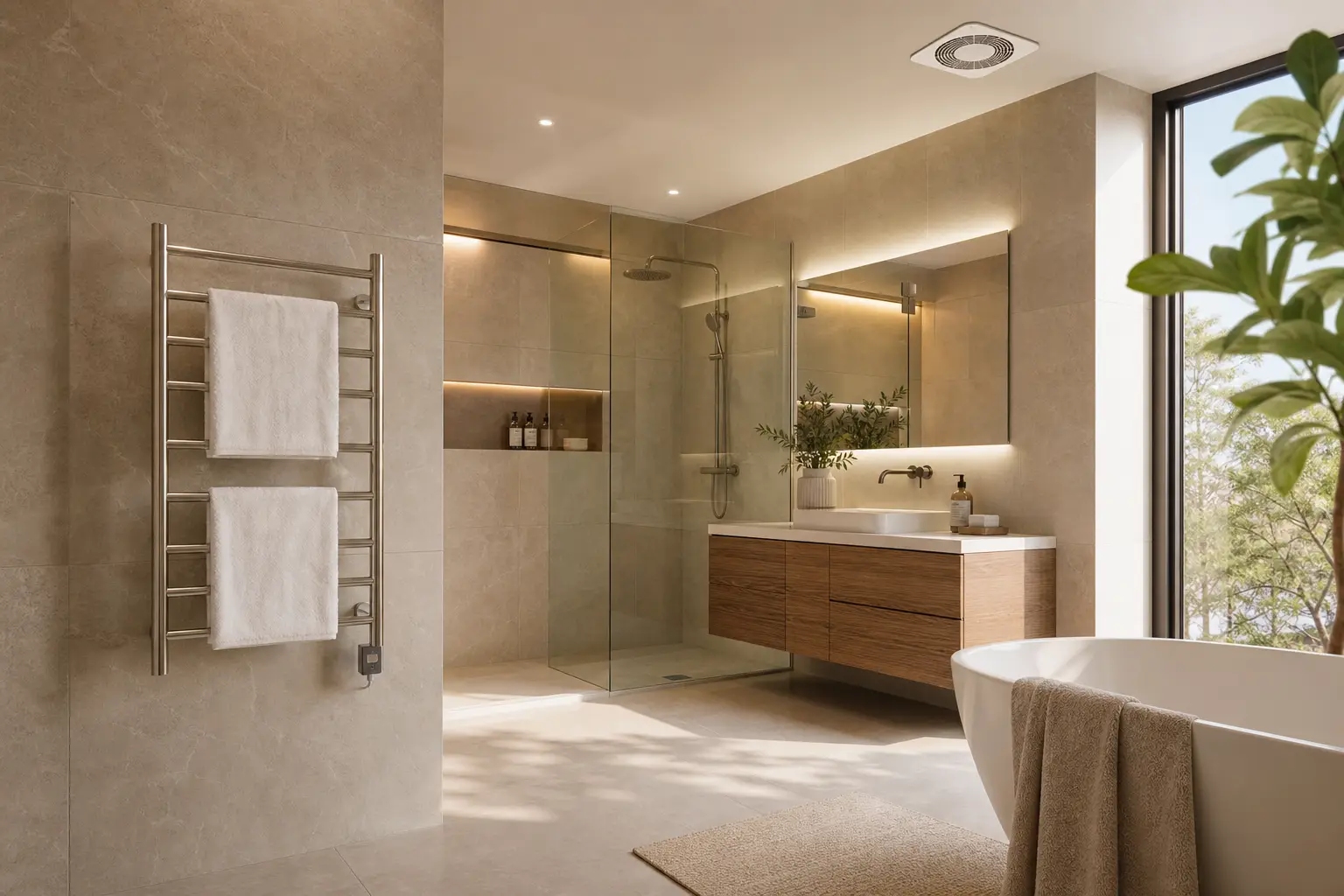
Ventilation removes moisture from the room. ENERGY STAR notes that ventilation fans help remove moisture and odors from bathrooms. That matters because towel drying is not only a towel problem; it is a room-air problem.
If you want better towel drying, check:
- Whether the fan is sized correctly
- Whether the fan vents outdoors
- Whether the fan is clogged with dust
- Whether it runs long enough after showers
- Whether the bathroom door blocks airflow
- Whether there is an air gap under the door
A heated towel rack plus good ventilation is more effective than heat alone.
7. Material and towel thickness affect drying
Thick cotton towels feel luxurious, but they hold more moisture. That means they often need more space, more airflow, and longer drying time.
Drying is usually easier with:
- Medium-weight towels
- Towels spread across multiple bars
- Less overlap
- Good airflow
- A properly sized rack
Hotels and spas should test towels with the actual rack model before large-scale procurement. A rack that works with one towel type may perform differently with oversized plush towels.
How to make a heated towel rack dry better
Use this checklist:
1. Spread towels flat instead of stacking them. 2. Leave air gaps between towels. 3. Use the right rack size for your towel count. 4. Run the rack long enough after bathing. 5. Use a timer for consistent drying windows. 6. Keep the bathroom fan running after showers. 7. Avoid overloading every bar. 8. Choose a rack with enough width and heated surface area. 9. Use medium-weight towels if drying speed matters. 10. Check whether high humidity is the real problem.
If towels are still damp, the issue may be bathroom moisture rather than the heated towel rack itself.
B2B note: test before specifying at scale
For hotels, apartments, and spa projects, drying performance should be tested in a real room with the actual towels.
Before approving a bulk order, test:
- Guest towel size
- Number of towels per room
- Rack size and bar spacing
- Bathroom fan performance
- Timer setting
- Room humidity after peak use
- Cleaning and housekeeping workflow
This avoids the common mistake of choosing a towel rack that looks correct on a drawing but does not match the towel load in daily use.
Practical recommendation
If your goal is warm towels, most correctly installed heated towel racks can help. If your goal is faster towel drying, look beyond the product photo. Choose enough heated surface area, avoid towel overlap, improve ventilation, and match the rack to the real towel load.
For CALITHREX buyers, the best result comes from treating the heated towel rack as part of a bathroom comfort and moisture-management system. Heat, airflow, timer use, and towel placement all work together.
FAQ
Do heated towel racks actually dry towels?
Yes, heated towel racks can help towels dry, especially when towels are spread out and the bathroom has good airflow. They are slower than a tumble dryer because they do not force hot air through fabric.
Why is my towel still damp on a heated towel rack?
The most common reasons are towel overlap, thick towels, high bathroom humidity, weak ventilation, a rack that is too small, or not running the rack long enough.
Should towels be folded on a heated towel rack?
Light folding is fine for warming, but thick folding slows drying. For drying, spread the towel across more heated surface area and leave air gaps.
Does a heated towel rack replace a bathroom fan?
No. A heated towel rack warms towels and supports drying, but a bathroom fan removes humid air from the room. They work best together.
What rack size dries towels better?
A wider rack with more heated surface area and enough bar spacing usually supports better drying than a small rack overloaded with thick towels.
Are heated towel racks good for hotels?
Yes, but hotels should test real towels, rack size, ventilation, timer settings, and guest use patterns before specifying a model across many rooms.