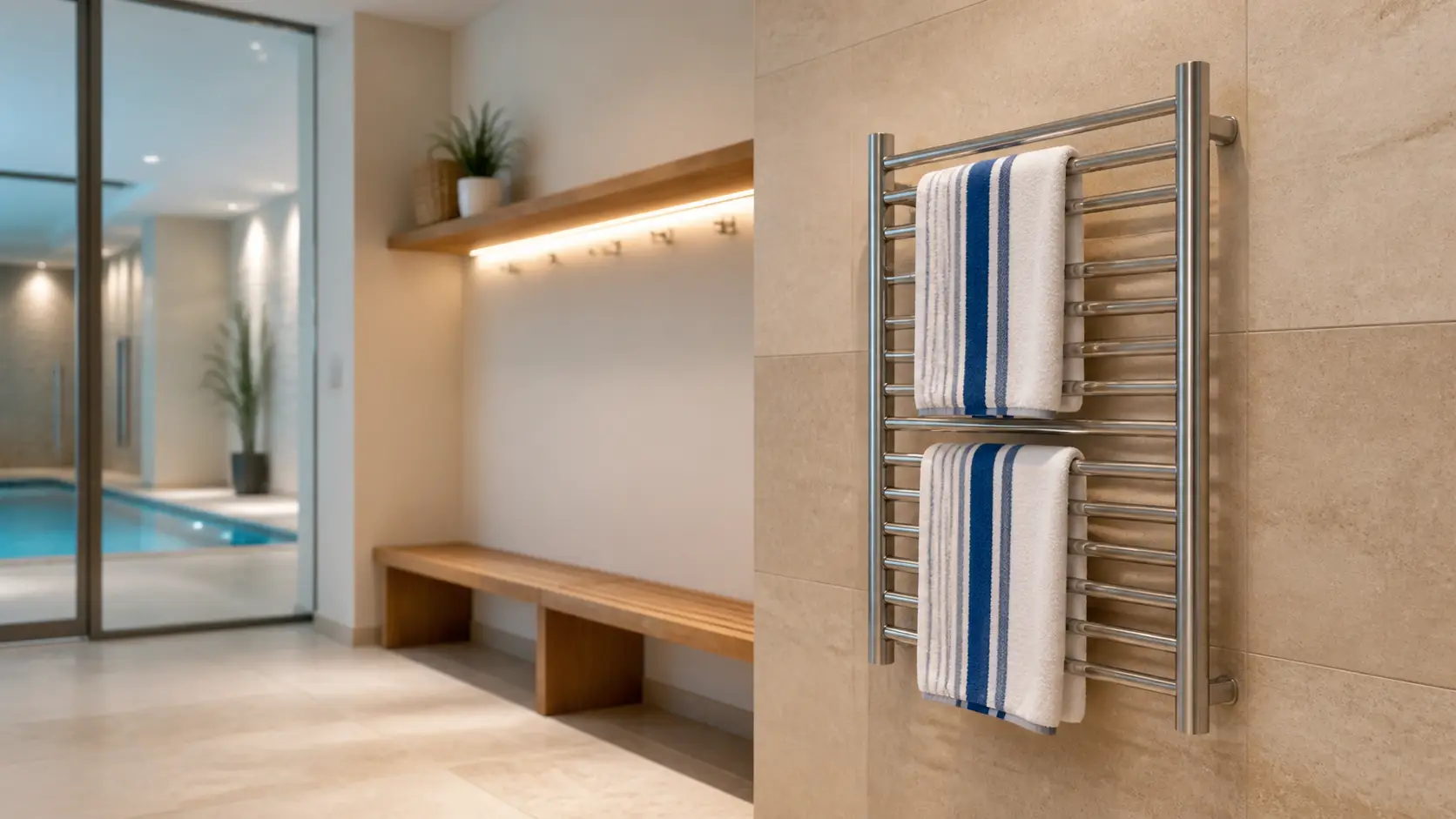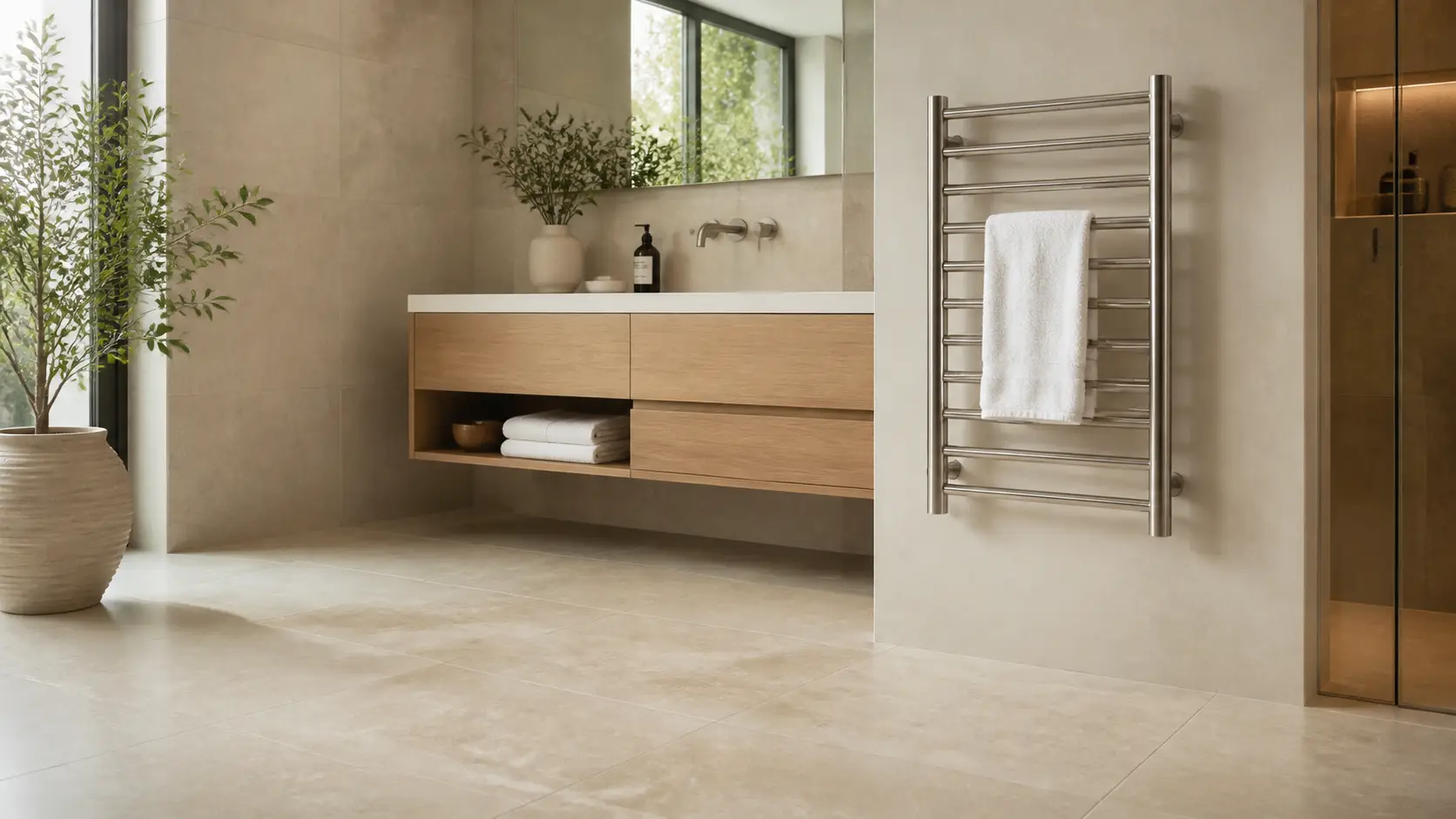
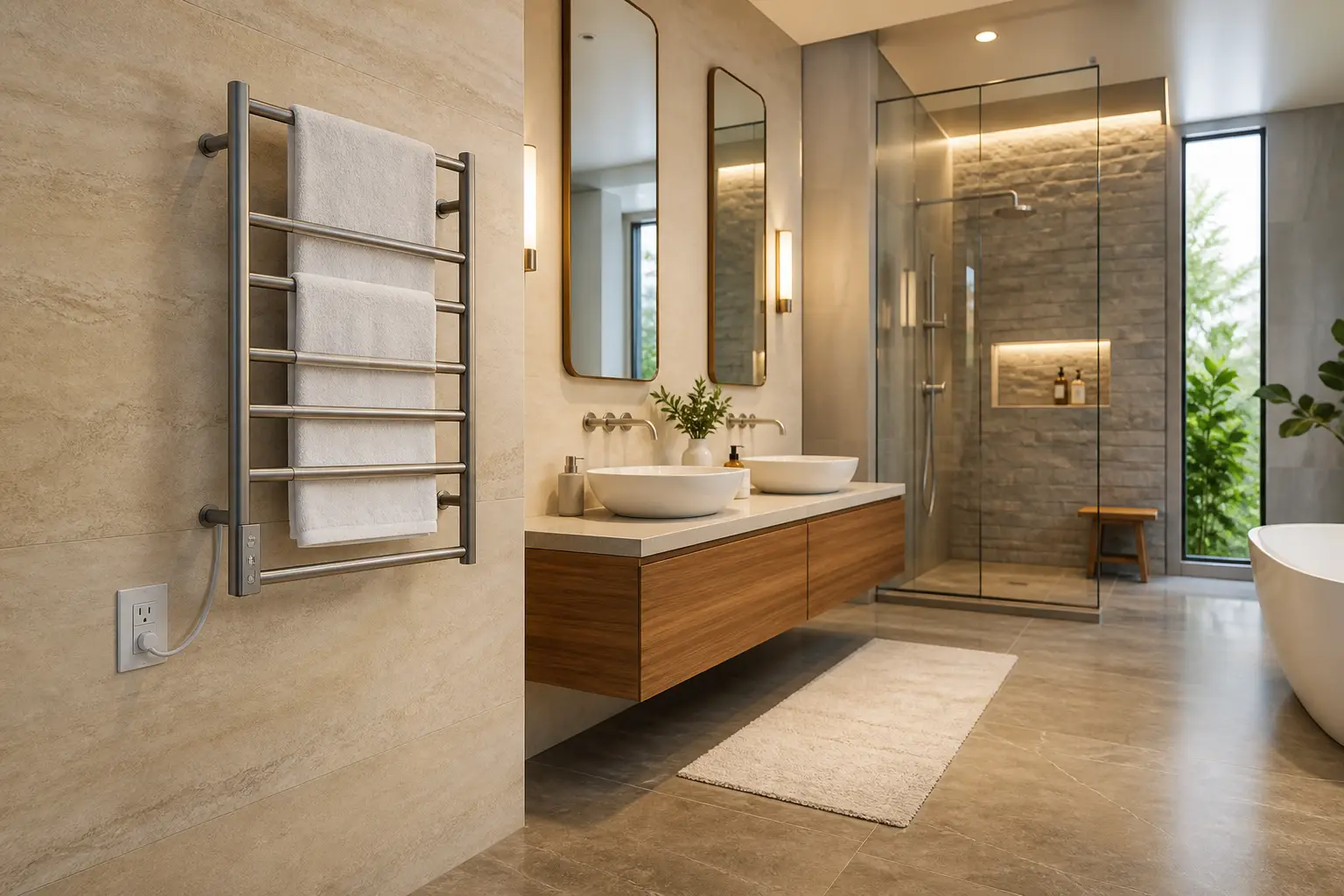
Heated towel racks can be safe in bathrooms when the product is properly certified, correctly installed, protected by the right electrical safeguards, and placed away from direct water exposure. The risk usually comes from poor installation, unsuitable outlets, damaged cords, incorrect bathroom placement, or using a product that is not designed for bathroom conditions.
Use this checklist before buying or installing an electric heated towel rack in a home, hotel, apartment, spa, or renovation project.
1. Check whether the product is made for bathroom use
Not every electric warming product belongs in a bathroom. A safe heated towel rack should be designed for humid bathroom conditions and supplied with clear installation instructions.
Before buying, check:
- Product certification or listing for your target market
- Manufacturer installation manual
- Rated voltage and wattage
- Intended installation type
- Whether the product is wall-mounted, freestanding, plug-in, or hardwired
- Bathroom placement restrictions
- Surface temperature guidance
- Warranty and after-sales support
For B2B buyers, documentation matters. Hotels, apartments, and contractors should not choose only by finish and price. Ask for certification documents, packaging details, installation instructions, and electrical specifications before placing a larger order.
2. Understand GFCI protection
GFCI protection is one of the most important bathroom electrical safety topics. A ground-fault circuit interrupter is designed to interrupt power quickly when it detects a ground fault. The U.S. Consumer Product Safety Commission explains that GFCIs are especially relevant where electrical equipment may be near water.
For heated towel racks, this matters because bathrooms combine moisture, metal fixtures, wet hands, and electrical power.
Check:
- Whether the bathroom outlet is GFCI protected
- Whether the circuit breaker provides GFCI protection
- Whether local code requires GFCI protection for the installation
- Whether the product instructions mention GFCI requirements
- Whether the GFCI has been tested recently
Do not assume a bathroom outlet is protected only because it is near a sink. If you are unsure, ask a qualified electrician to test it.
3. Use a licensed electrician for hardwired installation
Hardwired heated towel racks should be installed by a licensed electrician. They connect directly to the building’s electrical system, so mistakes can create shock, fire, or code-compliance risks.
A qualified electrician can check:
- Circuit capacity
- Junction box location
- Grounding
- Wall construction
- Switch or timer placement
- Local bathroom electrical rules
- Whether the product can be installed in the planned location
For commercial projects, this also supports consistency. A hotel buyer does not want each room wired differently. Standardizing the electrical plan helps installation teams, inspectors, and maintenance staff.
4. Be careful with plug-in models
Plug-in heated towel racks are easier to add to an existing bathroom, but they still need safe planning.
Avoid:
- Extension cords
- Damaged outlets
- Loose plugs
- Cord routes across wet floors
- Cords touching hot surfaces
- Cords hidden behind tile or trim in ways not approved by the manufacturer
- Using a plug-in product where a hardwired model is required
The cord should be visible enough for inspection but routed neatly enough that it does not create a trip, splash, or wear problem. If the outlet location makes safe cord routing impossible, choose another installation type or change the layout.
5. Check IP rating and wet-area placement
IP ratings describe protection against solids and water. For bathroom products, the water-resistance side of the rating is especially important.
Do not treat an IP rating as permission to install the product anywhere. Bathroom placement still depends on product instructions and local electrical rules.
Ask these questions:
- Is the towel rack suitable for the planned bathroom location?
- Is it near direct shower spray?
- Is it close to a bathtub edge?
- Is it near a sink where water splashes often?
- Does the manual restrict installation zones?
- Does the rating match the real bathroom conditions?
A heated towel rack should warm towels, not sit inside a wet zone where water regularly hits the product.
6. Keep towels and fabrics positioned correctly
Heated towel racks are designed for towels, but the way towels are placed still matters.
Use towels properly:
- Hang towels flat where possible
- Avoid overloading every bar tightly
- Do not cover controls, plugs, or cables
- Do not wrap towels around electrical connection points
- Do not hang plastic, rubber-backed, or heat-sensitive items unless the manual allows it
- Let air circulate around damp towels
For families, this is a practical safety and performance issue. Bunched towels dry slowly and can trap moisture. Neatly hung towels warm and dry more predictably.
7. Check surface temperature expectations
A heated towel rack should feel warm enough to warm towels, but it should not be treated like a room heater or a radiator replacement unless the product is designed for that role.
Before use, understand:
- Normal operating temperature
- Warm-up time
- Whether the product has temperature control
- Whether it has a timer
- Whether children may touch the rack
- Whether the rack will be installed in a guest bathroom
For hotels and short-term rentals, simple user expectations matter. If guests may not understand how the product works, a clear timer, safe placement, and simple controls are useful.
8. Do not ignore product certification
Certification helps show that a product has been evaluated against relevant safety requirements. It does not replace correct installation, but it is an important buying filter.
For U.S. buyers, look for certification or listing information that matches the market. For international buyers, check the applicable standards for the destination country or region.
For B2B procurement, request:
- Certification documents
- Product labels
- Rated voltage and frequency
- Installation manual
- Packaging and carton markings
- Batch traceability if needed
- After-sales support process
If a supplier cannot provide basic electrical documentation, do not rely on photos alone.
9. Plan timer and control safety
Timers can improve convenience and reduce unnecessary runtime. They are also useful for households and hotels because the product does not need to run all day for many use cases.
Consider:
- Built-in timer
- Wall switch
- Smart control
- Manual on/off control
- Guest-friendly operation
- Whether the control is reachable but away from splash zones
Controls should be easy to use but installed in a location that makes sense for a bathroom. In commercial projects, the simpler the control logic, the easier it is for guests and housekeeping teams.
10. Inspect regularly after installation
Safety is not only an installation question. It is also a maintenance question.
Check regularly for:
- Loose wall mounts
- Damaged cords
- Loose plugs
- Cracked outlets
- Unusual smells
- Unusual heat
- Flickering power
- Moisture around electrical points
- GFCI test failure
The CPSC recommends testing GFCIs after installation, at least monthly, after a power failure, and according to the manufacturer’s instructions. That is a simple habit that can catch problems early.
Homeowner checklist
Before installing a heated towel rack at home, confirm:
- The product is intended for bathroom use
- The installation type fits your bathroom
- The outlet or circuit is suitable
- GFCI protection is present where needed
- The product is not exposed to direct water spray
- The towel rack is mounted securely
- Towels can hang without blocking electrical parts
- The manual has been read
- A qualified electrician is used when needed
If any answer is unclear, do not guess. Ask a professional before installation.
Hotel and project buyer checklist
For hotels, apartments, spas, and commercial bathrooms, also check:
- Consistent product model across rooms
- Certification documents for the target market
- Installation drawings
- Spare parts availability
- Finish consistency
- Packaging protection
- Maintenance instructions
- Housekeeping workflow
- Guest control simplicity
- Supplier support for repeat orders
Safety becomes harder to manage when every room uses a different product or installation method. Standardization lowers risk.
Practical recommendation
A heated towel rack can be a safe and useful bathroom upgrade when it is treated as an electrical bathroom product, not just a decorative accessory. The safest buying process is to confirm certification, choose the right installation type, use GFCI protection where required, keep the product away from direct water exposure, and follow the installation manual.
For CALITHREX buyers, safety should be checked together with finish, size, towel capacity, wattage, and design fit. A premium towel rack should look good, work reliably, and fit the bathroom’s electrical plan from the start.
FAQ
Are heated towel racks safe in bathrooms?
Yes, they can be safe when the product is designed for bathroom use, properly certified, installed according to the manual, and protected by the right electrical safeguards.
Do heated towel racks need GFCI protection?
GFCI protection is commonly required or recommended in bathroom electrical situations. Requirements depend on local code, product type, and installation method. Ask a qualified electrician if you are unsure.
Can a heated towel rack be installed near a shower?
Only if the product instructions and local electrical rules allow the planned location. Avoid direct water spray and do not install the product in a wet zone unless it is specifically rated and approved for that use.
Is a plug-in heated towel rack safe?
A plug-in model can be safe if it is used with a suitable outlet, correct cord routing, no extension cord, and proper bathroom electrical protection. The outlet location is critical.
Should a hardwired heated towel rack be installed by an electrician?
Yes. Hardwired heated towel racks should be installed by a licensed electrician because they connect directly to the building’s electrical system.
What should hotels check before buying heated towel racks?
Hotels should check certification, installation method, finish consistency, guest safety, maintenance access, spare parts, packaging quality, and whether the supplier can support repeat orders.
Sources
- U.S. Consumer Product Safety Commission: GFCI Fact Sheet
- Occupational Safety and Health Administration: Electrical Safety
- CALITHREX: Are Heated Towel Racks Safe? IP Ratings, Certifications & What to Check
- CALITHREX: What Certifications Are Required for Heated Towel Racks in the US Market?
- CALITHREX: Do Heated Towel Racks Require a Dedicated Circuit?