Bathroom lighting in 2026 should be planned as a layered comfort system, not as one bright ceiling fixture. The strongest bathroom plans combine clear task lighting at the mirror, soft ambient lighting for daily routines, nighttime lighting for safer movement, natural light where possible, and practical placement for towel storage and heated towel racks. This matters for homeowners, hotels, spas, and multifamily projects because lighting affects safety, relaxation, grooming, perceived quality, and how easily people use warm towels after a shower.
Current bathroom trend data supports this direction. NKBA's 2026 bath trend coverage highlights task lighting, nighttime-specific lighting, natural light, mirror-integrated lighting, and mood lighting as important design priorities. Houzz's 2025 U.S. bathroom study also connects wellness features with upgraded lighting, relaxation, beauty routines, natural light, and dimmable lighting.
Quick Planning Table
| Lighting layer | What it does | Where it helps most | Heated towel rack connection |
|---|---|---|---|
| Task lighting | Helps shaving, makeup, skincare, and cleaning | Vanity, mirror, grooming zone | Makes the towel rack finish and towel area easier to see |
| Ambient lighting | Gives the room a calm base level of light | Ceiling, wall wash, cove, shelves | Keeps the rack from feeling like an isolated fixture |
| Night lighting | Supports safe movement without glare | Toe kick, low wall, motion path | Helps users reach towels after evening showers |
| Accent lighting | Adds depth and a premium feel | Niches, shelving, textured walls | Frames towel storage and bathroom accessories |
| Natural light | Improves comfort and visual freshness | Window, skylight, glass door | Helps towel drying when paired with airflow and spacing |
| Dimmable control | Adapts the room to different routines | Whole room or zones | Reduces energy waste and supports spa-style use |
Why Bathroom Lighting Is Becoming a Comfort Feature
Bathroom lighting used to be treated as a basic visibility decision. In newer bathroom design, lighting is part of the daily experience. A bathroom may need bright, accurate light in the morning, softer light for an evening bath, and low light for nighttime use.
That shift fits the broader move toward wellness bathrooms and hotel-inspired comfort. A heated towel rack works in the same design language. It is not just a product on the wall. It is part of the sequence people feel when they step out of the shower, reach for a towel, use the vanity, and leave the bathroom feeling dry, comfortable, and organized.
For B2B projects, the planning question is more practical: can the lighting and towel rack layout be repeated across many rooms without confusing guests, increasing maintenance, or creating awkward electrical coordination? Hotels, apartments, spas, and senior-living bathrooms should answer that question before ordering fixtures.
Start With the Vanity, Then Plan the Rest
The vanity is usually the first lighting priority because it supports grooming, skincare, shaving, and cleaning. Strong task lighting does not have to feel harsh. The best layouts often use light from both sides of the mirror, integrated mirror lighting, or a combination of overhead and vertical light to reduce shadows.
Avoid relying only on a single downlight above the sink. It can cast shadows on the face and make the bathroom feel less refined. In a high-end bathroom, the vanity zone should feel clear, calm, and intentional.
| Vanity lighting choice | Best use | Watch out for |
|---|---|---|
| Side sconces | Balanced face lighting | Needs enough wall width |
| Integrated mirror light | Clean modern appearance | Check brightness and serviceability |
| Over-mirror bar | Simple retrofit | Can create downward shadows if used alone |
| Recessed downlights | General brightness | Should not be the only grooming light |
Add Ambient Light for a Softer Bathroom
Ambient lighting gives the bathroom its base mood. This can come from ceiling lights, cove lighting, wall washing, lit shelving, or indirect light around architectural details. The goal is not to make the bathroom darker. The goal is to make it easier to move between bright task work and relaxed bathing.
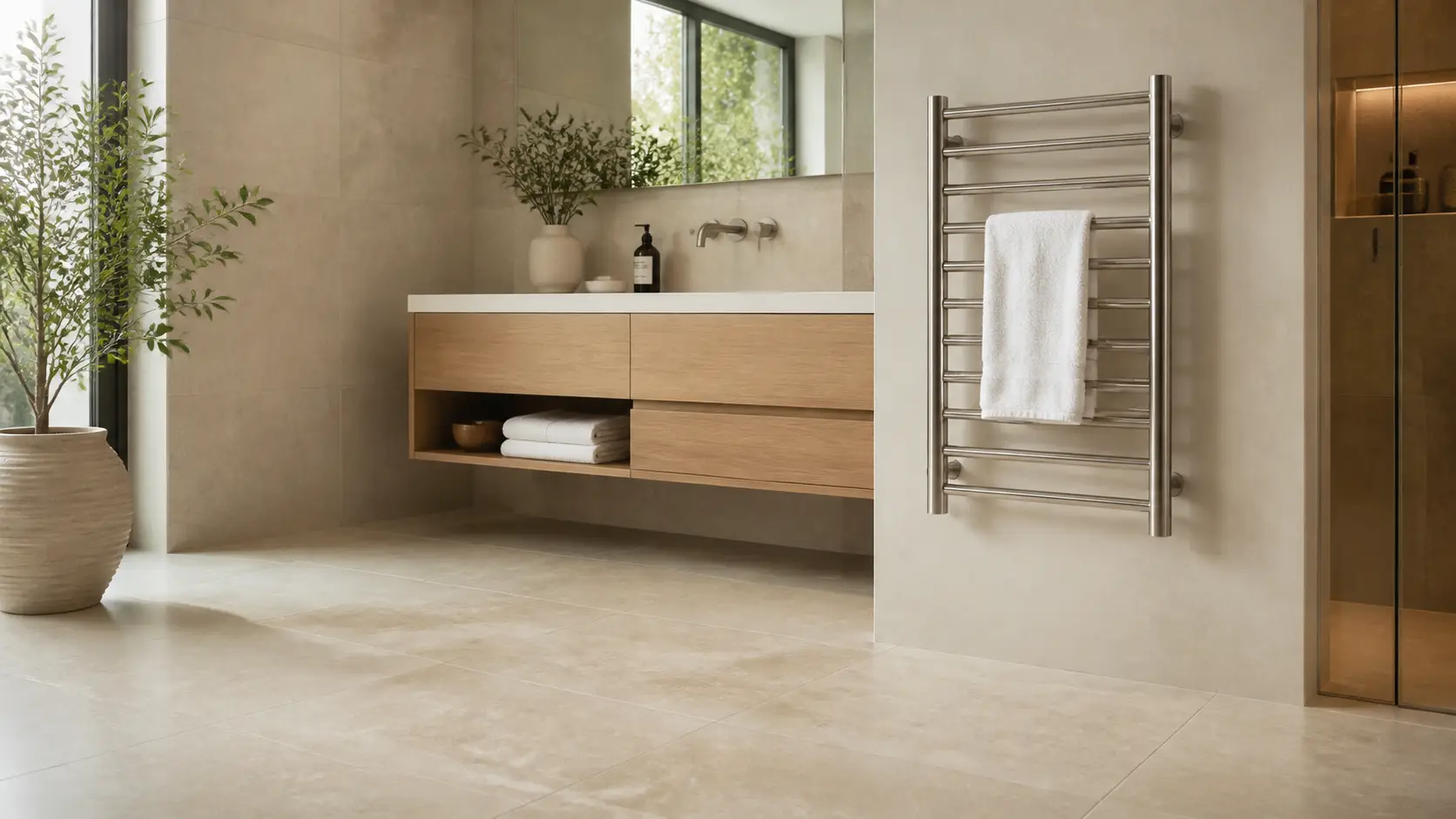
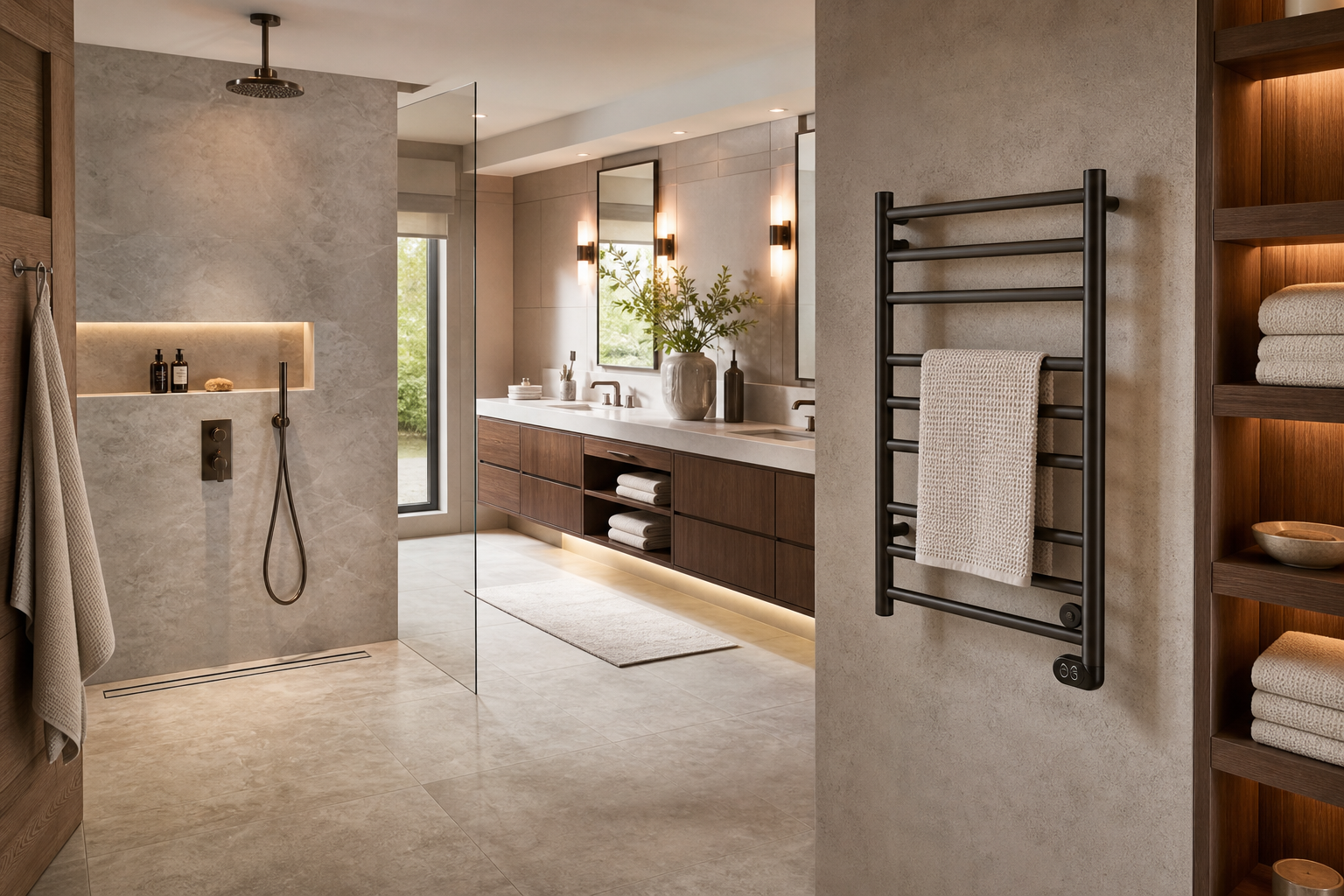
This is where heated towel racks benefit from better room planning. A rack placed on a dry wall beside warm wood shelving, soft wall lighting, or a calm stone surface looks more integrated than a rack added after every other decision is finished.
For residential bathrooms, ambient lighting can make a small bathroom feel less clinical. For hotels and spas, it helps guests read the room as premium without needing complex instructions.
Use Night Lighting for Safety
Night lighting is one of the most practical bathroom lighting ideas for 2026. It helps people enter the bathroom, use the toilet, reach the vanity, or step out of the shower without turning on bright light.
Good locations include:
- Toe-kick lighting below a vanity.
- Low wall lighting near the entrance.
- A motion-sensing path light.
- Soft shelf lighting outside the wet zone.
- A dimmable ambient scene for evening routines.
Night lighting also supports heated towel rack placement. If a towel rack is used after evening showers, users should be able to see the towel and the floor path without glare. That is especially relevant in primary suites, hotel bathrooms, spa rooms, and bathrooms designed for long-term use.
Keep Light, Towels, and Moisture Planning Connected
Lighting does not remove moisture. Ventilation and airflow still do that work. But lighting, towel storage, ventilation, and heated towel rack placement should be planned together because they affect the same daily routine.
EPA moisture guidance is clear that moisture control is central to reducing mold risk. In bathrooms, that means ventilation, drying time, and surfaces that are easy to clean. ENERGY STAR guidance also treats efficient ventilation and lighting as part of a better-performing home.
A heated towel rack can help towels feel warmer and dry more consistently, but it should not be treated as a substitute for a bathroom fan or good airflow. The best plan is a layered system:
| Need | Better planning decision |
|---|---|
| Remove humid air | Use proper ventilation and run time |
| Avoid glare | Use layered and dimmable lighting |
| Reach towels easily | Place towels outside direct splash where possible |
| Support drying | Avoid tightly stacked wet towels |
| Improve comfort | Add a heated towel rack where it fits the routine |
Heated Towel Rack Placement Near Lighting Zones
A heated towel rack should be easy to reach after bathing, but it should not block movement, crowd the vanity, or sit where towels are constantly splashed. Lighting makes this placement easier to use.
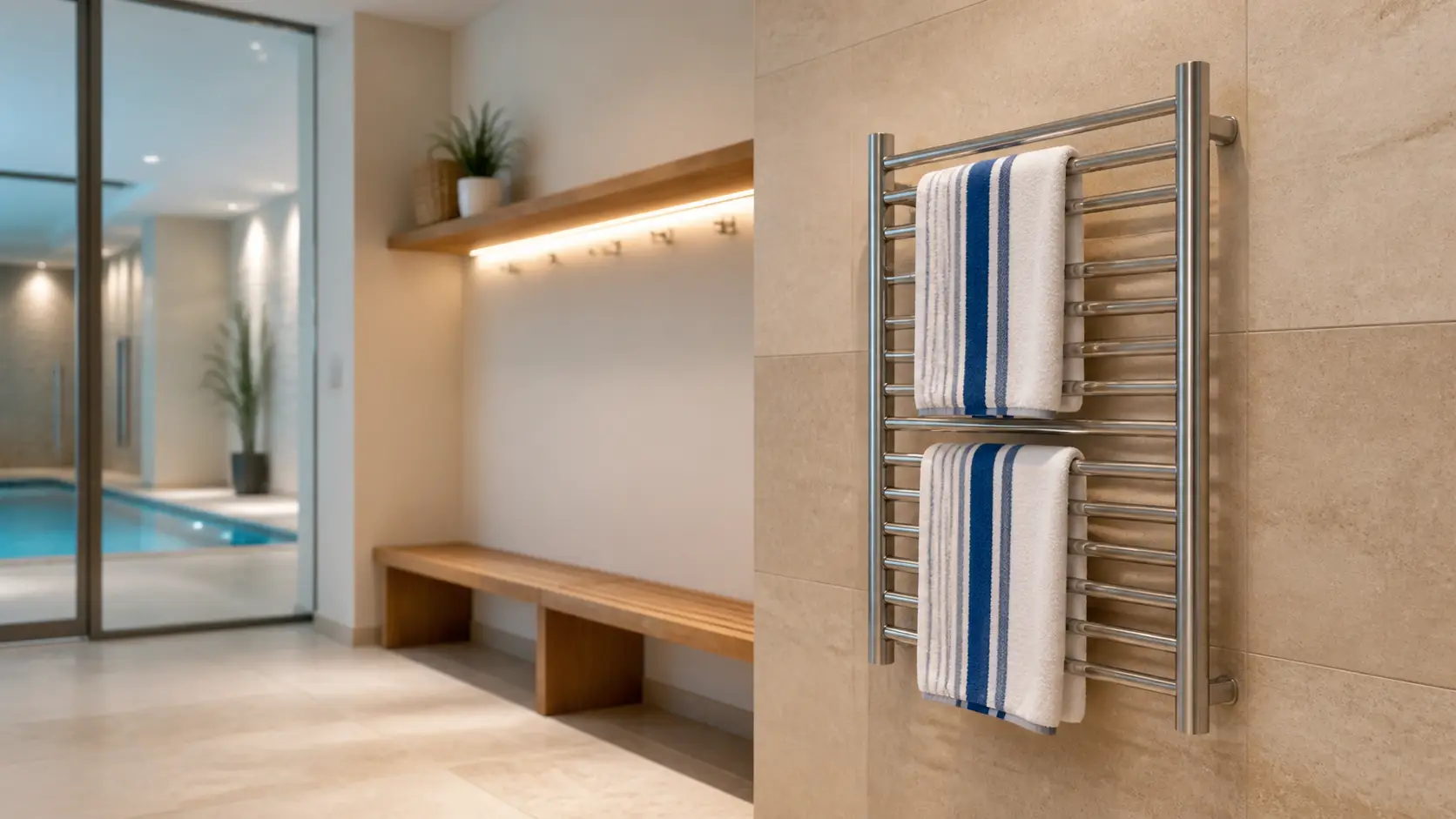
For a home bathroom, a rack near the shower exit or vanity can work well if there is enough clearance. For a hotel room, the rack should be visible enough that guests understand it, but simple enough that housekeeping can clean around it. For a spa or wellness suite, the rack can become part of the warm towel ritual if the lighting, towel storage, and shower sequence are planned as one experience.
| Bathroom type | Lighting priority | Heated towel rack priority |
|---|---|---|
| Small residential bath | Clear vanity light plus low-glare ambient light | Compact wall-mounted rack on a reachable dry wall |
| Primary suite | Layered vanity, shower, and evening scenes | Larger rack near shower-to-vanity path |
| Hotel guest room | Simple task and nighttime lighting | Repeatable placement across room types |
| Spa or wellness room | Soft ambient and accent lighting | Warm towel access as part of the service experience |
| Multifamily project | Durable, standardized lighting package | Easy replacement and consistent electrical planning |
Energy-Aware Lighting and Towel Warming
Energy efficiency is not only about choosing low-wattage products. It is also about control. Bathroom lighting and heated towel racks both benefit from timers, dimmers, sensors, and simple user habits.
LED lighting can provide strong brightness with lower energy use than older lighting technologies. Heated towel racks should be selected and controlled based on towel count, bathroom routine, wattage, and whether the room is residential, hospitality, or commercial.
The practical rule is simple: use bright light only when needed, use lower light for relaxed or nighttime routines, and use heated towel racks on a schedule that fits actual towel use.
B2B Specification Notes
For hotels, spas, apartments, and renovation projects, do not specify lighting and heated towel racks separately at the last minute. Coordinate them early with the electrical plan.
Project buyers should confirm:
- Vanity lighting type and replacement access.
- Night lighting location and control method.
- Heated towel rack wiring method and wall backing.
- Finish coordination across lighting, faucets, towel racks, and hardware.
- Guest instructions for controls if needed.
- Housekeeping access around towel racks and shelves.
- Ventilation performance and fan control strategy.
- Room-type standards for repeatable procurement.
This reduces rework. It also helps the bathroom feel intentional rather than assembled from unrelated fixtures.
Common Mistakes to Avoid
| Mistake | Why it causes problems | Better choice |
|---|---|---|
| One bright ceiling light only | Creates glare and poor grooming light | Layer task, ambient, and night lighting |
| No dimming or control plan | Wastes energy and feels harsh at night | Use dimmers, scenes, or simple switches |
| Towel rack placed after wiring is finished | May force awkward location or exposed cords | Plan electrical and wall location early |
| Rack installed in a splash-prone area | Can create safety and maintenance concerns | Keep placement practical and code-aware |
| No ventilation strategy | Towels and surfaces stay damp longer | Pair fan performance with towel drying habits |
| Too many decorative lights | Adds cost without improving use | Prioritize visibility, safety, and comfort first |
FAQ
What are the best bathroom lighting ideas for 2026?
The best bathroom lighting ideas for 2026 are layered task lighting, dimmable ambient lighting, nighttime path lighting, natural light, mirror-integrated lighting, and accent lighting that supports a calm, wellness-focused bathroom.
Should a bathroom have warm or cool lighting?
Most bathrooms benefit from a balanced plan. Use clear, color-accurate light at the vanity for grooming, then warmer or dimmer light for evening routines. The exact color temperature should fit the room design and user preference.
Where should lighting be placed near a heated towel rack?
Lighting should make the towel area easy to see without glare. A heated towel rack usually works best on a dry reachable wall near the shower exit or vanity path, supported by ambient or low-level lighting for evening use.
Does better lighting help towels dry?
Lighting itself does not dry towels. Towel drying depends more on ventilation, airflow, spacing, towel thickness, room humidity, and gentle heat from a heated towel rack. Good lighting helps people use the towel area safely and consistently.
Are heated towel racks part of bathroom lighting trends?
They are not lighting products, but they fit the same bathroom comfort trend. As bathrooms become more wellness-oriented and hotel-inspired, warm towels, soft lighting, better ventilation, and safer movement paths often belong in the same planning conversation.
What should hotels consider when combining bathroom lighting and towel warmers?
Hotels should prioritize repeatable room standards, clear controls, safe placement, cleaning access, consistent finish selection, energy use, and easy replacement. The lighting and towel warmer plan should be simple enough for guests and housekeeping.
Planning Takeaway
Bathroom lighting in 2026 is about comfort, safety, and better daily routines. Start with the vanity, layer in ambient and nighttime light, keep moisture control separate from lighting, and plan heated towel rack placement early. When these decisions work together, the bathroom feels calmer, safer, and more premium without becoming complicated.
For residential, hotel, spa, and multifamily projects, explore Calithrex heated towel rack options that can support warm towel comfort, clean bathroom layouts, and project-ready specification planning.