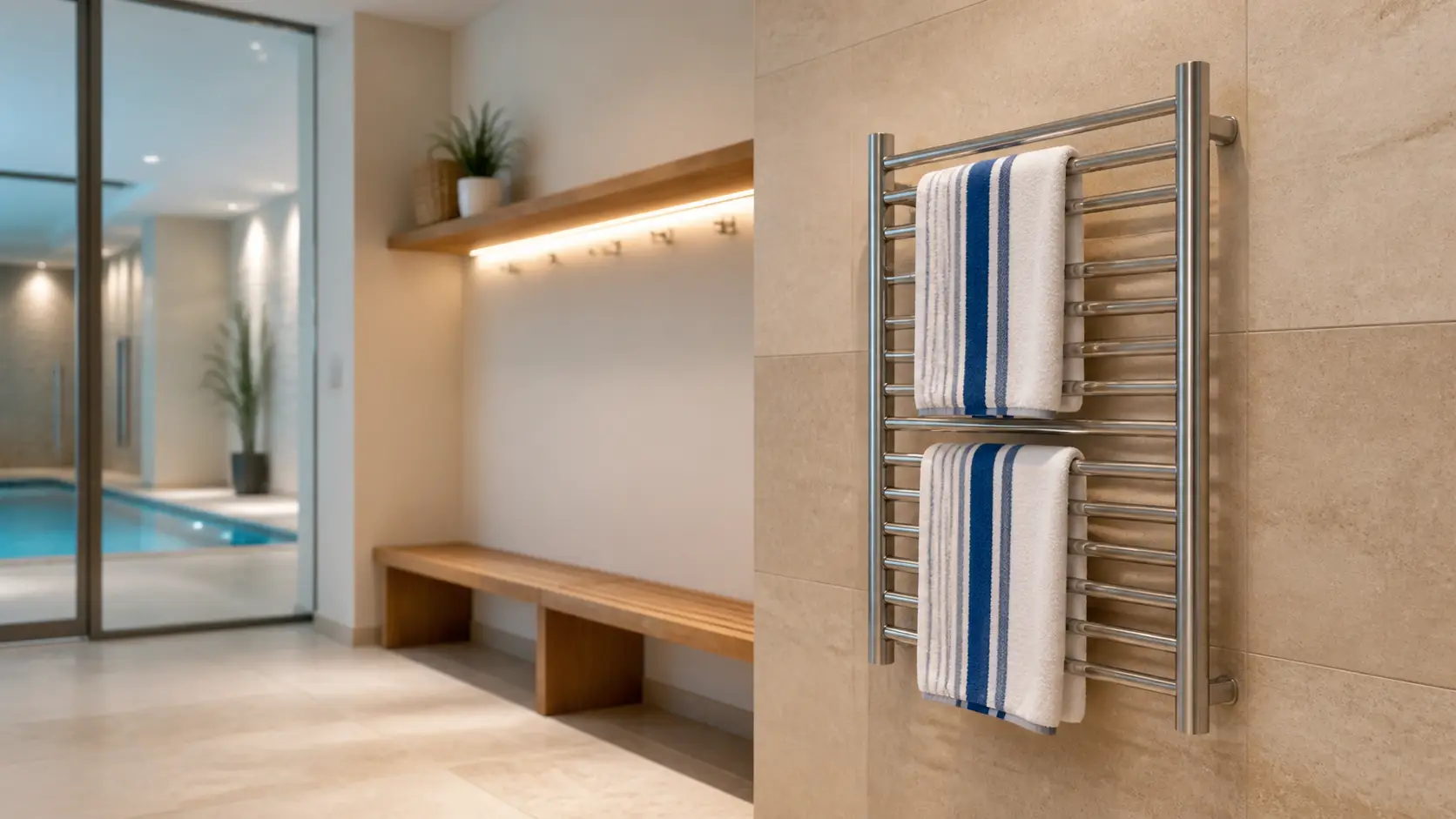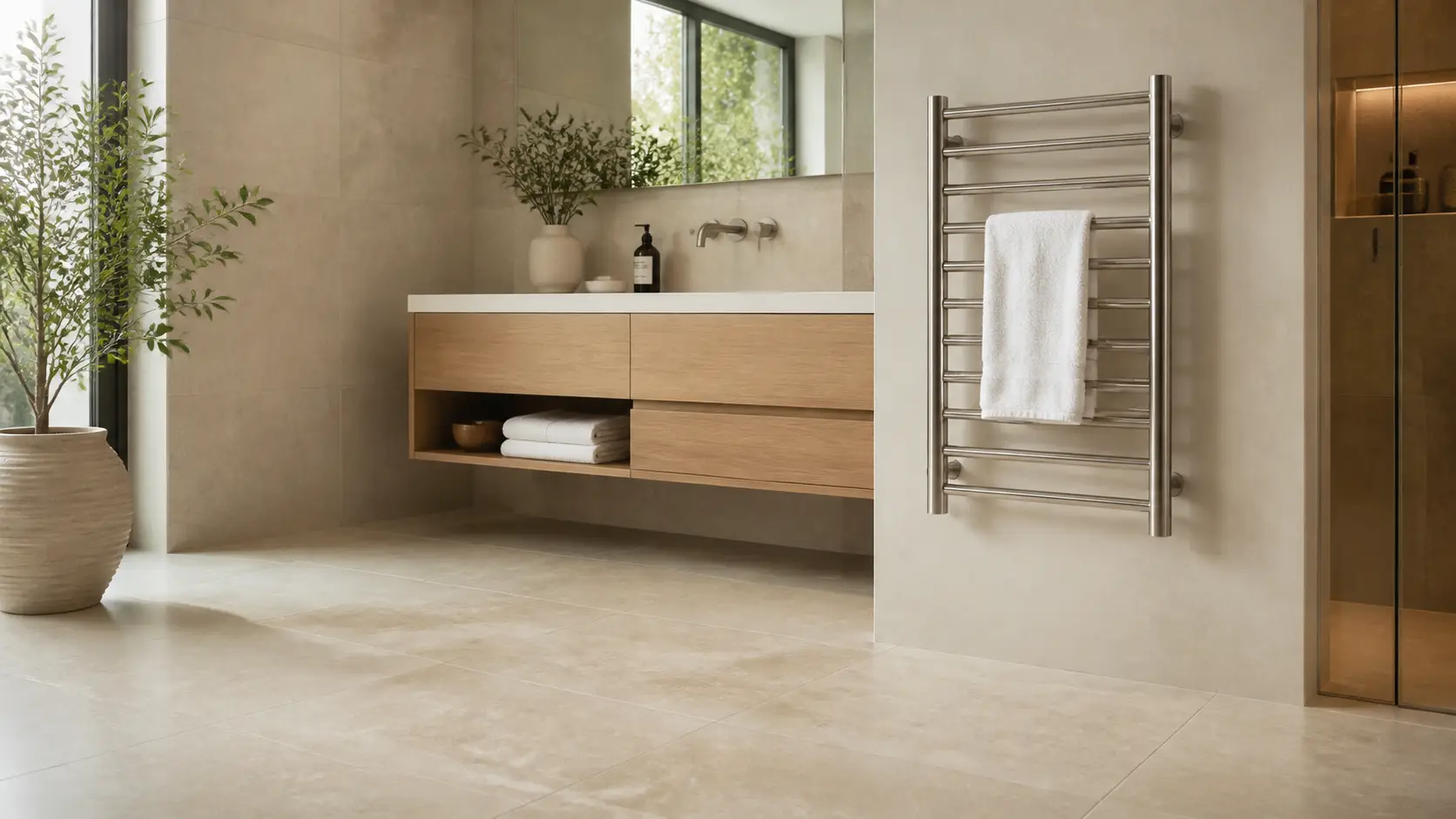
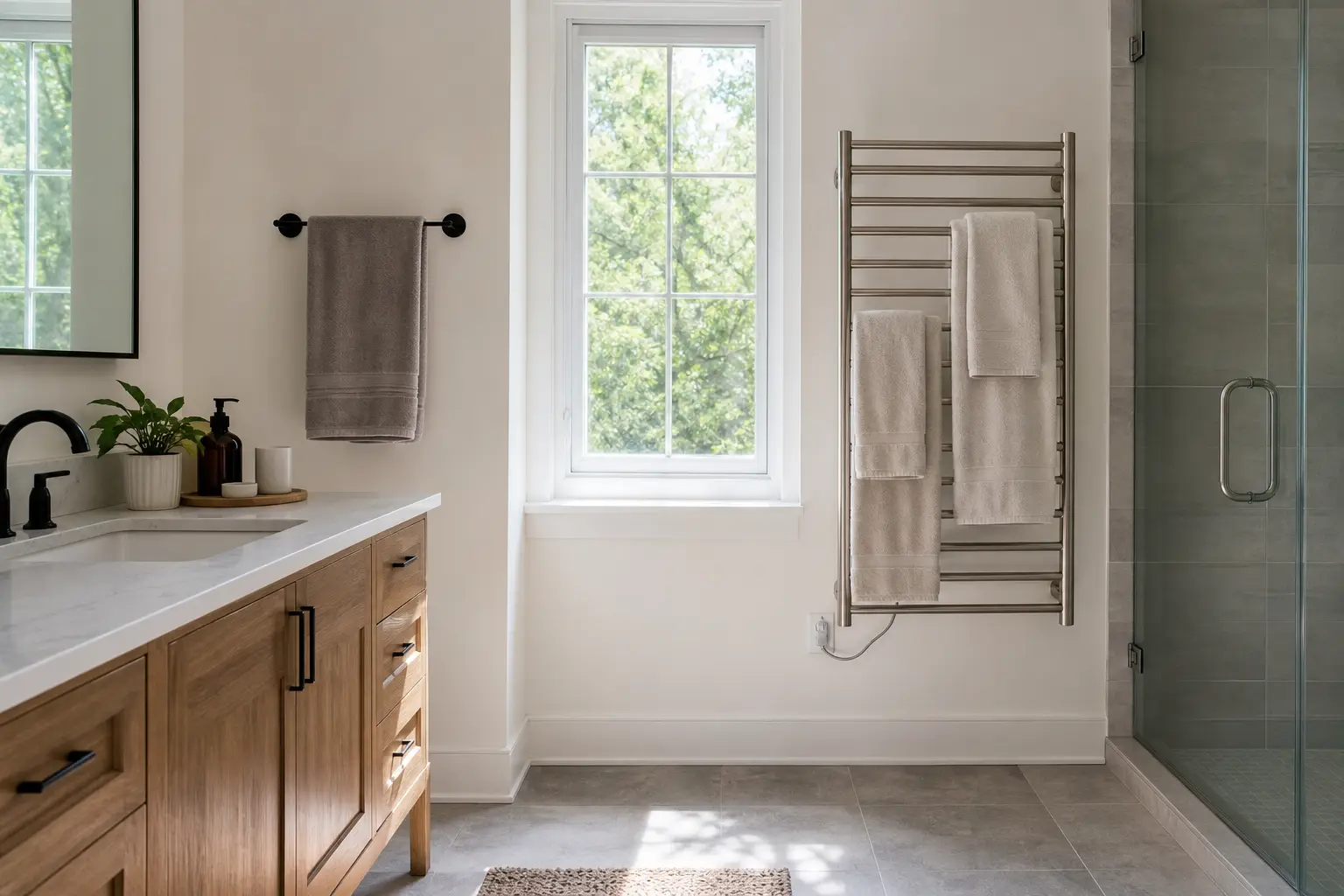
A heated towel rack usually keeps bath towels drier than a single towel bar or hook because it combines open hanging space with steady warmth. A towel bar can work in a well-ventilated bathroom when one towel is spread flat. Hooks are convenient, but they bunch fabric and slow drying. The right choice depends on towel thickness, airflow, wall space, electrical planning, and how many people use the bathroom each day.
Quick Comparison
| Choice | Best use | Drying strength | Main limitation |
|---|---|---|---|
| Towel hook | Robes, hand towels, quick hanging | Low for thick bath towels | Fabric bunches together |
| Standard towel bar | One towel spread flat | Moderate with good ventilation | Limited capacity |
| Heated towel rack | Daily bath towels and light garments | Stronger because it adds warmth and spacing | Needs safe power and wall planning |
A towel bar is not a bad bathroom accessory. It is simple, inexpensive, and easy to understand. If one person uses the bathroom and spreads one towel fully open after each shower, a bar may be enough. The problem starts when the bar is too short, two towels overlap, the room has weak ventilation, or the towel stays folded over itself for most of the day.
A heated towel rack solves a different problem. It gives towels rails to hang across, keeps damp fabric away from the vanity, door, or floor, and adds warmth that supports evaporation. It still needs ventilation. Heat helps, but it cannot remove humid bathroom air by itself.
When a Towel Bar Is Enough
Choose a standard towel bar when the bathroom has strong airflow, low daily towel load, and a clear wall where one towel can hang open. This is common in a guest bathroom, a powder room that rarely handles shower towels, or a larger primary bathroom with a separate linen area.
The towel bar also makes sense when electrical work would create more trouble than value. If there is no safe outlet or hardwired route, do not force an electric product into a poor location. A simple bar plus better ventilation may be the more practical upgrade.
Use the bar correctly. A bath towel folded into a narrow strip dries more slowly than one spread wide. Two towels stacked on the same bar dry poorly because the inner layers lose airflow. If the towel still feels damp the next morning, the issue may be towel spacing, fan use, room humidity, or towel thickness rather than the bar alone.
When a Heated Towel Rack Is Better
A heated towel rack is better when the bathroom handles damp towels every day and ordinary hooks or bars leave them musty, crowded, or slow to recover. It is especially useful in family bathrooms, compact apartments, humid climates, and remodels where the towel zone can be planned before the wall is finished.
The key benefit is drying-first organization. Instead of hanging towels over shower glass, doors, hooks, or the tub edge, each towel has a dedicated place to sit open. Warm rails can help moisture leave the fabric more consistently, while the open design keeps air moving around the towel.
This does not mean every bathroom needs one. If users expect it to dry heavy laundry, replace a clothes dryer, heat the whole bathroom, or solve a mold problem without ventilation, expectations are wrong. EPA moisture guidance treats moisture control as central to mold prevention, and ENERGY STAR notes that adequate ventilation helps control moisture and odors. A rack supports that routine; it does not replace it.
Hooks, Bars, and Rails in Real Homes
Hooks are useful for robes, pajamas, and a towel you will use again soon. They are poor for thick wet bath towels because fabric gathers into a compact mass. The outside may feel drier while the inside stays damp.
Bars improve that by spreading the towel, but one bar usually handles one large towel well. In a shared bathroom, a row of hooks may look tidy, yet towels often stay bunched. A heated towel rack gives more vertical drying area, which can matter more than the heat itself.
Think through the routine after a shower. Can the towel be reached without walking across wet tile? Can it hang without touching the toilet, vanity, floor, or shower glass? Is there enough room for the towel to hang open after use? Will the fan run long enough to clear humidity? These everyday details decide whether the towel zone works.
Safety and Planning Checklist
- Keep plug-in cords away from wet walking paths, shower spray, and pinch points.
- Do not use an extension cord as a permanent bathroom solution.
- Use a qualified electrician for hardwired installation decisions.
- Confirm local bathroom electrical requirements and GFCI protection.
- Leave enough wall clearance for towels to hang without blocking drawers, doors, or switches.
- Keep ventilation part of the plan, even with a heated rack.
CPSC guidance explains that GFCI protection is used where electrical equipment may be near water. That does not turn every outlet location into a good towel rack location. The better question is whether the rack, power route, mounting wall, towel drop, and daily movement path all work together.
Which One Should You Choose?
Choose a towel hook if you need a fast robe or hand-towel spot and drying is not the main issue. Choose a towel bar if one or two towels can hang fully open in a dry, ventilated room. Choose a heated towel rack if damp towels are a daily frustration and you have a suitable wall and safe power plan.
For a remodel, decide early. Towel bars, hooks, heated racks, switches, outlets, mirrors, shower glass, and vanity drawers compete for the same wall space. Planning the towel zone before tile or wall panels are finalized usually creates a cleaner result than adding accessories afterward.
For an existing bathroom, start with the problem. If towels are slow to dry because the fan is weak, fix ventilation first. If towels are crowded because there are too many users, add hanging capacity. If the wall and power route are suitable, an electric heated towel rack can make the routine feel more organized and more useful.
Browse the Calithrex heated towel rack collection when you want to compare size, installation type, finish, and towel capacity together.
FAQ
Is a heated towel rack better than a towel bar?
For drying used bath towels, usually yes. A heated towel rack adds warmth and more open hanging area. A towel bar can still work when one towel is spread out in a well-ventilated bathroom.
Can a towel bar dry towels well enough?
Yes, if the towel hangs open, the room has good airflow, and the bathroom is not overloaded with damp fabric. If towels stay damp overnight, the bar may not provide enough spacing.
Are towel hooks bad for bath towels?
Hooks are convenient, but thick towels dry slowly when bunched. They are better for robes, hand towels, or temporary hanging than for daily bath-towel drying.
Does a heated towel rack replace bathroom ventilation?
No. It helps towels dry, but it does not remove humid air from the room. Use an exhaust fan or other ventilation strategy to manage moisture.
Should I remove my towel bar?
Not always. Many bathrooms work best with both: a heated rack for damp bath towels and hooks or a bar for robes, hand towels, or guest use.
Is a plug-in heated towel rack safe in a bathroom?
It depends on the product, outlet location, cord route, and local requirements. Keep cords away from wet zones and use qualified electrical guidance when the setup is unclear.
Sources
- U.S. EPA: A Brief Guide to Mold, Moisture and Your Home
- ENERGY STAR: Ventilation Fans
- U.S. CPSC: GFCI Fact Sheet
- Calithrex: Heated Towel Rack Collection