An electric heated towel rack can be a safe bathroom upgrade when the model, installation, and daily use all fit the space. The important question is not simply whether a brand calls its rack safe. It is whether you can verify the exact installation type, product documentation, electrical plan, controls, and support path before you buy. A beautiful finish matters, but it should never be the only thing you inspect.
1. Start with the exact installation type
Do not assume that every electric heated towel rack installs the same way. Some models are plug-in; others are hardwired into the wall. That changes the planning, the electrician's scope, and where the rack can sensibly go.
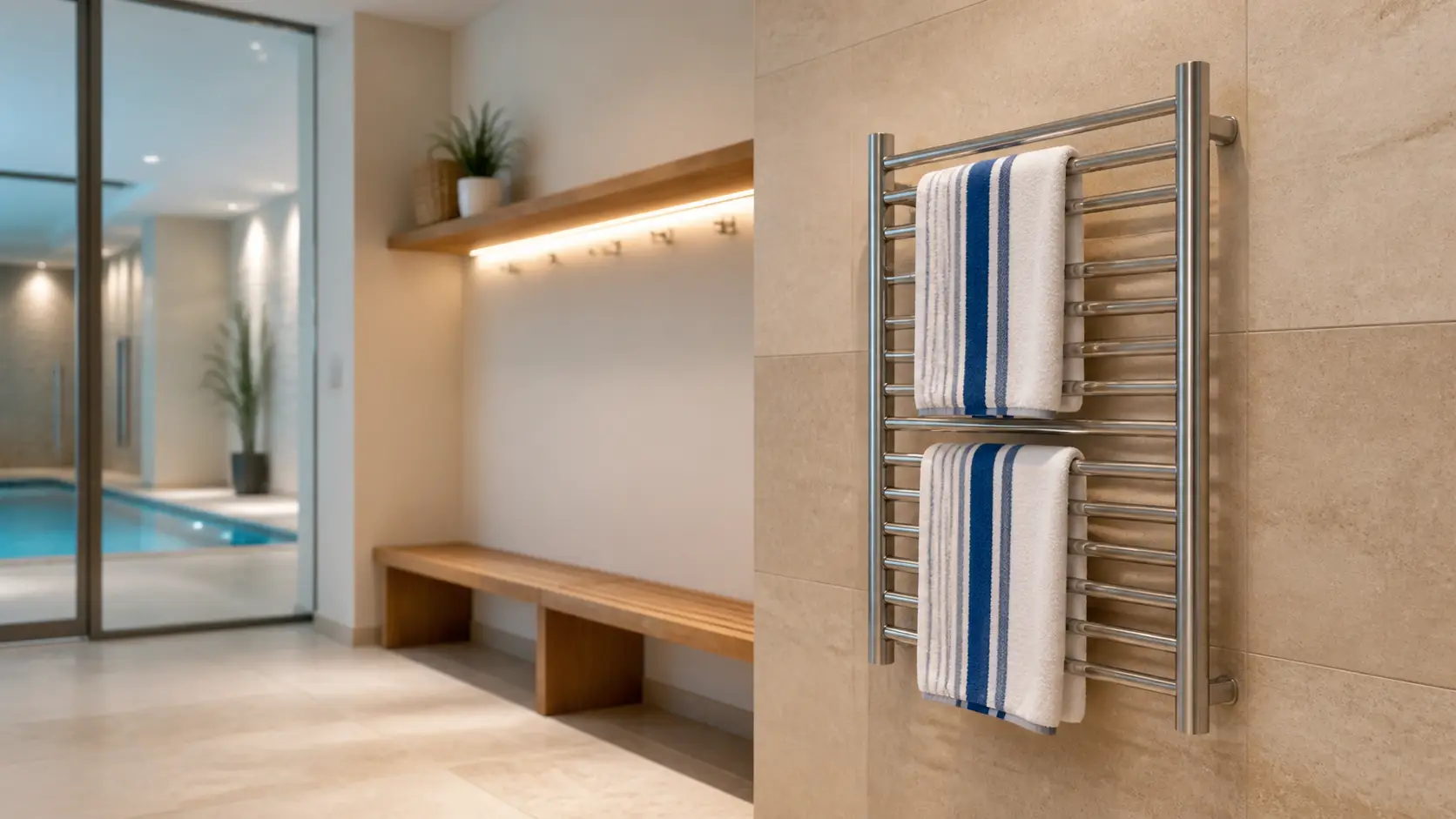
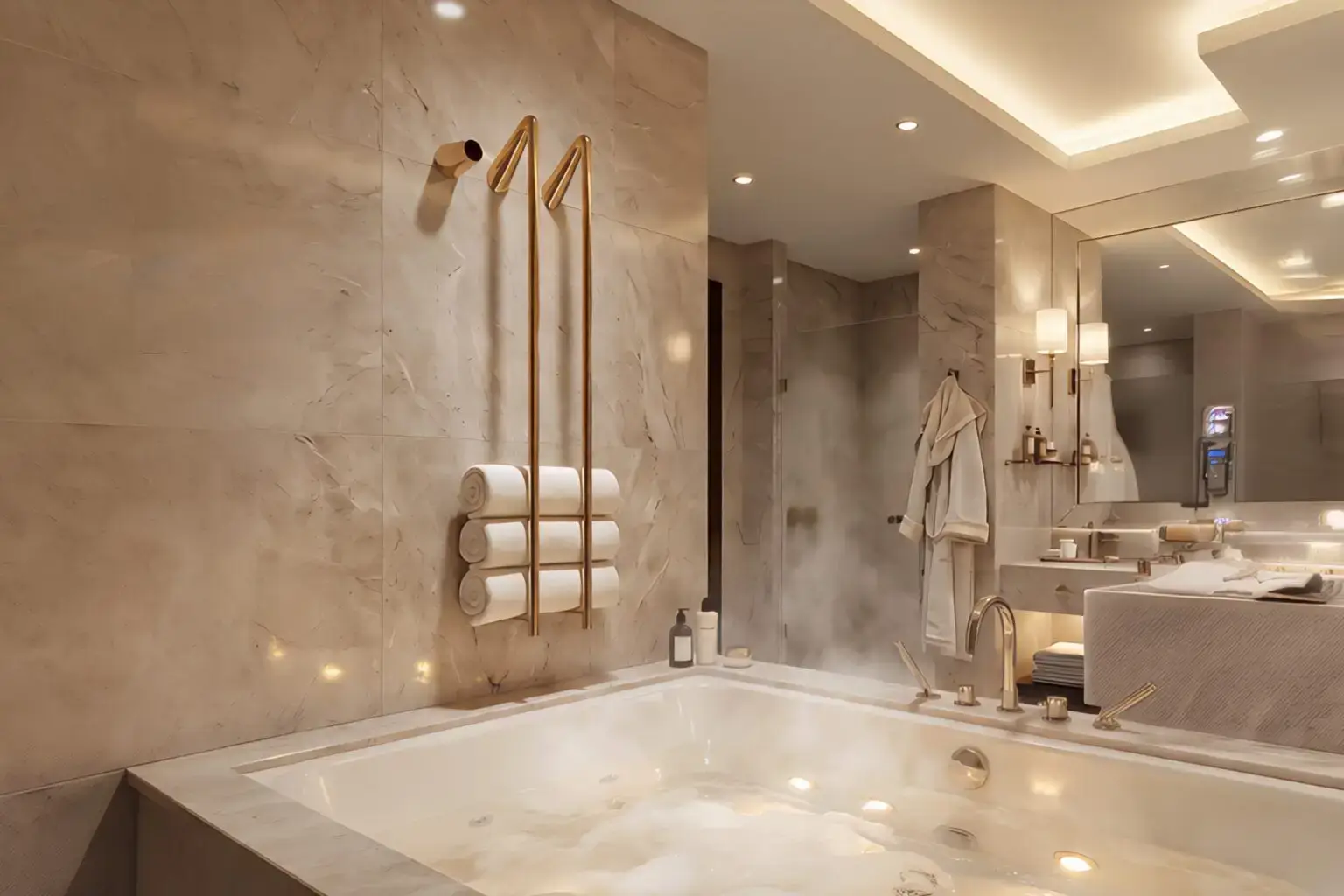
For example, the Calithrex ES17 can be specified for plug-in or hardwired installation, while the artistic Swan Lake EBL2 is hardwired only. That is not a small product-detail difference. It affects what you need to confirm before the wall is finished, not after the rack is already in the room.
Before placing an order, ask for the manual and confirm:
- Is this exact model plug-in, hardwired, or available in both versions?
- Where does its power connection sit?
- Which wall will carry it, and is that wall practical for the planned wiring?
- Who will do the electrical work if hardwiring is required?
2. Treat bathroom electrical protection as part of the decision
Bathrooms combine water, steam, bare feet, and electrical equipment. That is why the electrical plan deserves the same attention as the rack itself. In the United States, the Consumer Product Safety Commission explains that GFCI protection is designed to reduce the risk of severe electric shock from a ground fault, especially around water. A GFCI is an important protective measure, but it does not replace following the product manual or local electrical requirements.
For a hardwired rack, use a qualified electrician who can assess the circuit, location, local rules, and the manufacturer's instructions. For a plug-in model, do not solve a placement problem with a random extension cord or improvised outlet arrangement. A rack's wattage, installation type, existing load, and local requirements all matter.
3. Look for model-specific documentation, not vague reassurance
A trustworthy purchase decision starts with documents that match the model in your cart. At minimum, you should be able to find a product specification, installation manual, included-parts list, and a clear support contact.
The ES17 range, for instance, is available in 90W, 120W, and 150W versions depending on height. The paired EBL2 Swan Lake system is a 50W hardwired design with a timer and three temperature programs. These figures do not make one rack “safer”; they show why you should not copy installation assumptions from one model to another.
4. Plan the rack's location before you choose its shape
The right rack should work with the bathroom rather than fight it. Check the available wall area, the door swing, nearby fittings, the practical towel-hanging space, and the electrical route before selecting the finish or silhouette.
This matters even more for a design-led piece. The Swan Lake EBL2 uses two slender solid-brass rails in a sculptural vertical composition, but it is still a hardwired electrical fixture. Plan the wall, connection, and installation before selecting its finish.
Leave enough room to hang towels openly. An open rack works best when air can move around the fabric; it is designed to help used towels and light garments dry between uses, not to heat a tightly bundled stack of dry towels like an enclosed towel warmer.
5. Check controls and daily-use habits
Safety is also about avoiding careless routines. Read how the exact model turns on, how its timer works, and whether it has adjustable temperature settings before you decide where to install it.
Timers help create a predictable drying routine instead of leaving a product running by habit. The ES17 lists a 1-24 hour timer, while EBL2 includes a 1-24 hour timer and three temperature programs. Use the instructions supplied with your model, and do not treat a rack as a room heater or a substitute for bathroom ventilation.
6. Ask what happens if you need help
After-sales service is part of product safety because an unclear support path can turn a small issue into a frustrating one. Before buying, find out how to contact the brand, what information it needs to identify your model, and where its return and warranty terms are published.
For retail orders placed directly with Calithrex, the current returns policy provides a 30-day window for eligible unused and uninstalled products. It also explains that confirmed quality, shipping, missing-item, or incorrect-item issues may be resolved with parts, a replacement, a return and refund, or another reasonable solution. Keep your order confirmation and issue photos. Good service is visible: clear instructions, a real contact channel, and a documented process.
7. Use this seven-point check before checkout
| Check | What to verify |
|---|---|
| Installation | Plug-in or hardwired, connection location, and who will install it |
| Documentation | Exact manual, specification, included parts, and use limitations |
| Electrical plan | Product instructions, local requirements, and qualified advice where needed |
| Placement | Wall space, towel clearance, door swing, and practical wiring route |
| Daily controls | Timer, settings, and the intended towel arrangement |
| Product identity | The exact SKU, finish, dimensions, and wattage rather than a generic listing |
| Support | Contact path, return policy, warranty terms, and issue-reporting process |
FAQ
Are electric heated towel racks safe in bathrooms?
They can be, when the exact model is installed and used according to its documentation and local requirements. Verify the installation type, electrical plan, placement, and support information before purchase.
Do I need an electrician for a heated towel rack?
Hardwired products should be assessed and installed by a qualified electrician. A plug-in model still needs a suitable location and electrical setup.
Does a GFCI make any heated towel rack safe?
No. GFCI protection is important around water, but it does not replace correct product selection, installation, placement, or the manufacturer's instructions.
Is a higher wattage heated towel rack automatically less safe?
No. Wattage alone does not decide safety. It is one of several model-specific details that should be considered alongside installation, controls, documentation, and the electrical plan.
Can an artistic heated towel rack still be practical for everyday use?
Yes. The design should suit the room, while the rack still provides open space for towels and follows the correct installation plan. Choose the model for both its real dimensions and its daily drying routine.
Choose with the whole bathroom in mind
The most reassuring electric heated towel rack is not the one with the loudest claim. It is the one whose installation, documentation, controls, product details, and support process all make sense for your bathroom. Explore the Calithrex electric heated towel rack collection and review the exact product page and installation information before choosing a model.