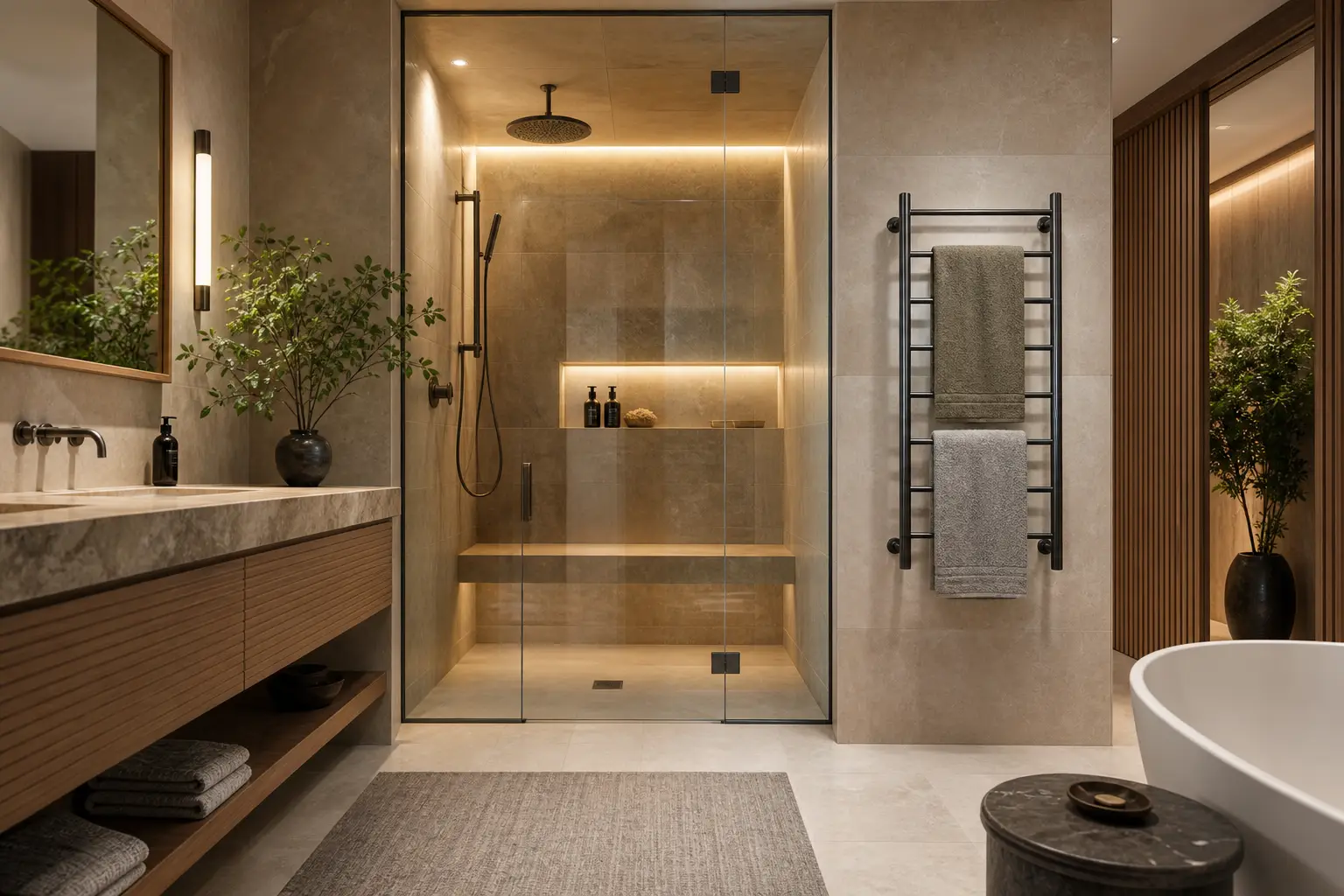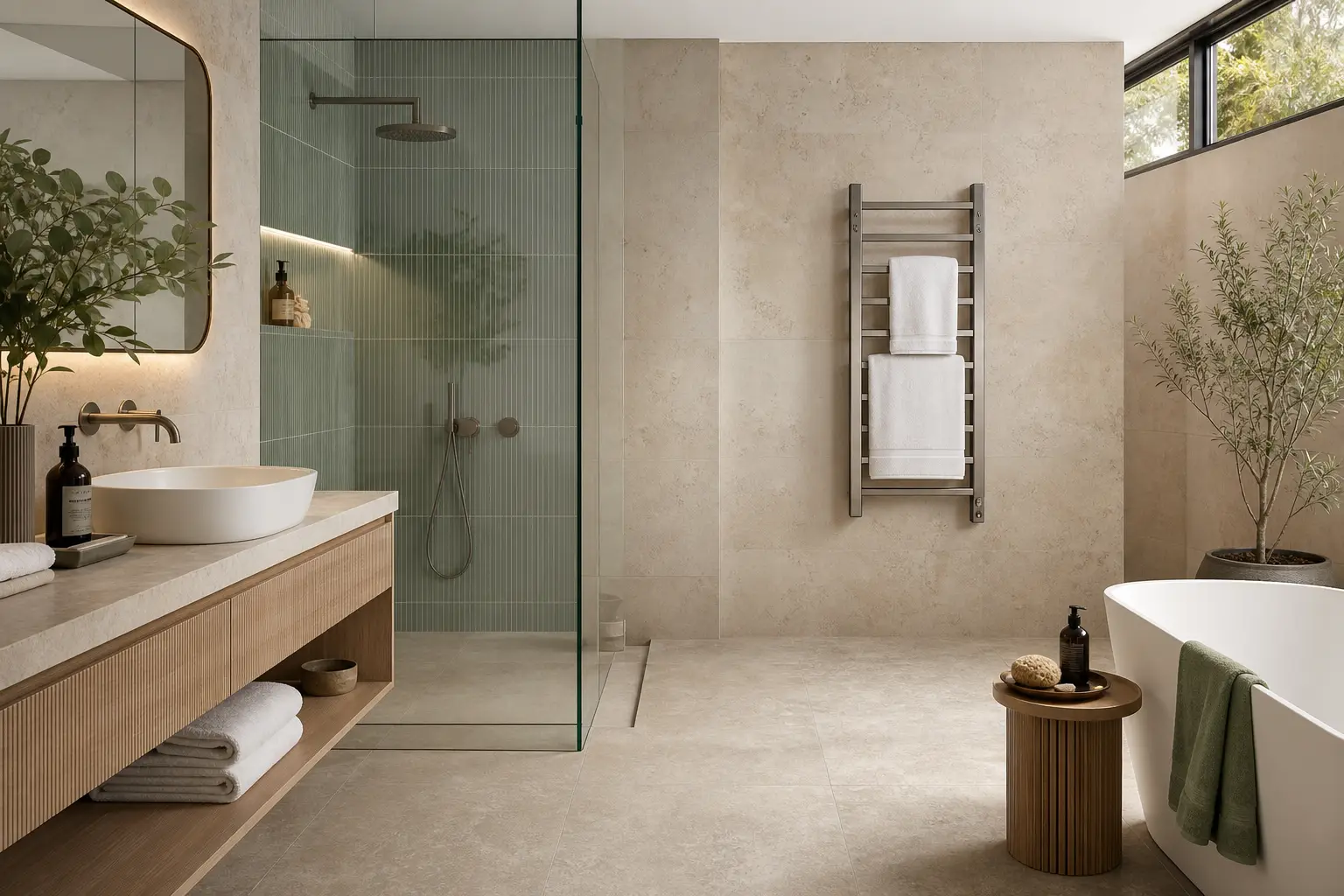
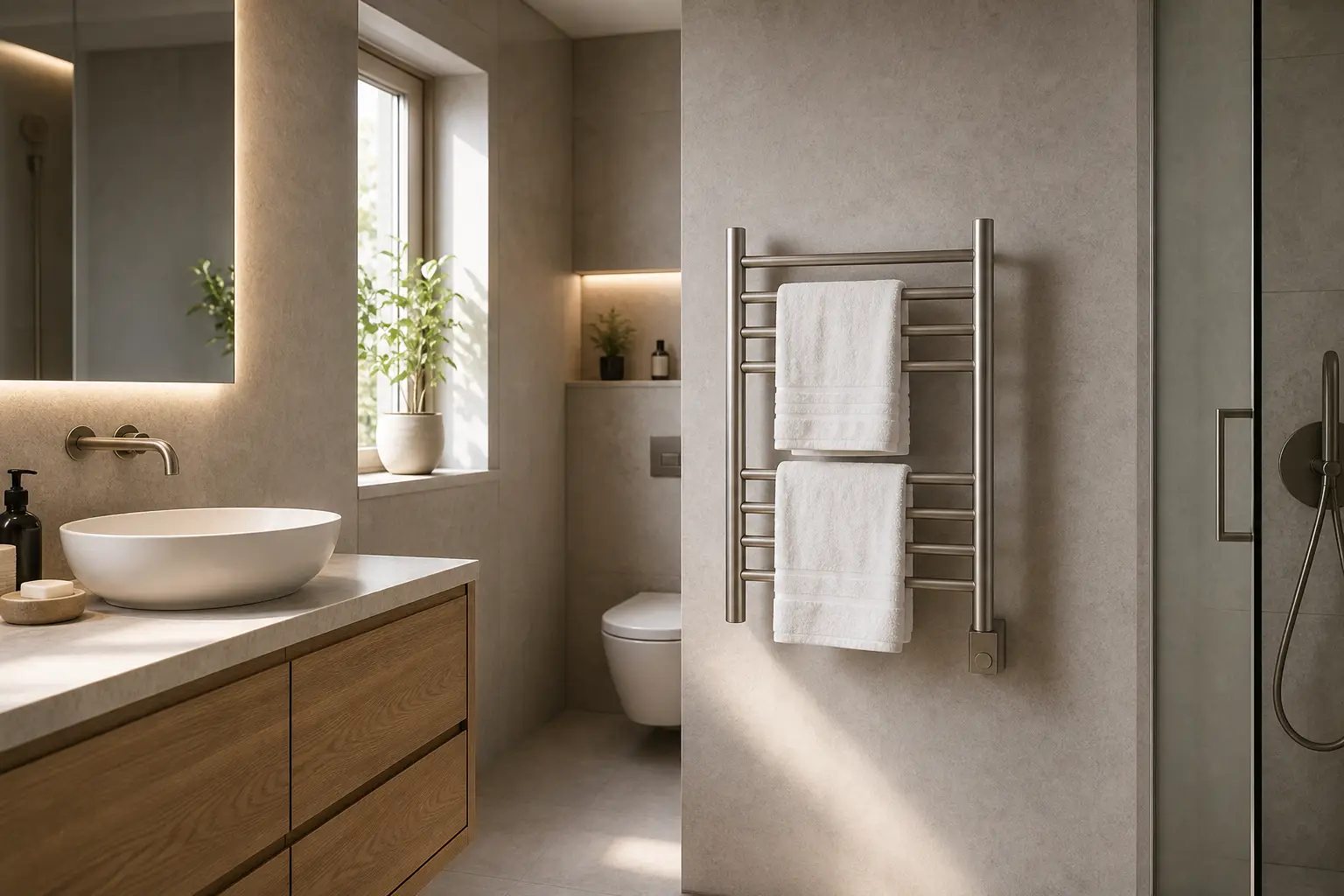
Heated towel racks can work very well in apartments when you choose the right installation type, size, and bathroom location. For most renters, a plug-in or freestanding towel warmer is the easiest option because it avoids permanent wiring. For homeowners or condo owners planning a renovation, a hardwired wall-mounted rack can look cleaner and save floor space. The key is to match the product to your lease rules, outlet location, towel routine, and bathroom layout.
Quick Answer: Which Apartment Setup Fits You?
| Apartment situation | Best heated towel rack type | Why it works |
|---|---|---|
| You rent and cannot drill tile | Freestanding plug-in towel warmer | No wall opening, easier to move, lease-friendly |
| You rent but can use existing wall anchors | Lightweight plug-in wall-mounted rack | Cleaner look if the landlord allows mounting |
| You own the apartment or condo | Hardwired wall-mounted heated towel rack | Built-in appearance and no visible cord |
| Very small bathroom | Slim wall-mounted rack or narrow freestanding rack | Keeps towels off doors, counters, and floors |
| Shared family bathroom | Wider rack with several bars | More towel surface and better daily convenience |
| Bathroom has poor ventilation | Towel rack plus exhaust fan use | Helps towels feel drier, but does not replace ventilation |
Start With Permission: Renter, Condo Owner, or Homeowner?
The first decision is not style. It is permission.
If you rent, check your lease before drilling tile, adding wall anchors, or making electrical changes. A freestanding plug-in towel warmer is usually the safest starting point because it can move with you and does not permanently change the bathroom. If your lease allows small wall anchors, a plug-in wall-mounted model may be possible, but you should still avoid drilling into waterproofing, tile, plumbing areas, or unknown wall cavities.
If you own the apartment or condo, you have more options. A hardwired wall-mounted rack can look more finished, especially in a remodel. It can also keep the floor clear in a compact bathroom. Before choosing that route, confirm the wall location, wiring route, switch or timer plan, and local electrical requirements with a qualified electrician.
For a deeper comparison of wiring options, see Calithrex’s guide to hardwired vs plug-in heated towel racks.
Plug-In vs Hardwired for Apartments
Plug-in models are usually better for renters and quick upgrades. They need a suitable outlet, a cord path that does not create a tripping issue, and enough clearance from wet zones. They are easier to remove, but the visible cord may not look as polished.
Hardwired models are usually better for owned apartments, condo renovations, and bathrooms where a clean built-in look matters. They can be connected to a wall switch or timer, and the finished result often looks more intentional. The tradeoff is installation complexity. A hardwired rack should be planned before tile work or wall finishing whenever possible.
| Feature | Plug-in towel rack | Hardwired towel rack |
|---|---|---|
| Best for | Renters, simple upgrades, temporary homes | Owners, remodels, long-term bathrooms |
| Installation | Usually easier | Requires electrical planning |
| Appearance | Cord may be visible | Cleaner built-in look |
| Portability | Easier to move | Permanent installation |
| Bathroom fit | Needs safe outlet access | Better for planned wall locations |
Safety Comes Before Style
Apartment bathrooms are compact, which means water, towels, outlets, and movement paths are often close together. A heated towel rack should never be placed where it blocks shower doors, vanity drawers, toilet access, or the main walking path.
For plug-in use, the outlet should be suitable for bathroom use and positioned so the cord does not cross the floor. GFCI protection is important because bathrooms are wet environments. The Electrical Safety Foundation International explains that GFCIs are designed to shut off power when they detect ground faults. OSHA also describes GFCIs as fast-acting protection that can shut off power quickly during a ground-fault event.
Do not use extension cords in the bathroom to make a towel warmer reach a distant outlet. If the outlet is in the wrong place, choose another towel warmer type or ask a qualified electrician about a safer setup.
If the rack will sit near a shower, tub, or splash zone, check the product rating and installation instructions. Calithrex’s IP rating guide for bathrooms explains how moisture protection ratings relate to bathroom placement.
How Big Should an Apartment Towel Rack Be?
In apartments, bigger is not always better. A rack that is too wide may look premium in a showroom but feel awkward in a narrow bathroom. Start by counting towels and measuring the wall or floor zone you can realistically use.
For one person, a compact rack that holds one bath towel and one hand towel may be enough. For two people, choose a rack with more bar spacing or a slightly wider frame so towels do not stay bunched together. For a family apartment, prioritize towel surface area and easy access over a decorative shape.
Measure these before choosing a size:
- Wall width between the vanity, toilet, shower glass, and door swing.
- Height from floor to any shelf, mirror cabinet, or towel hook.
- Clearance for towels hanging below the lowest bar.
- Distance from shower splash zones and direct water exposure.
- Outlet location if choosing a plug-in model.
For more sizing details, use the Calithrex heated towel rack size guide.
Where Should You Put It in a Small Bathroom?
The best location is usually near the shower exit, but not inside the wettest part of the room. You want the towel close enough to grab after bathing, but far enough away that the rack, cord, switch, and towels are not exposed to direct spray.
Good apartment locations often include:
- A dry wall beside the vanity.
- A wall section outside the shower door swing.
- A narrow area between the vanity and bathroom door.
- A freestanding position near the towel storage zone.
- A planned wall location during a remodel.
Poor locations include the back of a door that swings into fixtures, directly beside a shower head, under a low shelf, behind the toilet where towels are awkward to reach, or anywhere a cord would cross the walking path.
For mounting height, towel length matters more than a single universal number. The rack should be high enough that towels hang freely, but not so high that shorter users struggle to reach the upper bars. Calithrex’s installation height guide gives a practical starting point.
What Daily Problems Can It Solve?
In apartments, heated towel racks are less about luxury for luxury’s sake and more about daily bathroom order. Small bathrooms often have limited towel storage, weaker ventilation, and less room for drying towels between showers.
A good towel warmer can help with:
- Keeping towels off the floor, door handles, and vanity edges.
- Making towels feel warmer and more comfortable after a shower.
- Helping damp towels dry more evenly when used with ventilation.
- Reducing the need to hang towels in bedrooms or laundry areas.
- Making a compact bathroom feel more organized and intentional.
It is important to be realistic. A towel warmer is not a substitute for an exhaust fan, open window, dehumidifier, or proper moisture control. ENERGY STAR notes that adequate ventilation helps control moisture and odors in bathrooms. The EPA also emphasizes drying wet areas promptly to reduce mold risk. A heated towel rack is best treated as part of a drying routine, not the entire moisture-control system.
When an Apartment Towel Warmer Is Worth It
A heated towel rack is usually worth considering if you use the same bathroom every day, dislike damp towels, have limited towel hanging space, or want a simple comfort upgrade that does not require a full remodel.
It is especially practical when:
- Your bathroom has no good towel bar location.
- Towels stay damp overnight.
- You live in a cold or humid climate.
- You want a cleaner towel storage routine.
- You are improving a small bathroom without replacing major fixtures.
- You want a renter-friendly comfort upgrade that can move with you.
It may not be the best first upgrade if your bathroom has serious ventilation problems, a leak, unsafe wiring, no suitable outlet, or no dry placement zone. Fix those issues first. Warm towels are nice, but safe electricity and moisture control matter more.
Apartment Buying Checklist
Before you buy, answer these questions:
- Am I allowed to mount anything to the wall?
- Do I need the rack to move with me later?
- Is there a bathroom-rated outlet in a safe location?
- Will the cord cross the floor or touch wet areas?
- How many towels do I need to warm or dry each day?
- Is the rack narrow enough for the room?
- Can towels hang without touching the floor, toilet, or vanity?
- Does the finish match my faucet, shower hardware, and mirror frame?
- Would a timer or switch make daily use easier?
- Have I checked product instructions and electrical requirements?
If most of your answers point to portability, choose a freestanding or plug-in option. If most point to long-term design and a cleaner finish, a hardwired wall-mounted rack may be the better investment.
Design Tips for a More Polished Apartment Bathroom
The easiest way to make a towel warmer look intentional is to match it to existing hardware. Brushed stainless steel works well with chrome, nickel, or soft neutral bathrooms. Matte black can create a sharper modern contrast. Warm metallic finishes can feel more decorative, but they should connect with other visible fixtures.
In a small apartment bathroom, avoid turning the towel warmer into the only visual feature. It should support the room, not dominate it. Keep nearby shelves, hooks, and baskets simple so the towel area feels clean.
You can also pair the towel rack with small C-end upgrades:
- Better bath towels that dry evenly.
- A quiet bathroom fan routine.
- A slim storage shelf for spare towels.
- Wall hooks for robes or hand towels.
- A washable bath mat that does not stay damp.
For more small-space ideas, see Calithrex’s guide to small bathroom design and heated towel rack planning.
FAQ
Can renters use heated towel racks?
Yes, but renters should choose carefully. Freestanding and plug-in models are usually easier because they avoid permanent wiring. Always check the lease before drilling, wall mounting, or changing electrical fixtures.
Is a plug-in towel warmer safe in an apartment bathroom?
It can be safe when used according to the product instructions, placed away from direct spray, and connected to a suitable bathroom outlet. Avoid extension cords, damaged cords, loose outlets, and any setup where the cord crosses a wet walking path.
Do heated towel racks dry towels in small bathrooms?
They can help towels dry more evenly, especially when towels are spread across the bars and the bathroom has ventilation. They should not be treated as a replacement for an exhaust fan or moisture control.
Should I choose freestanding or wall-mounted for an apartment?
Choose freestanding if you rent, move often, or cannot mount into the wall. Choose wall-mounted if you own the apartment, want a cleaner look, and have a safe wall and electrical plan.
How many bars do I need?
For one person, a compact rack may be enough. For two people, choose more bar spacing or a wider rack. The goal is to avoid stacking thick towels tightly over each other because that slows drying and reduces warmth.
A Simple Recommendation
For most apartment renters, start with a plug-in or freestanding heated towel rack that fits the room without drilling or electrical changes. For apartment owners and condo remodels, plan a hardwired wall-mounted rack early so the wiring, switch, towel height, and finish feel built into the bathroom.
Explore Calithrex heated towel rack products if you are choosing a rack for a compact apartment bathroom, a small ensuite, or a home spa-style upgrade.