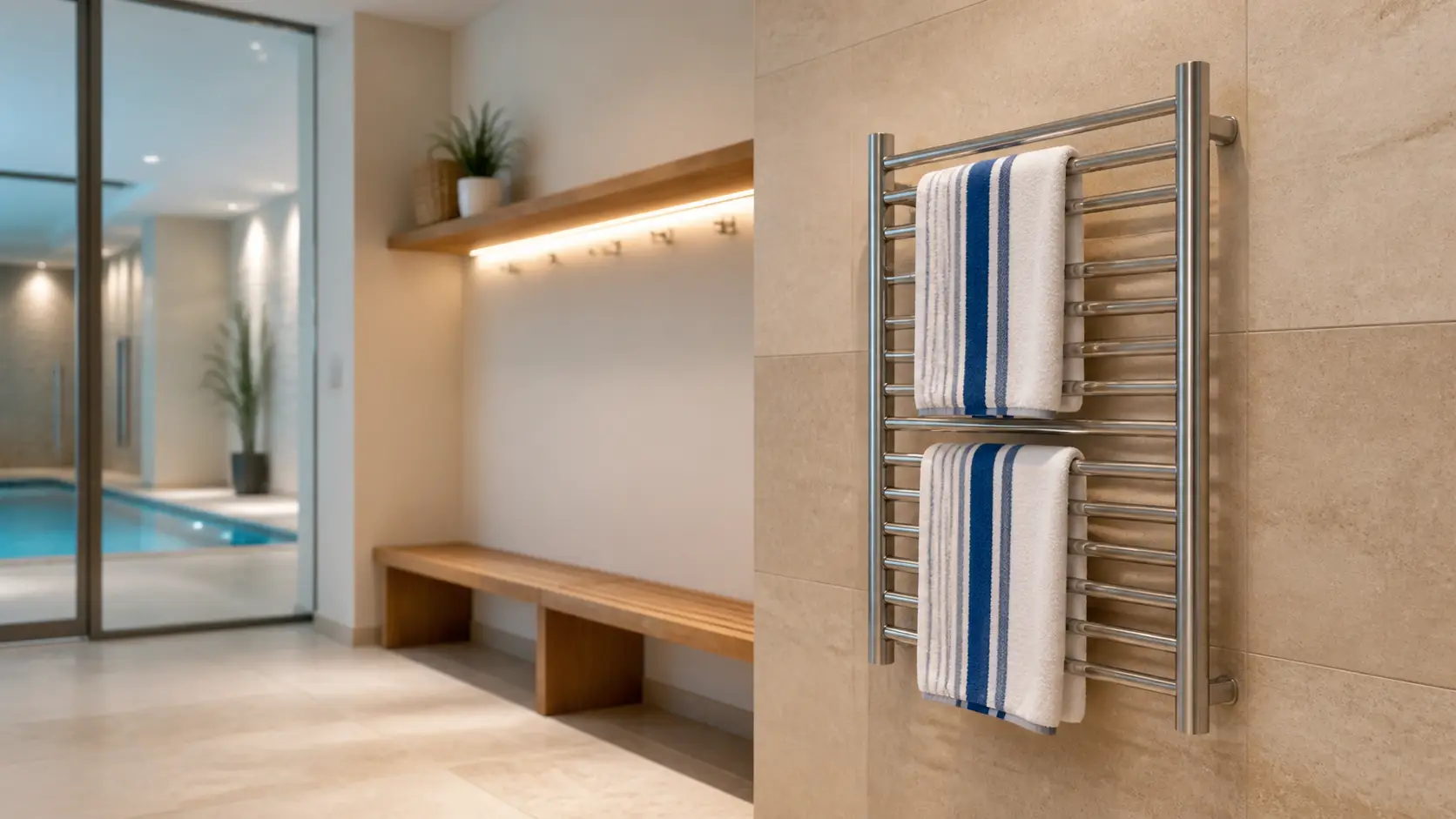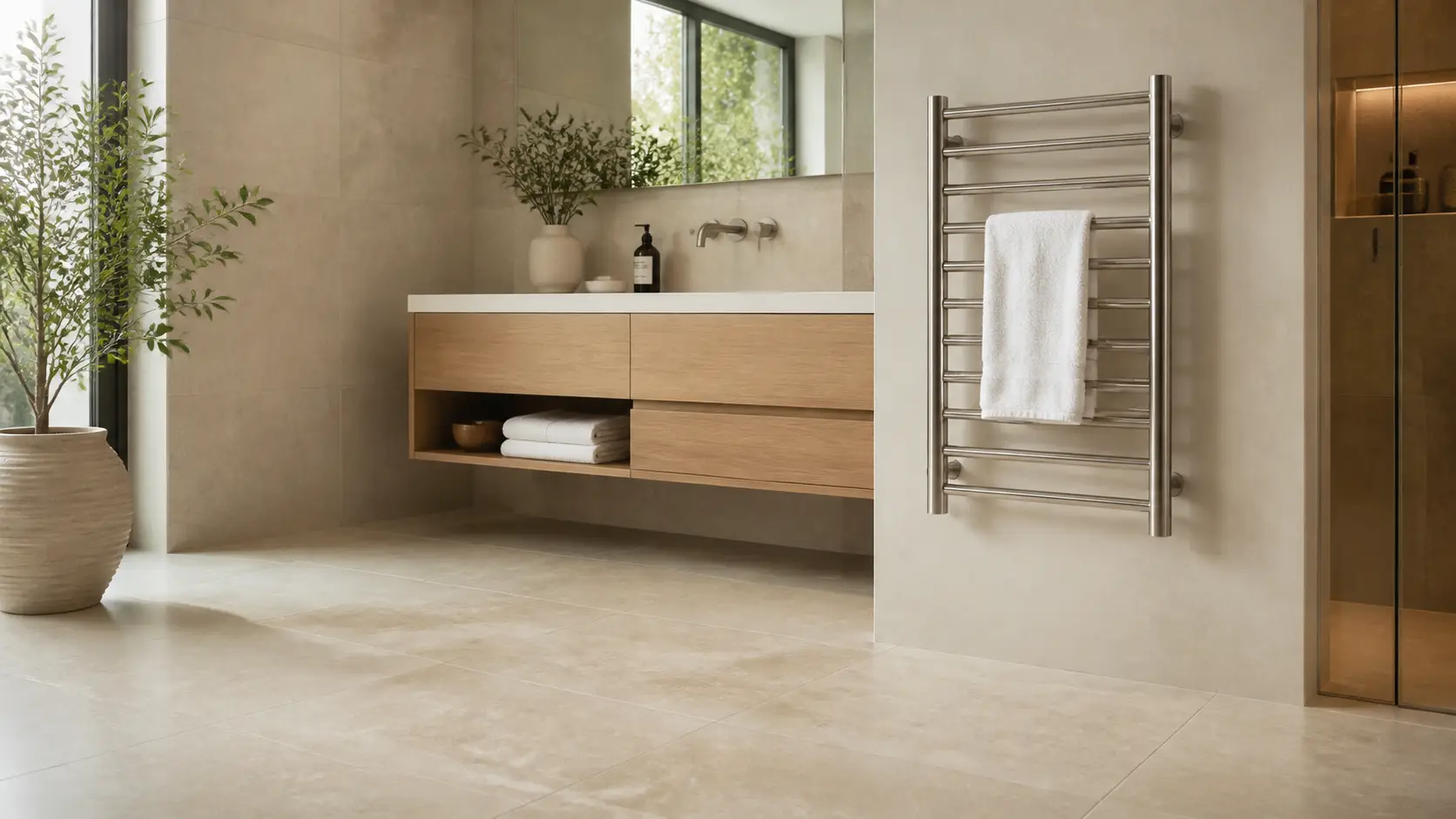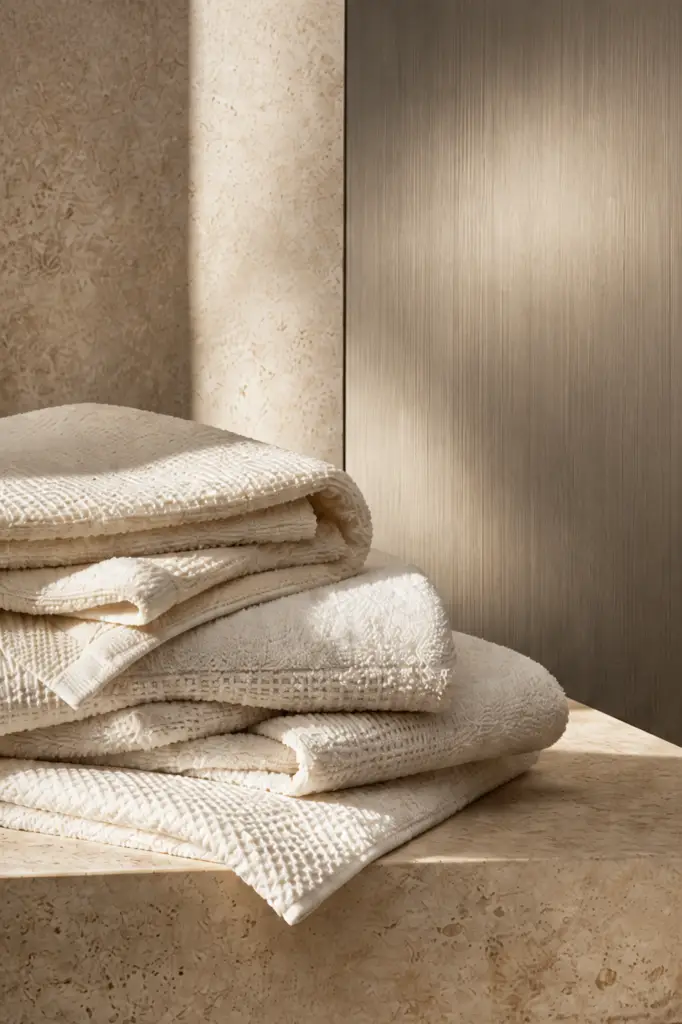
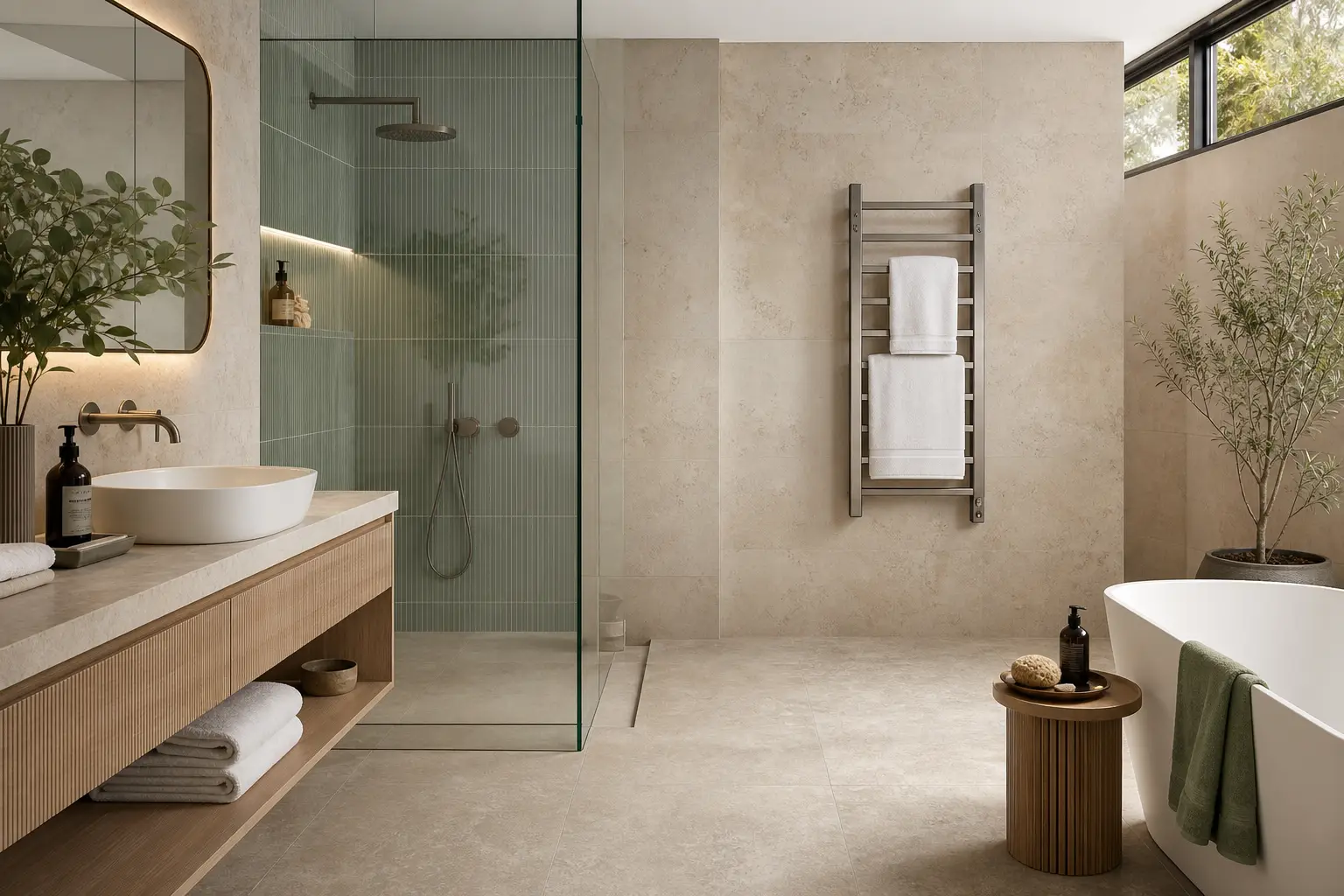
Bathroom tile trends for 2026 are moving toward warmer stone looks, tactile surfaces, larger shower zones, calmer color palettes, and better safety planning. For homeowners, designers, hotel buyers, and contractors, the practical question is not just which tile looks current. It is whether the wall tile, floor tile, grout, lighting, drainage, and heated towel rack placement work together after the bathroom is used every day.
What is changing in bathroom tile for 2026?
The strongest 2026 tile direction is a move away from cold gray, flat surfaces, and purely decorative tile choices. Current bathroom trend coverage points toward warmer neutrals, natural stone effects, textured wall moments, matte or slip-aware floor finishes, and tile layouts that make bathrooms feel more like spa or hotel spaces.
That does not mean every bathroom needs dramatic tile. In many residential and hospitality bathrooms, the more durable choice is a calm base tile with one controlled feature area. A warm limestone-look or travertine-look porcelain can carry the room, while a vertical stacked shower tile, fluted accent, or softer green niche adds personality without making replacement or maintenance harder.
2026 bathroom tile planning checklist
| Planning area | Better 2026 direction | Why it matters |
|---|---|---|
| Main wall tile | Warm stone-look porcelain, soft beige, limestone, travertine, muted green, or quiet clay tones | Creates a calmer premium look and works with chrome, brushed nickel, matte black, and warm metal towel rack finishes |
| Shower feature tile | Vertical stack, fluted texture, ribbed tile, mosaic, or a restrained accent wall | Adds depth without covering the entire room in high-cost feature tile |
| Bathroom floor tile | Matte, textured, or slip-aware porcelain rather than highly polished tile | Wet bathroom floors need practical traction planning, not just a showroom finish |
| Grout | Color-matched grout for calm rooms; slightly darker grout for high-use hotel or rental bathrooms | Grout choice affects maintenance, visual lines, and how clean the room feels over time |
| Heated towel rack zone | Place the rack outside the direct spray zone, near the exit path, with wall strength and wiring planned early | Warm towels only feel convenient if the rack is reachable, safe, and visually integrated with the tile layout |
Why warm stone-look tile is gaining ground
Warm stone-look porcelain is popular because it gives bathrooms a premium material feeling without the care burden of many natural stones. Large-format tile can reduce grout lines on walls, while porcelain can support a more consistent surface for bathrooms that need easier maintenance.
For CALITHREX customers, this matters because heated towel racks are often installed on tiled walls. If the wall tile is planned early, the installer can confirm blocking, cable routing, bracket positions, and grout-line alignment before the tile is finished. That is especially important for hardwired heated towel racks, hotel rooms, villas, and larger renovation projects where visual alignment is part of the specification.
Floor tile should be chosen differently from wall tile
One mistake is using the same design logic for every surface. Bathroom walls can carry larger, smoother, more decorative tile. Bathroom floors need a more practical decision because they are walked on when damp.
The Tile Council of North America explains DCOF as a measurement related to friction for hard surface flooring, while tile manufacturers commonly reference wet DCOF values when recommending tile for areas expected to be walked on when wet. The practical takeaway is simple: no tile should be treated as slip-proof, and wet bathroom floors need a product that is suitable for that use case.
For shower floors, wet rooms, and curbless entries, smaller tile formats or textured surfaces can also help because grout joints and surface texture can improve underfoot confidence. Large-format tile may still work in some bathroom floor areas, but the installer must handle slope, drainage, cuts, and surface suitability correctly.
How tile trends affect heated towel rack placement
A heated towel rack is easier to specify before tile work starts than after the room is finished. The tile layout affects where brackets look clean, where hidden wiring can run, and whether the towel rack feels naturally connected to the shower, vanity, or bathtub routine.
Use these placement rules:
- Keep the heated towel rack outside the direct shower spray zone unless the product, installation method, and local electrical requirements clearly support the location.
- Place it close enough to the shower or bath exit that a towel is easy to reach.
- Avoid mounting through fragile decorative accent tile without confirming wall backing and bracket support.
- Coordinate the finish with the tile mood: brushed metal for warm stone, matte black for stronger contrast, chrome or polished metal for cleaner hotel-style bathrooms.
- Plan towel drop clearance so the bottom towel does not sit too close to the floor, bathtub edge, or vanity countertop.
Residential bathroom examples
For a small residential bathroom, a good 2026 tile plan might use warm large-format porcelain on the main walls, a matte floor tile in a similar tone, and a narrow green or textured shower accent. A wall-mounted heated towel rack can sit on the dry wall between the shower and vanity, giving the room a comfort upgrade without stealing storage space.
For a family bathroom, durability matters more than novelty. Choose a tile that hides minor water marks, coordinate grout color carefully, and keep the towel warming zone away from door swings and wet clutter. This is where a simple wall-mounted electric heated towel rack often works better than a decorative towel ladder that is not powered.
Hotel, villa, and spa bathroom examples
In hotel bathrooms, tile needs to photograph well, clean quickly, and survive repeat use. Warm stone-look porcelain, larger wall tile, and quiet feature areas can support a premium guest experience without making every room look overly customized.
For hotel and spa projects, the heated towel rack should be treated as part of the tile and electrical package, not a late accessory. Buyers should confirm mounting surfaces, replacement access, finish consistency, IP/safety requirements, control method, and whether the towel rack sits in a guest-friendly dry zone.
Related planning guides on Calithrex include hotel bathroom design trends, bathroom flooring trends, and bathroom materials planning.
Common tile mistakes to avoid
- Choosing polished floor tile because it looks luxurious in photos, without checking wet-use suitability.
- Using too many feature tiles in one small bathroom.
- Forgetting that grout color changes the room more than expected.
- Planning a heated towel rack after the tile wall is complete, then discovering the best mounting point lacks wiring or backing.
- Placing the towel rack too far from the shower exit, which turns a comfort feature into decoration.
- Matching every metal finish perfectly instead of coordinating the overall tone.
Buying and specification questions
Before finalizing tile and towel warming products, ask these questions:
| Question | Who should answer it |
|---|---|
| Is the selected floor tile suitable for wet bathroom use? | Tile supplier, designer, contractor |
| Will the shower floor slope work with the chosen tile size? | Tile installer or contractor |
| Where will the heated towel rack wiring or outlet be located? | Electrician and contractor |
| Does the tiled wall have enough backing for the rack brackets? | Contractor |
| Will the rack sit in a dry, reachable, visually balanced position? | Designer, homeowner, hotel buyer |
| Are grout color and tile finish practical for cleaning frequency? | Homeowner, hotel operator, cleaner |
FAQ
Are large-format tiles still popular for bathrooms in 2026?
Yes. Large-format tile remains useful for calm, premium bathrooms because it reduces visual grout lines. It works especially well on walls, but floor use depends on drainage, slope, slip suitability, and installer skill.
What tile color is best for a 2026 bathroom?
Warm neutrals, limestone tones, travertine effects, muted greens, clay colors, and soft off-whites are easier to live with than harsh gray or bright trend colors. The best choice depends on light, vanity finish, hardware, and the towel rack finish.
Is matte tile better for bathroom floors?
Often, yes. Matte or textured tile can be more practical underfoot than polished tile in wet bathroom areas. Always check the manufacturer's intended use and wet-area suitability instead of relying on appearance alone.
Should a heated towel rack be installed before or after tile?
It should be planned before tile installation, even if the rack is mounted later. Early planning helps confirm wiring, wall backing, bracket positions, grout-line alignment, and safe placement outside the direct wet zone.
Can tile and heated towel rack finishes clash?
They can. Warm stone-look tile usually pairs well with brushed nickel, stainless steel, champagne, or softer metallic finishes. Matte black can work when the bathroom has enough contrast in fixtures, frames, or lighting.
CTA
Planning a tile-led bathroom upgrade or a hotel bathroom specification? Explore Calithrex heated towel racks and compare finish, mounting, and placement options early in the design process so the towel warming zone fits the tile layout instead of being forced in later.