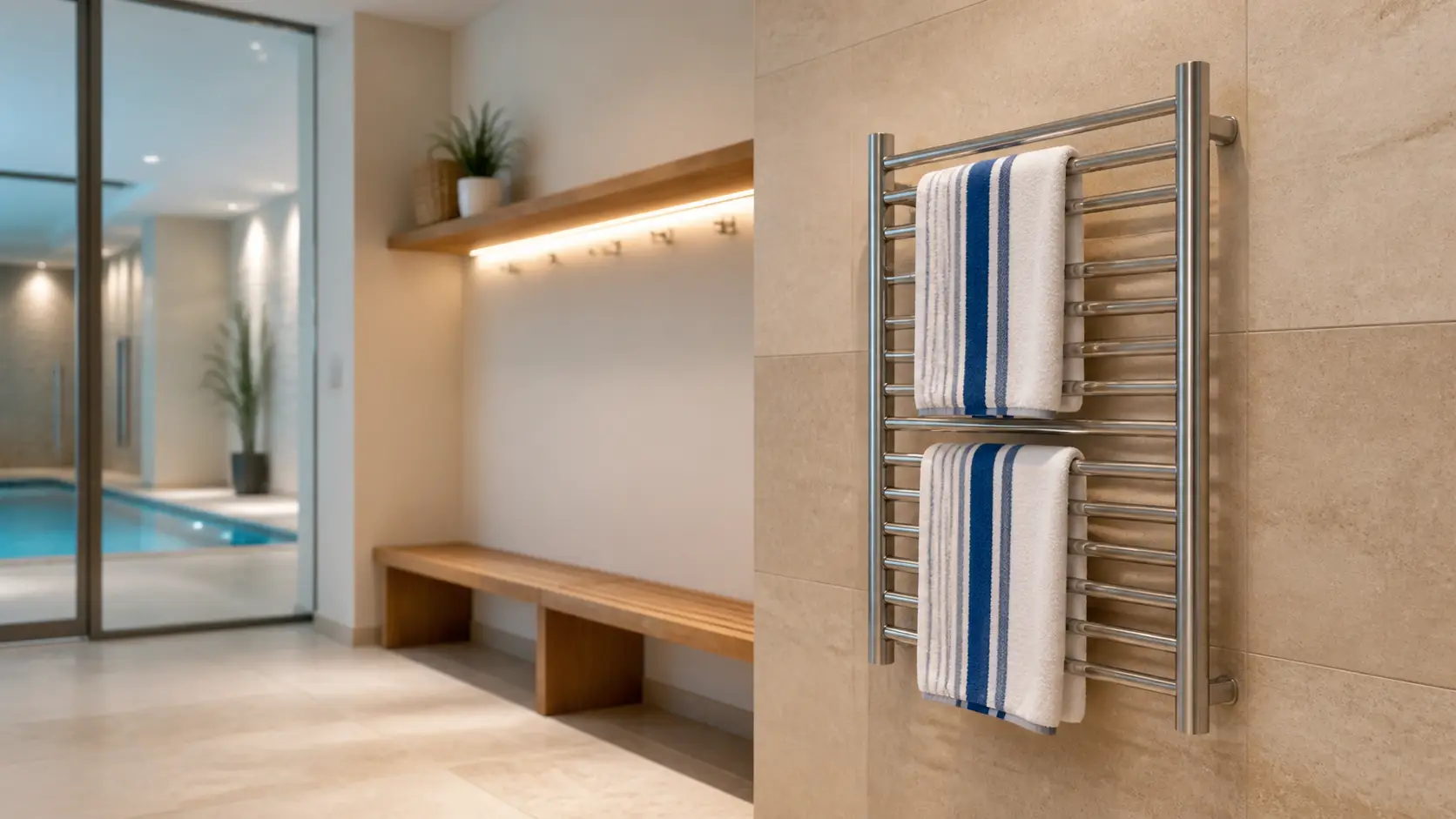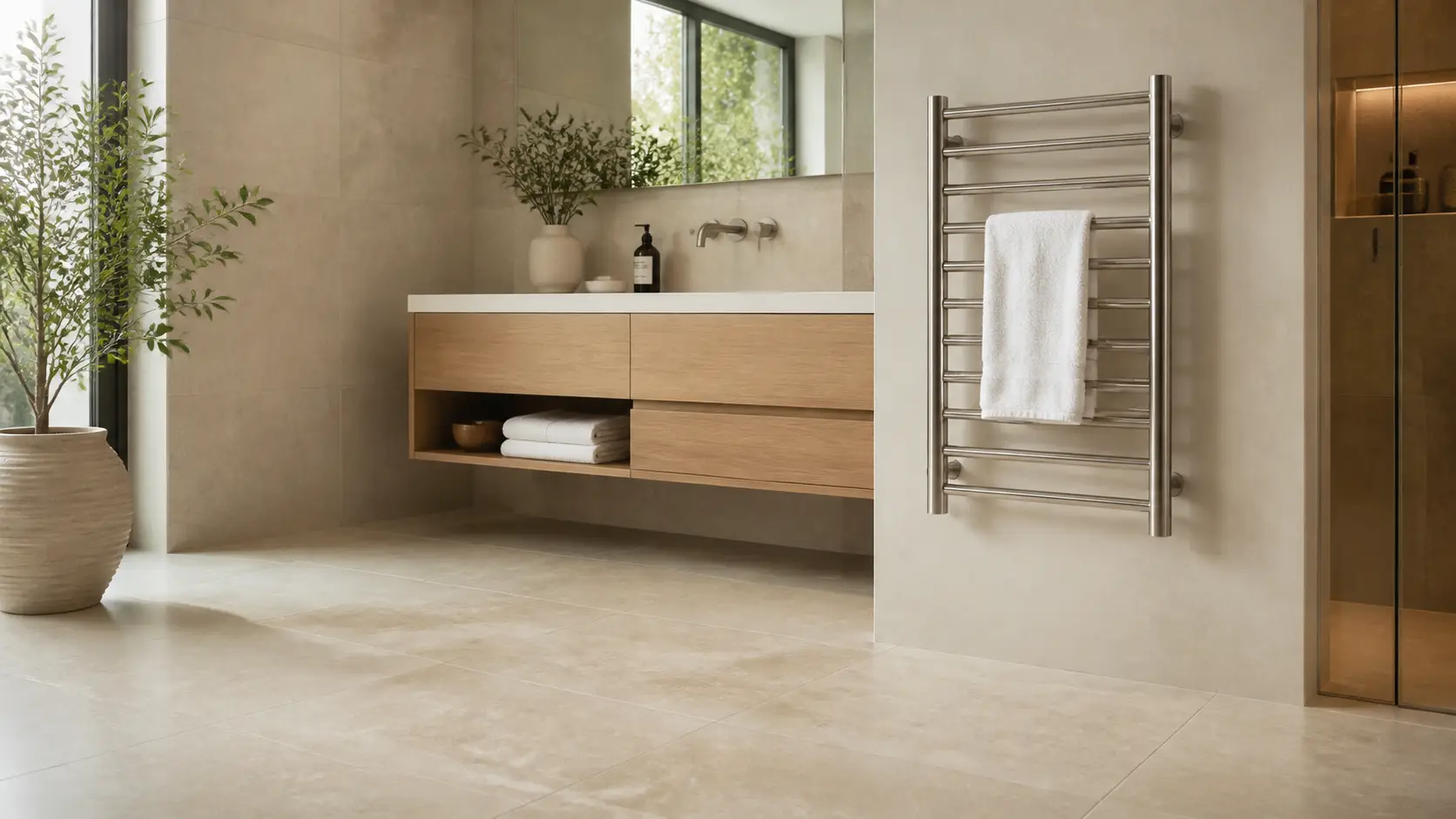
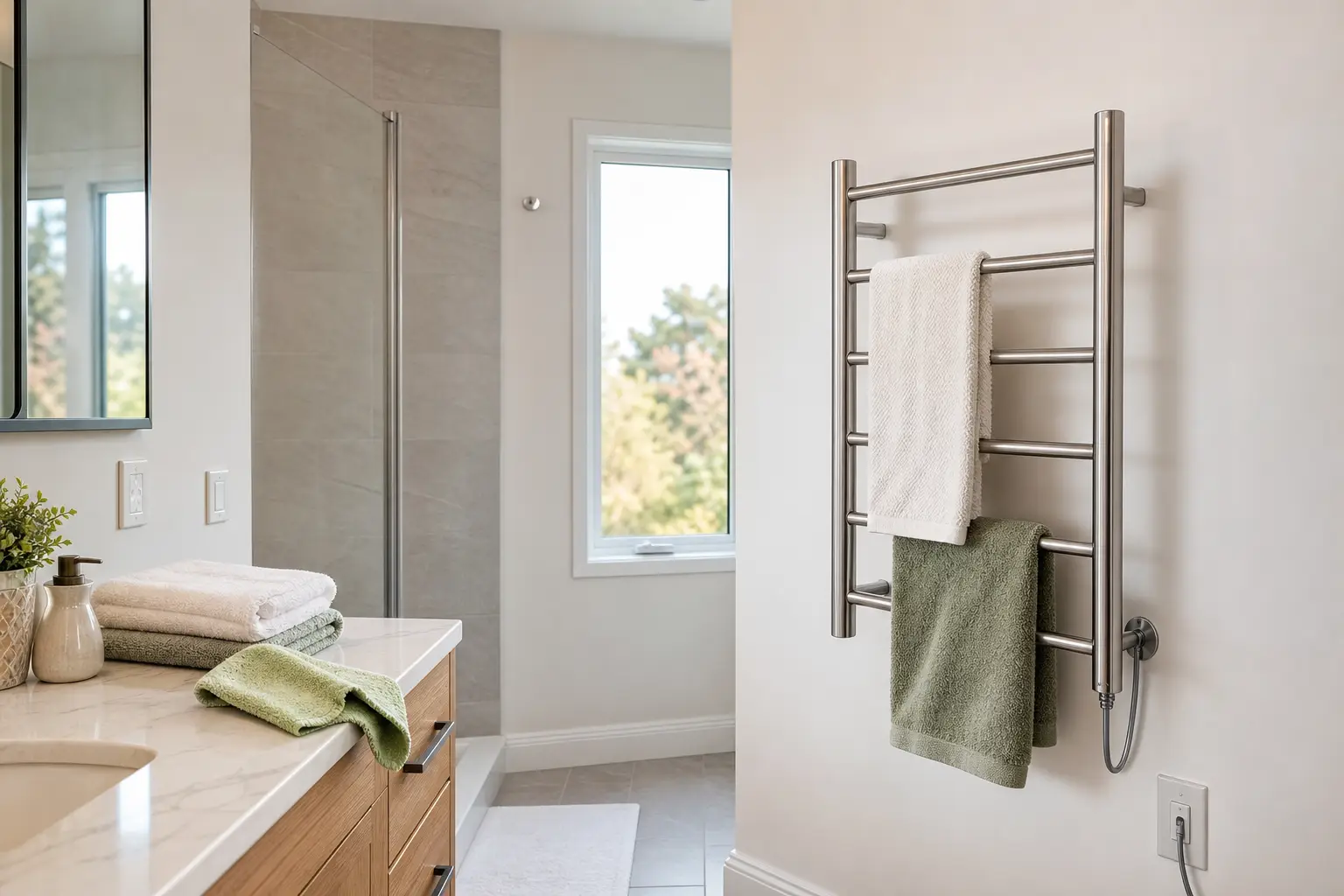
Electric heated towel rack maintenance is mostly about gentle cleaning, open towel placement, moisture control, and quick attention to anything unusual. You do not need a complicated routine, but you should treat the rack as both a bathroom fixture and an electrical product. Keep the surface clean, avoid harsh cleaners, follow the manual, and stop using it if you notice damage, loose mounting, unusual heat, or electrical problems.
A Simple Maintenance Schedule
| How often | What to check | Why it matters |
|---|---|---|
| After normal use | Towels hang open, not bunched tightly | Open fabric dries better and keeps the rack useful |
| Weekly | Dust, lint, water spots, fingerprints | Small buildup is easier to remove before it becomes stubborn |
| Monthly | Wall brackets, cord path, switch or timer behavior | Loose mounting or control issues should be noticed early |
| Seasonally | Bathroom ventilation, nearby moisture, outlet condition | The rack works better in a room that can release humidity |
| Any time something seems wrong | Odor, buzzing, damaged cord, unstable bracket, unusual heat | Stop use and get qualified help before the issue grows |
The goal is not to over-service the rack. It is to keep everyday problems from becoming safety, comfort, or finish problems.
Clean the Surface Gently
Most homeowners should start with the mildest method: turn the rack off, let it cool, and wipe the surface with a soft damp cloth. For fingerprints or light bathroom residue, use a small amount of mild soap on the cloth, then wipe again with clean water and dry the surface.
Avoid abrasive pads, steel wool, harsh powders, strong solvents, and cleaners that are not approved by the product instructions. These can scratch or dull a finish, especially on polished, brushed, plated, matte, or warm metallic surfaces. Do not spray cleaner directly into joints, controls, wiring exits, or wall openings. Apply cleaner to the cloth instead.
If the rack is in a family bathroom, cleaning frequency may depend on towels, soap residue, hard water, and how close the rack is to the vanity or shower route. A rack outside the splash zone may need only light dusting. A rack near a busy shower may need more frequent wiping and better ventilation.
Keep Towels Open, Not Packed
An open electric heated towel rack works best when towels have room for air and heat to move around the fabric. If a large towel is folded into a thick bundle over one bar, the inner layers may stay damp longer and the rack may feel less effective. Spread towels over more than one bar when possible, and avoid covering every rail with tightly layered fabric.
Use the rack for towels, bath sheets, and light garments that the product instructions allow. Do not treat it as a general drying rack for heavy bedding, shoes, plastic-backed bath mats, or items that should not be heated. If a fabric label warns against heat, follow the fabric label.
The drying-first habit also keeps the bathroom cleaner. Damp towels left on hooks, doors, tubs, or closed cabinets can hold moisture in one spot. The rack gives towels a dedicated place to recover between uses, but it still depends on airflow.
Manage Bathroom Moisture Around the Rack
A heated towel rack can help towels dry, but it does not replace bathroom ventilation. The EPA’s residential moisture guidance emphasizes controlling moisture sources, drying wet areas, and using exhaust fans in bathrooms. ENERGY STAR also notes that adequate ventilation helps control moisture and odors.
That matters for maintenance because trapped humidity affects more than towels. It can make mirrors spot faster, leave water marks on metal finishes, and keep the room feeling damp. After showers, run the bathroom fan or open a window when practical. Keep wet bath mats, dripping towels, and puddled water away from the wall area around the rack.
If mold or recurring mildew appears elsewhere in the bathroom, do not expect the towel rack to solve it by itself. Fix the moisture source, clean affected areas appropriately, improve ventilation, and dry damp materials promptly.
Check Mounting, Power, and Controls
A wall-mounted heated towel rack should feel stable. If a bracket moves, a screw loosens, or the rack shifts when towels are placed on it, stop adding weight and have the mounting checked. Movement can damage the wall, the finish, or the electrical connection over time.
For a plug-in model, keep the cord in a safe route where it does not cross a wet walking path, run under a rug, get pinched by furniture, or sit where water can collect. CPSC electrical safety guidance warns that damaged cords and overloaded extension cords can create hazards. In a bathroom, do not solve a poor outlet location with a casual extension cord.
For a hardwired model, use a qualified electrician for installation and service questions. CPSC guidance also highlights the role of ground-fault circuit interrupter protection in areas where electrical equipment may be near water. The exact installation details depend on the product, the bathroom, and local electrical requirements.
When to Stop Using It
Stop using the rack and seek qualified help if you notice:
- A damaged cord, plug, outlet, switch, or visible wire.
- A burning smell, buzzing, sparking, or repeated breaker/GFCI trips.
- Heat that seems unusual compared with normal operation.
- A loose wall bracket or rack body.
- Water entering controls, wiring points, or electrical connections.
- Any behavior that does not match the product manual.
Do not keep testing a questionable electrical product in a bathroom. Turn it off, unplug it if it is safe to do so, and ask the installer, manufacturer, or a qualified electrician what to check next.
Best Fit and Poor Fit
This maintenance routine fits homeowners who want a cleaner towel zone, warmer towels, and better drying support without making the bathroom routine complicated. It also fits remodels where the rack is planned on a dry wall with a clean power route and enough space for towels to hang openly.
It is a poor fit when the bathroom has no ventilation plan, the only outlet requires a cord across the floor, the rack is mounted where shower water regularly hits it, or users expect it to dry heavy wet laundry. Fix the room condition first, then choose or use the rack correctly.
Explore the Calithrex heated towel rack collection when you are comparing fixture styles, installation types, and bathroom fit.
FAQ
How often should I clean a heated towel rack?
For most homes, a weekly wipe with a soft cloth is enough. Clean more often if the rack is near the vanity, shower route, or hard-water splash area.
Can I spray bathroom cleaner directly on the rack?
It is better to apply mild cleaner to a cloth, then wipe the rack. Avoid spraying liquid into controls, joints, wall openings, plugs, or wiring exits.
Why are my towels still damp?
The towel may be folded too thickly, the room may be humid, the fan may not be running long enough, or the rack may be overloaded. Hang towels more openly and improve airflow.
Is it safe to use an extension cord?
Do not use an extension cord as a permanent bathroom solution. If the outlet location is wrong, choose another installation plan or ask a qualified electrician.
Should I turn the rack off before cleaning?
Yes. Turn it off, let it cool, then clean gently. This protects your hands and makes it easier to spot residue, loose parts, or finish issues.
Who should repair a hardwired heated towel rack?
Use a qualified electrician or the appropriate service channel. Do not open or modify a hardwired electrical fixture yourself.