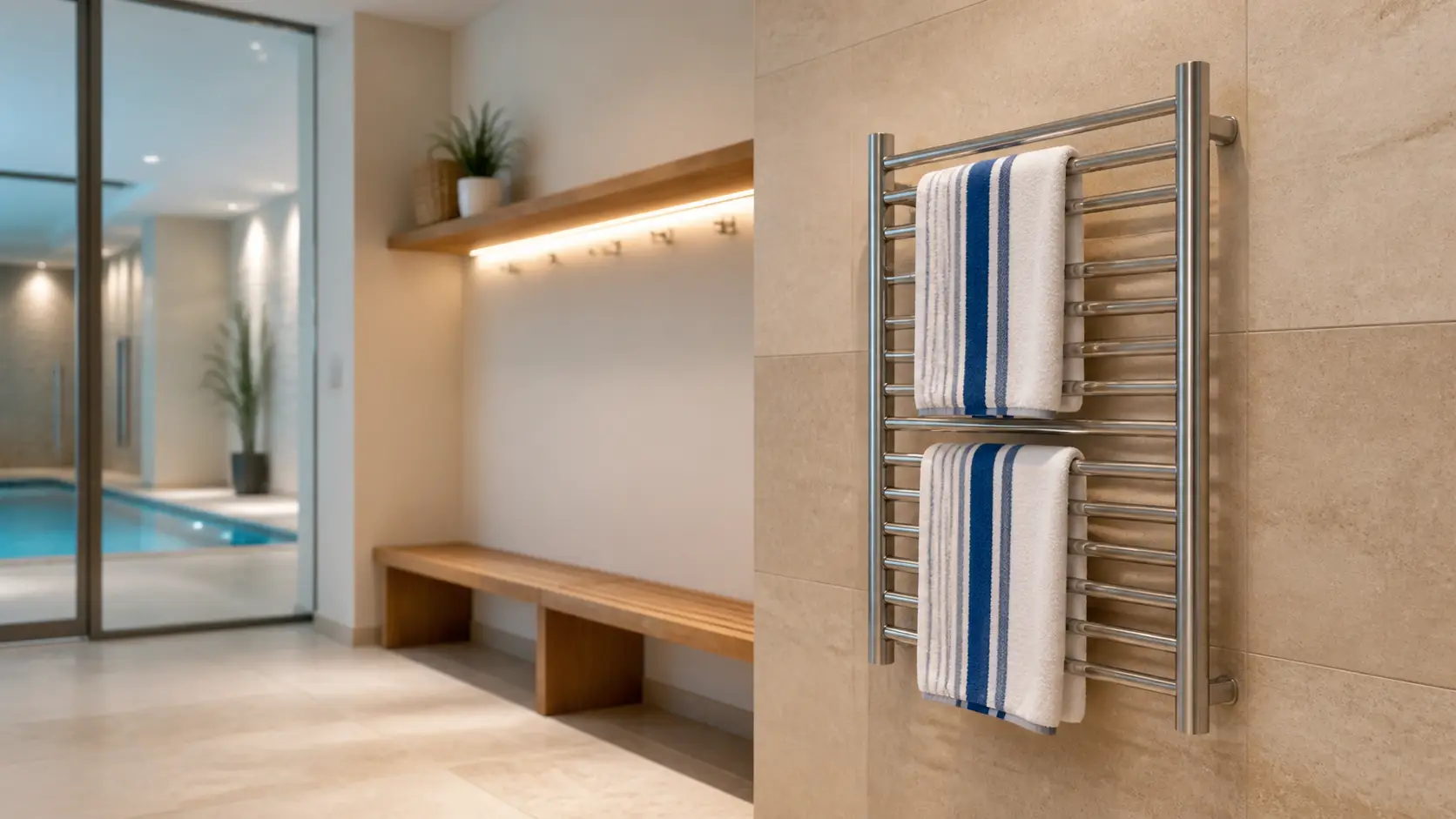

A heated towel rack can make sense in a family bathroom when several bath towels stay damp between showers and ordinary hooks leave fabric bunched together. It is not mainly a luxury detail. It is a towel-drying and storage-planning choice. Before buying one, count the real towels, check airflow, confirm safe power, and decide whether the bathroom routine needs heat, more hanging space, or both.
Start With Towel Count
| Family bathroom pattern | Practical towel setup | Watch-out |
|---|---|---|
| One or two daily users | Compact heated towel rack or wide towel bar | Towels still need to hang open |
| Three or more daily users | Larger rack plus hooks or a second bar | One rack may not handle every towel |
| Kids share the room | Simple reach height and clear walking path | Avoid cords, door swings, and floor clutter |
| Guest and family use overlap | Heated rack for bath towels, hooks for robes | Do not overload the warm rails |
| Weak bathroom ventilation | Fix fan use and towel spacing first | Heat does not remove humid room air |
The common mistake is choosing by outside rack size alone. A tall rack may still feel crowded if thick bath towels overlap. In a shared bathroom, towel count matters more than the number of rails in a product photo.
For a family of three or four, one heated towel rack may be the main drying zone, but hand towels, robes, pajamas, and dry spare towels still need hooks, shelves, or a linen basket. Keep the warm rails for damp bath towels and light garments that need air around them.
Why Hooks Often Fail in Busy Bathrooms
Hooks are easy to install and useful for robes, but they are weak for wet bath towels. A towel on a hook gathers into a thick bundle. The outside may dry while the inner folds stay damp. In a family bathroom, that becomes more obvious because towels are reused, moved, and stacked during the busiest part of the day.
A standard towel bar improves airflow because one towel can spread across the bar. The problem is capacity. Two towels on the same bar often overlap, and the inner layers lose airflow. For a fuller comparison of the two options, see our heated towel rack vs. towel bar guide.
A heated towel rack adds steady warmth to an open hanging area. That can support evaporation from damp towels, especially when towels are spread rather than folded tightly. It still needs room air movement. The U.S. EPA treats moisture control as central to preventing mold growth in homes, and ENERGY STAR notes that adequate bathroom ventilation helps control moisture and odors. A heated rack supports the towel routine, but the fan or other ventilation path still has to handle humid bathroom air.
Where to Put It
Place the rack where towels can hang open without touching the toilet, vanity, floor, shower glass, or door. In a family bathroom, the best wall is usually the one people can reach after bathing without crossing wet tile. If the rack is too far from the tub or shower, towels may still end up on the door, faucet, or floor.
Check the swing of every door and drawer. Shared bathrooms often have tight traffic at the vanity in the morning. A towel that blocks a drawer or brushes against a child step stool will be moved, which defeats the drying plan.
Mounting height should also match the users. Adults need towels high enough to hang freely. Children need a practical place to reach without pulling towels onto the floor. If the heated rack is too high for younger users, add a lower hook for a robe or hand towel, but keep wet bath towels on the open rails when possible.
Plug-In or Hardwired for a Family Bathroom?
Plug-in can work when the outlet location is suitable, the cord route is short and clean, and the rack is designed for the intended bathroom use. It is easier for an existing bathroom because it avoids opening the wall. The tradeoff is the visible cord. In a family bathroom, a cord across a walking path, near standing water, or behind a moving door is not acceptable.
Hardwired is usually cleaner during a remodel because it removes the loose cord and can place the switch or timer in a predictable location. A qualified professional should confirm wiring, wall structure, controls, and local electrical requirements before tile or finished wall work is complete.
The U.S. Consumer Product Safety Commission explains that GFCI protection is used where electrical equipment may be near water. ESFI also warns against using extension cords as permanent wiring. For a family bathroom, that means the power plan must be part of the product choice, not an afterthought.
A Family Bathroom Planning Checklist
- Count daily bath towels, not just people.
- Decide which towels need heat and which only need hooks or shelves.
- Leave space for each towel to hang open.
- Keep towels away from the toilet, vanity, floor, shower spray, and door swings.
- Confirm the bathroom fan or ventilation path is actually used after showers.
- Avoid extension-cord workarounds.
- Choose controls that family members can understand without instructions.
- Keep spare dry towels away from the damp towel zone.
If towels are still damp the next morning, do not assume the rack is too small first. Look at towel thickness, how tightly towels are folded, fan run time, and whether several towels are touching. Drying improves when warmth, airflow, and spacing work together.
When a Heated Towel Rack Is Not Enough
A heated towel rack is not a laundry dryer. It should not be expected to dry heavy wet clothing, soaked bath mats, or a full load of towels. It also will not fix a bathroom with persistent moisture problems, poor ventilation, or water leaks.
If a family bathroom regularly has piles of towels on the floor, the better solution may be a larger linen routine: fewer towels in circulation, a hamper outside the wet zone, hooks for robes, and a defined place for every damp bath towel. The heated rack is one part of that system.
It may also be unnecessary in a bathroom used by one person with strong ventilation and one towel bar that already works. In that case, a rack is a comfort upgrade, not a core fix.
FAQ
Is a heated towel rack useful in a family bathroom?
Yes, when several bath towels stay damp between showers and there is a safe wall and power plan. It is less useful when one towel bar already handles the routine.
How many towels can a heated towel rack handle?
It depends on usable hanging width, towel thickness, and spacing. Count towels that can hang open, not how many can be stacked onto the rails.
Can kids use a heated towel rack?
Families should plan placement and controls carefully. Keep cords away from walking paths and wet zones, and use qualified electrical guidance when the setup is unclear.
Does it replace bathroom ventilation?
No. The rack helps towels dry, while ventilation removes humid air from the room. Both matter in a busy bathroom.
Should every family member get a rail?
Not always. Some towels can use the heated rack, while robes, hand towels, or dry spare towels use hooks, shelves, or a linen area.
Is plug-in or hardwired better?
Plug-in can be practical for a refresh if the outlet and cord route are safe. Hardwired is usually cleaner during a remodel, but it needs earlier planning.
Next Step
If your shared bathroom handles several damp towels every day, compare the Calithrex heated towel rack collection by size, installation type, finish, and usable towel spacing. If towel crowding is the real issue, plan the whole towel zone first: rack, hooks, shelves, hamper, fan use, and safe power.