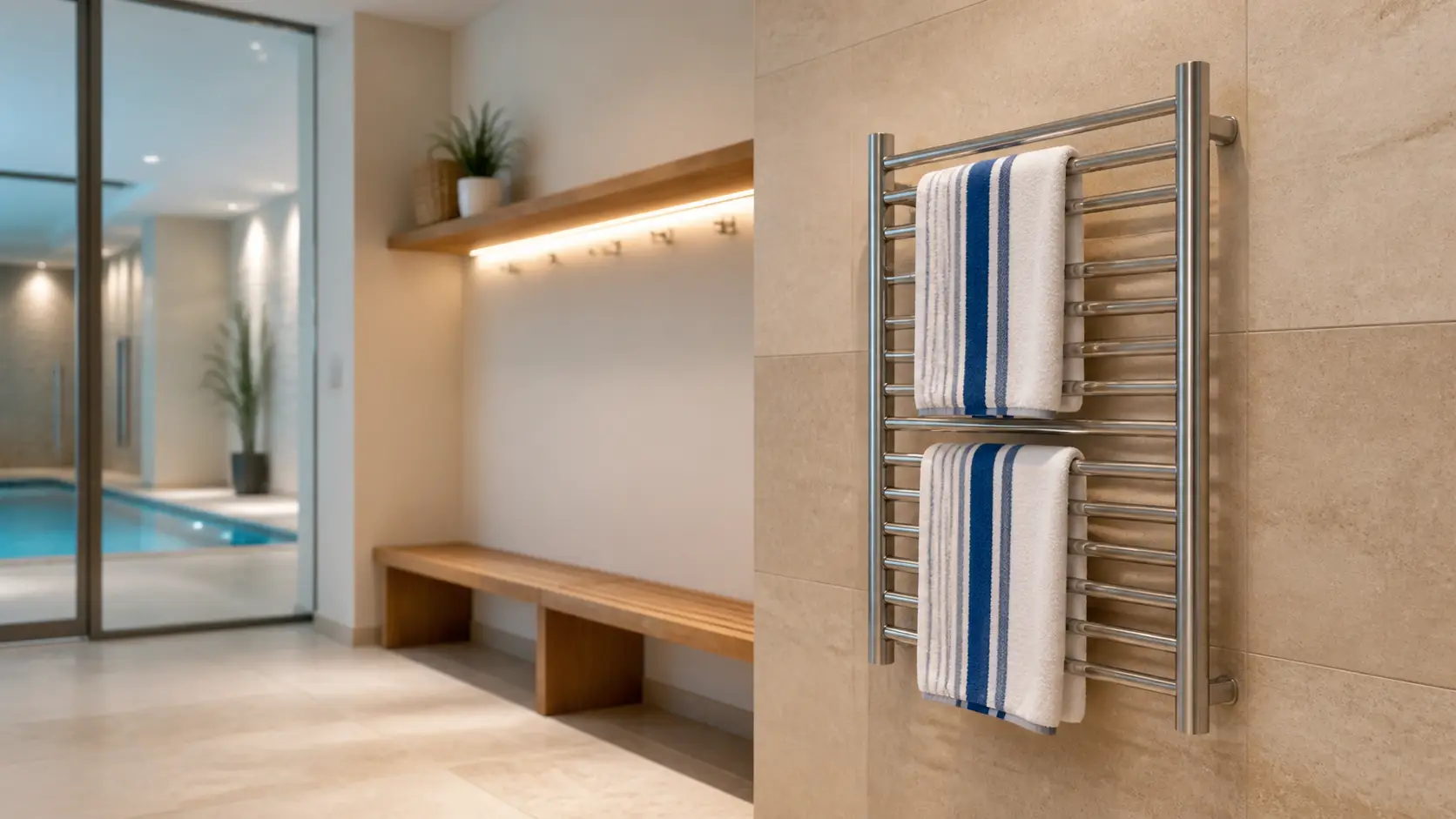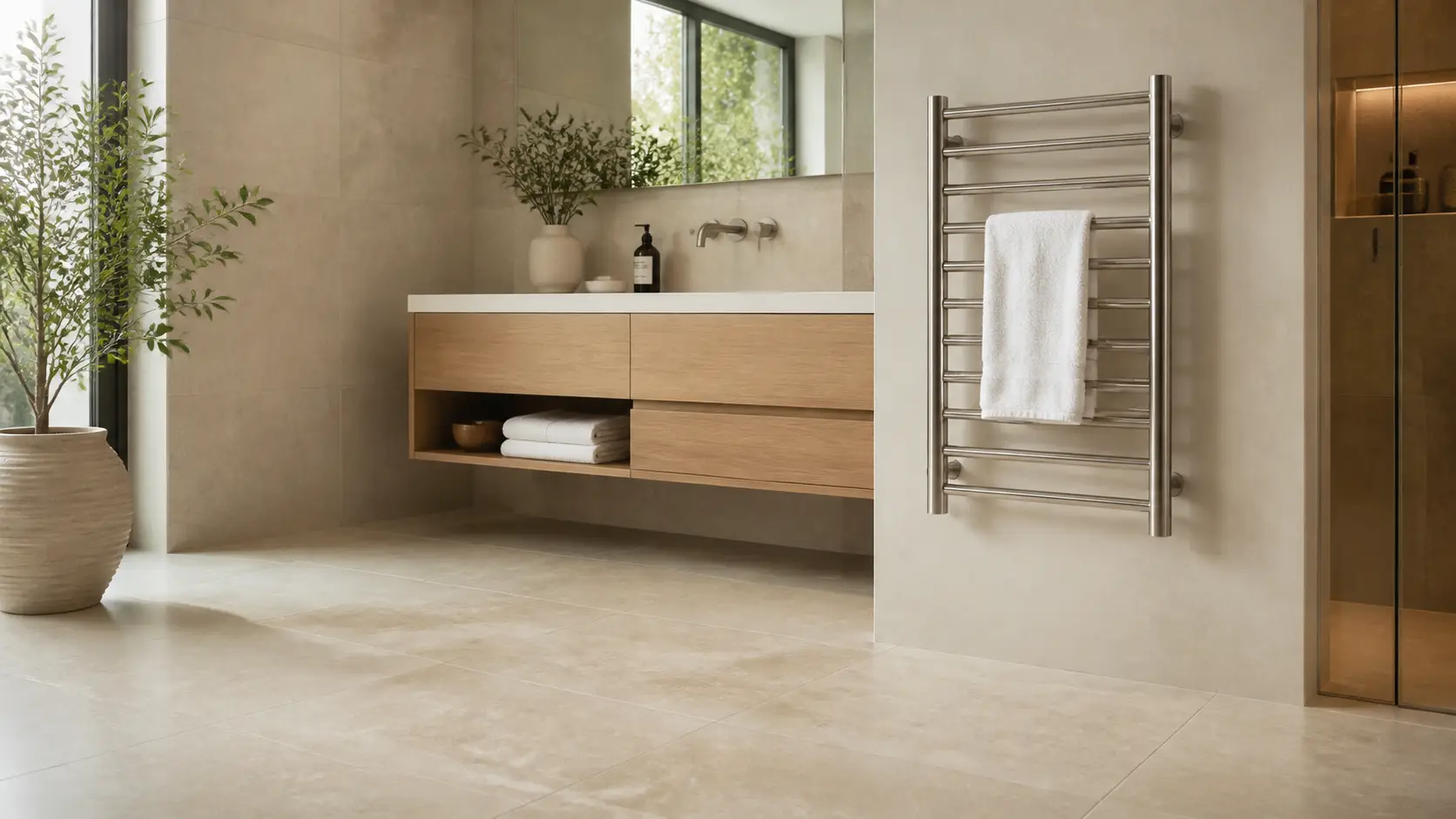
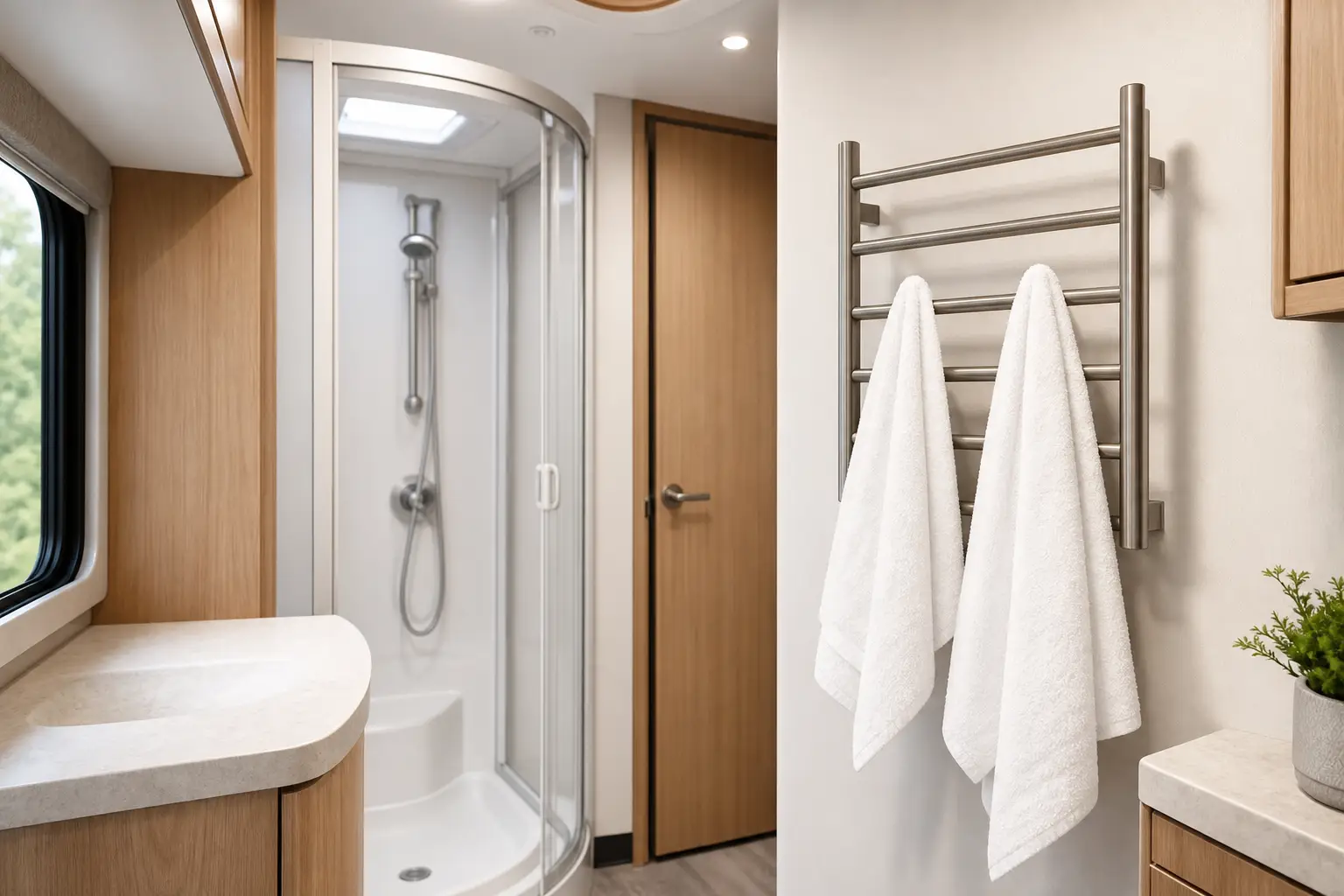
Yes, a heated towel rack can fit an RV bathroom, but only when the specific product, the RV electrical system, the wall structure, and the wet-area layout all work together. Its useful job is to give towels and light garments an open place to dry between showers. It is not a shortcut around limited ventilation, a weak wall, or an unclear power plan. In a compact RV, those checks matter more than the fixture’s appearance.
Start With the Towel Routine, Not the Fixture
Picture the hour after a shower or a rainy hike. Where will two damp bath towels go? In many RV bathrooms, a towel ends up folded over a door, bunched on a hook, or spread across the bed. Those choices save wall space, but they also limit airflow around the fabric.
An open heated towel rack can help only when towels can hang separately. It works best as one part of a simple routine: towels on the rack, clean spares in a dry cabinet, clothing that needs washing in a hamper, and heavier or dripping items handled elsewhere. It is not a laundry dryer and should not be loaded with every wet textile from a travel day.
| RV bathroom situation | A rack may be practical when | Reconsider when |
|---|---|---|
| Two-person weekend trips | Two towels can hang open without blocking the room | Towels already dry quickly on an existing bar |
| Family travel | There is a separate hook, bar, or drying zone for overflow | One small fixture would carry several layered towels |
| Wet-weather trips | The fan and moisture routine already work | Condensation or a leak is still unresolved |
| Renovation or build-out | Wiring and backing can be planned before finishes | The wall and electrical route cannot be verified |
| Long off-grid stays | The electrical demand fits the actual power plan | Power availability is uncertain or tightly managed |
Use the table as a reality check, not a product-sizing guide. The relevant question is how many towels can remain open with space around them, not how many can be draped across the rails.
Confirm Power Before Buying Anything
An RV is not simply a smaller house. Its electrical setup can involve shore power, a generator, an inverter, batteries, circuit limits, and equipment installed by different manufacturers or owners over time. Do not assume a bathroom outlet, a wall cavity, or an inverter can support an appliance just because it is physically nearby.
Read the exact rack’s instructions and electrical requirements, then compare them with the RV documentation. A qualified RV technician or electrician should assess an uncertain installation. The U.S. Consumer Product Safety Commission explains that GFCI protection is used where electrical equipment may be near water; this is especially relevant in a small room where the sink, shower, and fixture may be close together.
Avoid extension cords as a permanent answer. The Electrical Safety Foundation International warns that extension cords are not permanent wiring. A cord crossing a narrow walkway, running behind a door, or passing near a wet floor creates a problem rather than solving one. If a suitable fixed installation cannot be planned safely, choose a non-electrical towel routine instead.
Check the Wall, Door, and Shower Clearance
RV walls may have limited depth and hidden wiring or plumbing. A rack needs a mounting surface that can support the exact product according to its instructions; thin decorative paneling alone is not proof of suitable backing. Before drilling, identify the mounting location and check the RV builder’s documentation or consult a professional who can inspect the wall safely.
Then test the daily movement through the bathroom. Tape a paper outline to the wall or hold up a bath towel at the proposed location. The door should open freely, the shower enclosure should remain usable, and a full towel should not touch the floor, toilet, vanity, or a wet shower surface. Leave enough room to wipe down the wall and to remove towels without brushing against the sink.
Placement also affects whether people will use the rack. A fixture that is hard to reach after a shower becomes a decorative rail while towels migrate back to hooks and doors.
Drying Still Depends on Ventilation
An open heated towel rack supports drying from fabric that is hung open. It does not remove humidity from the RV bathroom itself. The U.S. Environmental Protection Agency identifies moisture control as important for limiting mold growth in homes, while ENERGY STAR notes that ventilation helps control bathroom moisture and odors.
Use the RV’s fan as part of the same towel routine. If mirrors stay fogged, walls feel damp, or towels remain wet for long periods, investigate the fan, airflow path, seals, plumbing, and any condensation before adding another heat source. Do not treat a towel rack as a fix for a leak or a poorly ventilated wet room.
For travel days, give towels a chance to hang open before closing the RV for hours. If the bathroom will be shut up during storage, follow the product instructions and your RV’s normal moisture-control practices rather than leaving damp textiles on the rack indefinitely.
Choose a Practical Drying Zone
The best RV setup is usually modest. One or two bath towels can hang open, while swimwear, heavy beach towels, bath mats, and wet outerwear use another appropriate drying location. Keeping each category separate reduces crowding in a room where every inch is shared.
Before committing, walk through a real use sequence:
- Enter with wet towels and close the bathroom door.
- Open the towel rack area without hitting the door, shower, or vanity.
- Turn on the fan and place the towels without overlap.
- Check that the towel ends stay off the floor and away from direct water.
- Confirm that the route to the outlet, switch, or fixed wiring remains clear and appropriate.
If any step feels awkward, the layout is not ready. A conventional towel bar, additional hooks, a vent improvement, or a separate laundry stop may be more useful than forcing a rack into the wrong wall.
FAQ
Can a heated towel rack run from an RV inverter?
That depends on the exact rack, inverter capacity, battery system, other electrical loads, and the RV’s installation guidance. Verify the complete setup with the product and RV documentation before relying on it.
Does it replace an RV bathroom fan?
No. The rack helps towels dry when they hang open. The fan or other ventilation path manages humid air in the bathroom.
Can I mount one on any RV wall?
No. The wall must provide the mounting support and clearance required by the exact product. Check for hidden wiring and plumbing before drilling.
Can I use it for heavy beach towels or a bath mat?
Only if the product instructions allow the use and the item can hang open without overloading the fixture. Very wet, heavy, or layered textiles may need another drying method.
Is a plug-in model easier for an RV?
It may appear simpler, but it still requires an appropriate outlet, safe cord route, and confirmation that the electrical system supports the exact product. Do not use an extension cord as permanent wiring.
Next Step
Measure the available wall, a full bath towel, the door swing, and the route to safe power before comparing options. If the layout and electrical plan are sound, explore the Calithrex heated towel rack collection by installation type and usable towel spacing. If they are not, improve ventilation or the towel-storage routine first.