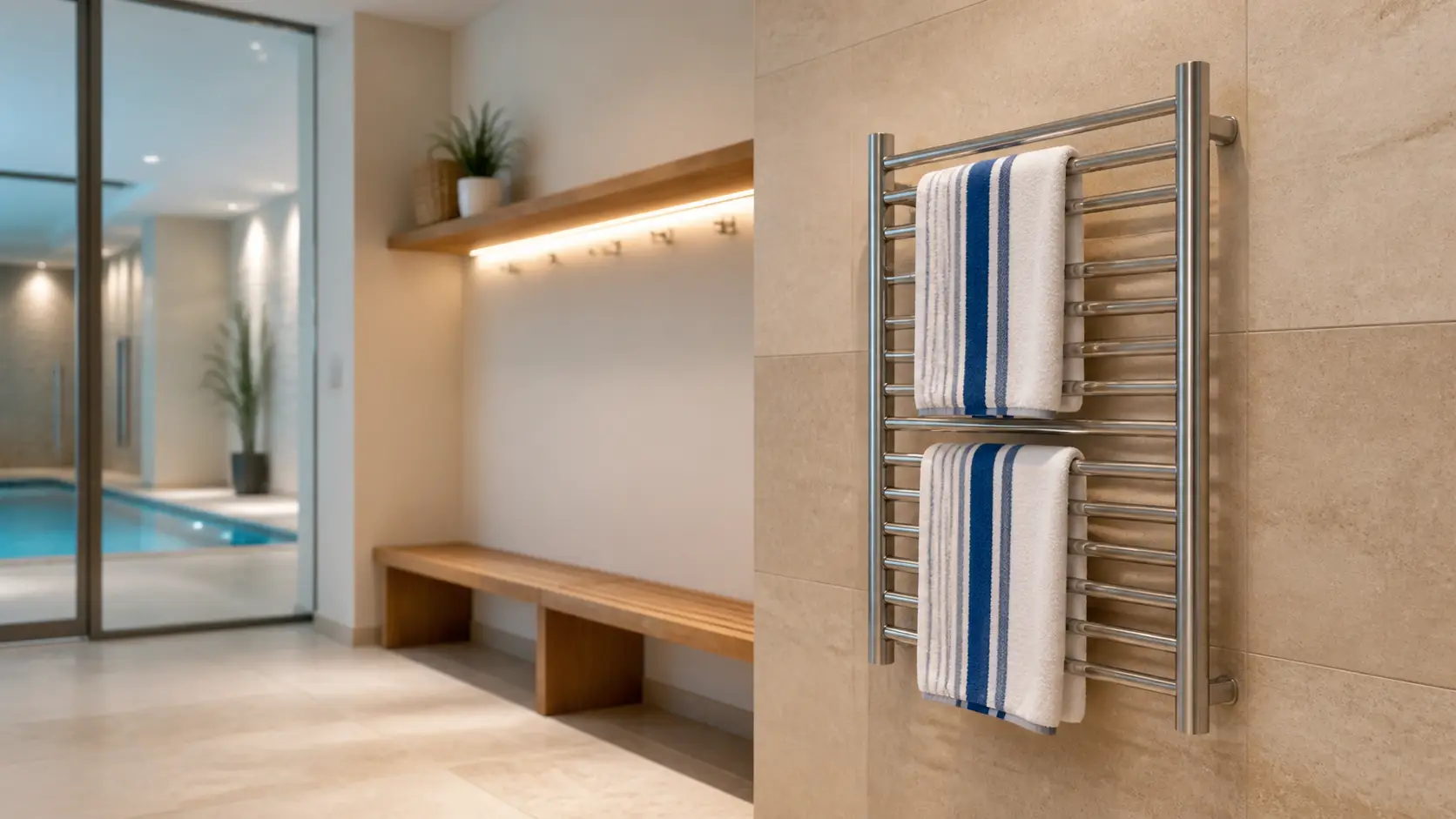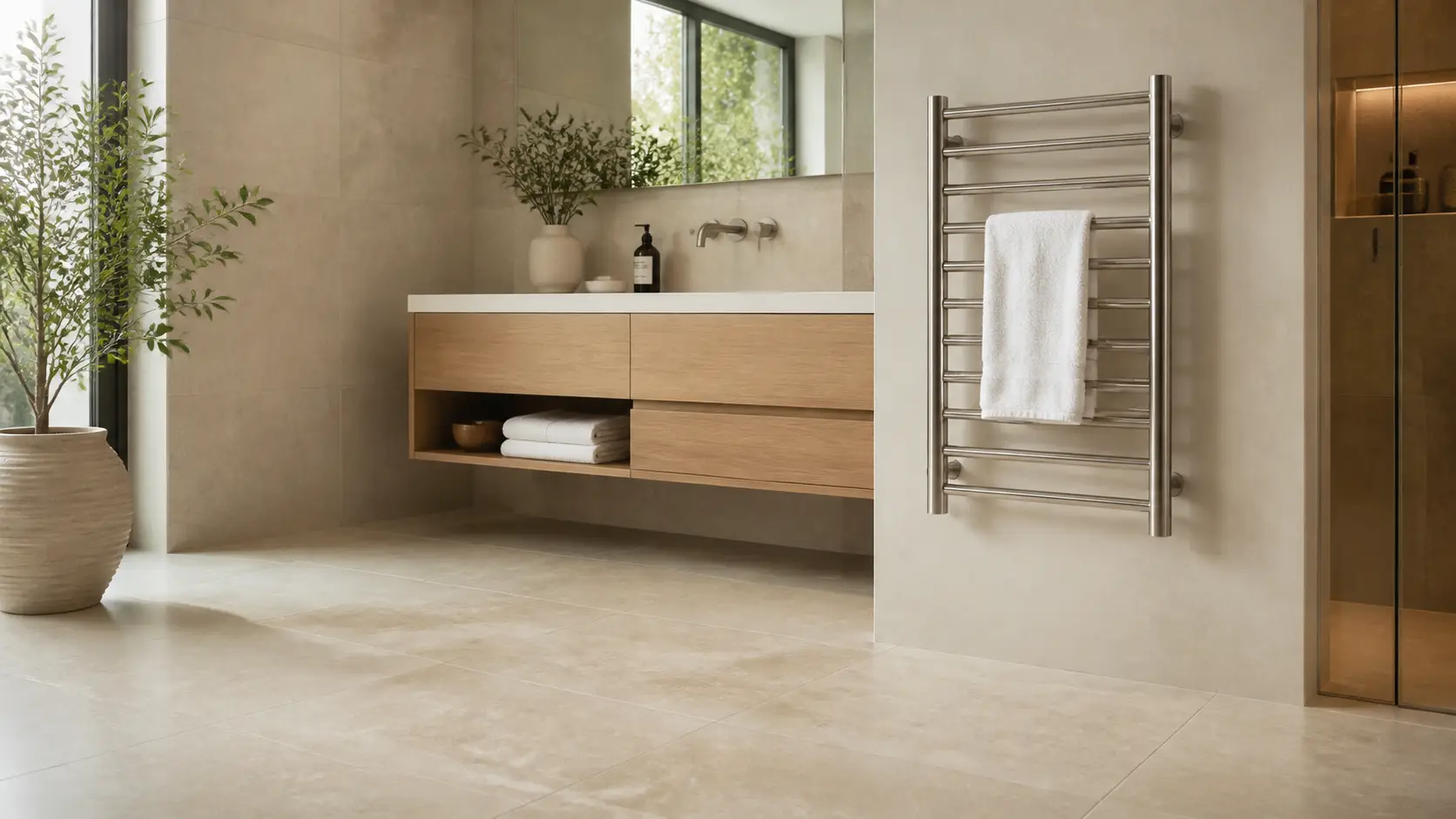
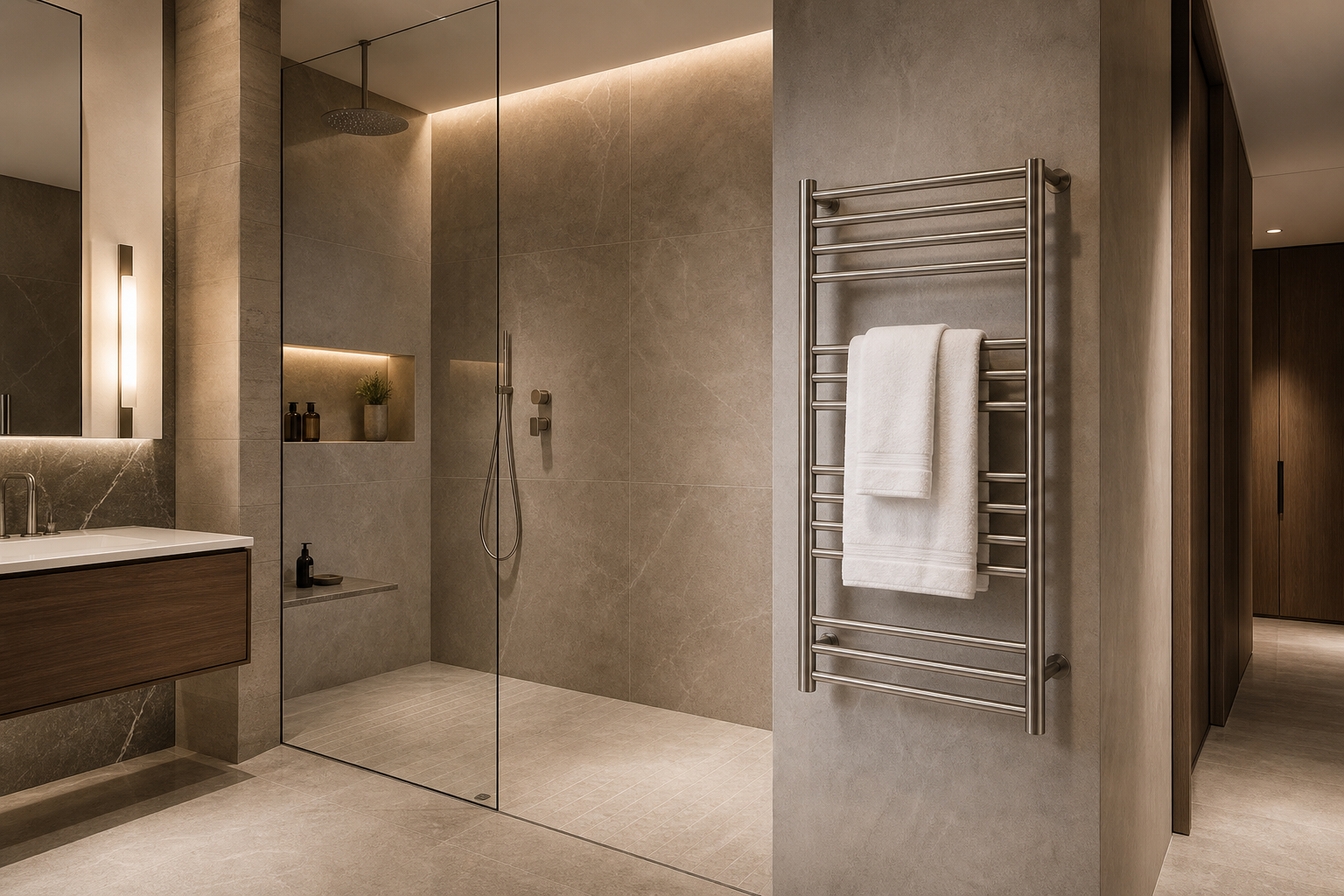
Wet room bathroom design works best when water management comes first: slope the floor correctly, keep ventilation strong, choose slip-aware surfaces, and place towel storage and heated towel racks outside the direct shower spray zone. A wet room can look cleaner and feel more accessible than a traditional enclosed shower, but it needs tighter planning because more of the bathroom is exposed to moisture.
For CALITHREX buyers, the key point is simple: a heated towel rack can support comfort and towel drying in a wet room, but it should be planned as part of the dry-side routine, not treated as a substitute for drainage, waterproofing, or exhaust ventilation.
Why Wet Rooms Are Becoming a Bigger Bathroom Topic
Wet rooms are no longer only a luxury-hotel feature. Houzz's 2025 bathroom trend coverage reports that wet rooms now represent 16% of renovated bathrooms, with homeowners citing better space use, visual appeal, and accessibility as common reasons. NKBA's 2026 bath trend coverage also points to larger bath footprints, larger showers, wellness-centered features, and universal design considerations.
That makes wet rooms relevant to several Calithrex audiences:
- Homeowners planning a cleaner, more open primary bathroom.
- Designers balancing spa aesthetics with daily towel storage.
- Hotel and spa buyers trying to make bathrooms feel premium without creating maintenance problems.
- Contractors who need clear product placement before waterproofing, wiring, and tile work begin.
Wet Room Planning Checklist
| Design decision | What to check | Why it matters |
|---|---|---|
| Floor slope and drain | Confirm slope, drain position, and water path before tile selection | Water should move toward the drain instead of spreading into the vanity or towel area |
| Waterproofing | Treat the wet zone as a system, not just a shower corner | Leaks and trapped moisture are expensive to repair later |
| Ventilation | Use a properly specified exhaust fan and allow air movement after showering | EPA guidance keeps moisture control central to mold prevention |
| Surface grip | Choose flooring with wet-area traction in mind | Wet rooms remove the traditional shower curb, so more floor area can become damp |
| Towel location | Keep towels reachable but away from direct spray | Towels should be convenient without becoming constantly wet |
| Heated towel rack position | Mount outside the shower spray zone and near the dry exit path | This improves daily use and reduces unnecessary moisture exposure |
| Electrical plan | Confirm power route, control access, IP rating, and local code needs early | Heated products in bathrooms should be specified before walls close |
Where Should a Heated Towel Rack Go in a Wet Room?
The best position is usually on the dry-side wall, close to the exit from the shower but outside the direct spray zone. Users should be able to step out, reach a warm towel naturally, and keep the towel rack clear of continuous splashing.
Good placement usually means:
- Near the shower exit, not inside the main spray path.
- On a wall with enough clear width for towels to hang freely.
- Away from the floor drain line where standing water may travel.
- Close enough to the vanity or dressing zone to support the daily routine.
- High enough for full towel drop, while still reachable for children, older adults, or hotel guests when that audience matters.
For more installation-specific decisions, use internal anchor text such as heated towel rack installation height and heated towel rack IP rating rather than treating wet room placement as a purely decorative choice.
Wet Room Layout Examples
Compact Residential Bathroom
In a small bathroom, a wet room can remove visual barriers and make the space feel larger. The heated towel rack should sit on the dry-side wall near the door or vanity, not behind the shower glass. A narrow vertical rack can work when wall width is limited, while a horizontal rack is useful when the wall can support more towel contact.
Primary Suite or Spa Bathroom
For a larger home bathroom, the towel rack can become part of a comfort sequence: shower, step onto a dry mat zone, reach a warm towel, then move to the vanity. This layout supports the wellness-bathroom trend without adding complicated technology.
Hotel or Serviced Apartment Bathroom
For hospitality projects, repeatability matters. Buyers should standardize mounting height, electrical position, finish, and towel capacity across room types. A heated towel rack can raise the perceived bathroom quality, but it should be easy for housekeeping to clean around and inspect.
Spa and Wellness Suite
In a spa setting, towels may be used more frequently and changed more often. The towel rack should support guest comfort without becoming the main towel-drying system for operations. Plan separate linen storage and ventilation first, then use heated racks for guest-facing warmth and presentation.
Ventilation Still Does the Heavy Lifting
A heated towel rack can help towels feel warmer and dry more comfortably, but wet rooms still need moisture control. EPA mold and moisture guidance recommends keeping indoor humidity below 60%, ideally between 30% and 50%, and drying wet surfaces quickly when condensation appears.
In practice, that means a wet room plan should include:
- A correctly sized exhaust fan vented outdoors.
- A switch, timer, or humidity-sensing control that users will actually use.
- Air movement after showers, especially in windowless bathrooms.
- Towels hung open rather than bunched on hooks.
- Materials that tolerate repeated moisture exposure.
The better framing is "ventilation plus drying routine," not "one product solves moisture."
Heated Towel Rack Specification Notes
For a wet room bathroom design, specify the towel rack early enough for the electrician, tile installer, and designer to coordinate.
Key questions:
- Is the model wall-mounted or freestanding?
- Is the installation hardwired or plug-in?
- What IP rating is appropriate for the planned location?
- Where will the switch, timer, or control sit?
- How many towels must it hold at peak use?
- Does the finish match other bathroom hardware?
- Can the wall support the rack and towel load?
For design-driven projects, stainless steel, brushed, satin, matte black, and warm metallic finishes can all work if they match the rest of the bathroom hardware. The safest choice is not always the trendiest finish. It is the finish, size, and mounting position that fit the room's maintenance routine.
Common Wet Room Mistakes
| Mistake | Better decision |
|---|---|
| Treating a wet room as a normal shower with less glass | Plan the entire wet side as a moisture-management system |
| Mounting towels too close to the shower head | Keep towels accessible but outside direct spray |
| Choosing glossy floor tile only for appearance | Check wet-area traction and cleaning needs |
| Forgetting controls until after tile is installed | Decide rack wiring and timer position before wall closure |
| Relying on towel warmth to manage humidity | Use ventilation and drainage as the first moisture-control layer |
| Putting too many accessories in the wet zone | Keep the layout open enough for cleaning and safe movement |
Buying Guidance for Homeowners and Project Buyers
For a homeowner, the best wet room towel rack is one that fits the shower exit path and daily towel count. For a hotel, apartment, or spa buyer, the better question is whether the same specification can be installed, cleaned, and maintained across many rooms.
Use this short decision path:
- Choose wall-mounted for a cleaner built-in look.
- Choose freestanding only when electrical routing and wall support make fixed installation impractical.
- Choose a finish that matches faucets, shower trim, and cabinet hardware.
- Confirm installation zone and IP rating before purchase.
- Match towel capacity to the real use case, not only the product photo.
- Plan ventilation and towel storage before treating a heated towel rack as the main solution.
For a product-focused next step, explore Calithrex heated towel racks or use the heated towel rack size guide to match wall space and towel capacity.
FAQ
Is a wet room a good idea for a small bathroom?
It can be, especially when a glass shower enclosure or curb makes the room feel cramped. The design must still control water spread, ventilation, and towel placement carefully.
Can a heated towel rack go inside a wet room?
It can be used in a wet room bathroom, but the safer planning approach is to place it outside the direct shower spray zone and confirm the correct electrical specification for the location.
Does a heated towel rack replace a bathroom exhaust fan?
No. A heated towel rack supports towel warmth and drying comfort. Ventilation, drainage, waterproofing, and surface drying remain the primary moisture-control tools.
What is the best heated towel rack style for a wet room?
Wall-mounted racks usually work best because they keep the floor clearer and support a cleaner wet room layout. The best shape depends on wall width, towel count, and whether the room needs a vertical or horizontal layout.
Are wet rooms suitable for hotels?
Yes, but hotels need stricter specification than a single home bathroom. Drainage, slip-aware surfaces, housekeeping access, towel capacity, and durable hardware finishes should be standardized before rollout.