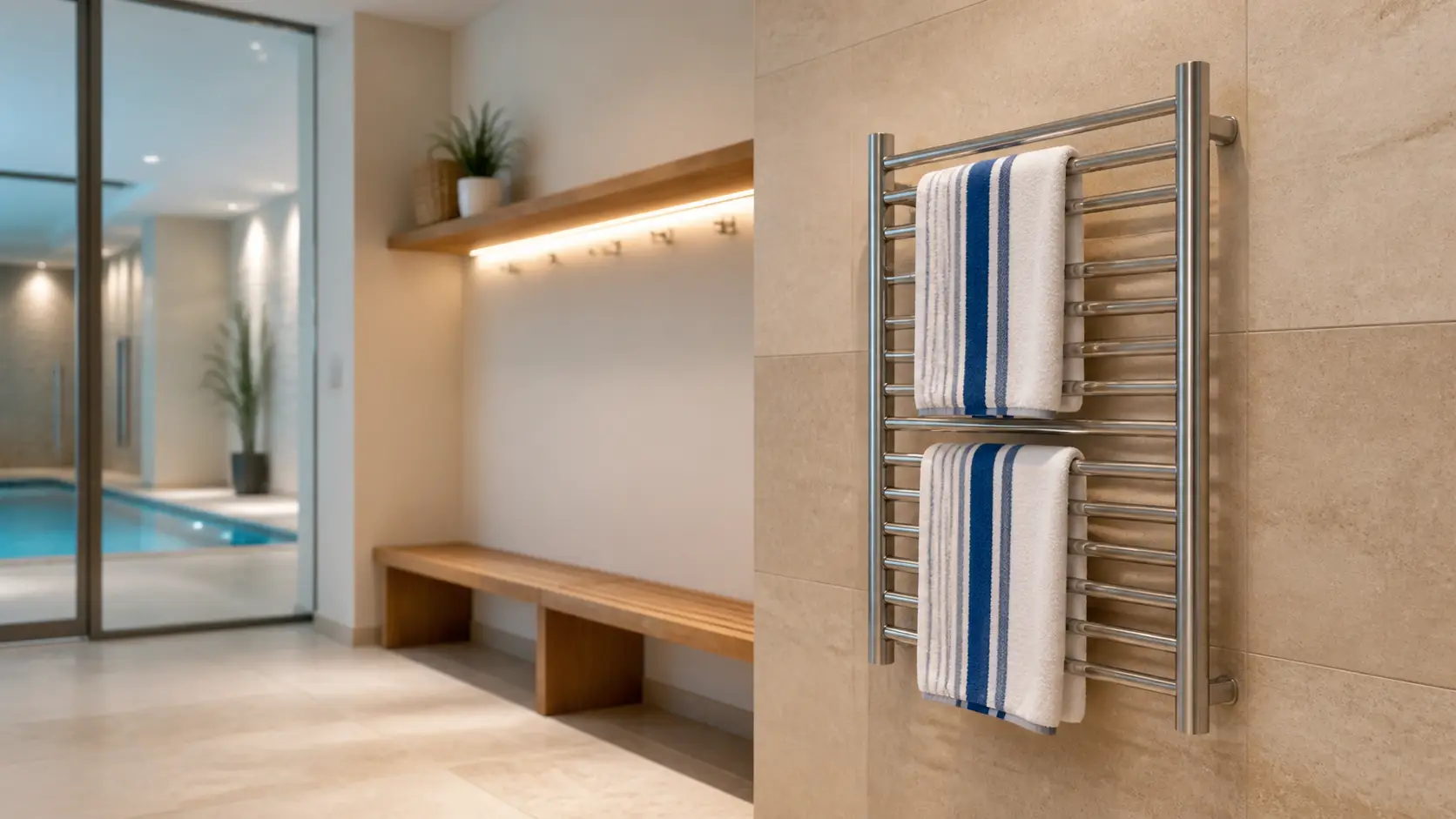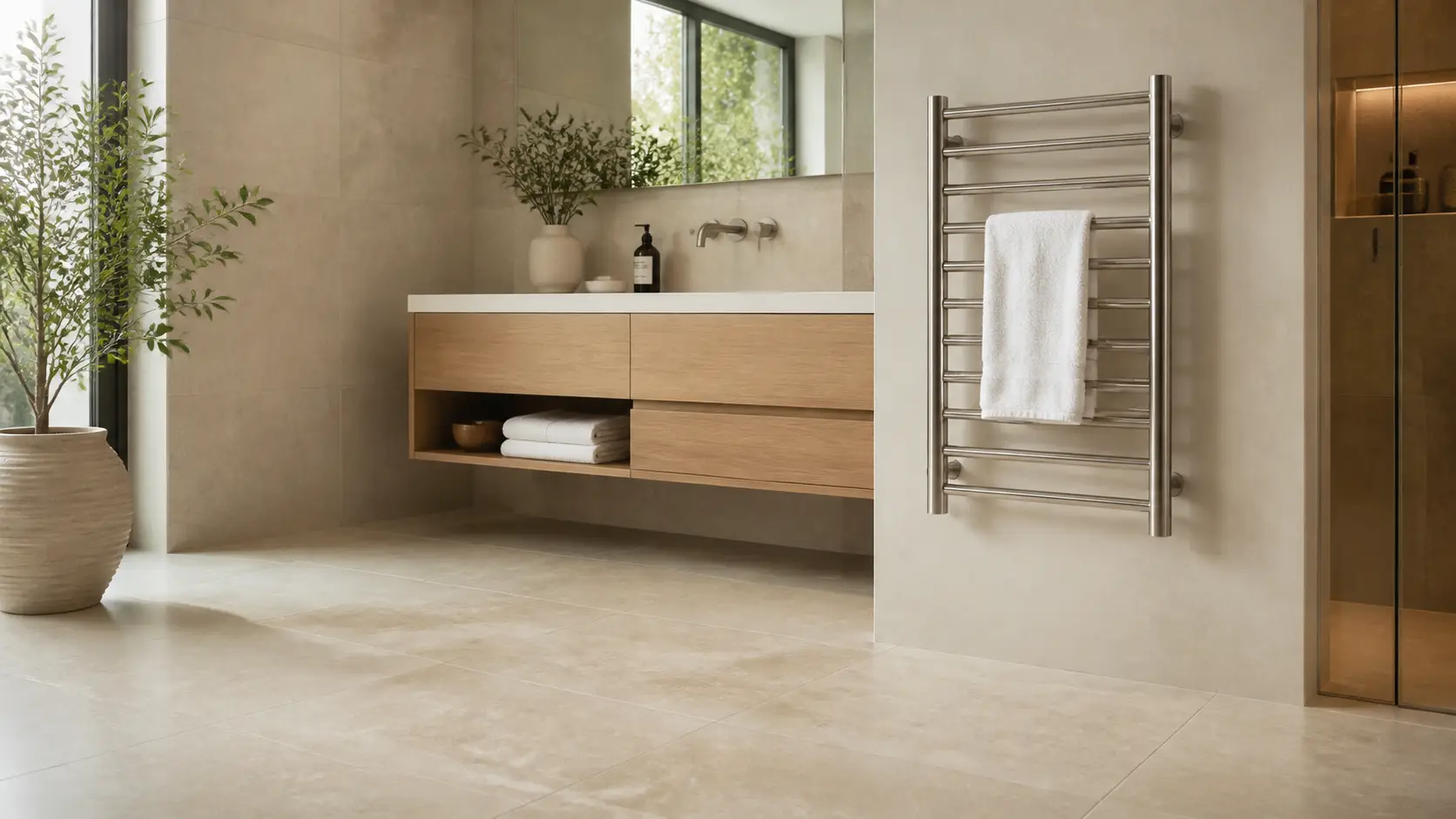
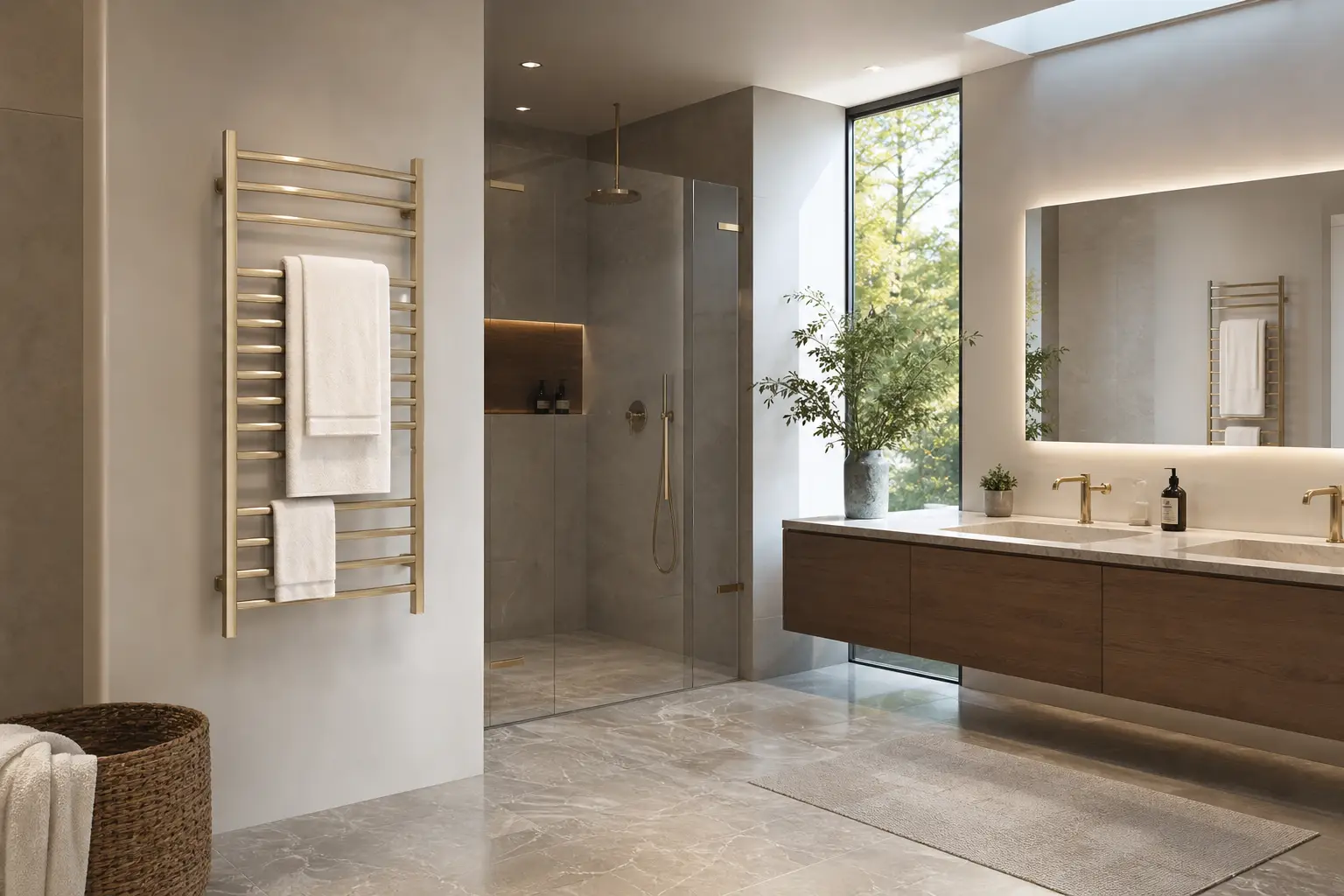
Before buying a heated towel rack, check more than the style. The right product should match your towel size, bathroom layout, installation type, power plan, finish, controls, and daily routine.
A good heated towel rack should solve a real use case: warming towels before a shower, helping damp towels dry, improving bathroom comfort, or upgrading a hotel-style bathroom specification. A poor choice usually comes from buying too small, ignoring installation, or choosing a finish that does not suit a humid bathroom.
Use this checklist before you order.
1. Confirm the main use case
Start with why you want the heated towel rack.
Common use cases include:
- Warm towels after bathing
- Faster towel drying between uses
- A premium bathroom upgrade
- Guest bathroom improvement
- Hotel or spa room specification
- Apartment or renovation project upgrade
- Moisture management support in a humid bathroom
The use case affects everything else. A guest bathroom may need a clean visual fixture. A family bathroom may need more towel capacity. A hotel room may need consistent finish, warranty support, and easy maintenance.
2. Check towel capacity, not only product size
Do not judge only by the outside dimensions. Ask how many towels the rack can actually support.
Check:
- Number of bars
- Bar spacing
- Heated surface area
- Towel width
- Bath sheet size
- Whether towels can be spread out instead of bunched together
A compact rack may look elegant but disappoint if it cannot handle the towels used every day. For better drying, towels need contact with heated bars and airflow around the fabric.
3. Choose the right installation type
Most buyers compare three options:
| Type | Best for | Main tradeoff |
|---|---|---|
| Plug-in | Existing bathrooms, easier upgrades | Visible cord and outlet planning |
| Hardwired | Remodels, hotels, premium bathrooms | Requires electrical planning |
| Freestanding | Flexible placement, renters, temporary use | Takes floor space |
Hardwired models usually look cleaner, especially in renovation and hospitality projects. Plug-in models are easier to add to an existing bathroom. Freestanding models are useful when wall installation is not practical.
For more comparison, read: Freestanding vs Wall-Mounted Towel Warmers.
4. Measure the bathroom before choosing style
Measure the wall or floor area before choosing a design.
Check:
- Wall width
- Mounting height
- Clearance from shower glass, doors, vanities, and toilets
- Distance to outlet or electrical point
- Whether towels will hang freely
- Whether the rack blocks movement in the bathroom
For small bathrooms, a vertical or narrow wall-mounted rack may work better. For larger bathrooms, a wider ladder-style rack may look more balanced and offer better towel capacity.
5. Review wattage and daily operating cost
Many residential electric heated towel racks use relatively modest wattage compared with larger heating appliances, but cost depends on how long the product runs.
Use this formula:
watts / 1000 x hours used x electricity rate = running cost
A timer can make a major difference. A 150W towel rack used for 4 hours a day costs much less than the same rack left on 24 hours a day.
For detailed examples, read: Heated Towel Rack Energy Consumption: What It Actually Costs to Run.
6. Look for timer or control options
A timer is one of the most useful features on an electric heated towel rack.
It helps you:
- Warm towels before shower time
- Dry towels after use
- Avoid running the rack all day
- Control electricity cost
- Build a predictable daily routine
For most homes, scheduled use is better than continuous use. For hotels or spas, timer strategy can also reduce operating cost across many rooms.
7. Check material and finish quality
Bathrooms are humid environments, so finish quality matters.
Look for:
- Corrosion-resistant material
- Smooth welds and joints
- Durable surface finish
- Easy cleaning
- Finish consistency across multiple units
- A color that matches faucets, shower fittings, and bathroom hardware
Chrome, brushed nickel, matte black, polished metal, and warm metallic finishes can all work, but the right choice depends on the bathroom design.
8. Confirm bathroom electrical suitability
Electric bathroom products need proper installation and appropriate protection.
Before ordering, confirm:
- Whether the model is suitable for bathroom use
- Whether hardwired installation needs an electrician
- Whether the outlet location is safe and practical
- Whether local electrical code affects placement
- Whether the product instructions match your bathroom layout
For hardwired products, use a qualified electrician. This is especially important in wet areas and commercial projects.
9. Consider towel drying, not just towel warming
Warm towels are the comfort benefit. Better towel drying is the practical benefit.
For drying performance, check:
- Heated bar layout
- Airflow around towels
- Towel thickness
- Bathroom humidity
- Ventilation
- Whether towels can be spread out
The U.S. EPA emphasizes that moisture control is central to mold control. A heated towel rack can support a drier towel routine, but it should not replace ventilation.
10. Match the rack to the design level of the bathroom
A heated towel rack is visible. In a premium bathroom, it should look like part of the design, not an afterthought.
Check whether the rack matches:
- Faucet finish
- Shower hardware
- Vanity style
- Tile color
- Bathroom size
- Overall design language
For hospitality, apartments, and renovation projects, finish consistency across rooms can be as important as the individual product style.
11. Check warranty and support
Before ordering, check what happens after purchase.
Review:
- Warranty length
- What the warranty covers
- Installation requirements
- Replacement part availability
- Customer support responsiveness
- Packaging protection for shipping
- Support for project quantities
For B2B buyers, warranty and support can affect project risk. A lower unit price may not be the best value if after-sales support is weak.
12. Decide whether the product fits the project, not just the room
For homeowners, the project may be one bathroom. For hotels, apartments, spas, and developers, the project may include dozens or hundreds of rooms.
B2B buyers should check:
- Product availability
- Finish consistency
- Packaging strength
- Installation documentation
- Electrical requirements
- Lead time
- Replacement policy
- Commercial operating cost
Grand View Research reports continued growth in the heated towel rail market, with electric products representing a large share of demand. That growth reflects stronger interest in bathroom comfort, wellness, and premium fixtures, but project buyers still need practical specification discipline.
Quick buying checklist
Before placing an order, confirm:
- Use case
- Towel capacity
- Installation type
- Bathroom measurements
- Wattage and running cost
- Timer or control options
- Material and finish
- Bathroom electrical suitability
- Drying performance
- Design fit
- Warranty and support
- Project-level requirements
If any of these are unclear, solve them before ordering.
FAQ
What should I look for when buying a heated towel rail?
Look for the right size, towel capacity, installation type, wattage, controls, finish quality, bathroom suitability, and warranty. Do not choose by appearance alone.
Is hardwired or plug-in better?
Hardwired models usually look cleaner and suit remodels or hotels. Plug-in models are easier for existing bathrooms. The better choice depends on the project.
What size heated towel rack do I need?
Choose based on towel size and number of users. A small rack may suit one bathroom user, while families and hospitality spaces usually need more capacity.
Should I choose a wall-mounted or freestanding heated towel rack?
Wall-mounted racks save floor space and look more integrated. Freestanding racks are flexible and easier to move but take up bathroom floor area.
Does wattage matter?
Yes, but wattage is only one factor. Size, bar layout, towel contact, timer control, and bathroom conditions also affect performance.
Are heated towel racks worth it for hotels?
They can be a strong comfort upgrade for hotels, spas, and premium rentals. B2B buyers should also evaluate installation, warranty, finish consistency, and operating cost across rooms.
CTA
If you are comparing electric heated towel racks for a home bathroom, hotel room, spa, or renovation project, start with the checklist: capacity, installation, finish, controls, and support.
Explore CALITHREX bathroom comfort solutions here: https://calithrex.com/
Sources and references
- CALITHREX: The Complete Guide to Buying Heated Towel Racks
- CALITHREX: Freestanding vs Wall-Mounted Towel Warmers
- CALITHREX: Towel Warmer Installation Mistakes to Avoid
- U.S. EPA: A Brief Guide to Mold, Moisture and Your Home
- Grand View Research: Heated Towel Rail Market Size, Share & Trends