Yes, a heated towel rack can work in a mudroom when it is used for small towels, light gloves, and other care-label-approved fabrics—not boots, saturated coats, or heavy gear. Its best role is to support drying after rain or snow by keeping light items open and separated. The room still needs moisture control, suitable electrical installation, and a separate plan for muddy or dripping items.
What a heated towel rack can do in a mudroom
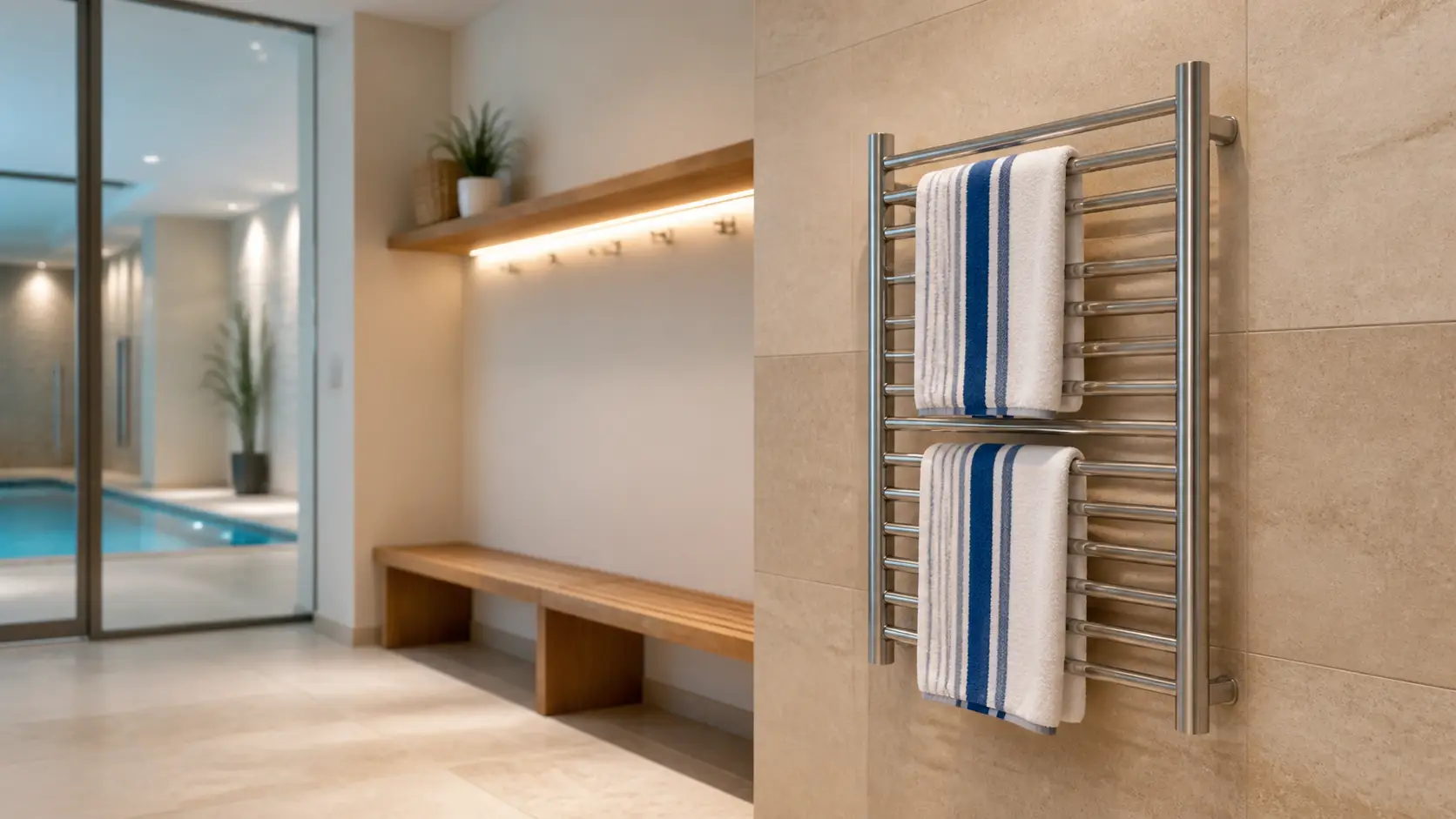
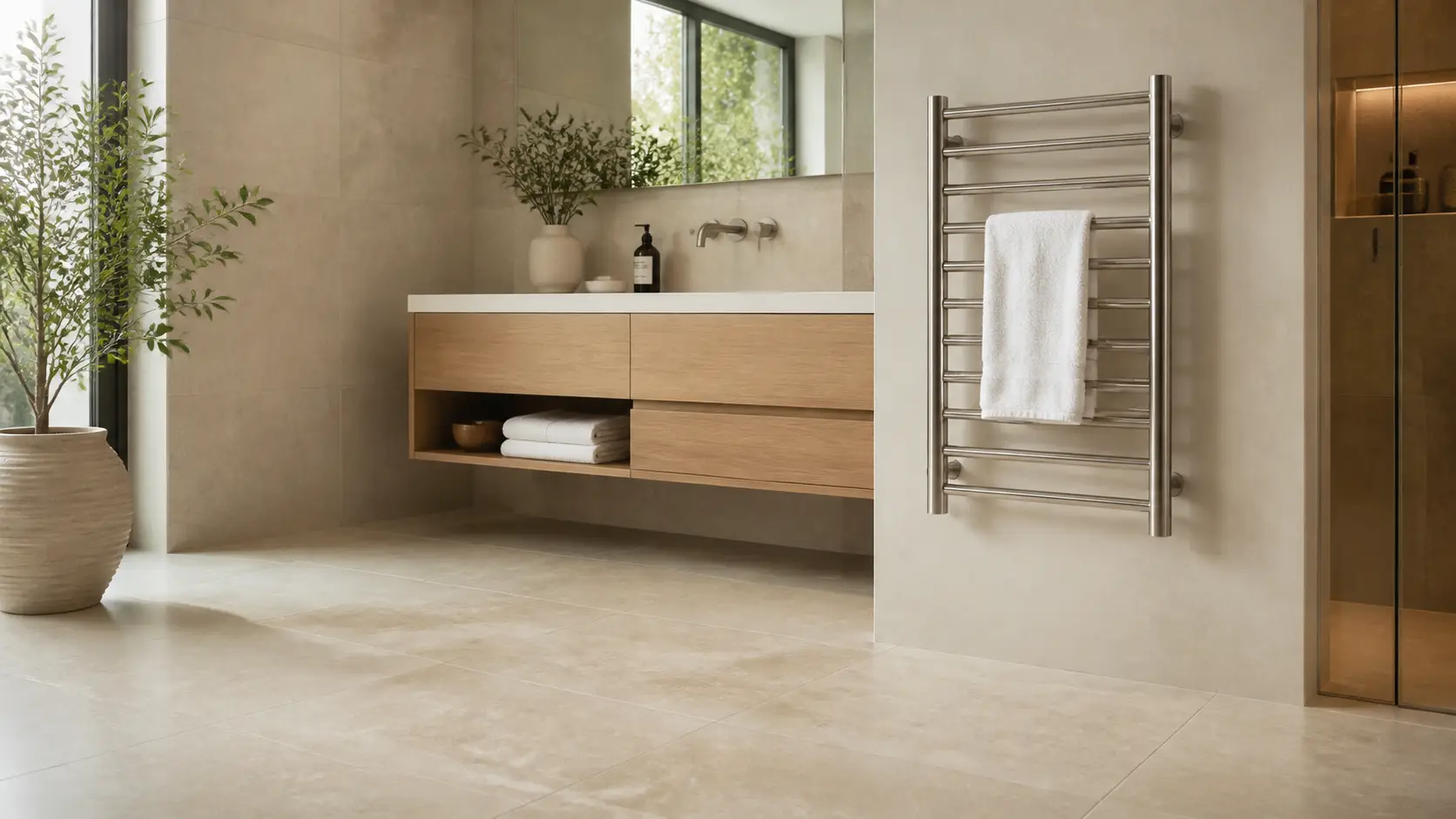
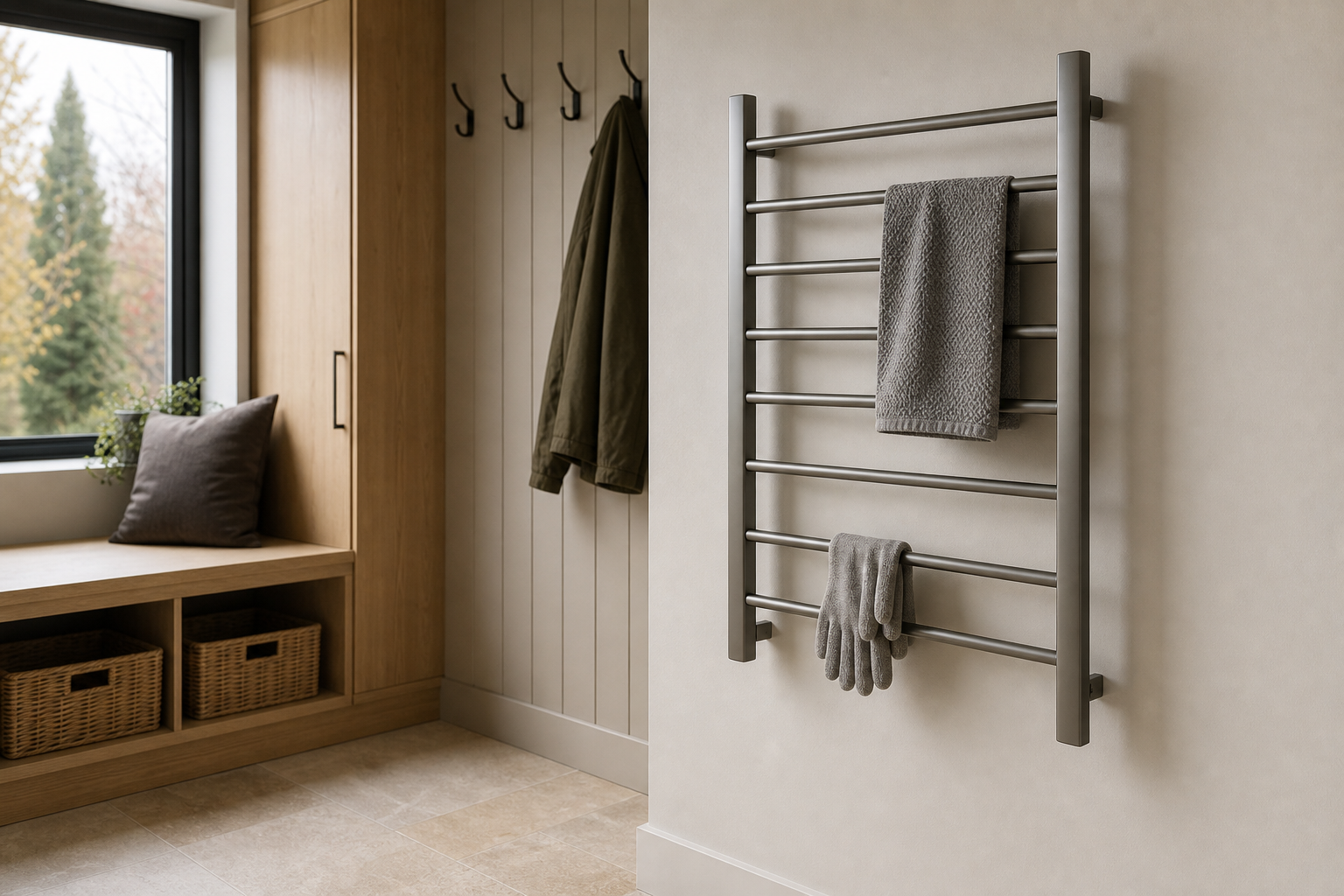
A mudroom collects moisture in a different way from a bathroom. Instead of one steamy shower, it may receive damp hands, wet pet towels, light rainwear, gloves, or a small towel used near the entry. A wall-mounted electric heated towel rack can create an organized drying zone for selected light textiles while keeping them off benches and floors.
The useful principle is the same as in a bathroom: warmth works best when fabric is spread open and air can move around it. A rack is not a sealed dryer, and it should not be treated like one. Thick layers, dripping loads, and tightly packed garments slow moisture release and may exceed the product's intended use.
The U.S. Environmental Protection Agency emphasizes moisture control and recommends drying damp materials promptly. In a mudroom, that means the rack should support a wider plan that also includes wiping up tracked water, keeping the floor dry, and using ventilation or dehumidification when the room stays humid.
Decide what belongs on the rack
| Mudroom item | Usually a reasonable use? | What to check first |
|---|---|---|
| Small cotton towel | Yes, when damp rather than dripping | Spread it open and leave space around it |
| Lightweight fabric gloves | Sometimes | Read the care label and avoid coatings or trims that dislike heat |
| Light scarf or washable fabric accessory | Sometimes | Confirm the label allows the drying method |
| Saturated winter coat | No | Use the garment's approved drying method and a stronger drying setup |
| Boots, shoes, helmets, or hard sports gear | No | Keep rigid, rubber, plastic, and muddy items off the bars |
| Rubber-backed mat | Usually no unless expressly allowed | Heat can affect backing or adhesives; follow its care instructions |
This table is a practical filter, not a substitute for the instructions supplied with the rack or the textile. The Federal Trade Commission's care-label guidance explains that garments carry instructions and warnings because some care procedures can damage the complete item, including its trim and other components. If the label is unclear, choose a lower-risk drying method.
Plan a clean, safe drying zone
Place the rack where light items can hang without blocking the door, bench, cabinets, or walking path. Mudrooms often have narrow circulation space, so measure the rack projection as well as its width and height. A towel or glove should not brush against footwear, cleaning chemicals, pet supplies, or a wet floor.
Separate the room into three simple zones:
- A drip zone for umbrellas, boots, and heavily wet outerwear.
- A heated rack zone for approved towels and light textiles.
- A dry storage zone for clean coats, bags, and items ready to use.
This prevents the heated rack from becoming a catch-all. Shake off or blot excess water before hanging an item, then use one open layer per section of the rack. Do not wrap fabric around controls, stack several wet items on one bar, or cover the entire unit with one dense garment.
Electrical placement needs the same care as it does in other damp areas. The U.S. Consumer Product Safety Commission describes ground-fault circuit interrupters as protection against severe electrical shock. Follow the rack's installation instructions and local electrical requirements, keep cords out of the walking path, and do not add an extension cord to reach a distant outlet. If the location, wiring, or damp-area suitability is uncertain, use a qualified electrician.
Use the rack with moisture control
A heated rack helps the item touching or surrounding its bars; it does not remove all moisture from the room. If the mudroom has no window, frequently receives wet clothing, or shares air with a basement or garage, watch for condensation, persistent dampness, and musty odors. Improve airflow, use mechanical ventilation or dehumidification where appropriate, and dry tracked water promptly.
The EPA notes that mold control depends on moisture control and recommends reducing humidity and drying wet surfaces. That is why a mudroom rack works best for small, repeatable loads rather than a household's entire wet-weather wardrobe. When several coats are soaked, a boot tray, hooks with open spacing, a fan-supported drying area, or an approved clothes dryer will usually be the better tool.
For everyday use, keep the routine simple:
1. Remove mud and excess water away from the rack. 2. Check the item's care label and the rack instructions. 3. Hang only light, approved fabric in a single open layer. 4. Leave gaps between items and keep controls uncovered. 5. Manage room humidity and wipe up water on the floor. 6. Remove items after they are dry enough and leave the rack clear.
When a mudroom rack is worth considering
A heated towel rack may be useful when the mudroom regularly handles a few small damp textiles, has suitable wall space, and can support a safe electrical route. It is less useful when the main problem is soaked boots, heavy coats, large sports loads, poor drainage, or chronic room humidity. In those cases, solve the room-level moisture and storage problem first.
Before choosing a rack, count the actual light items you expect to hang and measure the available wall. Then compare rack size, installation method, bar spacing, controls, and the manufacturer's allowed uses. The Calithrex heated towel rack buying guide can help you turn those measurements into a practical shortlist.
FAQ
Can I dry wet gloves on a heated towel rack?
Only when they are lightweight fabric gloves, their care label permits the drying method, and the rack instructions allow the use. Keep coated, leather, battery-powered, or heavily insulated gloves off the rack unless their manufacturer specifically approves it.
Can I put a wet coat on the rack?
A saturated or heavy coat is usually a poor fit because it blocks airflow and adds substantial weight. Follow the coat's care label and use an appropriate garment-drying setup instead.
Can a heated towel rack dry shoes or boots?
No. Keep footwear off the bars. Mud, rigid materials, rubber, adhesives, and trapped water make shoes and boots unsuitable for a towel rack.
Does the mudroom need ventilation if the rack is heated?
Yes. The rack supports drying selected fabric, while ventilation or dehumidification manages moisture in the room. One does not replace the other.
Should I use an extension cord in the mudroom?
No. Do not route an extension cord across an entry or damp floor. Use a suitable permanent electrical arrangement that follows the product instructions and local requirements.
Next step
List the small towels and light garments that actually enter your mudroom during wet weather. If they fit an open, care-label-approved drying routine, measure a safe wall location and compare electric heated towel rack sizes. If the list is mostly boots and heavy outerwear, plan a dedicated mudroom drying system instead.